Bonding façade elements with tapes
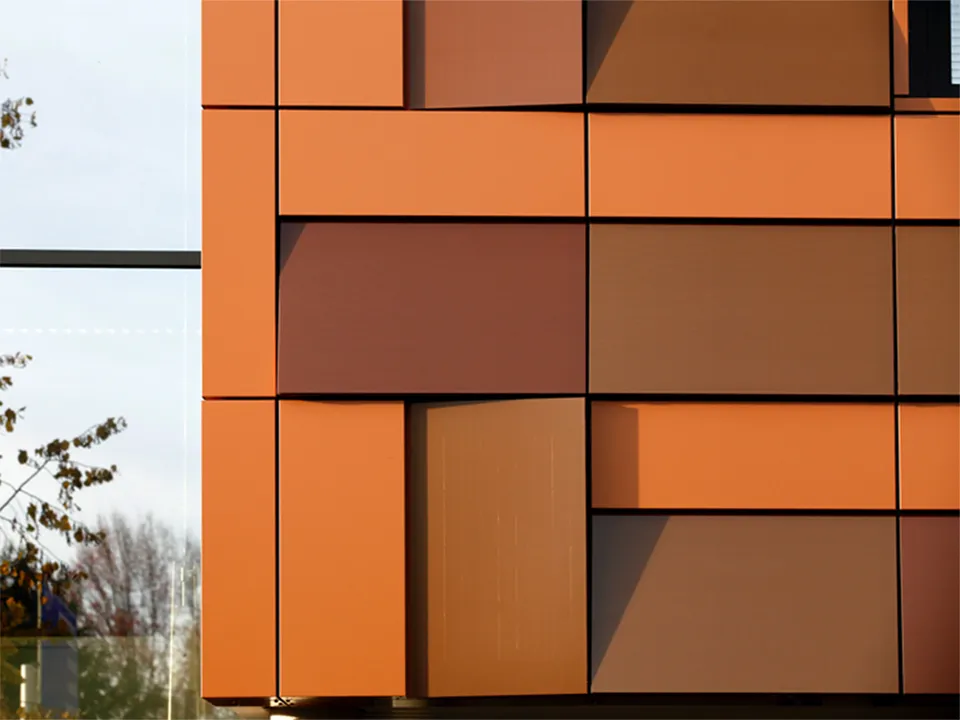
Architects are increasingly asking façade contractors to attach façade elements without visible fixings. The use of structural tapes to bond façade elements is making it possible to meet this requirement more and more often. “There are still plenty of hurdles to overcome in practice, but the potential is considerable,” says Roeland Burgers of Sorba, a specialist in façade construction, interior construction and infrastructure projects based in Winterswijk.
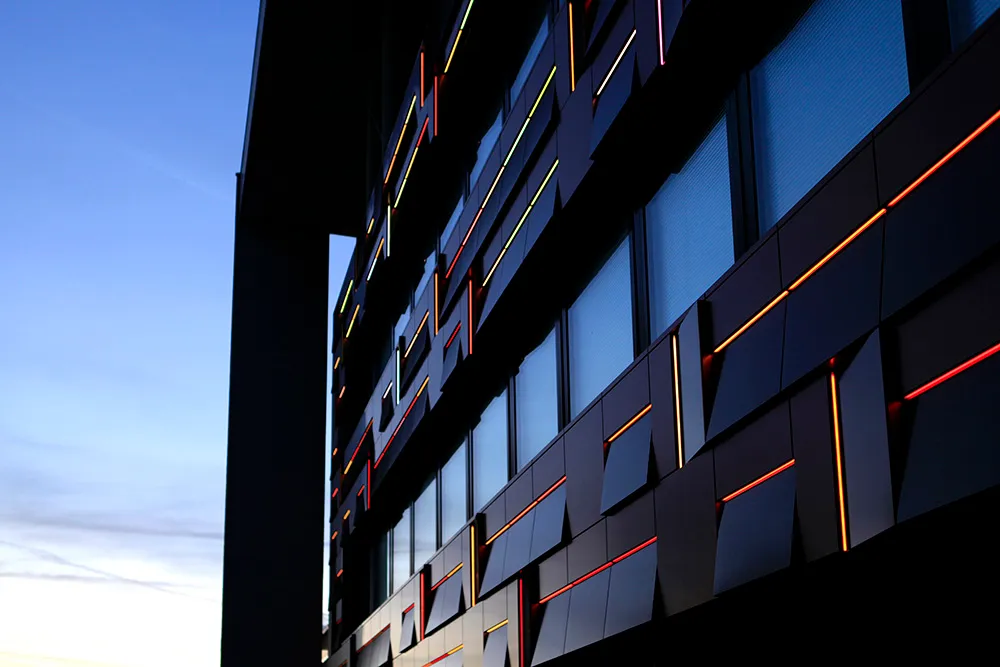
Façade cladding manufacturers such as Sorba are therefore receiving this request more and more often. It applies both to solid, composite façade elements and to glass panels that need to be fixed without visible profiles. Over the past decade, many examples of façades with concealed fixings have already been completed, including several prestigious office buildings in the Netherlands.
Benefits of bonding tapes
Tapes are being used more and more often because of their many benefits.
tapes or foam tapes are easy to apply accurately
provide consistent, uniform quality across the bonded surface
compensate for minor surface irregularities and differences in tolerances
their high viscoelasticity allows them to accommodate both shrinkage and expansion
provide an immediate initial bond, saving time and space in the production process
their quick application reduces labour costs
elements bonded with tapes do not need to be left to cure
can be applied without expensive tools or guns
are environmentally friendly because they contain no silicones (VOC value 0)
For these reasons, tapes are a good alternative to mechanical fixing systems and liquid adhesives. In addition to bonding panels for façade elements, tapes are also used successfully to assemble interior components and in electronics, automotive, bus, caravan and yacht construction, the solar industry, and the advertising and signage industries.
Bonding façade elements
Roeland Burgers of Sorba, who completed his first project using tapes to bond glass elements with concealed fixings back in 2006, now has extensive experience in bonding façade elements. “Notable examples include the façades of the Kuijpers office buildings in Helmond and Pharos in Hoofddorp, which incorporate energy-generating façade elements. We bonded the energy-generating panels, developed by Studio Solarix, onto an anodised aluminium subframe in our own facility, then finished them with Alpolic colour panels.
For the assembly, we used REFORAC UPPER BOND acrylic tapes. The complete façade elements were then mechanically fixed to the façade’s supporting structure. This met both the architect’s wish for a façade with no visible fixings and the client’s sustainability requirements.”
Hurdles to overcome
In practice, Burgers still has some hurdles to overcome when bonding façade elements with concealed fixings. “Building control authorities require guarantees on service life, ranging from 25 to 50 years. Because this innovative fixing method is relatively new, we cannot yet meet that requirement. Accelerated ageing tests are not accepted in many cases, so we monitor the ageing process and record the results.”
Conditions for application
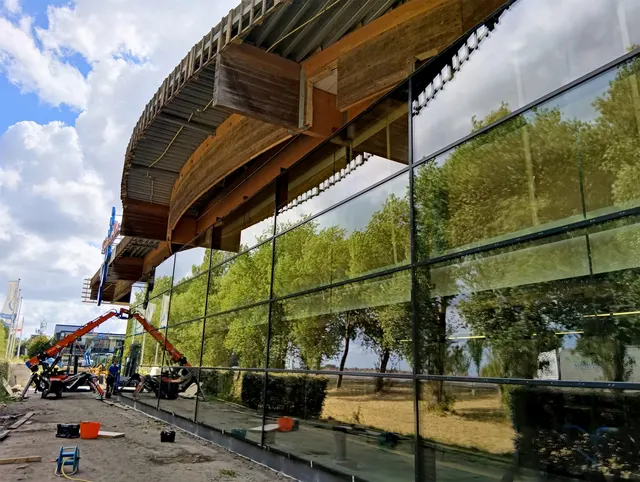
The different panels can only be bonded under controlled conditions, with low humidity and surfaces that are 100% degreased, as too many factors outdoors can negatively affect application. Preventing air entrapment is another challenge. “Unlike adhesives, which involve mixing 2 components, tapes provide consistent adhesion across the bonded surface. Although the thickness of acrylic foam tape can accommodate small differences in thickness, there is a limit. When bonding the glass façade panels for the recently completed Depot Boijmans Van Beuningen in Rotterdam, the municipality required an additional safety measure, so a secondary load path was installed, providing a 200% safety margin. Due to the different tolerances in the glass and aluminium frame, the glass could only be bonded to the aluminium frame using structural adhesive, so tape could not be used.
Pharos office building in Hoofddorp
Energy-generating façade elements bonded with REFORAC UPPER BOND tapes were used on the Pharos office building in Hoofddorp. The project developer’s ambition was to create Europe’s healthiest workplace community. The existing low-rise section of the Pharos office building in Hoofddorp, dating from 2004, underwent a major renovation with health, sustainability and innovation as its priorities. The project included energy-generating façade elements, smart windows and plenty of greenery. For the energy-generating façade elements, which were also manufactured by Sorba, coloured solar panels were bonded to Alpolic cassettes using REFORAC Bonding tapes. A total of 450m2 of solar design energy-generating façade elements were installed on the building. The energy-generating façade elements were developed by Studio Solarix.
Question about this story? Ask your question
Keep following this
Get an email when a new story is published. No account needed.
- SubjectFaçade cladding