How glazing and internal blinds work together
Text Roel van GilsImage Kvadrat
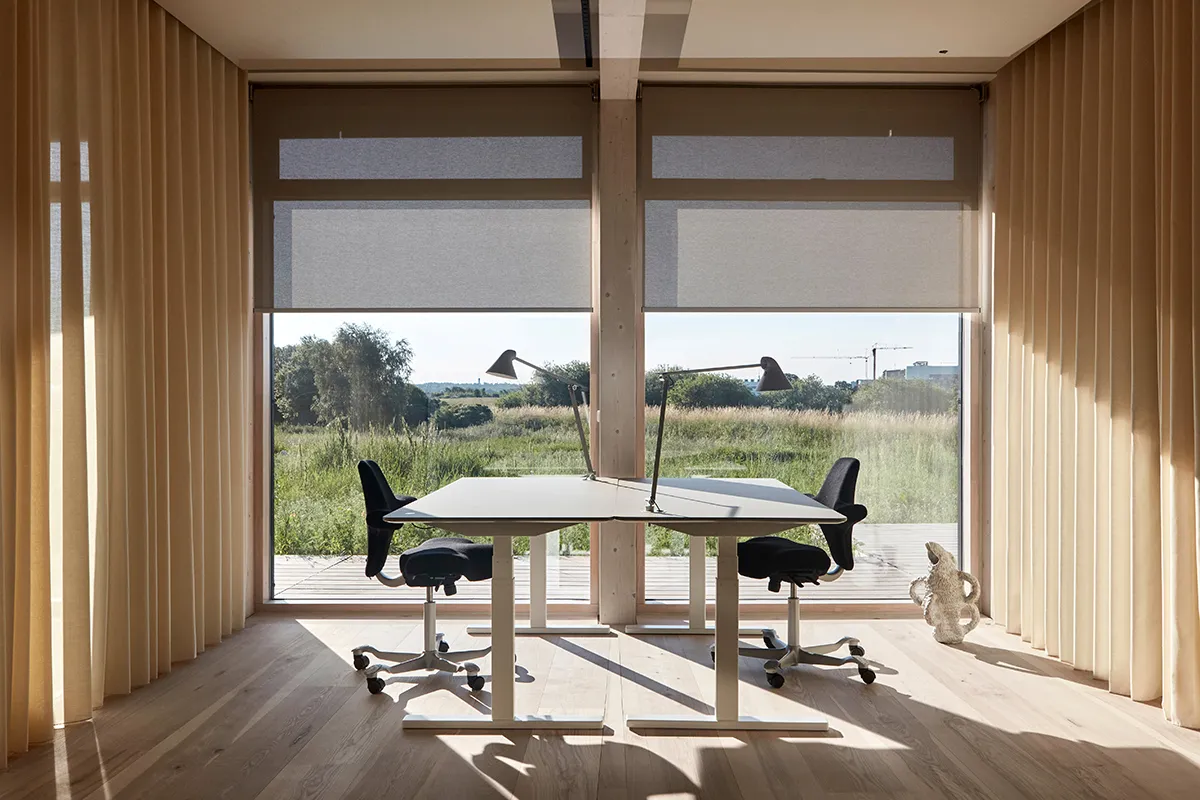
Synergy in the façade
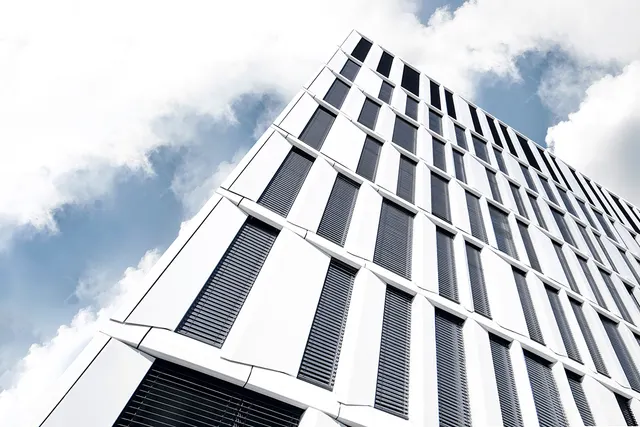
In modern façade design, the question is no longer whether to use glazing or solar shading, but how to combine the two to best effect. The right glazing, combined with high-quality internal blinds, largely determines a building’s thermal and visual comfort. While external solar shading was the norm for a long time, more and more architects and developers are opting for an optimal synergy between solar-control glazing and metallised internal blinds, bringing light, heat and views into perfect balance.
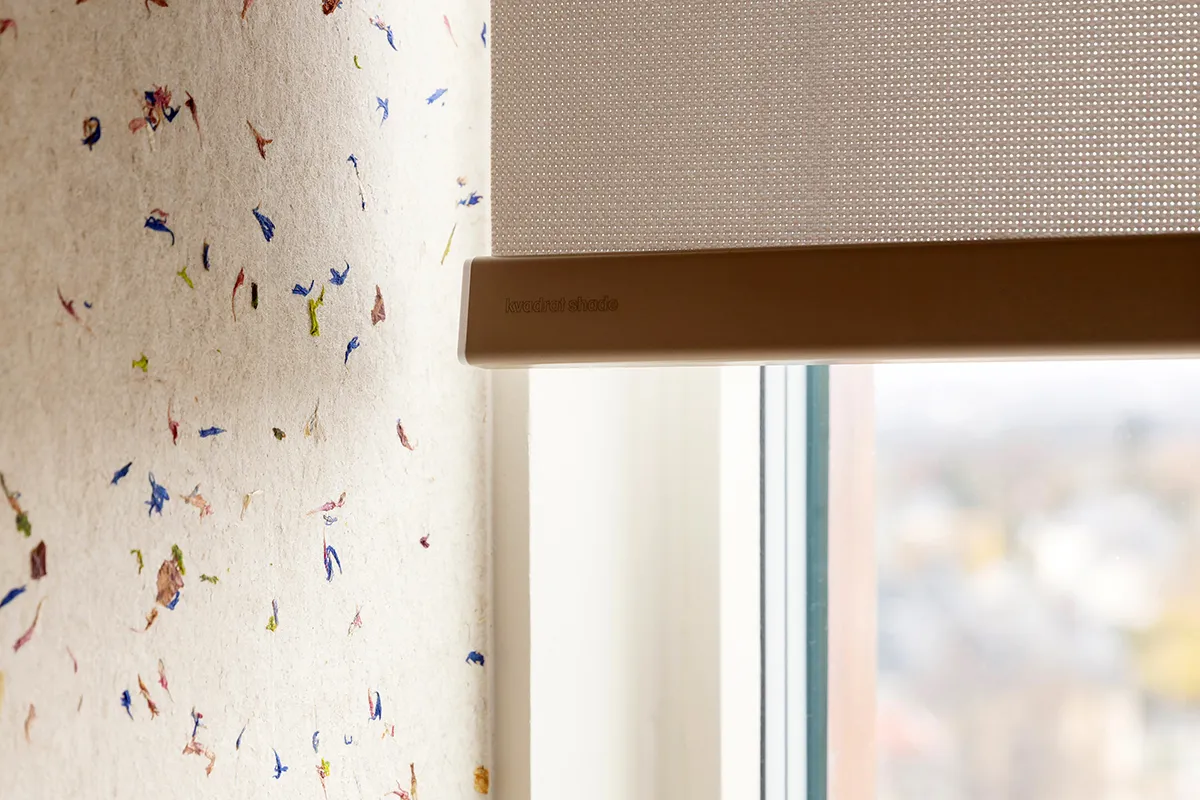
The Danish textile company Kvadrat, known among other things for its upholstery and curtain fabrics and acoustic solutions, has in recent years developed Kvadrat Shade into a specialist in high-quality window coverings. “Internal blinds have become a fully fledged pillar of our organisation,” says Jaap Steenbakkers, commercial director of Kvadrat Shade. Its recent collaboration with Saint-Gobain Glass, a world leader in sustainable, high-performance glazing, marks a new phase: aligning solar-control glazing and internal blinds as part of one integrated concept.
The power of combining the two
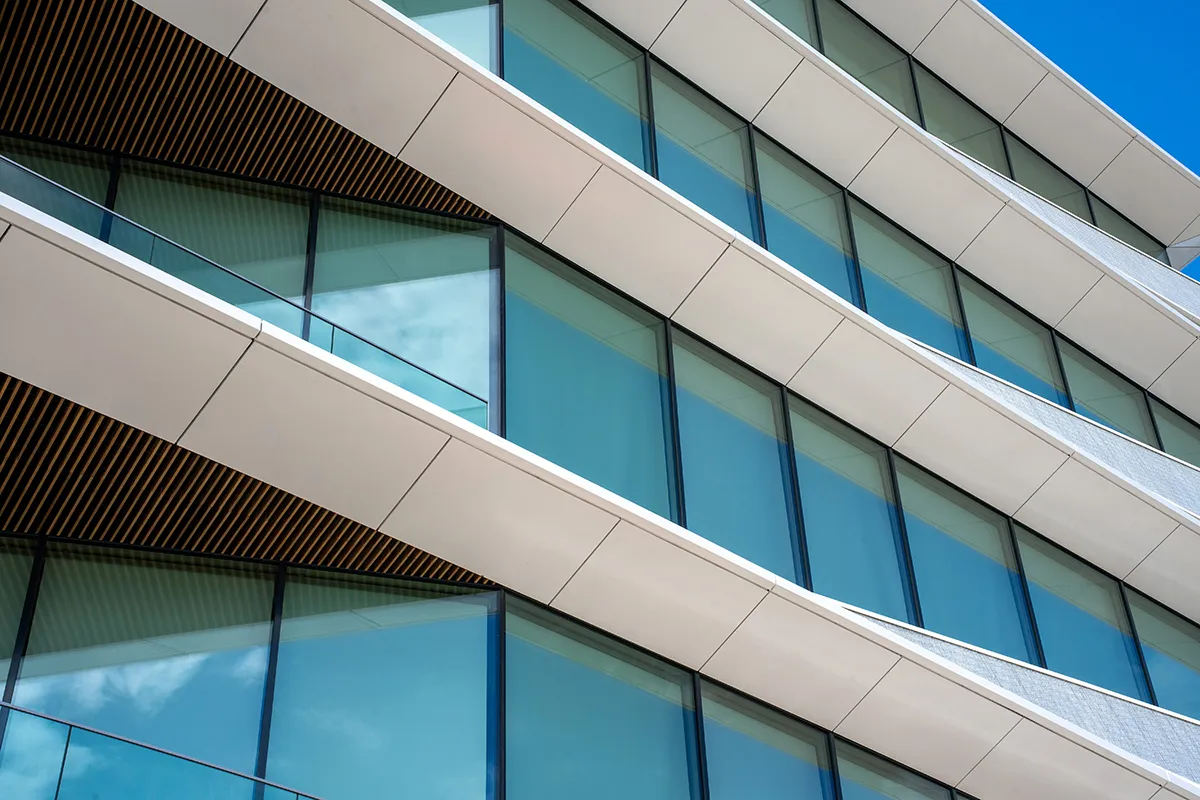
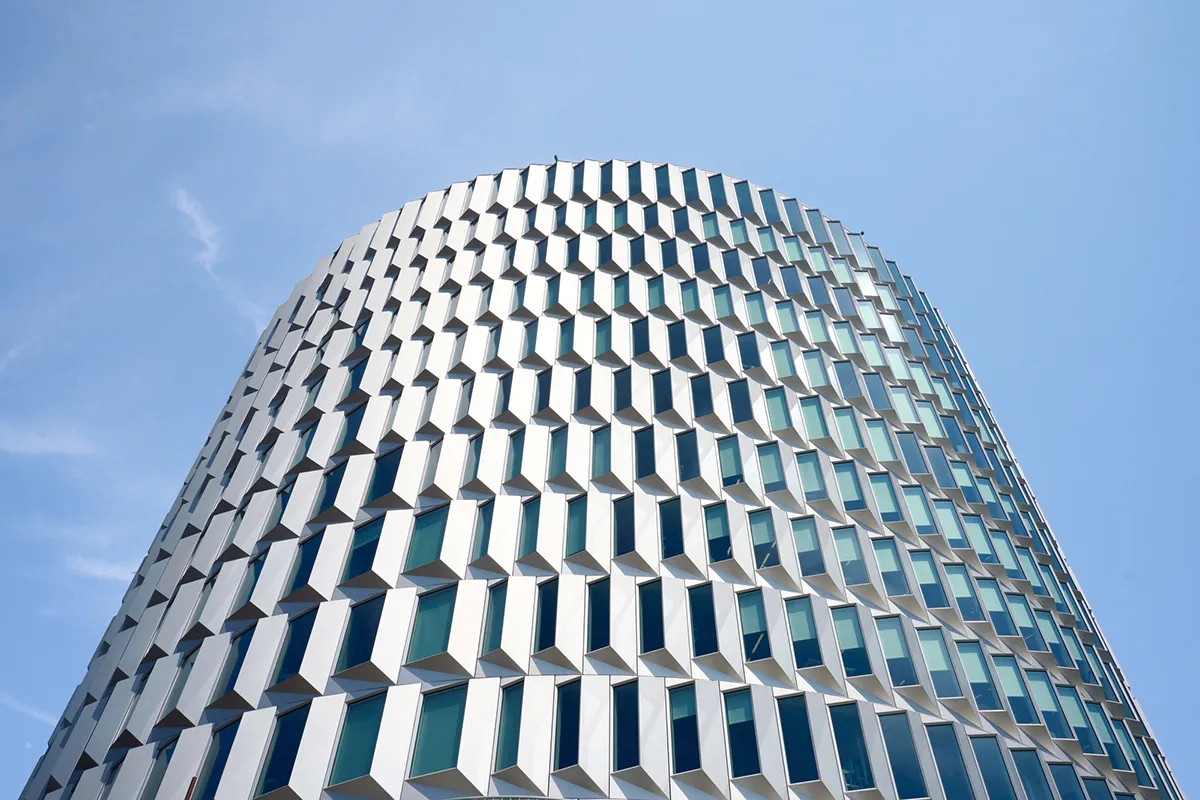
The collaboration began in Scandinavia. It has since grown into close cooperation at head-office level, with local partnerships being rolled out in the various markets where both companies operate. One good example is the AstraZeneca headquarters in Amsterdam, where both parties were involved from the design stage. By treating the glazing and internal blinds as a single system, they were able to optimise the indoor climate, significantly reduce the cooling load and improve the BREEAM rating. Steenbakkers believes this is the way forward: “High-performance glazing alone or solar shading alone is not enough. It is about finding the right combination, tailored to the façade’s orientation and the way the space is used.” Carl Pollet, product manager at Saint Gobain Glass, adds: “Our COOL-LITE® XTREME 70/33 solar-control glazing blocks 67% of solar heat. The remaining heat is largely reflected back outside by Kvadrat Shade metallised roller blinds, to maximise indoor comfort without obstructing the view out.”
Sustainability at every layer
Both Saint-Gobain Glass and Kvadrat Shade pursue sustainability on two levels: operational performance and embodied carbon. Operationally, the focus is on reducing energy demand. Solar-control glazing with high selectivity (the ratio between light transmission and solar heat gain, ed.) reduces the need for cooling, while internal blinds with a reflective layer help maintain a stable indoor climate. In terms of material impact, Saint-Gobain Glass is also making great strides with low-carbon ORAÉ® glazing. “It contains at least 64% recycled glass cullet and generates 42% less CO2 emissions during production,” says Carl Pollet. In parallel, Kvadrat is developing fabrics made from 100% recycled yarns, such as Graphite, made from 100% recycled textile waste, and Ferrite, made from 100% ocean-bound plastic, moving Kvadrat Shade towards circularity.
The optimal mix and match
An important consideration when designing energy-efficient façades is matching the glazing to the façade’s orientation. Carl Pollet says: “Solar-control glazing is used on the east, south and west façades to limit the heat load from low-angle and afternoon sun, while thermal insulation glazing is used on the north façade to let in as much daylight as possible.
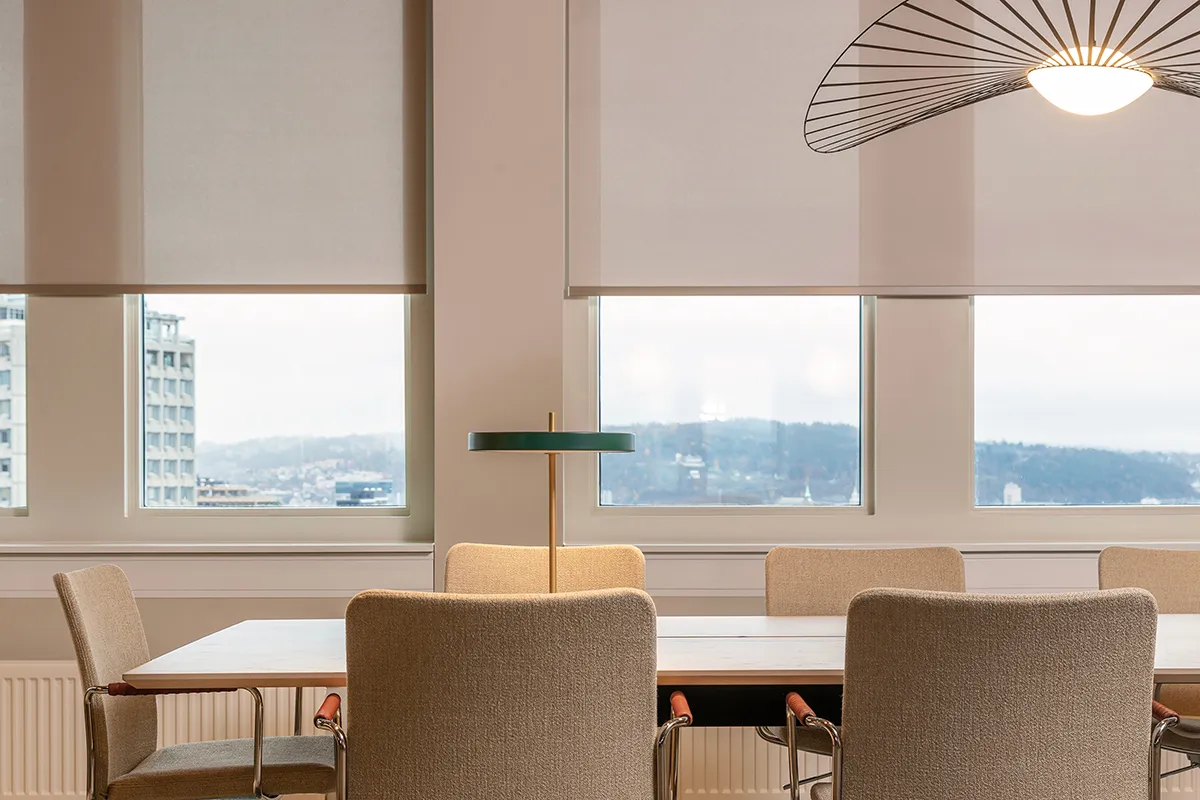
ECLAZ® ZEN is thermal insulation glazing that combines maximum daylight with thermal comfort.” Kvadrat Shade applies the same principle to its fabrics. “Rather than offering a single standard solution with a metallised coating, we develop fabrics with different specifications, textures, colour combinations and transparencies,” says Steenbakkers. “This allows us to create the optimal ‘mix and match’ for every client, façade and situation. It is also ideal for multi-tenant buildings: each tenant can choose their own colour, while the exterior remains uniform and aesthetically pleasing.”
A smart alternative
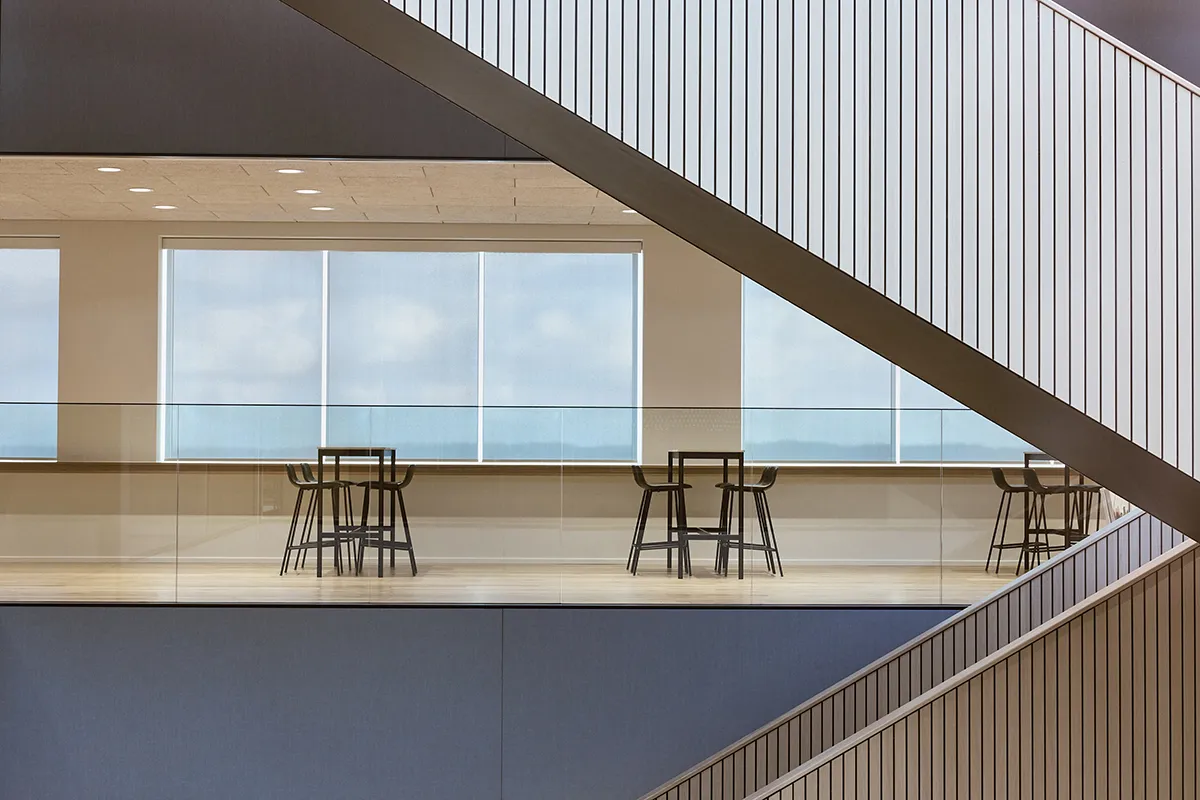
According to Steenbakkers, metallised internal blinds offer several specific advantages over external solar shading. “External solutions are more susceptible to wind loads, require maintenance and often need permits, and can be difficult to integrate with modern glazed façades. Internal blinds, by contrast, provide a single solution for controlling light and heat in summer, while reducing heat loss in winter and preserving a good view out. By adding an ultra-thin aluminium layer to our innovative textiles, many times thinner than a human hair, we achieve emissivity values as low as 0.03. This provides excellent insulation in winter, while the high reflectance in summer prevents solar energy from being absorbed and the space from overheating unnecessarily.” Current innovations in glazing and the automation of internal blinds also make rapid retrofit applications possible, without major changes to the exterior of the façade. “For office building renovations in particular, this offers a sustainable, budget-friendly route to an energy label A,” says Steenbakkers.
The combination of high-performance glazing and intelligently controlled internal blinds is the future of energy-efficient buildings. “By linking glazing and fabric performance to parameters such as g-value and U-value, the optimal configuration can be calculated for each section of the façade, with the blinds responding automatically to light and temperature,” Steenbakkers concludes. “This delivers optimal comfort in every situation: sufficient daylight, a view out and controlled solar heat gain.”
Saint-Gobain Glass and Kvadrat Shade have jointly produced a white paper explaining in detail the synergy between glass and internal blinds, including data.
Een zakelijke vraag aan Saint-Gobain Building Glass Benelux? Get in touch
Who worked on it
AstraZeneca-hoofdkantoor in Amsterdam
- zonwerende beglazing
 Saint
- gemetalliseerde binnenzonweringKvadrat Shade
Keep following this
Get an email when a new story is published. No account needed.
- ProjectAstraZeneca-hoofdkantoor
- ThemeGlass for light and comfort
- SubjectSolar shading
- CompanySaint-Gobain Building Glass Benelux
- CompanyKvadrat Shade