From construction company to data factory: the digital transition in prefab construction
Text Maarten van der BoonImage BIM4Production®
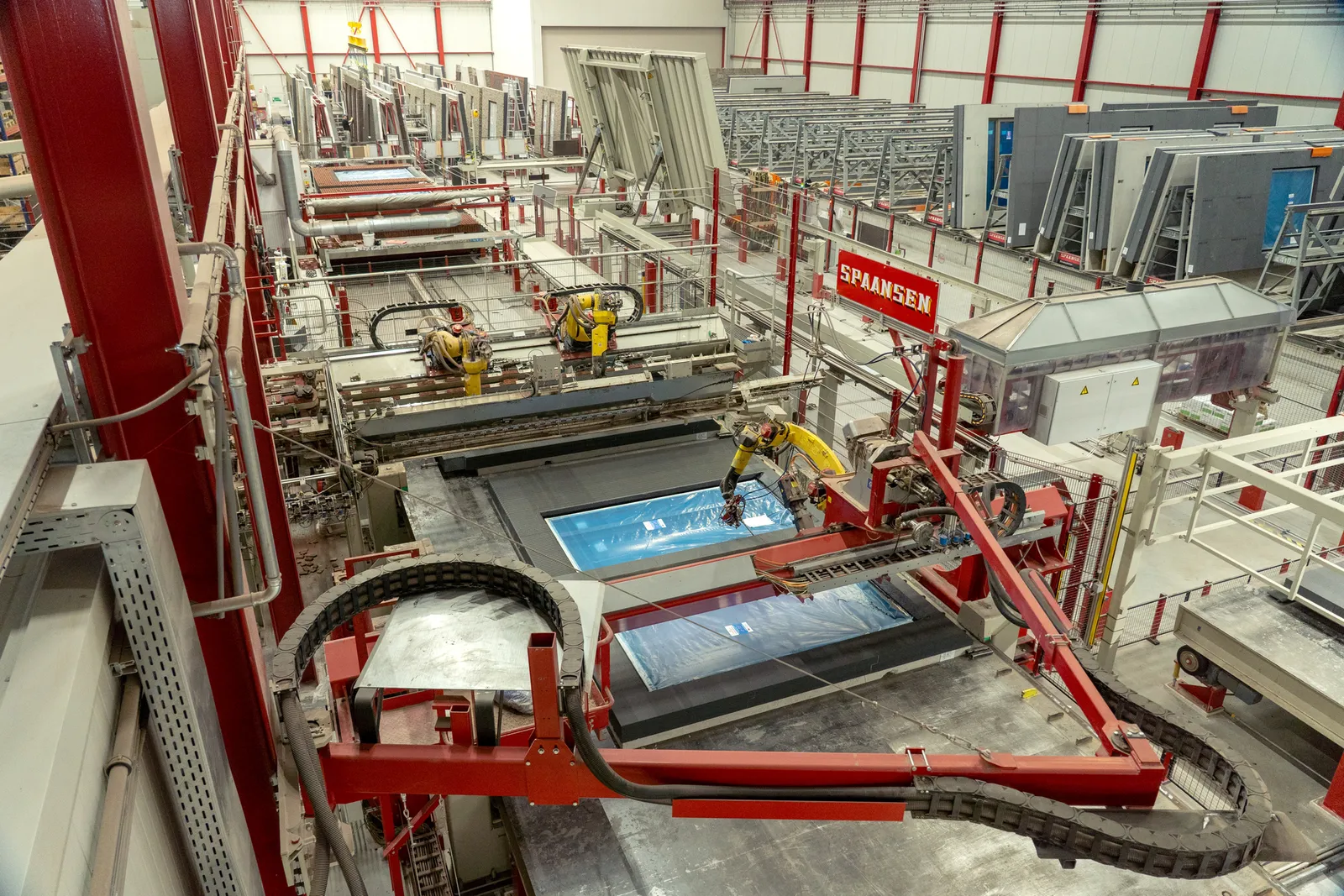
The Dutch construction industry is at a turning point. Labour shortages, rising material costs, environmental pressures and the housing shortage are forcing the sector to rethink its construction processes. Industrialisation and prefabrication are no longer a passing trend, but a strategic choice. Yet the transition is slow, partly because of weak digital infrastructure. Prefabrication without digitalisation, both in the factory and across the supply chain, is only a partial solution.
The rise of prefab
Prefabrication is not new. Houses were already being built using precast concrete after the Second World War. While the post-war wave was driven by economies of scale, today the focus is on mass customisation: every project is unique, but the process is industrialised. Precast concrete dominates market volume, steel is essential in non-residential construction, and timber construction is firmly established in housebuilding. All segments face the same challenge: complex products, unique projects and tight margins.
From engineering model to shop floor
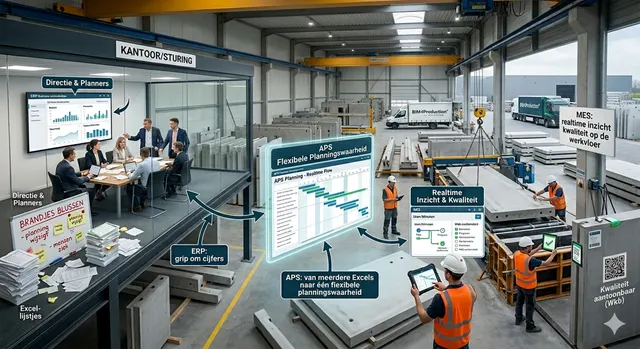
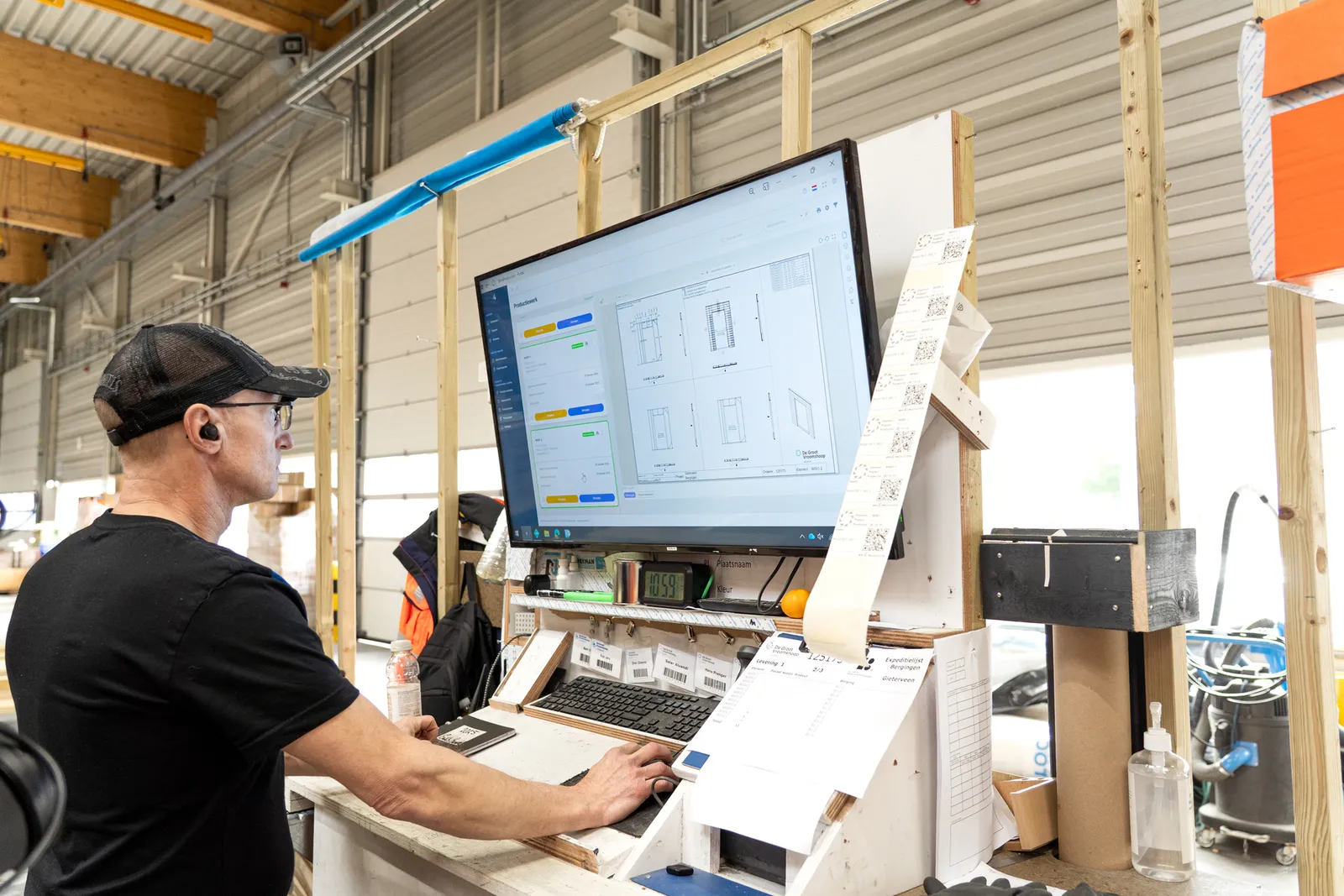
A prefab factory is a manufacturing operation producing elements that vary from one to the next: a project can quickly involve dozens of unique building components, each with its own dimensions, materials and installation sequence. Traditional business software struggles to handle this complexity. Too many factories still rely on paper work orders, schedules in Excel and separate quality records. The result: time spent searching on the shop floor, installation teams waiting and quality problems that only come to light at handover. This is not down to a lack of willingness, but to decisions that have been deferred.
ERP, APS and MES
The crucial shift is to think in terms of producing elements rather than projects. A prefab factory is ‘digital fit’ when it has three systems working together. ERP handles quotations, purchasing and finance, but is too coarse-grained for the production floor. APS dynamically schedules which element goes on which machine and makes real-time replanning possible. MES directs and records production on the floor: each element has a digital identity, and every step is fed back into the system. Together, they form the controls of a transparent factory.
A single source of truth
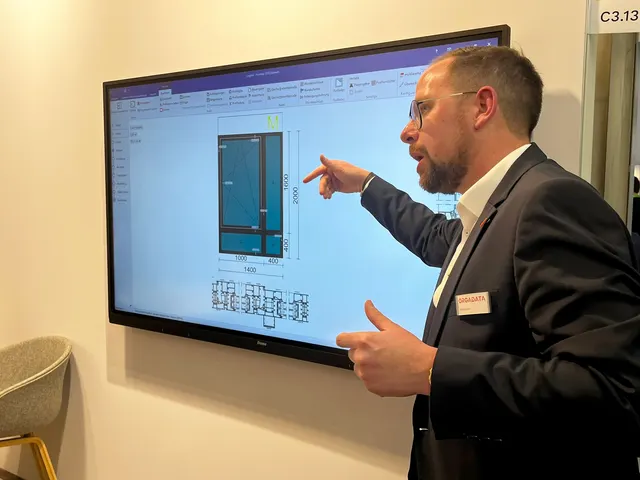
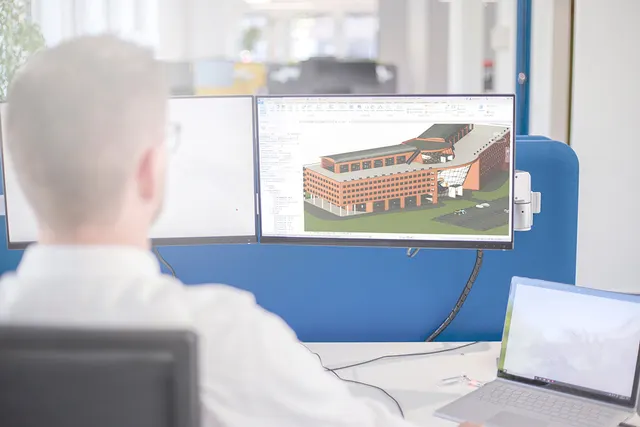
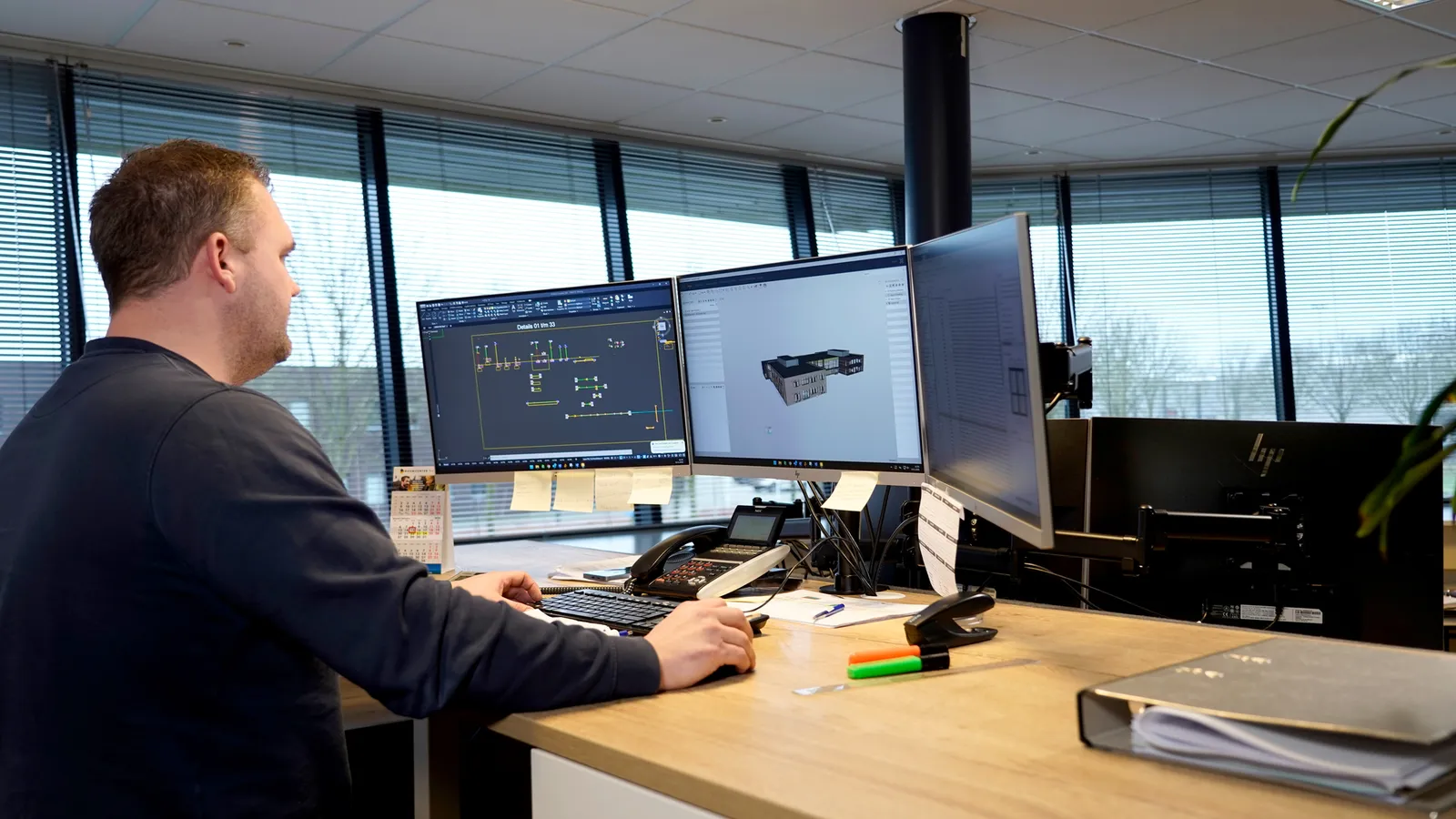
Prefab construction has one major advantage over other manufacturing industries: the design is already digital, in a BIM model containing geometry, materials and tolerances. Yet what happens after engineering is often still analogue: printed drawings, manual work orders and paper delivery notes. The weakest link is the flow of information between engineering and production. The transition starts with recognising that the engineering model must be the single source of truth for the entire supply chain. This is the approach taken by BIM4Production®: engineering, planning, production, logistics and quality management as integrated modules. One platform, suited to modular construction, including façade construction, timber frame construction and precast concrete.
Beyond the factory walls
The transition does not stop at the factory. A complex prefab project often involves five to ten parties working together, each with its own systems. Quality problems rarely originate with a single link, but are caused by insufficient information sharing. This calls for standardised data formats, open interfaces and a culture of transparency. The technology is available; the willingness to share is often the problem. The sector is moving at two speeds: a vanguard investing in data, and a larger group still relying on experience and Excel. The difference shows up in delivery reliability and the cost of failure, partly as a result of the Wkb.
The construction industry has the wind in its sails, but its potential will not be realised automatically. Those who take prefabrication seriously as a production model must also take digitalisation seriously: from ERP and APS to MES, and from factory to supply chain. Building with prefab is manufacturing, and manufacturing without data is guesswork.
Have a business enquiry for BIM4Production®? Get in touch
Companies in this story
Keep following this
Get an email when a new story is published. No account needed.
- ThemeFrom facade model to production
- SubjectSoftware & automation
- CompanyBIM4Production®