Dynamic glazing: added value for façades
The Federatie Aluminium Constructeurs (FAC) closely follows all developments and innovations in the glass industry. Glass plays a crucial role in architecture and façade construction, both functionally and aesthetically. However, the trend towards nearly zero-energy buildings led to glazed areas being replaced by walls or hidden behind solar shading systems. This prompted glass manufacturers to invest heavily in developing smart, dynamic glazing, with the aim of regulating the amount of daylight and solar gain in buildings with (large) glazed areas, while also achieving high energy efficiency.
However, the various dynamic glazing solutions that came onto the market highlighted the significant challenges involved in their application. Some had a bluish or yellowish reflected colour, which architects and clients found aesthetically unacceptable. Other solutions had a very slow transition time (> 15 minutes from clear to dark, or vice versa) and consumed relatively large amounts of energy. In the meantime, several manufacturers have brought innovative, high-performance products to market and successfully put them into use.
Self-tinting glass thanks to electrochromic technology
Glass manufacturers such as AGC and Saint-Gobain focused their development efforts on electrochromic (EC) technology, which uses electrical impulses to modulate the light passing through transparent surfaces and change their tint.
EC technology has been around for several decades. The challenge, however, was to package this advanced technology in a ‘format’ suitable for use in an architectural setting, while meeting other requirements such as durability, energy efficiency, aesthetics and smart control.
How does it work? Imagine a lithium battery, like the one in a rechargeable phone, but completely transparent and forming part of an insulating glass unit. Through the process of charging and discharging, the battery creates a tinting effect that regulates light transmission, the amount of solar energy entering from outside and glare. The principle is that of a battery applied in several layers (of nanoparticles) to a specially designed, ultra-thin, high-quality glass pane. This is then laminated with a second pane to form a ‘transparent battery’ and assembled into the required insulating glass unit.
Three parameters
Three parameters are essential to the development of dynamic glazing.
The first is a high degree of flexibility and rapid response, enabling users to manage light levels and solar heat ‘on demand’ or automatically. Some products on the market switch from light to dark in less than 3 minutes and allow just 5% of the heat through.
The second parameter is aesthetics: in its light state, the glass should be indistinguishable from standard glazing, while in its dark state it should not deprive users of the feeling of a natural connection with the outside world.
Smart control and sustainability make up the third parameter. The added value of dynamic glazing lies in a control system that seamlessly responds to the needs of users and the building’s surroundings, can optionally be synchronised with the Building Management System (BMS), and consumes little electricity.
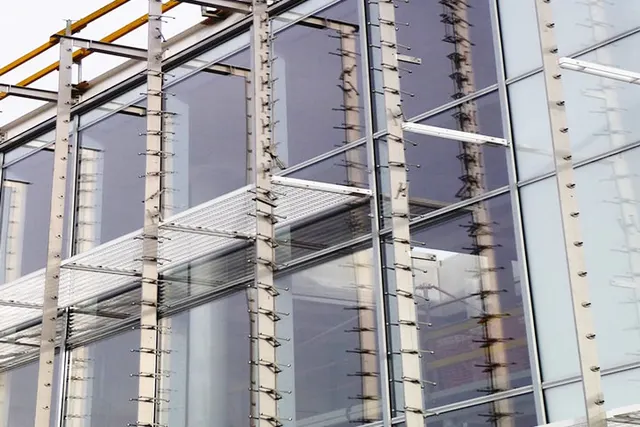
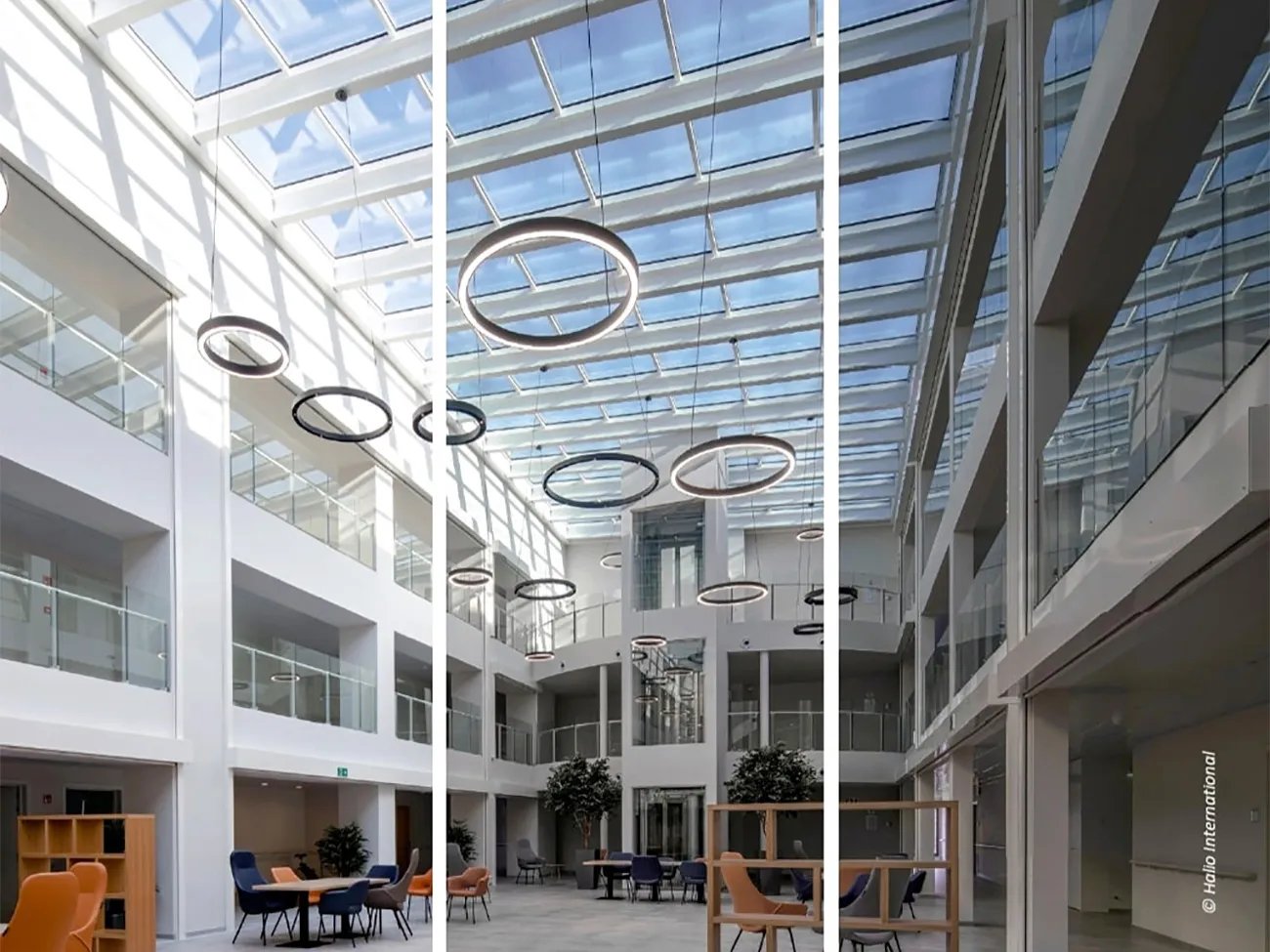
An impressive application of dynamic glazing based on electrochromic technology can be seen in the renovation of Gare Maritime, the former Brussels goods station on the Tour & Taxis site. The developer chose to cover the façades of the steel structures, totalling 40,000 m2, with two layers of smart glazing. These let in an abundance of natural light while regulating temperature and light over a length of 220 metres. The result is a remarkably transparent setting that is pleasant to work and spend time in.
Switchable glass based on liquid crystals
Another type of dynamic glazing, developed, for example, by the Merck group together with partners such as Guardian Glass, is based on liquid crystal technology. It is a transparent material consisting of a mixture of dyes and liquid crystals, applied between two panes of glass with an invisible conductive coating. When voltage is applied to the liquid crystal layer, the crystals change orientation, which alters the position of the dye molecules. The position of these molecules determines the colour of the system and affects whether the glazing appears clear or tinted.
Benefits of dynamic glazing solutions
Dynamic glazing makes a fundamental contribution to the comfort and wellbeing of building users. It ensures natural daylight and uninterrupted views of the outside, while preventing overheating and glare from the sun. Compared with standard double glazing, dynamic glass also helps save energy through an optimised g-value, particularly by reducing cooling costs. Finally, smart glass adds value to a building because it qualifies for green certifications such as BREEAM and LEED.
Efficient daylight and solar control are undoubtedly among the most promising glazing applications in architecture. However, glass manufacturers are also working on a wide range of other glass solutions, including laminated safety glass with photovoltaic cells, self-cleaning glass and anti-condensation glass. In short, there are many sustainable glass innovations for the buildings of the future.
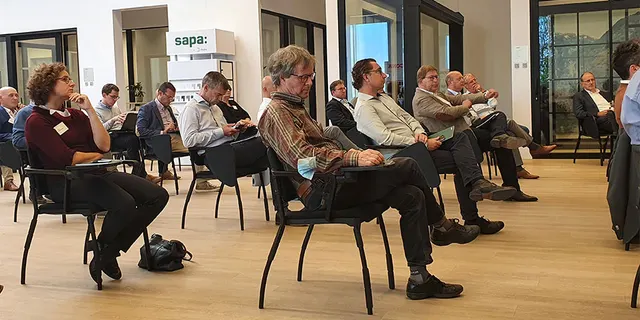
The Federatie Aluminium Constructeurs (FAC) regularly organises themed evenings to keep its members, aluminium window and façade contractors, up to date with developments and innovations in the sector. A themed evening on Dynamic Glazing was held on 7 September. For more information: www.fac-belgium.eu.
With thanks to the following companies for their contribution to this article
Question about this story? Ask your question
Companies in this story
Keep following this
Get an email when a new story is published. No account needed.
- ThemeGlass for light and comfort
- SubjectFAC
- CompanyFederatie Aluminium Constructeurs (FAC)