








A gem in the north
Text Roel van GilsImage Robert Koelewijn Fotografie
Watertight thanks to proven traditional standing-seam technique
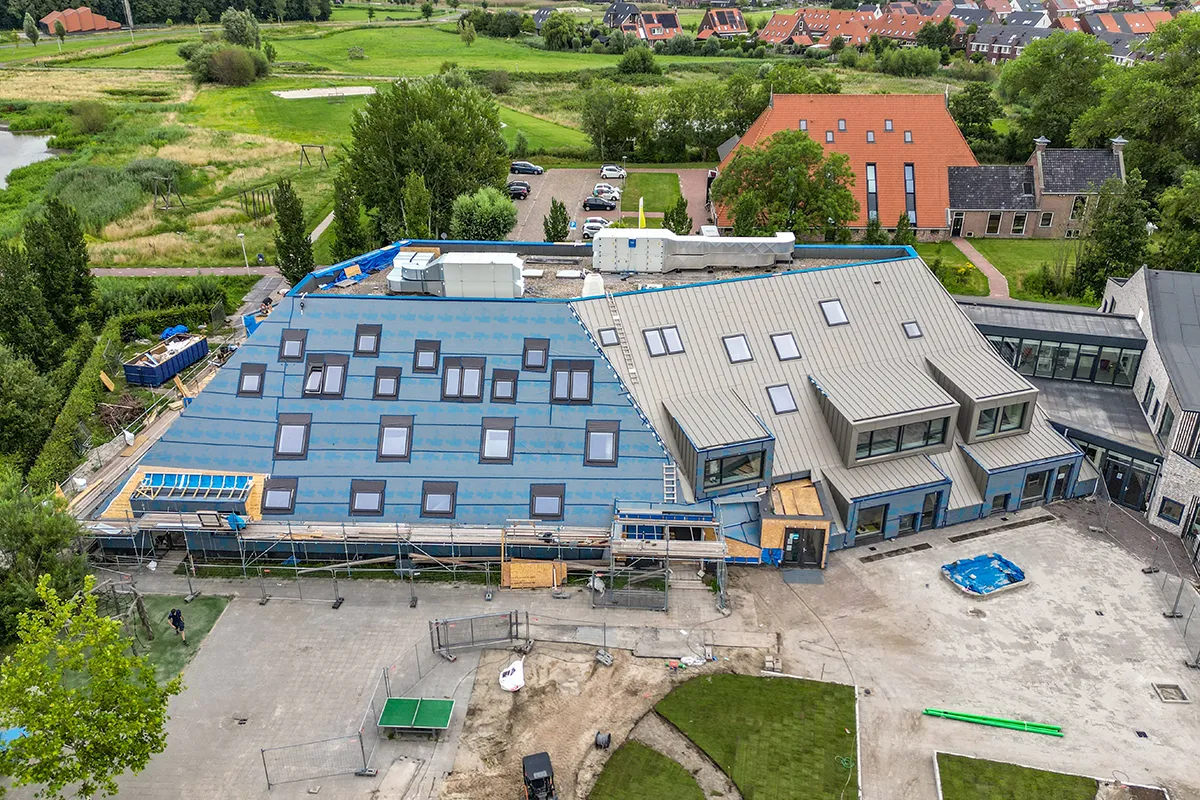
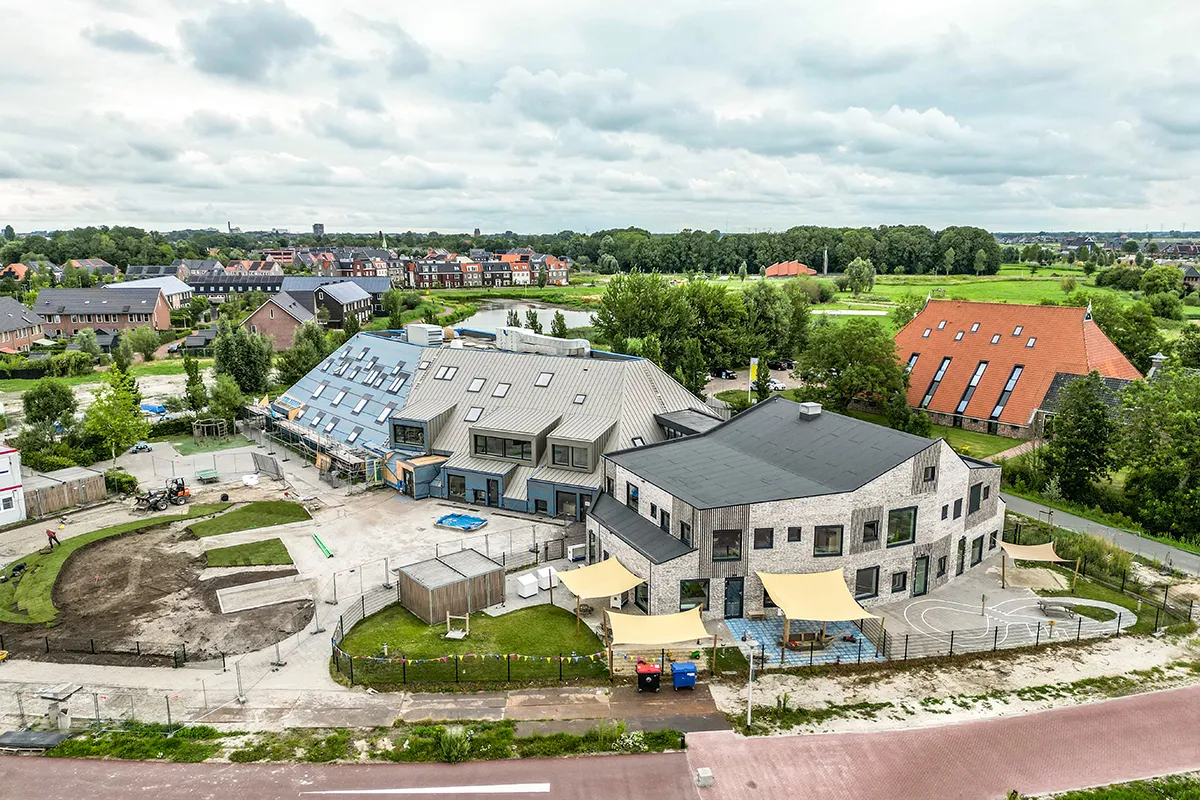
IKC de Pionier primary school in Leeuwarden had been plagued by leaks for many years, despite the building having been completed in 2009. The extension provided an opportunity to replace the entire steel snap-lock standing-seam roof with an aluminium standing-seam roof from PREFA. The experts at Ridder Skins for Buildings were tasked with making the roof watertight once and for all using traditional standing-seam technique.
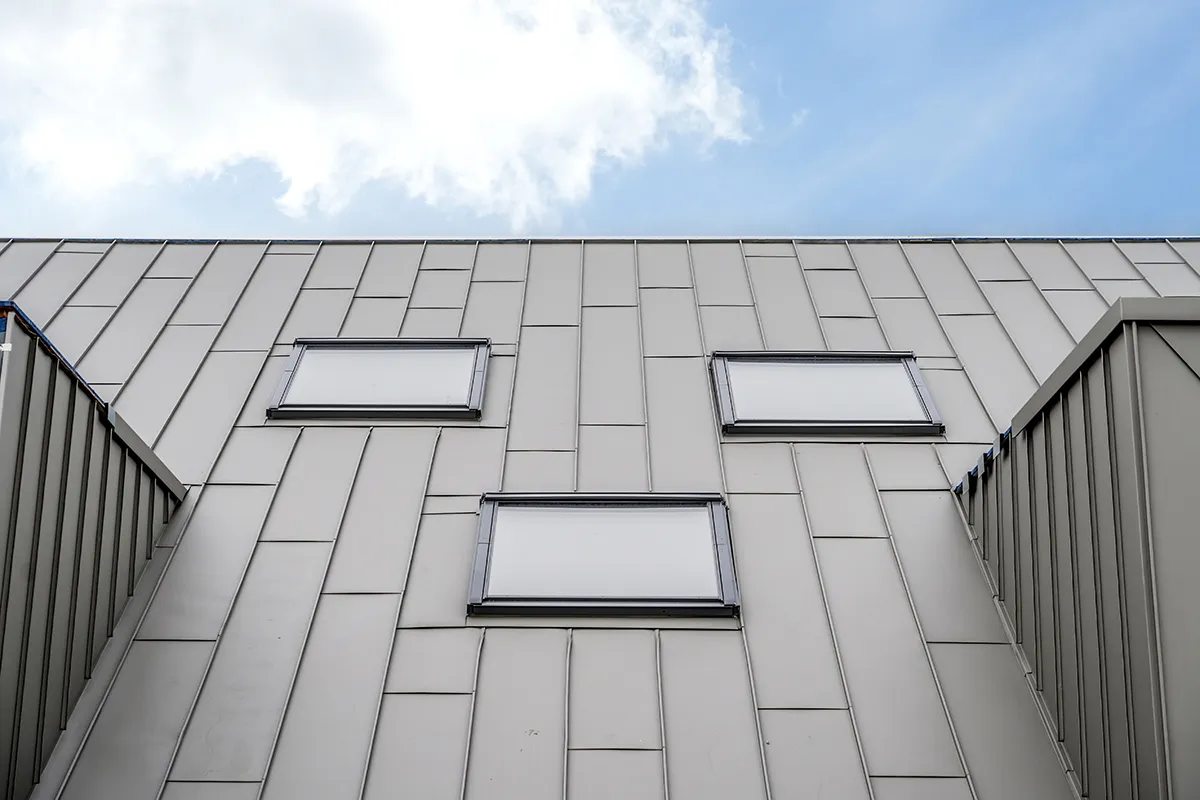
Every product has its proper application, says Dennis Reek of Ridder Skins for Buildings. “The former steel roof on the stelp farmhouse at IKC de Pionier was a textbook example of the wrong product being used for the wrong application. Put simply, snap-lock standing seams are glorified corrugated sheets. That comes with certain installation and design limitations. Integrating 58 roof windows and 20 dormers into this design is one such limitation of the system. With so many interruptions, it is hardly surprising that the roof started leaking badly after a few years.”
Countless glints
As well as leaks, the school was also short of space. The extension, adding a new front section to the existing stelp farmhouse, provided an opportunity to replace the entire roof. In search of an alternative to the steel snap-lock standing-seam roof, the architect quickly settled on aluminium, and in particular on PREFA products, which are also ideally suited to roof and façade renovations. “The architect was particularly taken with our P.10 coating. The light bronze colour came very close to the colour in the artist’s impression,” says Roel van der Veen of PREFA. “The special folded texture in the paint, visible only under a microscope, creates countless glints. The surface is exceptionally resistant to UV radiation, fading and weathering. This means we can offer a 40-year warranty on the material and coating without any problem, provided it is installed in accordance with the specifications. For that reason, we referred the contractor to Ridder Skins for Buildings.”
Folding
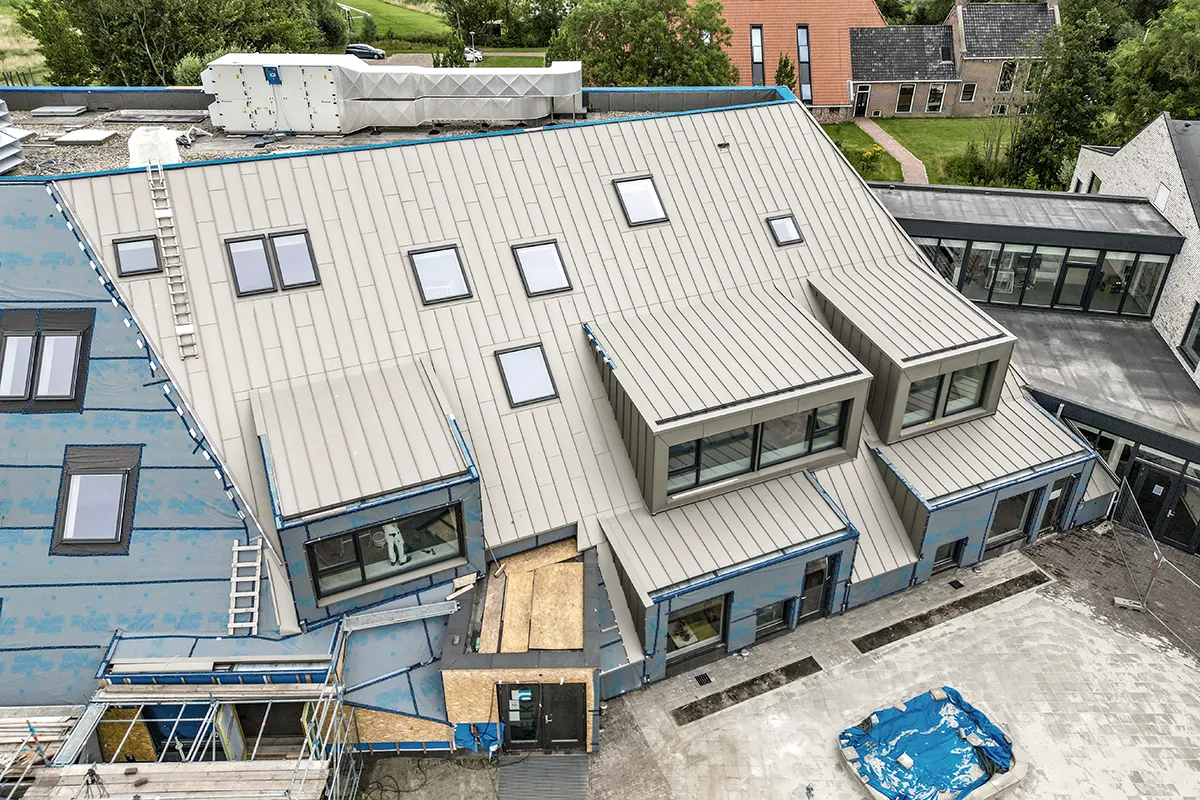
Bouwbedrijf De Vries from Leeuwarden contacted Ridder in mid-2024. “They were not very familiar with standing-seam technique and were looking for suitable advice, confidence and certainty,” says Reek. “Together, we discussed the roof build-up and all the details, and reached an agreement fairly quickly. The contractor would first complete the new build and then strip the entire roof from the existing building, so we could start installing the new roof in early 2025. The leaks had caused considerable damage to the supporting structure, more than expected. As a result, the contractor had to replace far more roof sheeting than planned, and we could not start until April 2025.” Ridder is installing around 1,800 m2 of aluminium standing-seam panels, with a cover width of 430 mm, on the roof and part of the façade. “There is another 200 m2 in total to go on the side cheeks of the 20 dormers. We also have to neatly integrate those 58 roof windows and make them watertight. This is where the major advantage of traditional standing-seam technique comes into its own. It is not rigid and can be folded very effectively, allowing for a watertight, high-quality finish.”
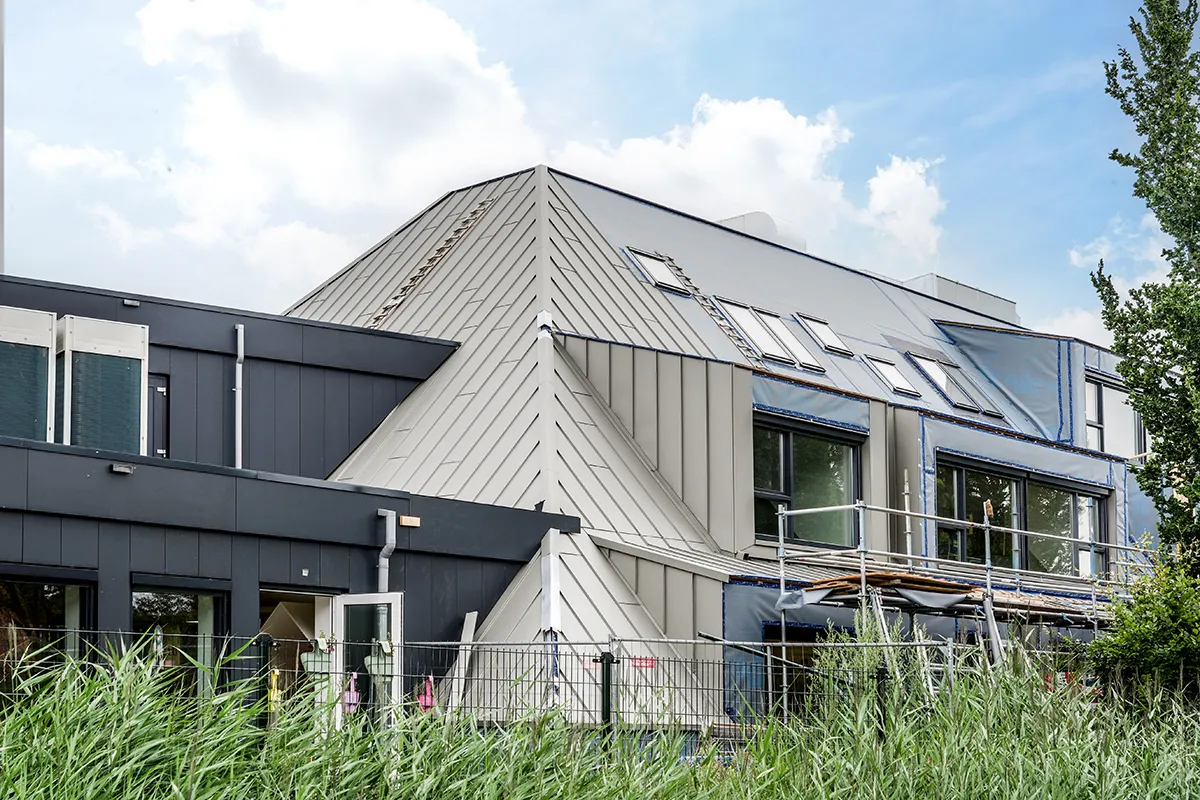
Reek expects to install the final standing-seam panels in autumn 2025, leaving both the stelp farmhouse and the new front section with a watertight roof at last. “As well as being functional, the new roof in PREFA’s elegant bronze colour is simply beautiful to look at. It really is a gem in the north,” says Reek.
A business enquiry for PREFA? Get in touch
Who worked on it
IKC de Pionier in Leeuwarden
- aluminium felsdak
 PREFA
- felstechniekRidder Skins for Buildings
- contractorBouwbedrijf De Vries
Keep following this
Get an email when a new story is published. No account needed.
- ProjectIKC de Pionier
- SubjectGeneral
- CompanyPREFA
- CompanyRidder Skins for Buildings
- CompanyBouwbedrijf De Vries







