








Energy-generating façade material
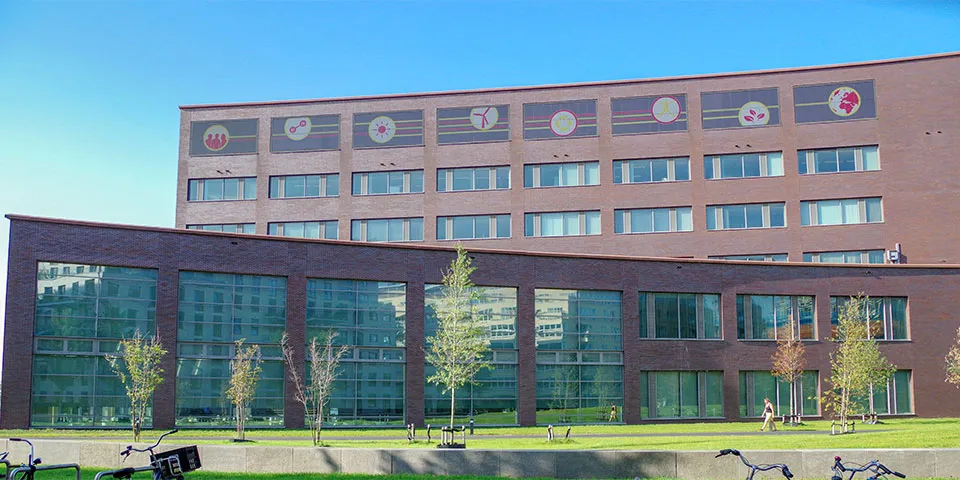
Two years ago, the Dutch Solar Design research consortium presented full-colour PV panels for the first time at Dutch Design Week in Eindhoven. This revolutionary façade material, with integrated solar cells, is the result of research into maximising energy generation while achieving high aesthetic quality. Several projects have since been completed using this energy-generating façade material, including the STCA in Amsterdam.
With BENG on the horizon, the roof area of a high-rise project, meaning one with more than five storeys, is no longer sufficient to meet the requirements for on-site energy generation. “Alternatives therefore need to be considered,” says Frank Frumau of Aldowa Green, one of the partners in the Dutch Solar Design research consortium. “The façade is a serious contender, especially now that these panels also meet aesthetic requirements. The panels combine a photovoltaic material that generates energy with an integrated full-colour visual, which can be designed by the architect or client.” The PV panels are manufactured by Solar Visuals, a company spun off from Dutch Solar Design.
Sustainability ambitions
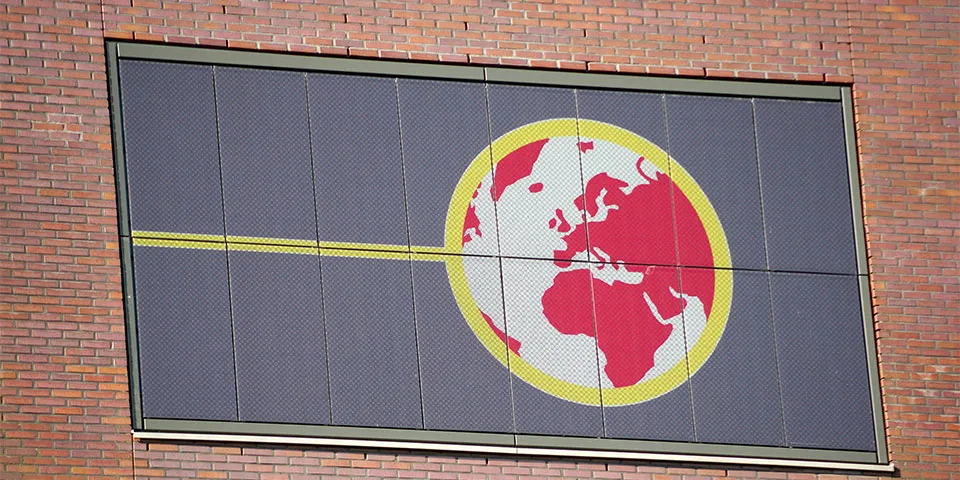
Following several enthusiastic responses, Aldowa Green and Solar Visuals carried out an initial pilot at the STCA in Amsterdam. “We decided to use the building’s louvred sections for this pilot,” explains Frumau. “Aldowa Green removed the existing louvres and fitted the resulting façade openings with full-colour PV panels from Solar Visuals. Aldowa Green equipped the PV panels with a frameless suspension system. The installation comprises eleven sections in total. Eight of the eleven sections feature full-colour pictograms supplied by the client, while the other three have a plain grey finish.”
Any size
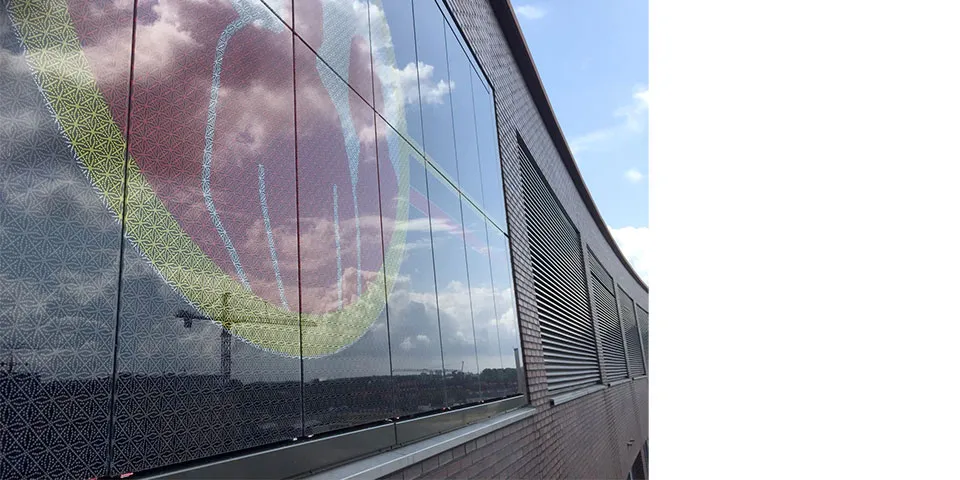
For this pilot, Aldowa Green was responsible for engineering, dismantling and installing the panels in the existing façade on site. Frumau says: “We have developed a technique for installing Solar Visuals’ glass-glass panels completely invisibly in the façade. We also take care of finishing the assembly and, where necessary, any additional folded sheet metal around the panels in a matching colour. This pilot comprises eleven sections with sixteen panels and one section with six panels. The full-colour panels themselves are factory-assembled in almost any required size. The optimum size is determined according to the façade layout and the dimensions of the cells. Angled panels are also possible. We always look for a strategic balance between maximum energy generation, optimum design quality and cost.”
Frumau says rooftop solar panels place a huge peak load on the electricity grid in the middle of the day. “Grid operators have a strong interest in flattening this peak. Solar panels in façades can make a valuable contribution. They generate less energy on a fine summer’s day, but more during the winter months, when the sun is low. Buildings need plenty of energy for their systems at precisely that time. Over the course of the year, the output curve for façade-mounted PV panels is much flatter and places less strain on the electricity grid than that of rooftop panels. Since they can be supplied in any colour, shape or pattern, I see a bright future for energy-generating façade material.”
Question about this story? Ask your question
Keep following this
Get an email when a new story is published. No account needed.
- SubjectGeneral







