








Hagemeister brick ranges increasingly used in prefabricated elements
Greater design freedom, sustainable and fast
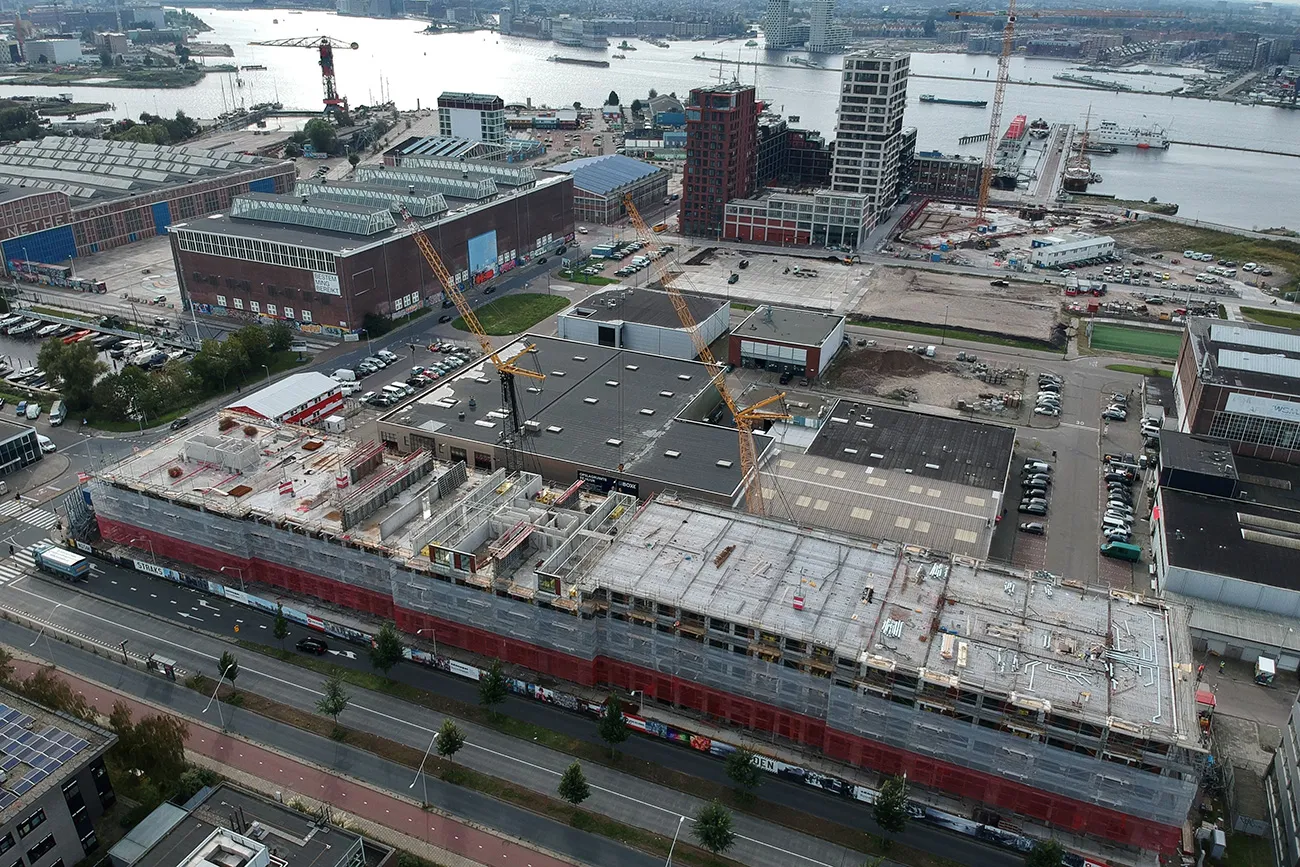
900 Mahler, Intermezzo, Xavier, Het Dok: as an alternative to traditional bricklaying, architects, clients and contractors are increasingly choosing Hagemeister brick ranges for prefabricated elements. The main reasons are greater design freedom, faster construction and façade sections of consistently high quality. Prefabrication also performs well in terms of nitrogen requirements. At the Het Dok residential building in Amsterdam, the ready-made façade elements with Hagemeister brick slips were supplied by Hibex.
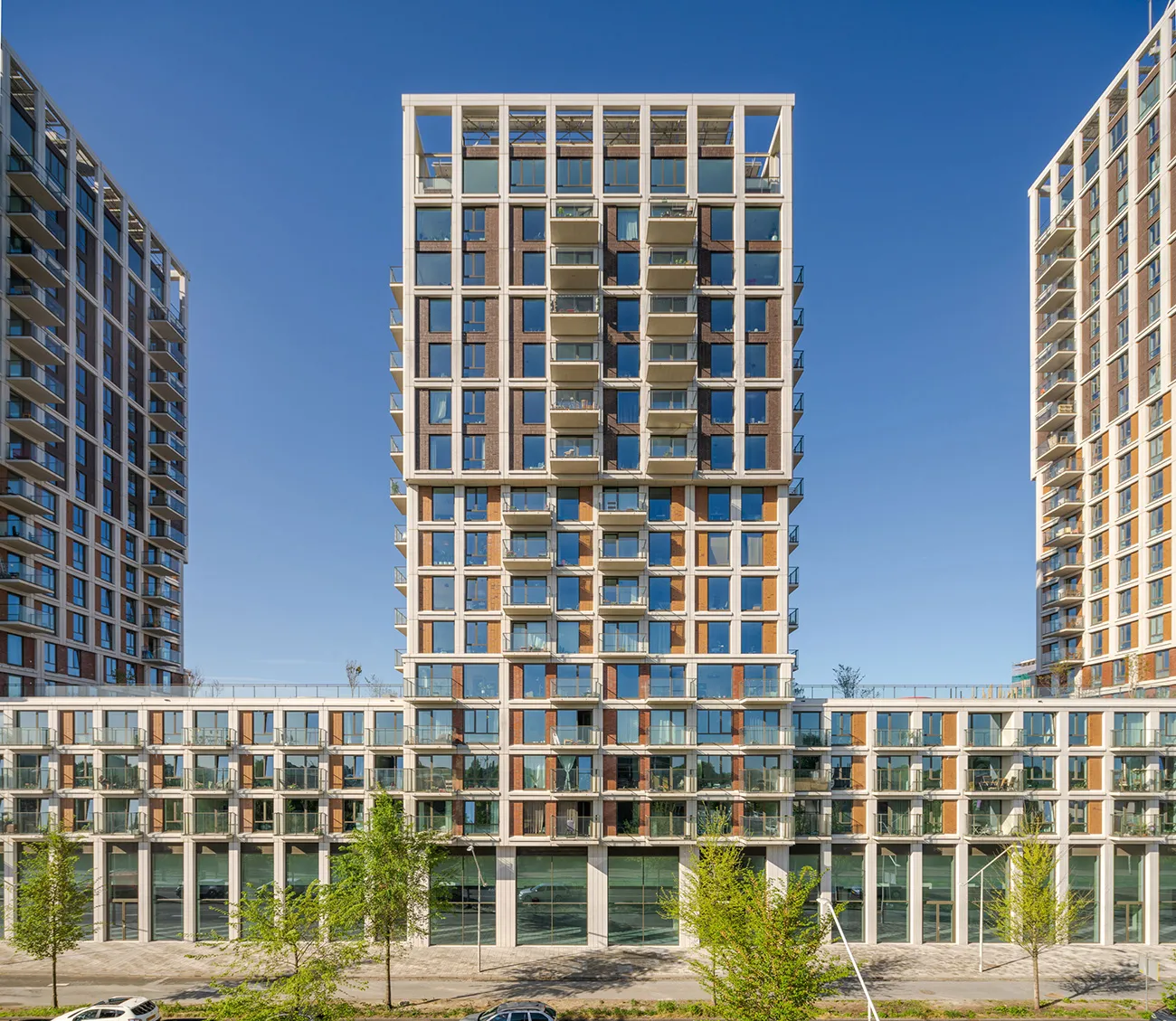
Het Dok in Buiksloterham comprises three towers on a broad base. The façades of the residential complex feature Waalformat brick slips in three Hagemeister ranges: the dark red Mühlheim GT/FUoS for the base, the yellow Gent GT/FUoS for the middle sections of the towers and the dark Liverpool GT/FUoS for the crowns. These three Hagemeister ranges are set within a repeating grid of prefabricated elements. The grid and brickwork give the building a sense of unity and a human scale. They also refer to the industrial past of the site in Amsterdam Noord.
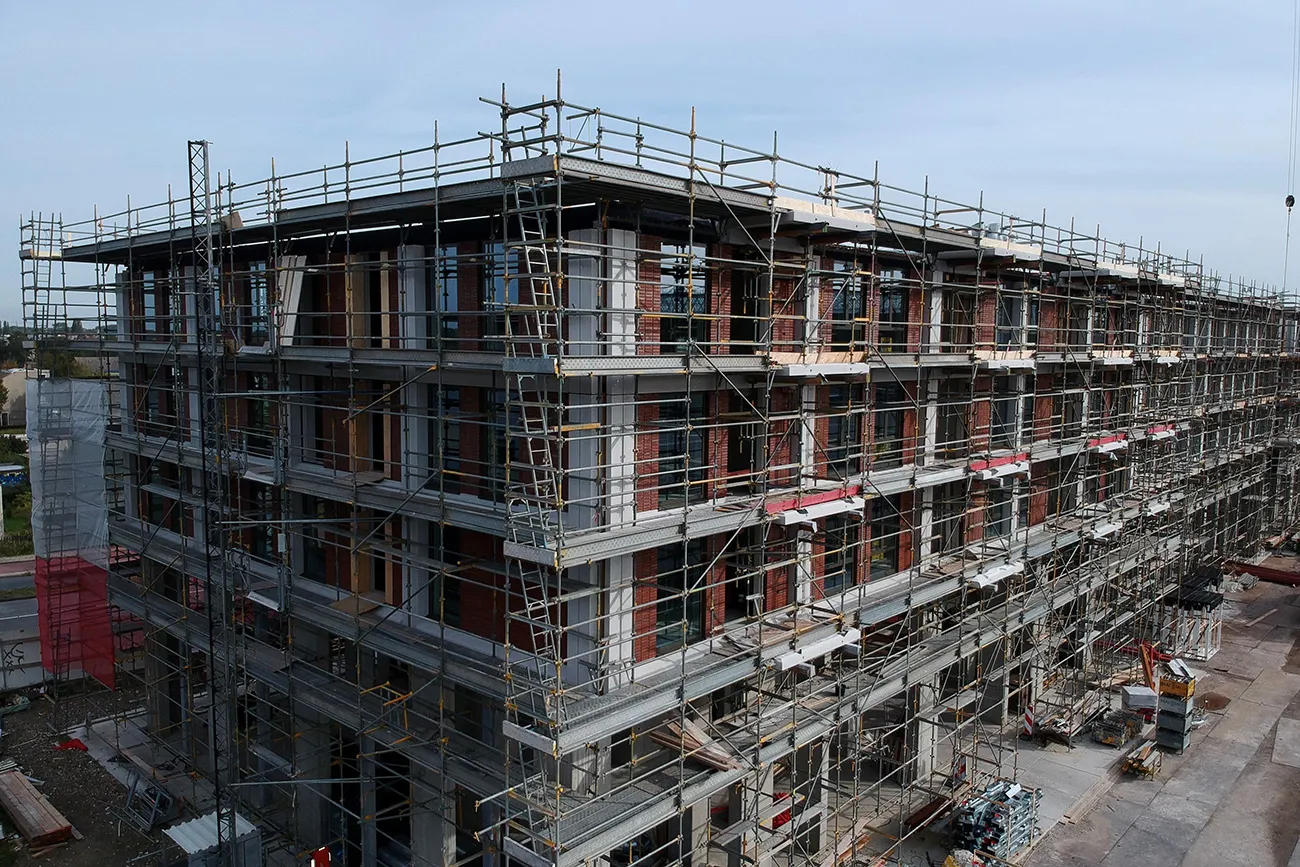
Groningen-based prefabrication specialist Hibex supplied more than nine hundred sandwich elements with brick slips, 130 single-leaf elements with brick slips for the tower crowns and four hundred other architectural elements for the design by de Architekten Cie.
Project architect Hans Hammink of de Architekten Cie. designed the façades of Het Dok with two scenarios in mind: “The façades were designed for prefabrication, while keeping in mind that we could always switch to traditional construction. We knew that Hagemeister also supplies brick slips. Prefabrication was therefore an option, but so was traditional construction using full bricks.”
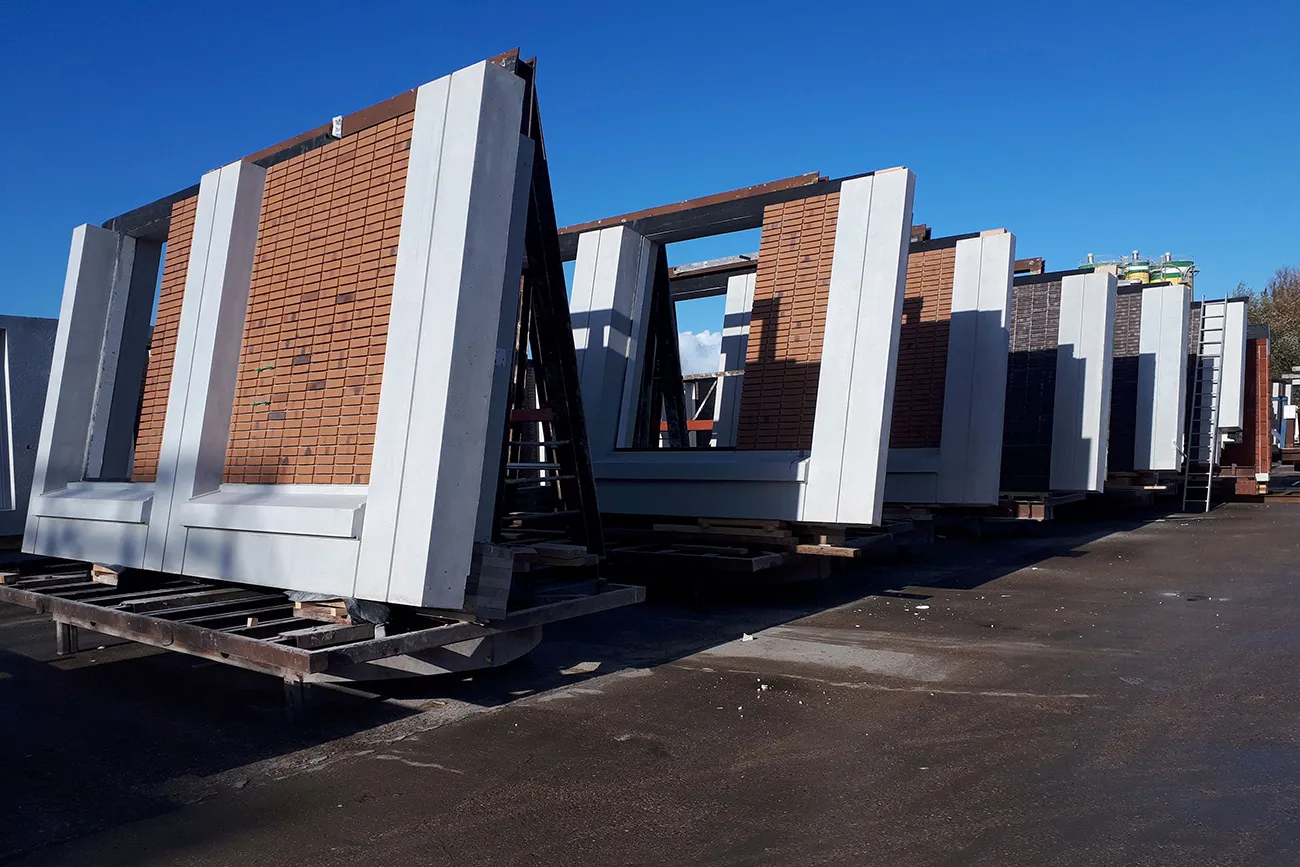
The prefabricated elements for Het Dok were made using bespoke wooden moulds. Hibex works to project-specific requirements and does not use standard moulds. The wooden moulds for Het Dok were fitted with raised panels for the brickwork, each with a milled recess for an individual brick, in this case in a stretcher bond pattern.
Hans Hammink: “There is no need for pointing afterwards. The recessed joint in the prefabricated element creates strong shadow effects and expressive façades at Het Dok.”
Hibex regularly incorporates Hagemeister bricks into its prefabricated elements. Hibex managing director Michael Hermes says: “We often produce façade elements for prestigious architectural projects. The choice is generally a brick with the right appearance and quality. Hagemeister’s ranges are an obvious choice.”
The use of prefabricated elements with brickwork has grown in recent years. Hermes has seen the same growth at Hibex: “Concrete prefabricated products with brickwork are now accepted in the market. Architects are familiar with them and are keen to explore the limits of what can be achieved with brickwork in prefabricated elements. There is considerable freedom in terms of form.”
Contractors also see the benefits. Hermes says: “You can erect prefabricated elements incredibly quickly. With a crane and a five-person team, you can put up an entire project in a short time. There are many projects in inner-city areas in the Netherlands, and prefabrication pays off there too. It makes logistics much easier. The prefabricated sections are delivered quickly by lorries that leave the site again straight away.”
The engineering can still be challenging, Hermes says: “With prefabrication, decisions have to be brought forward in the design process. Chasing channels for electrical wiring and other services can no longer be done on site. The location of the kitchen, for example, needs to be clear at the design stage.”
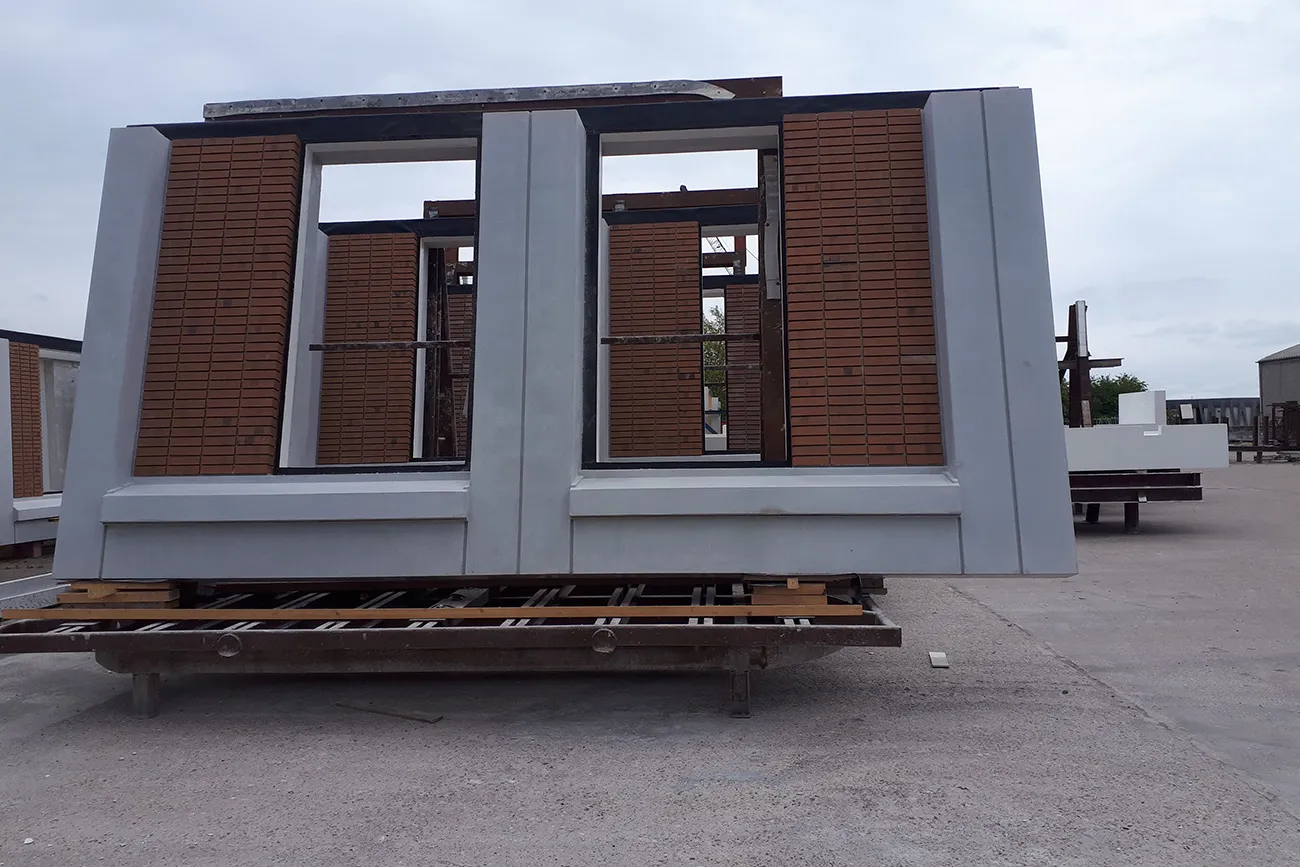
Prefabricated construction also performs well in terms of environmental requirements and in the debate on nitrogen emissions. The nitrogen requirement relates to emissions at the construction site. Hermes says: “With prefabrication, emissions on site are limited to transporting the prefabricated sections and operating the crane. Emissions from manufacturing the elements occur elsewhere.”
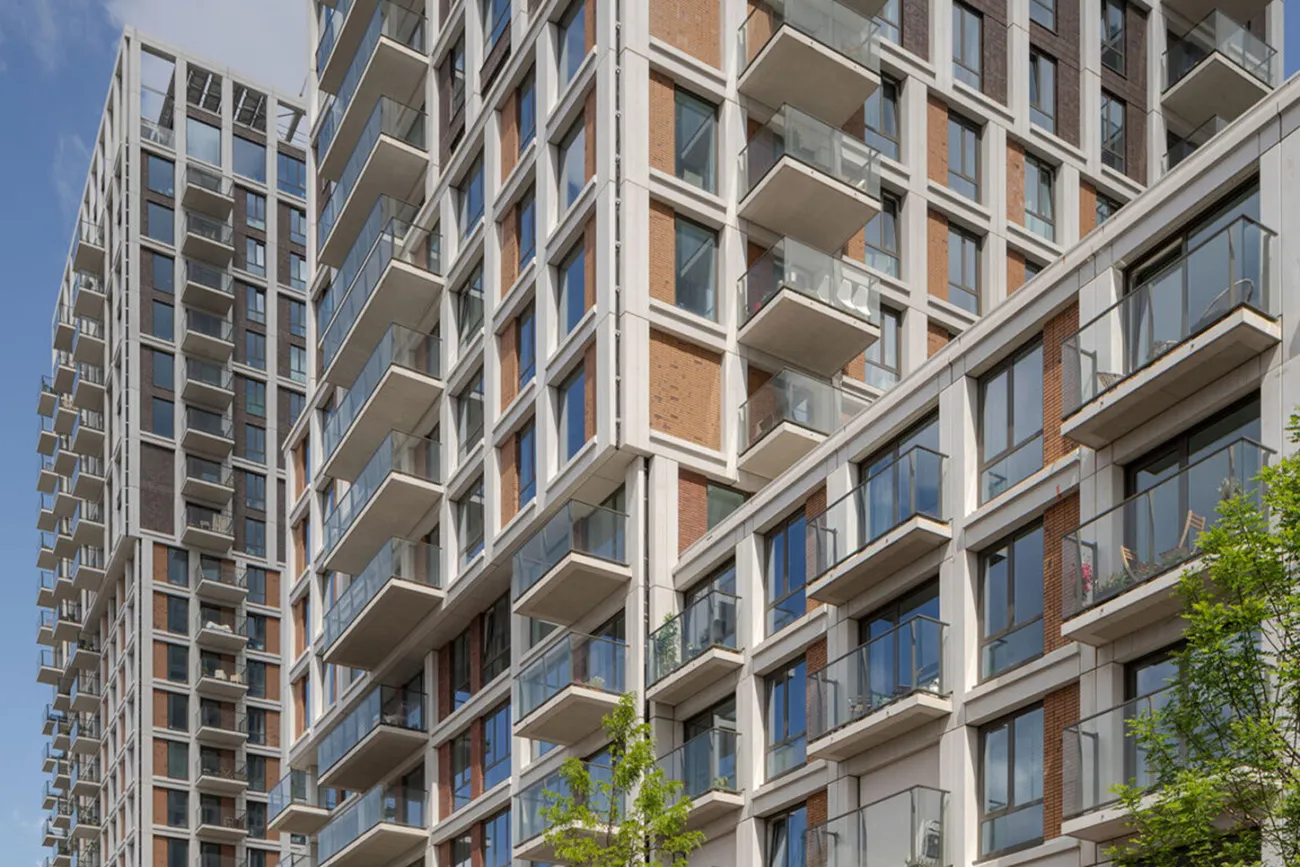
In recent years, brick manufacturer Hagemeister has combined the design freedom of prefabricated façade elements with bespoke ceramics on numerous projects. Hagemeister supplied bespoke products for large-scale residential developments such as 900 Mahler, Intermezzo and Xavier in Amsterdam-Zuidas. It also translated the rich ornamentation, patterns and reliefs envisaged by the architect into bespoke prefabricated elements for smaller-scale residential projects such as Loungekwartier, designed by Heren 5, in Leidsche Rijn. Het Dok is the latest addition to this portfolio.
Project details
Client: COD
Architecture: de Architekten Cie.
Partners: Pero Puljiz, Erik Vrieling
Project architect: Hans Hammink
Design team: Rink Alberda, Niels Mulder, Boris van Gorkom, René Bos, Klaas Reinder Sluijs, Marco Keijzer, Ron Garritsen, Jolein Haeck, Boukje Bugel, Niels Geerts
Main contractor: Van Wijnen
Prefabricated sections: Hibex, Groningen
Brick: Mühlheim GT/FUoS; Gent GT/FUoS; Liverpool GT/FUoS
Format: WF (brick slips on precast concrete elements)
Brick-clad façade area: approx. 4,500 m²
Question about this story? Ask your question
Keep following this
Get an email when a new story is published. No account needed.
- ThemeFrom facade model to production
- SubjectGeneral







