








Intelligent solutions for connecting building components
Text Lieke BousemaImage Schöck
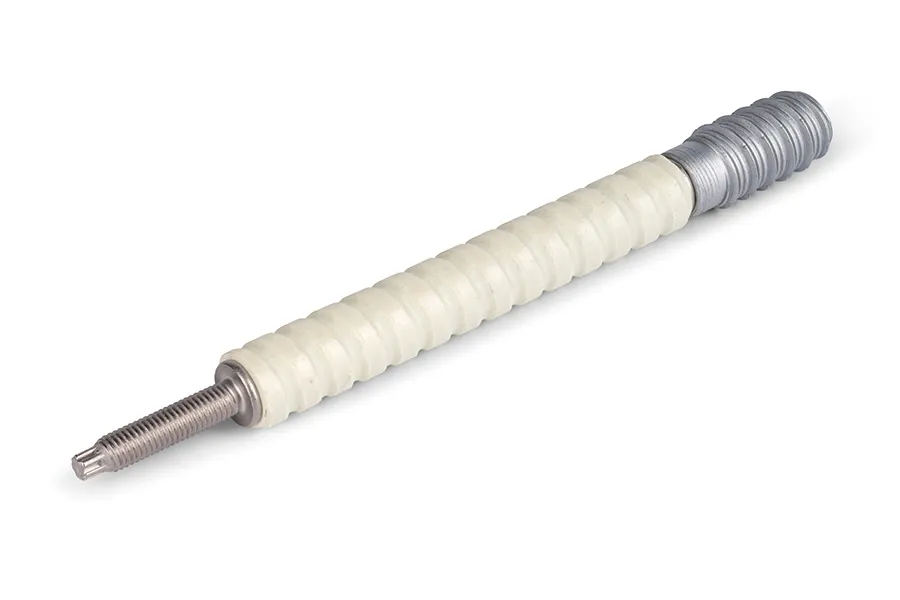
Schöck is the specialist in high-quality connection components for structural, load-bearing and construction applications. Its products range from thermal and acoustic insulation to anchoring and reinforcement technology. Particularly popular in its range are glass fibre-reinforced polymer (GFRP) rods, which combine a number of unique properties.
“Glass fibre-reinforced polymer is corrosion-resistant, non-magnetic, easy to machine and electrically non-conductive,” says Michiel Rietveld, International Account Manager Isolink & Combar at Schöck Nederland b.v. “The material also has a high tensile strength of >1,000 N/mm2 and very low thermal conductivity of 0.7 W/mK. Glass fibre-reinforced polymer is also 3.5 times lighter than steel, offering significant benefits on large projects.” These properties make a positive contribution to Schöck’s mission to make construction cleaner, more efficient and more sustainable. To continue meeting strong market demand, Schöck’s glass fibre composite rods have been manufactured at its new plant in Halle (DE) since 2020.
Slimmer and cleaner
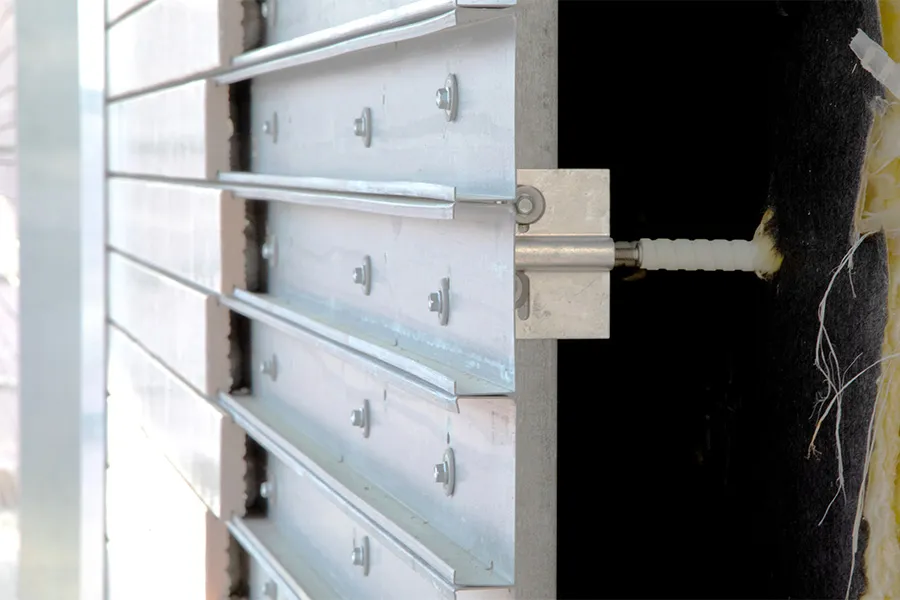
Schöck’s glass fibre composite rods are used, among other applications, for reinforcement (Combar), sandwich panel anchoring (Isolink C) and façade anchoring (Isolink F). “Thanks to Isolink’s low thermal conductivity, a façade can be built up to 50% slimmer,” Michiel emphasises. “Without any loss of insulation performance. This results in high-quality insulated walls and façades that are not only exceptionally thin, but also significantly cleaner for the environment. Research has now shown that using this material can save as much as 15-25% in CO2 emissions.”
Thermally and structurally connected
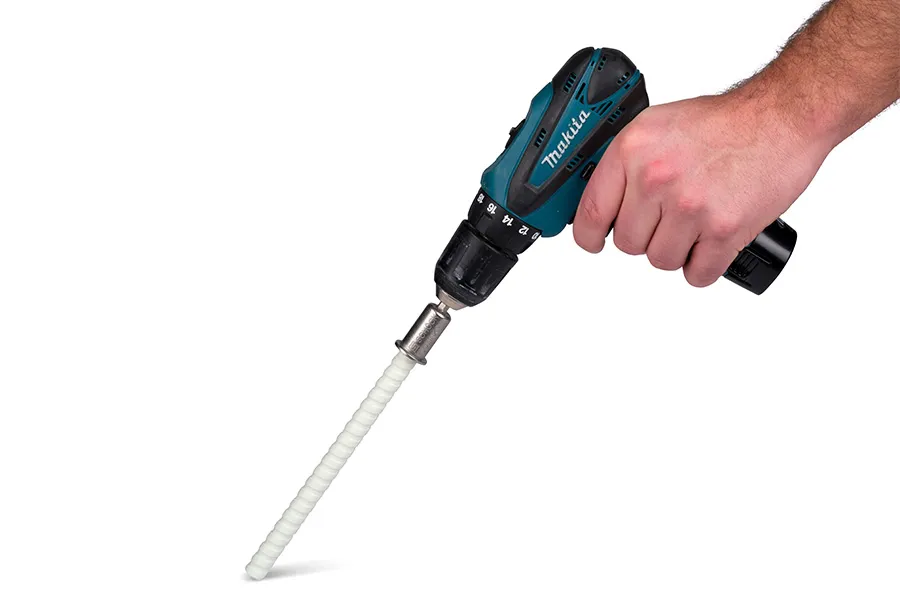
Another advantage of using Isolink for connections is that the absence of thermal bridges prevents condensation from forming, Michiel explains. “This prevents mould growth. Over the past two years, we have made significant progress in developing both Isolink products. For façade anchoring, for example, we have developed a dry, screw-fixed installation method that is particularly well suited to renovating and retrofitting insulation to façades in existing buildings. For Isolink C sandwich panel anchoring, we have simplified the installation of the anchors with the introduction of the Screwtool. This means there is no longer any need to pre-drill the insulation.”
Landmark projects
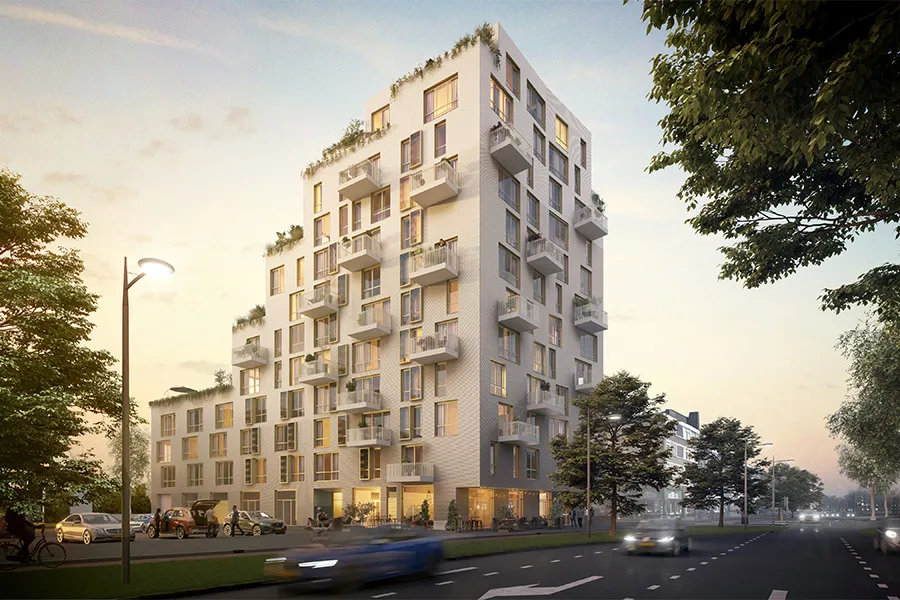
In 2023, Isolink sandwich panel and façade anchors were used in several landmark projects. Michiel cites the Porseleinen Hof project in Delft, where the entire porcelain façade was anchored to the substructure without thermal bridges, in collaboration with Leebo Intelligente Bouwsystemen and using the Schöck Isolink F system. “Overhoeks building De Jakoba in Amsterdam is also impressive, and we supplied our Isolink C sandwich panel anchors for the project. Our glass fibre composite rods were also used to connect the special aesthetic elements to the building. Both projects are a perfect fit with our motto: our innovative connections ensure that every project is connected to the highest standards, both thermally and structurally.”
Question about this story? Ask your question
Companies in this story
Keep following this
Get an email when a new story is published. No account needed.
- SubjectGeneral
- CompanyLeebo Intelligente Bouwsystemen







