








Living LAB 040: A glimpse into the future
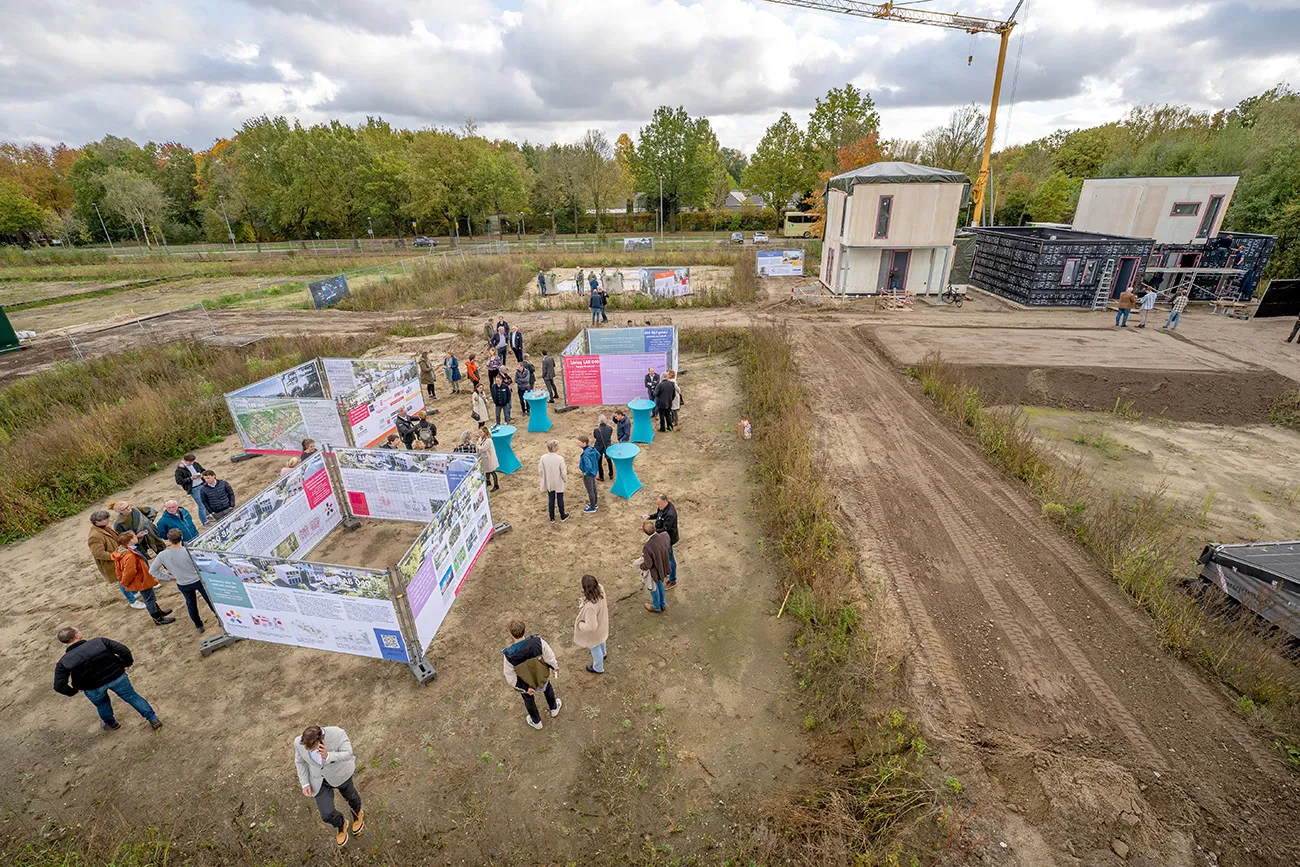
At the beginning of 2021, I told Gevelbouw readers about the establishment of a Living LAB 040 in Eindhoven. The LAB has since opened, and the first experimental homes are taking shape. Various experiments are also planned for the coming period. This article looks at how the LAB, together with all the knowledge surrounding it, can help drive innovation forward quickly.
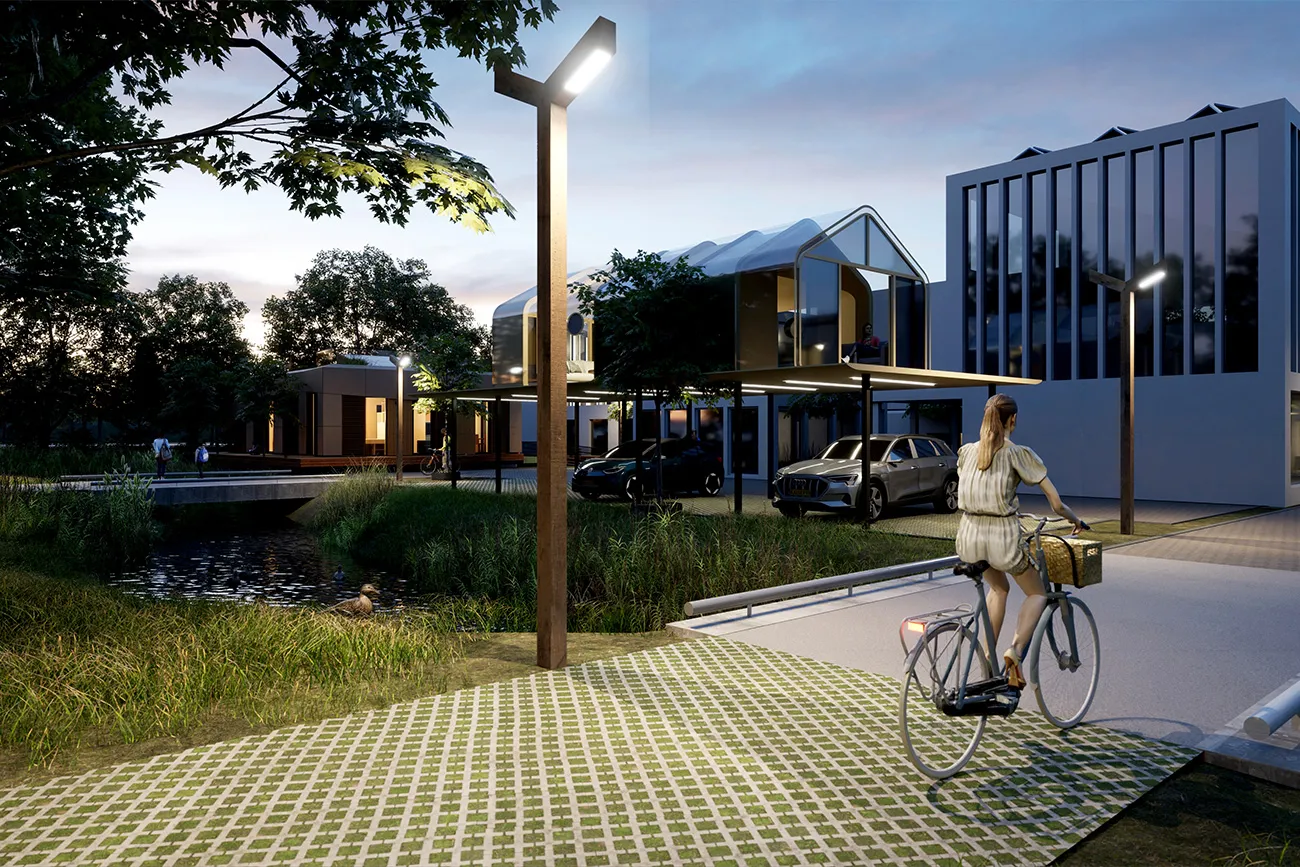
Innovation is fun
‘Standing still means going backwards’ is a familiar saying. That is certainly true in the turbulent times we live in, with major changes in the market and society. Less than 50 years ago, change happened so slowly that the difference between today and tomorrow was minimal. Innovation could be postponed without consequences. Things are very different now. Running a business passively can even be described as life-threatening. Many companies are therefore shifting into action mode. All too often, an emerging threat is the main reason for looking for innovation.
It is much more interesting, enjoyable and profitable to see social and market trends as a field of opportunities. For many people with a limited role in the construction supply chain, that can be challenging, and you may need a little outside help to map those opportunities. If you have spent years developing routines within your position in the supply chain, it is not easy to identify new opportunities from a broader perspective. This certainly applies to façade construction too. You will find that an opportunity-focused approach can breathe new life into your business. That provides a new basis for enthusiasm across the company, and therefore for future success.
The idea
The founders of Living LAB 040, Monique Donker and I, come from the field of construction innovation. For the social enterprise LL040 BV, which we established, we set out to accelerate innovation. The ultimate aim is tangible success and impact in the market. We do this by taking the initiative, providing support, making connections, bringing companies, knowledge institutions and government together, and offering facilities, among other things. The Living LAB is therefore not only a place for hands-on experimentation, but also a platform organisation for debate, where suppliers of building systems, building elements and components spur one another on to achieve great things. It is also where, together with forward thinkers, we develop a vision for the city of tomorrow. This vision then provides a basis for shaping the future and securing the long-term viability of the many companies involved. And if anyone gets stuck, help is always close at hand. That is the essence of the concept behind Living LAB 040.
Pilots and demos
One important thing that is missing when companies try to innovate in an integrated way is the opportunity to experiment under realistic conditions. With housing concepts, utilities such as energy, green spaces, building elements and components. Companies find it difficult to get innovation off the ground, as well as to move towards implementation responsibly and gradually. The construction industry is not familiar with the pilot project. Projects are always standard commercial ones, where mistakes are not allowed, which severely impedes innovation. The Living LAB is a protected environment where mistakes are allowed. It is a place for pilot and demonstration projects, and a pleasant environment is also created for residents. After all, it is a Living LAB. This is possible because residents have close ties with the LAB. They are drawn from a group of prospective residents who understand what it means to live in a laboratory. They also form the ‘Citizens’ Think Tank’, an important LAB initiative where new ideas are assessed in advance and residents can come up with creative solutions of their own, which are valuable to suppliers and other stakeholders.
The projects
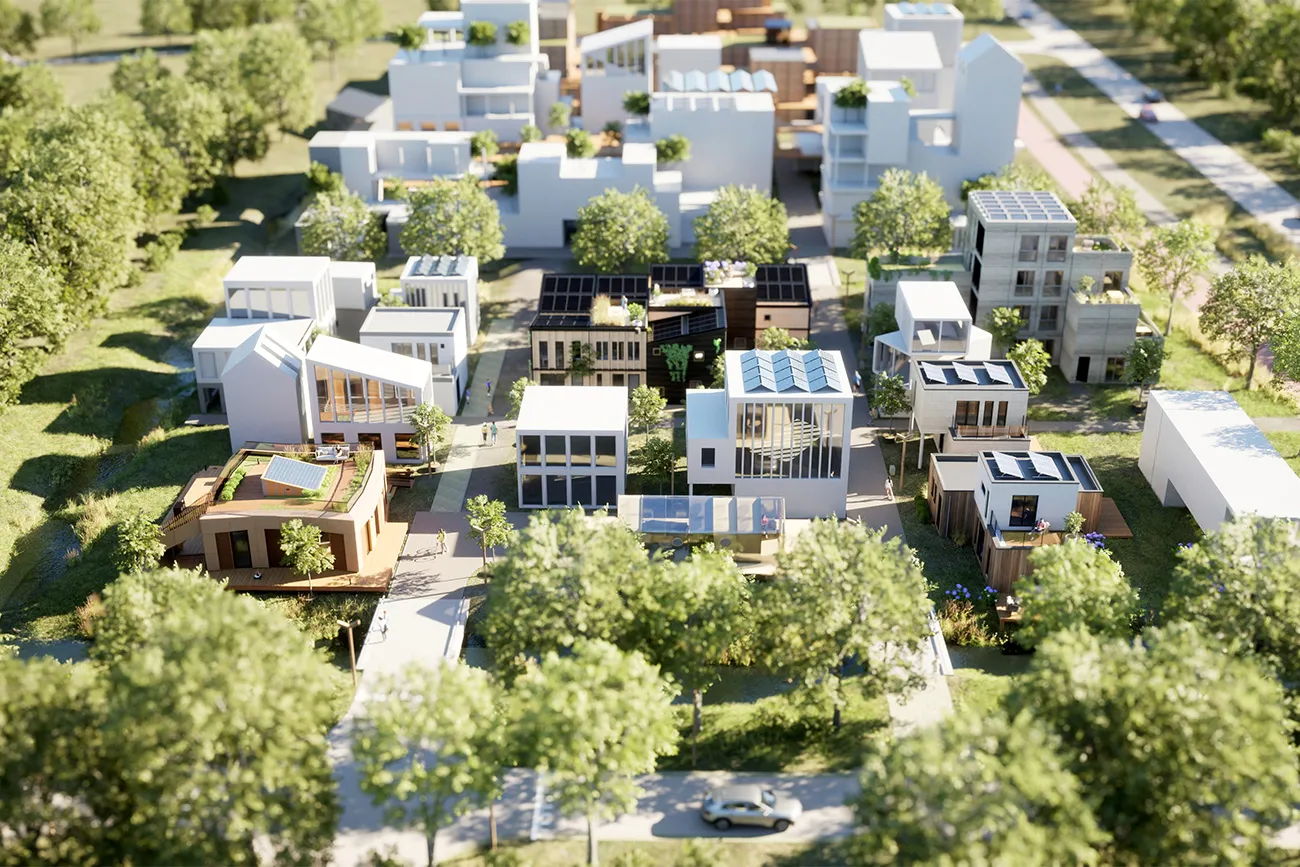
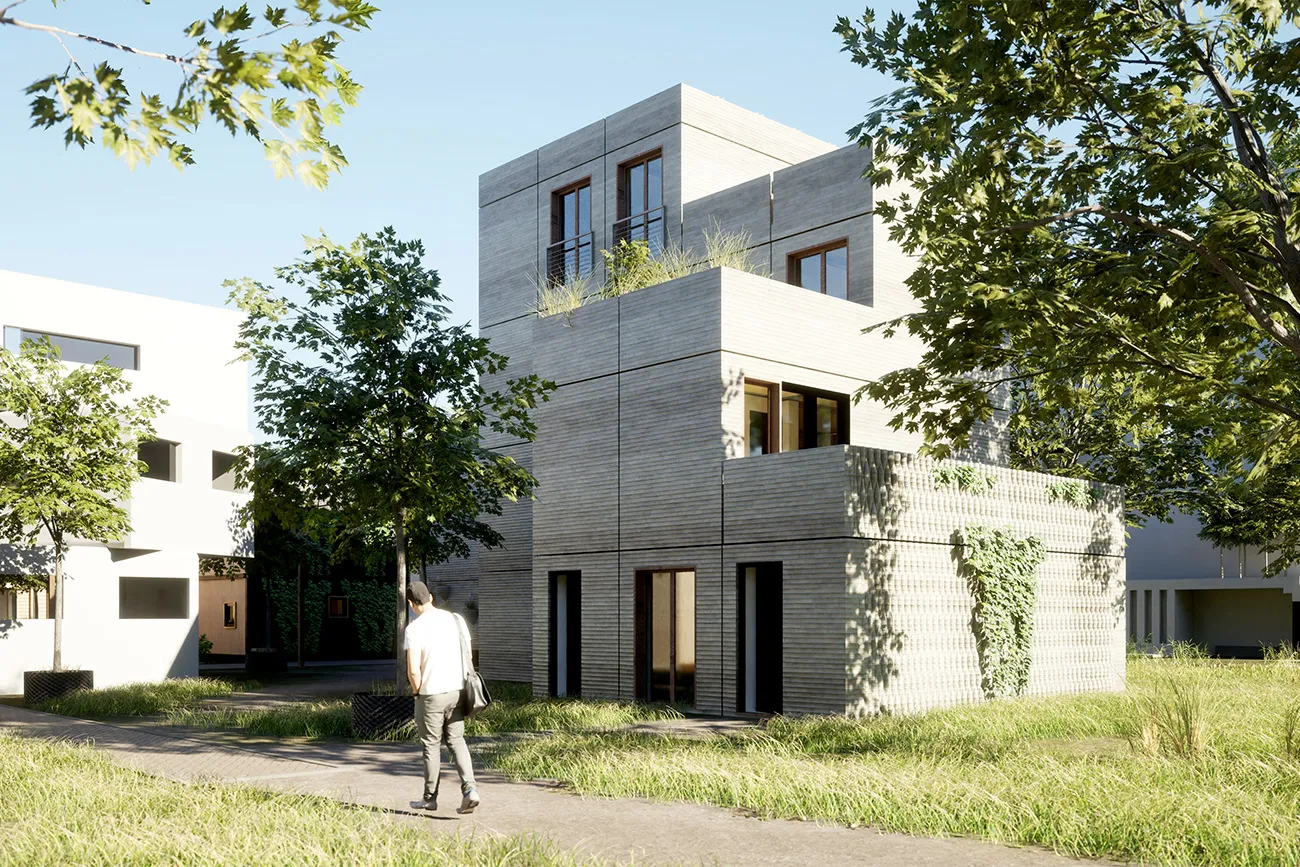
The LAB has got underway with several suppliers, each delivering a small cluster of homes. Their primary aim in building at the LAB is to learn. This is not a property business case, nor could it be, as the LAB has a finite lifespan of 15 years. These are initiatives by entrepreneurs who have developed a response to the needs of tomorrow and want to gather residents’ experiences at the LAB. They also have specific innovation agendas, covering areas such as energy, water cycles, rooftop use, materials, resident acceptance, financing and housing models. For now, Ferlem, Team VIRTUe and CyBe will deliver the first ten homes over the next few months. Discussions are already under way with the next companies looking to join, and the LAB will fill up with almost 120 homes over roughly two years. We are also developing innovations at building-element and component level. Companies such as Velux, ENS and Duco are involved in this way. Here, we work to match companies and encourage collaboration.
The vision
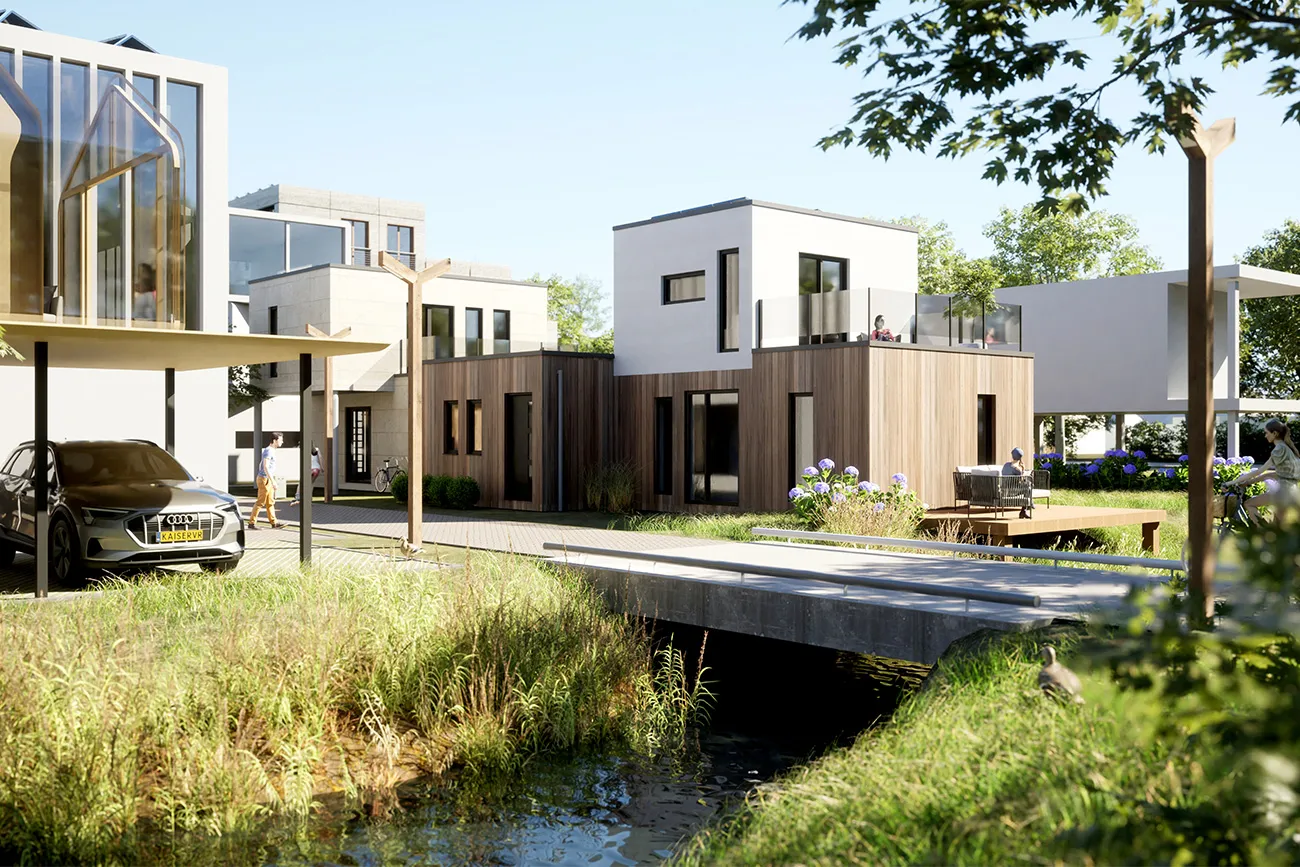
At the LAB, we welcome not only suppliers with ideas. We also initiate our own innovations, generally across suppliers, based on the visions that emerge from debate and research, and take a more active role in guiding them. We organise projects ourselves and invite interested companies to take part. Concrete ideas currently being developed include circular façades, a healthy living environment and multiple use of land. All of these topics raise interesting challenges for façades.
The direction of innovation is shaped by the aim of discovering or inventing the city of tomorrow. We know that this city will be denser, yet still a pleasant place to live. A city where people are more connected, where it is safe, the climate is pleasant and people are healthy; where people can get around without owning a car, and housing is affordable, among other things. The overall vision, which encompasses these themes, is structured around five innovation pillars.
We do all this with the many companies involved, the Municipality of Eindhoven, which has embraced the LAB, partners such as Amvest and Volksbank, knowledge institutions and, above all, the residents.
The research
The first structures are now appearing at the LAB, but research has been under way since the outset in March 2021. It all focuses on the compact city of tomorrow. This includes research into ownership in a compact city, drawing on examples from across Europe. We concluded that shared facilities such as a workshop, kitchen or guest room work well for groups of up to around 8 homes. Another area of research is energy supply and preventing congestion, so that grid upgrades are not needed and the associated disruption and costs can be avoided. At the LAB, this led to a grid that has also drastically shortened the time needed to obtain a connection. Another example is work with students, with TU/e and Fontys as partners, to develop and visualise future scenarios, translating the vision into images. And there is much more.
Together
As mentioned, the LAB is a place to experiment, but also a platform. A place where people meet who would not normally cross paths: manufacturers, designers, builders, local authorities, politicians, financiers, interior fit-out specialists, insurers, green-space specialists, visionaries, writers, people who inspire others, and so on. In short, it is an environment where inspiration and collaboration drive renewal and accelerate progress. LL040 aims to give leading innovators a platform, speed up innovation and bring others along at pace. The belief is that this is how we can shape the future ourselves.
Conclusion
See this article as an initial overview. We would be pleased to report on innovation news in this magazine, particularly where it relates to façades. There will certainly be plenty to report, as façades feature prominently at the LAB. Topics include circularity, the integration of functions and building services, industrial processes, façades as a service, and healthy living and working, among others. For now, we have only touched briefly on some of the many topics. To be continued.
By Jos Lichtenberg, Professor Emeritus of Construction Innovation at TU Eindhoven and, together with Monique Donker, initiator of Living LAB 040. For more information about the LAB or to get involved: info@livinglab040.com
Question about this story? Ask your question
Keep following this
Get an email when a new story is published. No account needed.
- SubjectGeneral







