An innovative window sill for a changing construction industry
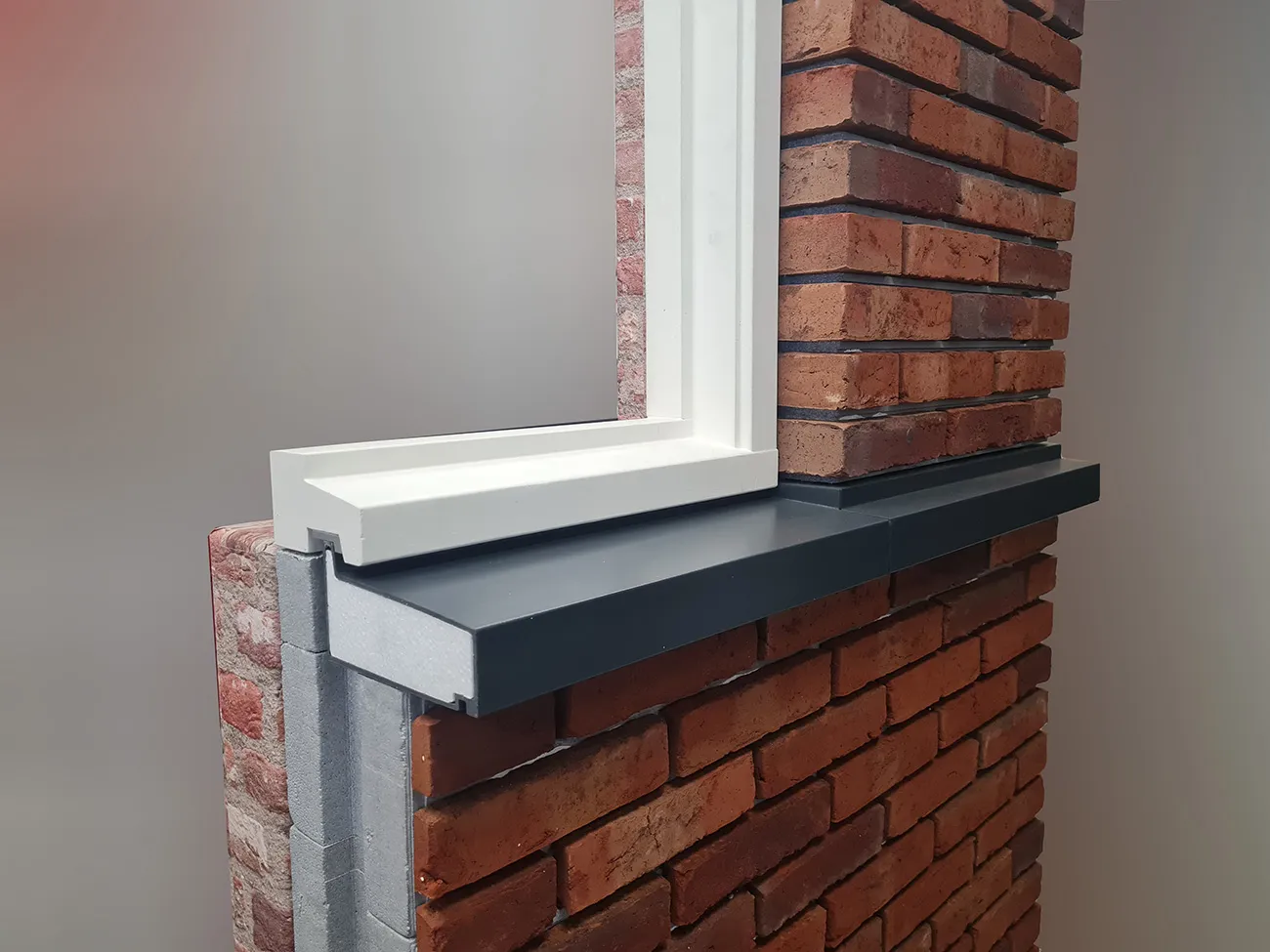
After more than half a century, the time has come: a completely new type of window sill is coming to market. It is a ground-breaking product, made not from stone or metal, but from glass. The ‘IsoSill’ window sill (registered trademark) addresses the long-standing problem of thermal bridging beneath windows in otherwise well-insulated façades. And there are more and more of these, as construction changes in response to climate change. Bart Tenbült, managing director and owner of Raamdorpelelementen BV in Bladel, believes it is high time his company responded with a suitable, intelligently designed product.
Window sills have been around for as long as window frames. They are generally made from heavy materials: ceramic, natural stone and concrete. Aluminium came next, followed, more than half a century ago, by Holoniet, a composite material. And that was that. There has been little development in this sector when it comes to the basic product. In the years that followed, Bart Tenbült watched his company grow and grow, but he also saw changes in the form and materials of the façades into which its window sill elements were installed. ‘Insulation’ was the keyword that prompted him to ask whether there might be a better solution to the almost inevitable thermal bridge in these well-insulated façades. After two years of grappling with existing window sills, he took a different approach: back to the drawing board, as it were, to design a completely new type of window sill from scratch, with optimum insulation and a thermal-bridge-free connection.
The search for solutions
It was this in-house bespoke production that gave Bart Tenbült his lightbulb moment. It was a case of thinking ‘outside the box’. As Bart had already said: “Construction is changing. Better-insulated façades are coming onto the market, with much thicker insulation layers and a finish of render or brick slips, and we are seeing a growing combination with timber construction. This means that a heavy window sill can no longer rest on a solid base such as the traditional outer leaf of brickwork. As an interim solution, we use metal angle brackets for support, but these create a significant thermal bridge, which runs counter to the façade’s required optimum insulation value.”
This marked the start of a years-long search. The innovative product had to be relatively easy to manufacture, made to measure, lightweight and producible in-house. And, of course, it had to meet the most important requirement: optimum insulation. That was the key factor behind choosing EPS for the core.
IsoSill: the insulating window sill
EPS is lightweight, load-bearing, easy to shape and offers a very high level of insulation, exactly the properties Bart was looking for in the new window sill. The innovative IsoSill window sill was born when it was then encased in GFRP (glass-fibre-reinforced plastic).
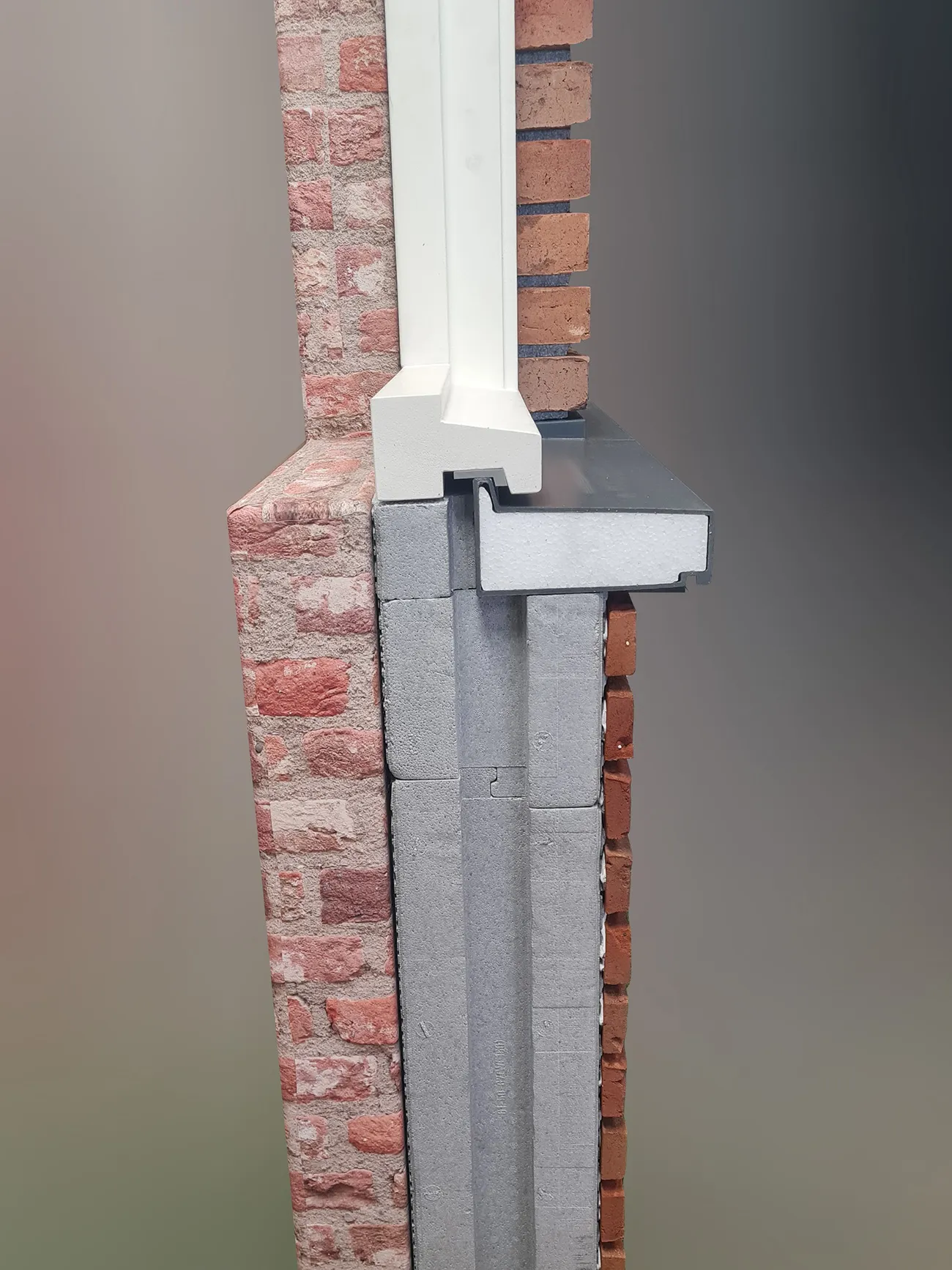
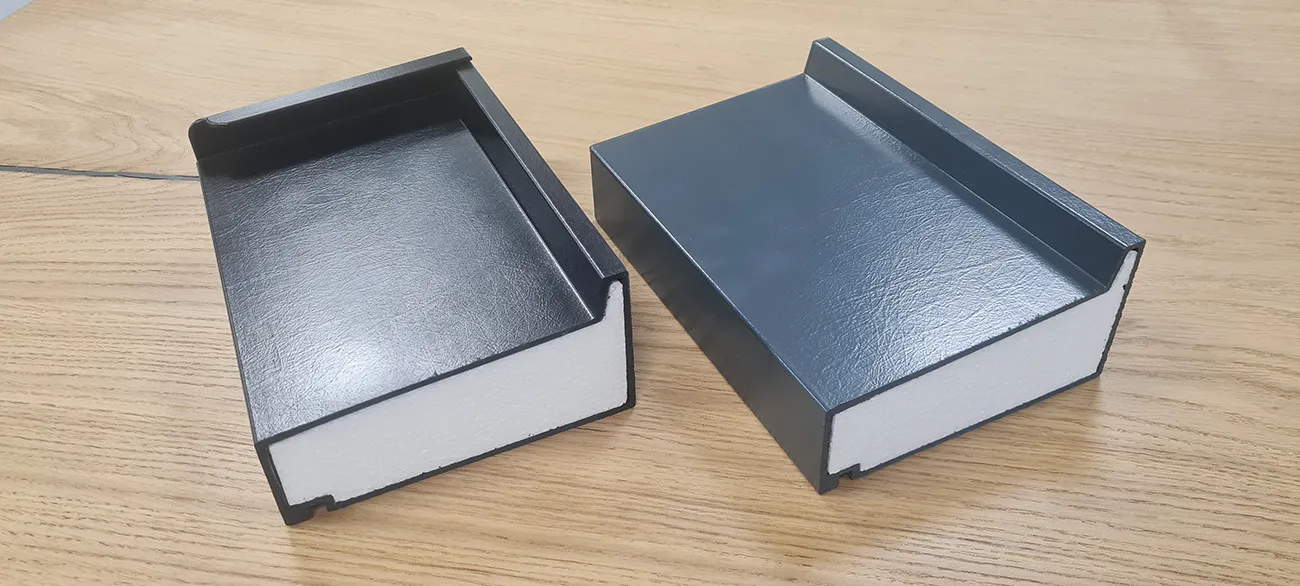
The EPS core is encased in a 3 mm-thick layer of glass fibre. This casing is insulating, strong and lightweight, as well as impact-resistant and easy to cut to size. According to Bart, these window sills are exceptionally strong and easy to repair if necessary. The maximum available length in a single piece is 3 metres, and several depth options will eventually be added to the current standard depth of 160 mm. The glass-fibre end caps are glued onto the ends, after which the made-to-measure window sills are finished with a two-component paint, spray-applied in the required colour.
At 3 kg per metre, these innovative window sills are many times lighter than ceramic, natural stone and concrete versions, bringing their own advantages. They are more sustainable to transport and can be installed on site in long lengths without lifting equipment. An IsoSill string course is also available to complement the window sill, so architects need not hold back in this respect.

Question about this story? Ask your question
Keep following this
Get an email when a new story is published. No account needed.
- SubjectProduct information