“Water-based coatings are the future!”
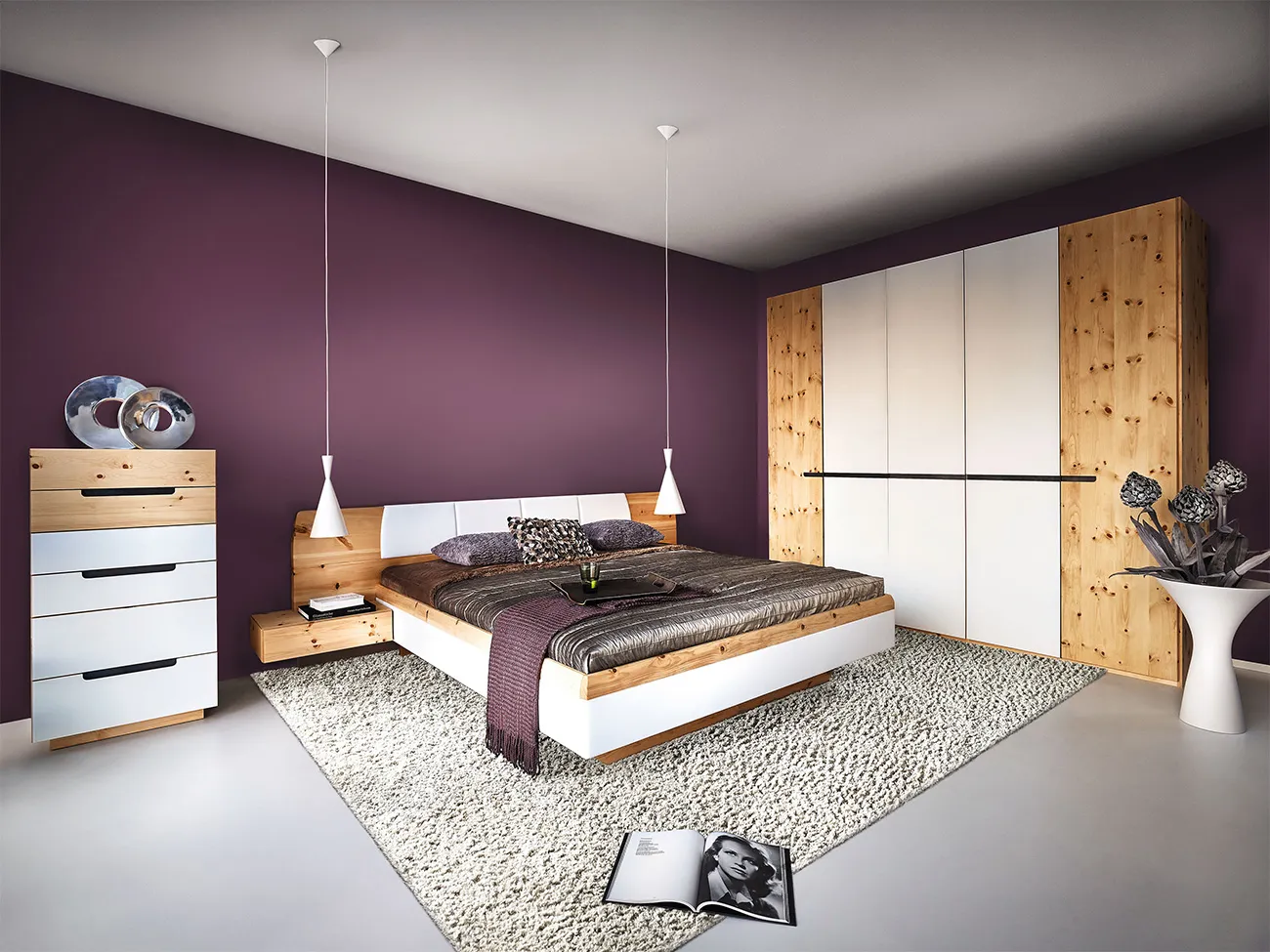
Water-based coatings are known to have low emissions and be environmentally friendly. But can they match solvent-based products in terms of surface quality and application? Anyone who takes a closer look at today’s water-based coatings will find that they certainly can, and in some respects even outperform them. In this interview, Leon Cremers, director of ADLER Benelux in Heeze, tells us more.
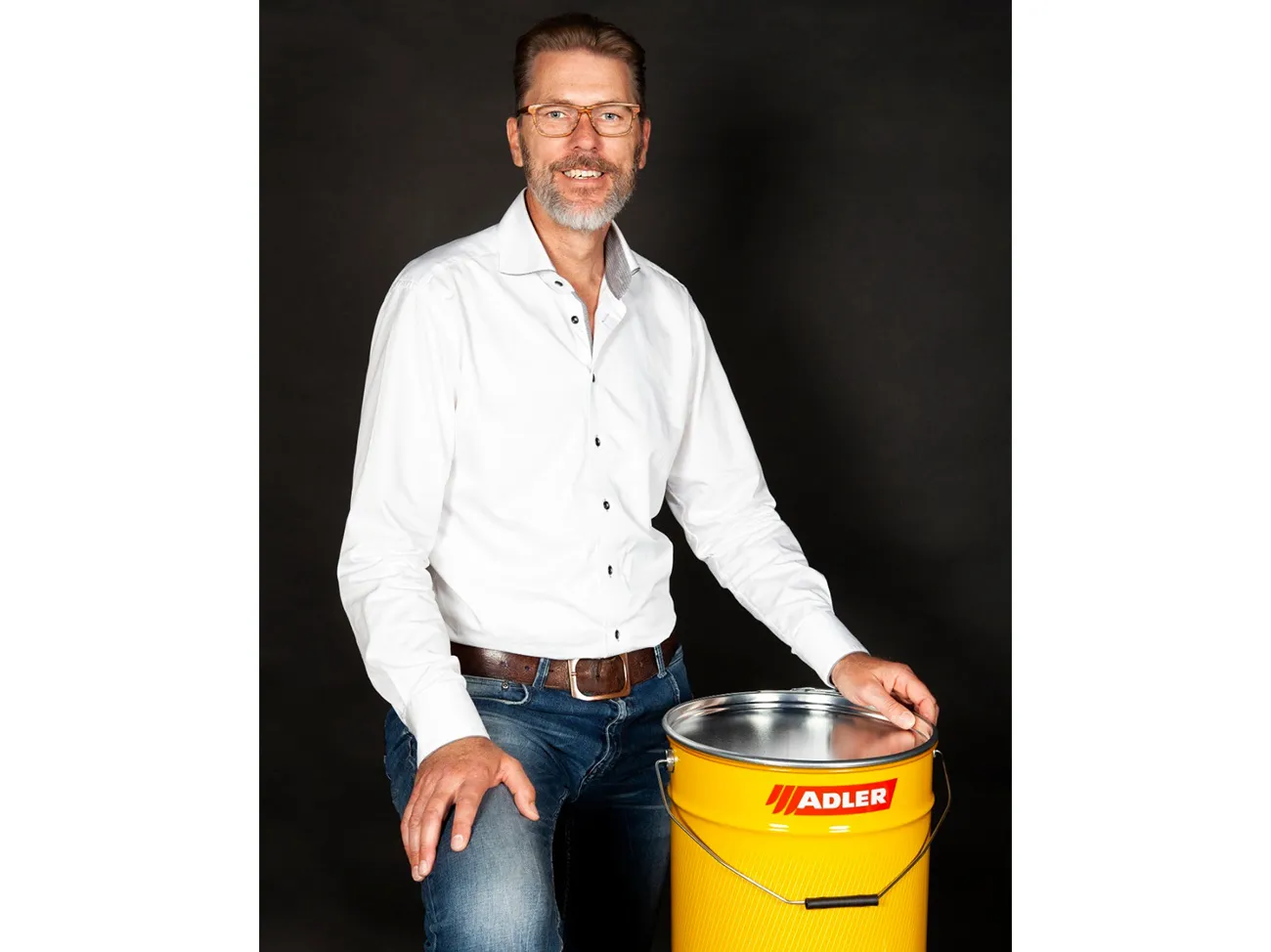
What are the advantages of water-based coatings over solvent-based coatings?
“Modern water-based coatings no longer have any disadvantages compared with solvent-based products, but they do offer decisive benefits! First, their low VOC content makes water-based coatings better for people and the environment. Many water-based coatings also consist largely of renewable raw materials. Water-based coatings also offer significant benefits for working conditions during application: there is no strong, unpleasant smell of solvents while coating, there is less fire risk and the health risks are lower, not least because hardeners containing isocyanates can be avoided. In addition, thinning coatings and cleaning equipment are much simpler, as both can simply be done with water. Disposal of coating residues, filters and cleaning materials is also far less complicated.”
“Water-based coatings also offer clear added value for customers. High-quality wooden furniture stands for sustainability and an environmentally friendly indoor climate. A water-based coating is the icing on the cake, so to speak.”
“All in all, the advantages of water-based coatings already outweigh the disadvantages, and this will only become more pronounced in the future. Legislation governing solvent-based products is likely to become stricter, while customer demand for ecological and sustainable products will also increase. Those who respond to this now and invest in environmentally friendly materials and processes will benefit.”
Is there a difference in quality between solvent-based and water-based coatings?
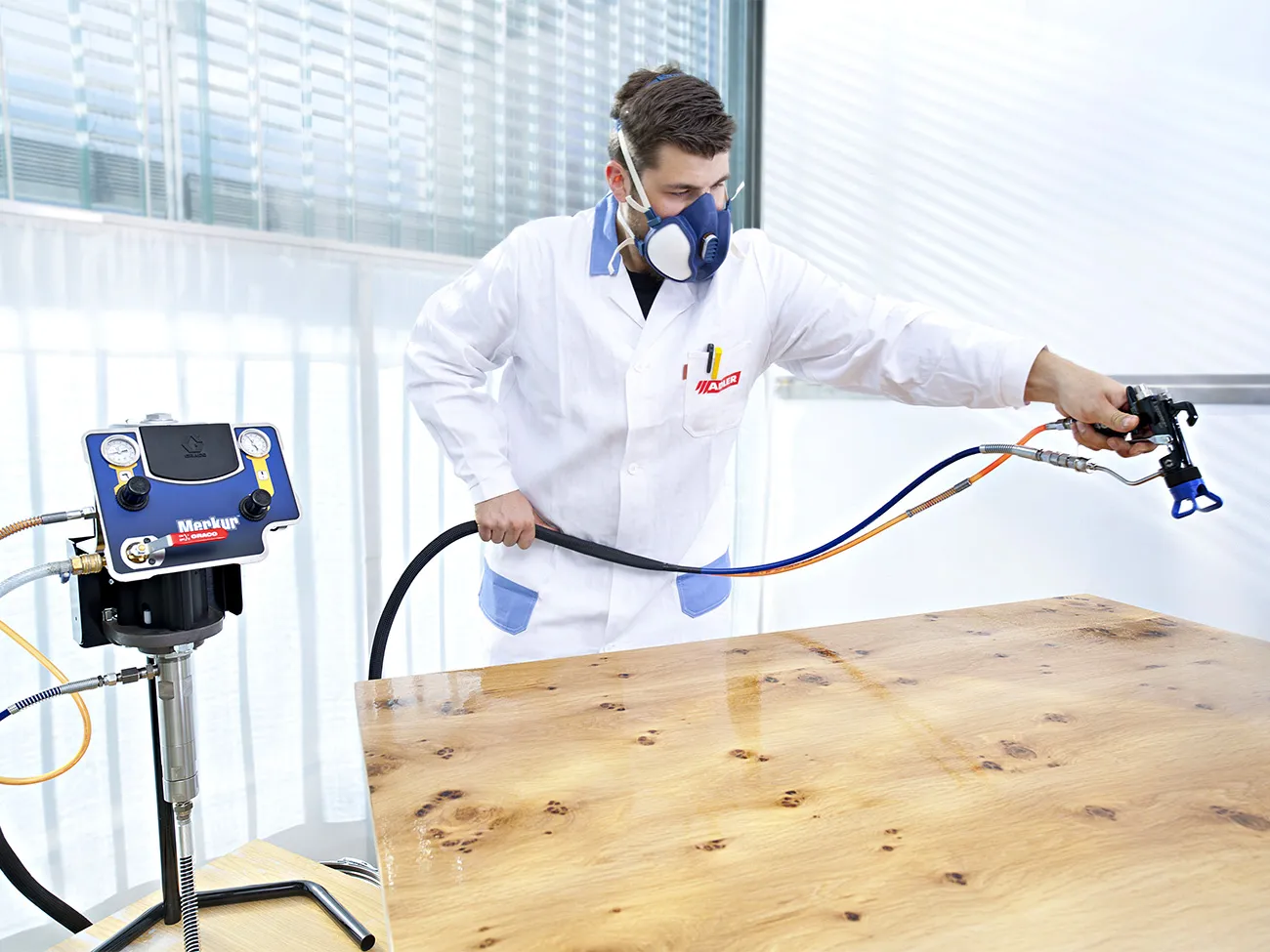
“There are still many misconceptions about water-based coatings: the surface is supposedly delicate, application is difficult, the coating dries slowly… Perhaps that was true in the past, but it has not been the case for a long time. Modern water-based coatings achieve the same chemical and mechanical resistance as solvent-based products, and in some cases, such as our ADLER Bluefin Resist furniture coating, do so without the addition of hardeners. This is because solvent-based coatings are often applied as 2K products. Water-based coatings are much more flexible: often one and the same product can be applied as both a 1K and a 2K coating.”
“Modern water-based coatings have also caught up in terms of drying speed. For example, ADLER’s universal furniture coating Bluefin Unistar can be sanded after just one to two hours and stacked after drying overnight. And when conditions are right, ideally in a drying room with adjustable temperature and cross-ventilation, water-based coatings can even dry faster than solvent-based coatings.”
Is it difficult to switch from solvent-based coatings to water-based coatings?
“No, not at all. On the contrary, it is relatively straightforward. Naturally, you need a coating system suitable for water-based coatings, but as most modern equipment is already made of stainless steel, this is generally not a problem. It is useful, however, to attend a course where users learn how to apply water-based coatings to best effect. ADLER also offers this kind of training.”
What water-based coatings does ADLER offer?
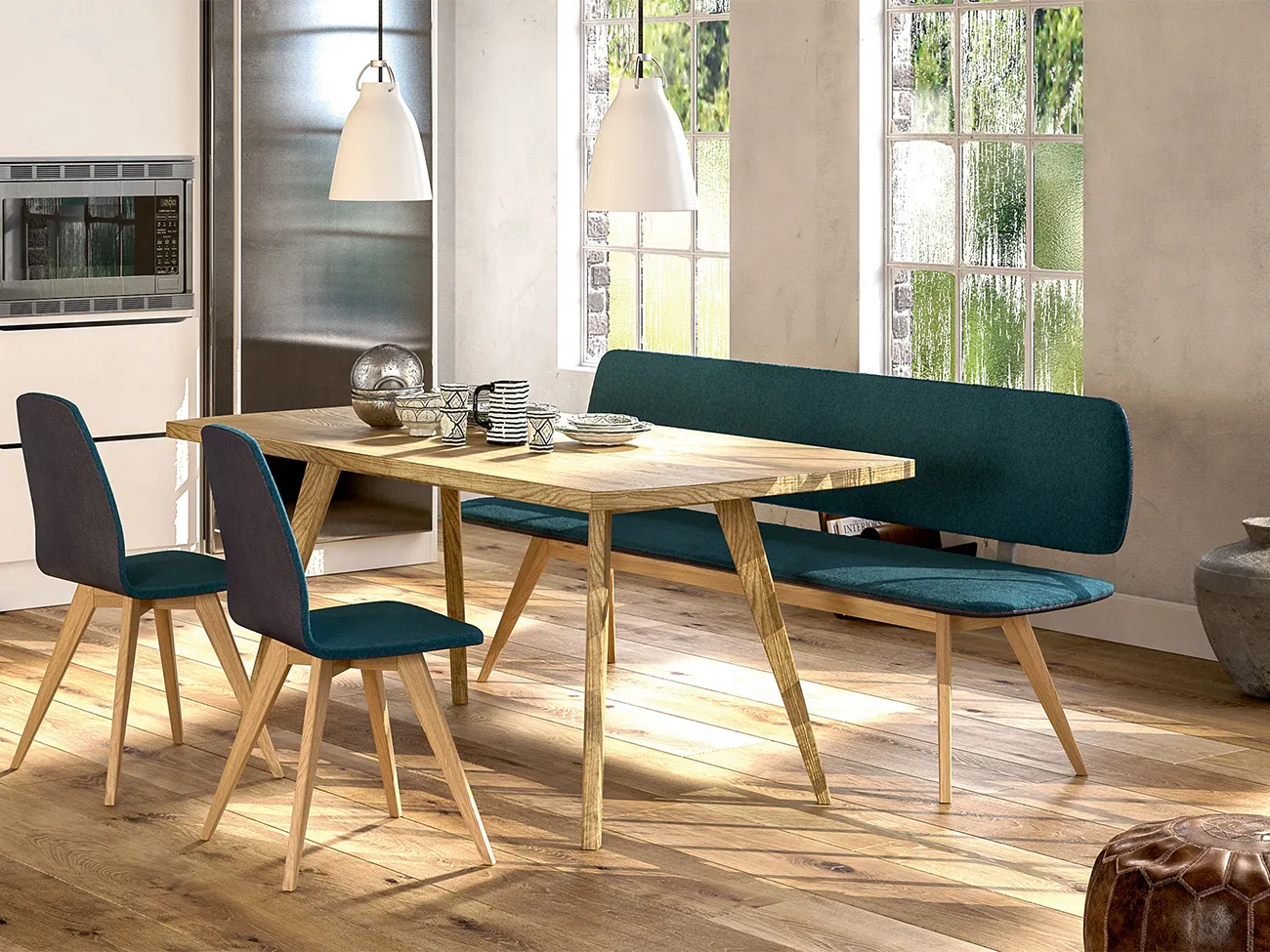
“Our range includes a suitable water-based coating for every application, in any colour, for any substrate and in any gloss level. We also offer a wide range of water-based effect coatings.”
Are there price differences between water-based and solvent-based coatings?
“Using water-based coatings is more cost-effective. The price per litre of a water-based coating is slightly higher, but because less coating is needed in use, it ultimately works out cheaper for the applicator. When a water-based coating is applied as a 1K product, users can save up to 15 per cent. This price difference will grow in the future, as solvent-based coatings become increasingly expensive.”
Question about this story? Ask your question
Keep following this
Get an email when a new story is published. No account needed.
- SubjectProduct information