








Why building climate control needs to be taken much more seriously
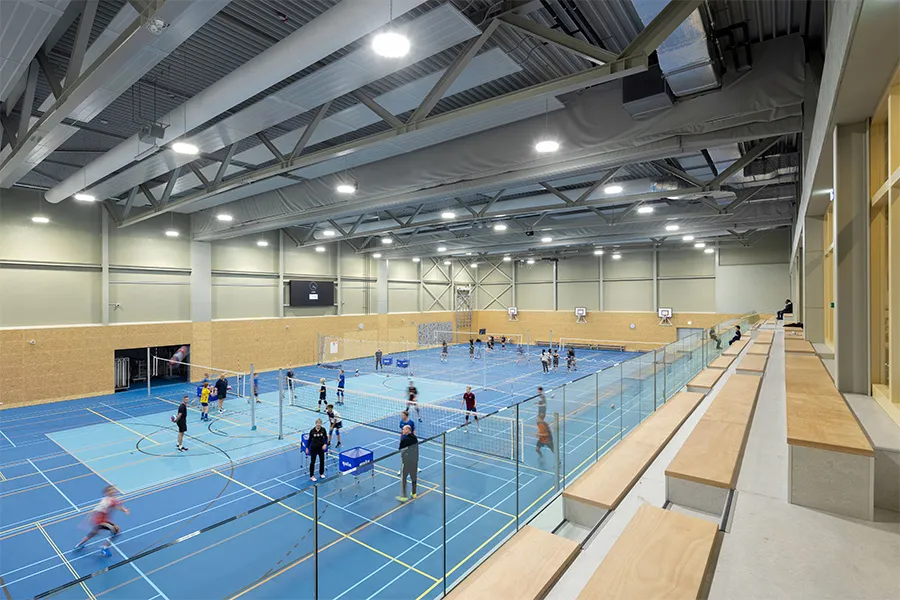
When building or renovating homes or buildings such as sports halls, swimming pools and schools, an energy performance calculation is mandatory. In other words: what is a building’s energy performance, and which energy label does it qualify for? The calculation is based on BENG criteria: Nearly Energy-Neutral Buildings. But Jaco Mooijaart, head of the Electrical Engineering & Mechanical Engineering (E&W) department at Iv-Bouw, believes this mandatory calculation takes too few factors into account. The result is a paper reality in which some climate targets are achieved only in theory.
BENG criteria
Since 1 January 2021, calculations based on these BENG criteria have been mandatory as part of a permit application. As a specialist in non-residential construction, Iv-Bouw is often involved in such calculations for schools, public swimming pools and multi-purpose sports halls, for example. Until 2021, calculations were based on the so-called Energy Performance Coefficient (EPC). The new BENG criteria are assessed in three parts: annual energy demand (in kilowatt-hours per year), fossil energy consumption (heating, cooling, ventilation, etc.) and the percentage of renewable energy.
A paper reality
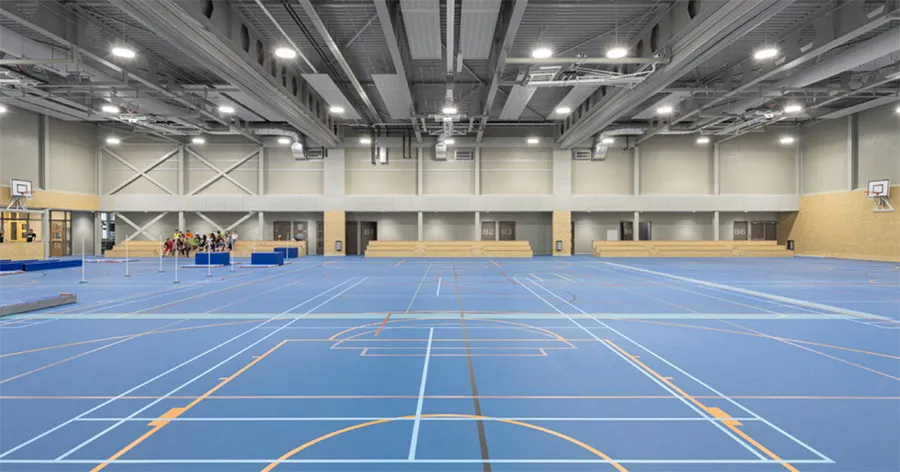
Iv-Bouw is legally required to apply these calculations, but considers them an overly simplistic representation of reality. For example, the BENG criteria use annual averages for a building, without sufficiently taking account of peak power, building use or, for instance, efficiency losses caused by climate control using ventilation air. Ventilation takes up much more space and incurs greater distribution losses than a water-based climate control system. This is barely reflected in the results of the energy performance calculations presented to clients. A cheaper climate control solution with an air handling system is therefore often preferred, even though it uses considerably more energy than the figures suggest and is consequently more expensive to run.
“In schools and sports halls, we often see an all-air system being chosen, where climate control is provided entirely by air. But ventilation is primarily intended to prevent people in a building from being exposed to excessively high CO2 levels,” explains Jaco Mooijaart. “These spaces, however, are used fairly consistently. In our view, water-based climate control works perfectly well in that case. It is much more energy efficient. The initial cost is somewhat higher because more systems are needed, but it pays off in the long run.”
Jaco is concerned that none of this is clearly reflected in calculations submitted with permit applications, since major decisions are being made on the basis of incomplete information. “This means buildings are being constructed that are theoretically (almost) energy neutral, but may not be in reality. I believe it is our responsibility as consultants to keep scrutinising this. Having a national standard for permit applications is a good thing, but it must tell the whole story. What is more, these criteria were introduced to prevent the construction of energy-guzzling buildings. In this respect, they are currently missing the mark somewhat.”
A tailored approach for every building
According to Iv-Bouw, the uniformity of these calculations also leaves no room for a tailored approach. They are based on average consumption for an average building. But every building is different. “You can apply this model to a swimming pool too: it is a building with a sports function, but I don’t think I need to explain to anyone that heating a swimming pool makes achieving energy neutrality almost utopian. A swimming pool simply uses much more energy than a regular sports hall, yet an energy performance calculation produces the same results for both. Something needs to be done about that, and it starts with raising the issue. Our sector does rely on this, but it does not tell the whole story.”
For now, these BENG criteria remain in force. Iv-Bouw draws on many years of experience and highly specialised expertise in non-residential construction, as well as advice on issues relating to (sustainable) building services. This enables Iv-Bouw to offer well-founded criticism when school boards or local authorities come forward with plans to build or renovate. Jaco says: “There is still a great deal of progress to be made in this area, including in raising clients’ awareness. It is just a shame that we cannot demonstrate it through these criteria, but they can trust our expertise.”
Far greater gains to be made in new-build projects
Making public buildings more sustainable is a major undertaking, and part of a wider effort. As the example of new-build projects outlined above shows, there are significant gains to be made. And they must be made. Under the Paris Agreement, global CO2 emissions must be reduced by at least 95 per cent by 2050 to ensure that the Earth warms by no more than 1.5 degrees Celsius.
The more energy a building needs for climate control, meaning heating, cooling and ventilation, the harder it will be to meet that target by 2050. Jaco believes Iv-Bouw can play an important role in advising building owners and providing well-founded advice and recommendations that go much further than the BENG criteria. “For example, you need to include variables to present a fair picture,” he continues. “If you can show that a swimming pool might appear almost energy neutral on paper, but is not in reality, you can propose other solutions.”
Heat from outside
Iv-Bouw believes we need to think bigger, and above all, beyond the usual framework. This also applies, for example, to local authorities responsible for schools, sports halls and libraries for the community. Such facilities are, of course, tied to a particular place or region. “But even so, it is worth looking at the surrounding area. What can you make use of there? For example, waste heat from a neighbouring production facility, or cooling your building with surface water. Not every local authority has that option, of course, but we are seeing it happen more and more often.”
Read more in our magazine!
We enjoy sharing our projects with you. This article appeared in our Ivormatie magazine. It features more stories about the remarkable and complex projects at Iv-Groep.
Question about this story? Ask your question
Keep following this
Get an email when a new story is published. No account needed.
- SubjectGeneral







