High-quality insulating glass with a significantly reduced environmental impact
Text Lieke BousemaImage Vandaglas
Low Carbon insulating glass for Plot F
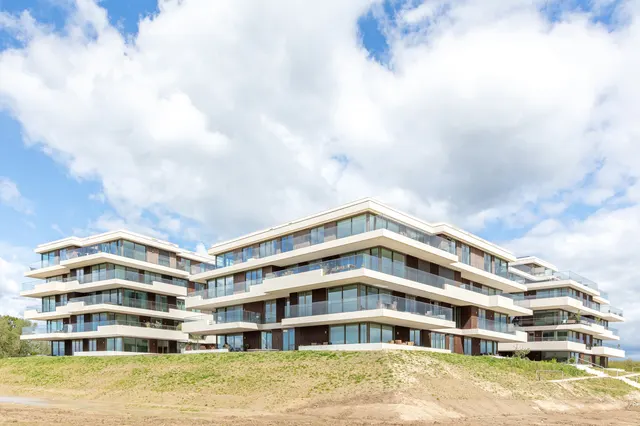
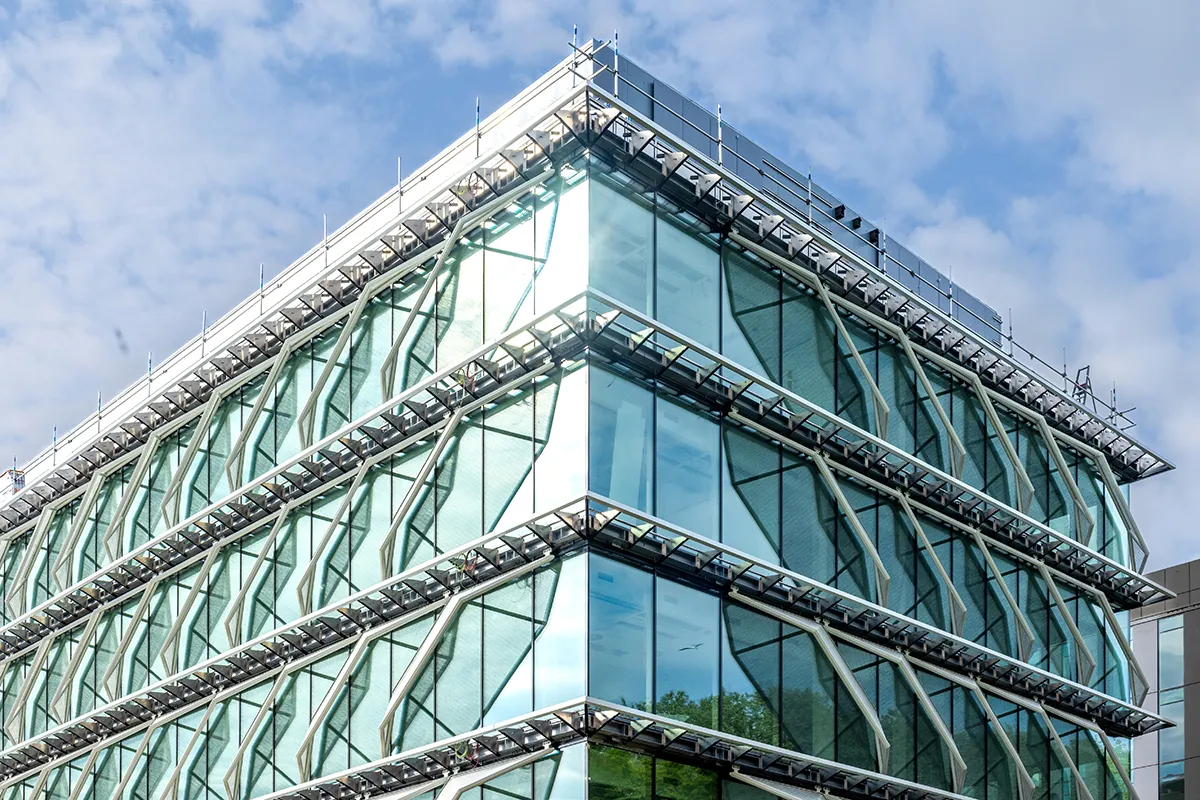
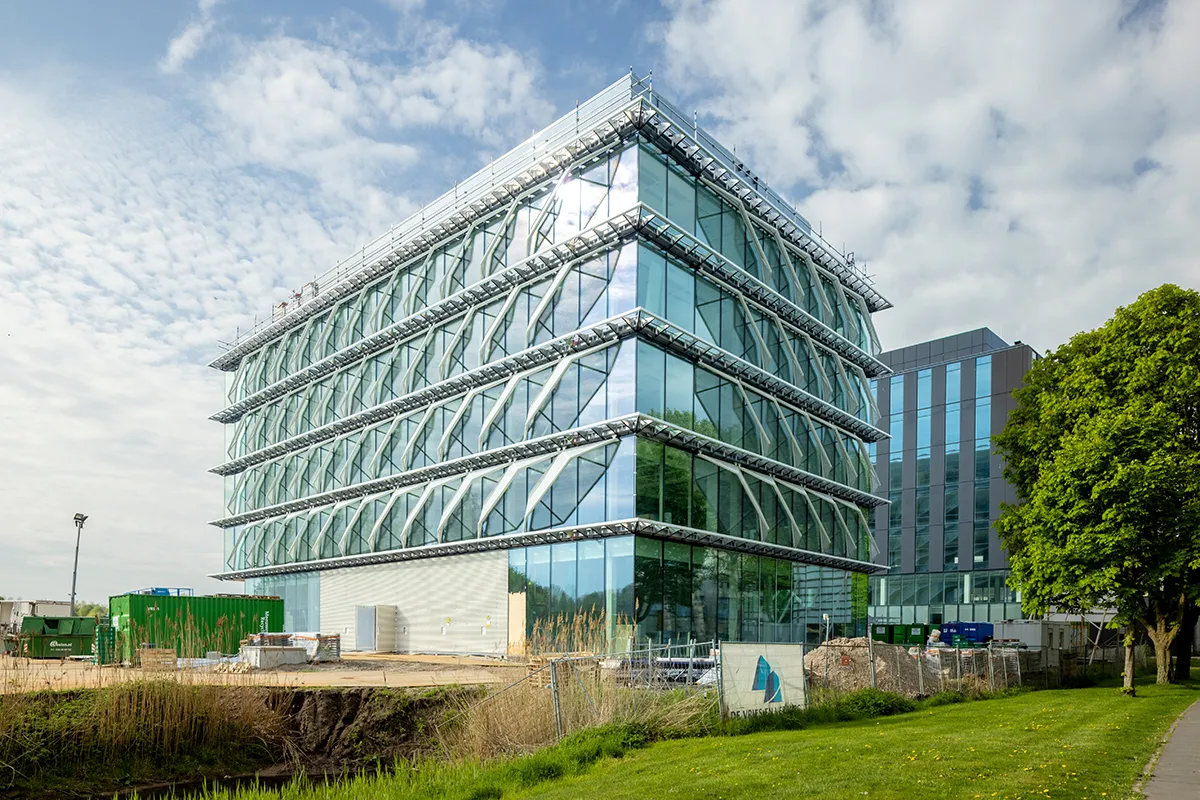
A new building with office and laboratory space is being constructed on Tafelbergweg, on the Amsterdam UMC site (AMC location). Plot F has been designed to meet ambitious sustainability targets, including BREEAM-NL Outstanding. Alongside the use of XCarb steel and hollow-core slabs without a structural topping, Vandaglas’s TriplePerform LCG XTR70/33 ORAE insulating glass makes an important contribution. The insulating glass delivers outstanding thermal performance, high energy efficiency and a comfortable indoor climate. Its high recycled-glass content also significantly reduces its environmental footprint. It is no coincidence that TriplePerform LCG XTR70/33 ORAE has been included in the National Environmental Database with a Category 1 product card.
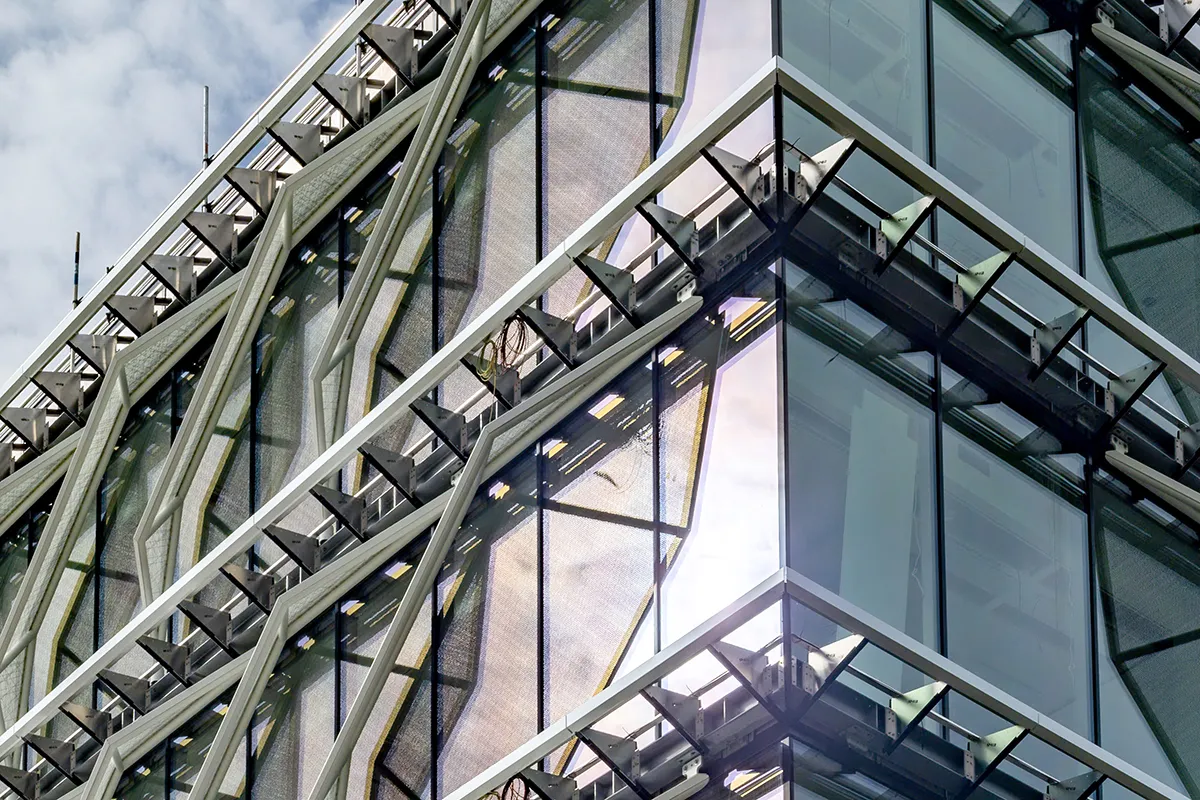
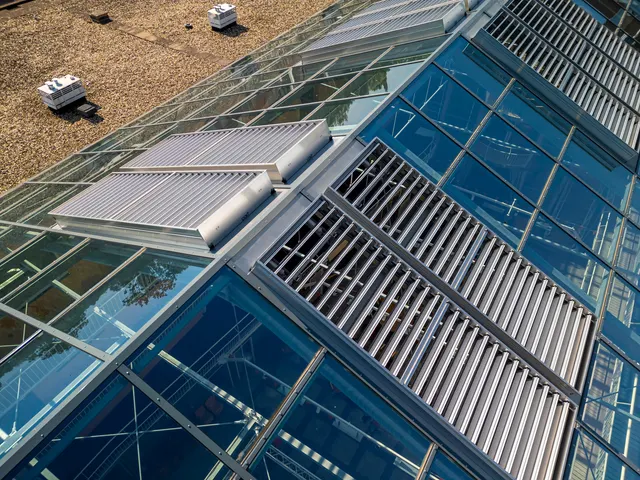
Plot F is being built by De Vries en Verburg, with Wijnveen Aluminiumbouw BV responsible for the façade. “As Wijnveen’s regular supplier, we explored the sustainable options for this project in close collaboration with the façade contractor and main contractor,” says Reinout Jansonius, CSR Manager at Vandaglas. “A transparent glass façade has been installed around the new Plot F building, with architectural shading elements limiting solar heat gain. In total, approximately 2,500 square metres of solar-control, thermally insulating triple glazing is being used, in various configurations and with an XTR70/33 coating. This coating is notable for its very high light transmittance of 63 per cent and excellent solar factor of g 0.31. This ensures a pleasant indoor climate in every season.”
Various configurations
All the glazing is full storey-height, Jansonius explains, with some of the ground-floor glass featuring a screen-printed pattern. “This is primarily to ensure privacy. It is also combined with structural glazing, creating a completely flush glass façade.” Safety glass has been used on the ground floor, while fall-protection glazing has been installed on the upper floors.
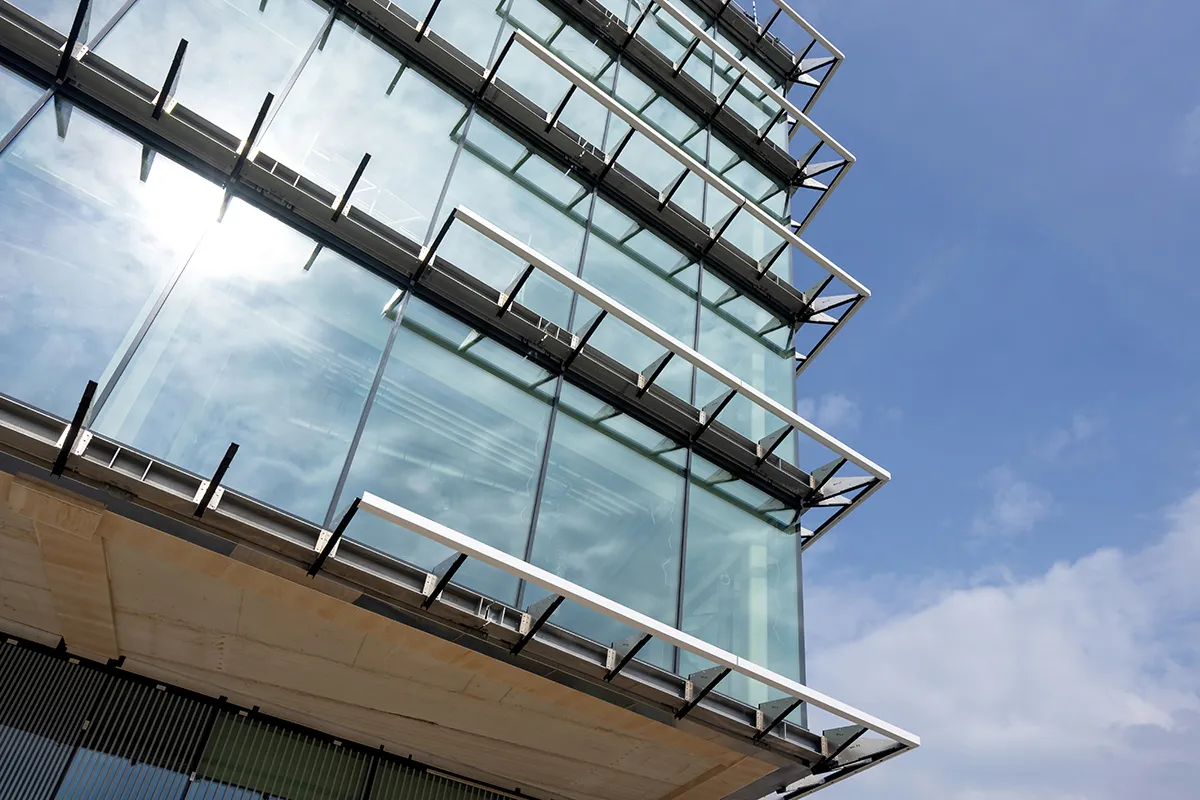
External light reflectance of 13 per cent
“The XTR70/33 coating stands out for its external light reflectance of 13 per cent, which means the glass reflects light to the same degree as standard HR+++ glass,” says Jansonius. “It has a highly neutral appearance, while users also benefit from its unique technical properties. In addition to this, the fact that it is Low Carbon insulating glass, TriplePerform LCG XTR70/33 ORAE, was a decisive factor for De Vries en Verburg. It makes a major contribution to Plot F’s sustainability performance.” For Vandaglas, Plot F was the first project for which it produced triple insulating glass on a large scale, using Low Carbon Glass (LCG) from Saint-Gobain.
World’s lowest carbon footprint
“The production of TriplePerform LCG XTR70/33 ORAE has the world’s lowest carbon footprint,” says Jansonius. “Instead of sand, a remarkably high proportion of recycled glass fragments, or cullet (65 per cent), is added during the melting process, significantly reducing the need for virgin raw materials. The glass’s melting point is also substantially lower, resulting in considerable energy savings. And this is all achieved without compromising technical, quality or aesthetic performance. By using approximately 2,500 square metres of solar-control, thermally insulating TriplePerform LCG XTR70/33 ORAE, Plot F cuts its CO2 emissions by no less than 40 per cent compared with standard glass.”
National Environmental Database
Vandaglas was awarded the contract to produce and supply the insulating glass on the condition that the glass products were included in the National Environmental Database (NMD) with a Category 1 product card, Jansonius explains. “The NMD aims to provide a clear picture of the environmental performance and circularity of buildings, and is based on a building product’s life cycle assessment (LCA). In other words, it covers the product’s total environmental impact, from raw material extraction to manufacture, and from demolition to recycling. At the start of this project, we mapped the environmental impact of our glass products. This involved quantifying factors such as energy and raw material use, waste streams and emissions, and having the results verified by an independent, qualified LCA expert. While the average Environmental Cost Indicator (MKI) in our sector is €8.85, our TriplePerform LCG XTR70/33 ORAE insulating glass achieves an MKI of just €4.53 over a 30-year service life.”
Een zakelijke vraag aan Vandaglas b.v.? Get in touch
Companies in this story

Keep following this
Get an email when a new story is published. No account needed.
- ThemeGlass for light and comfort
- SubjectGlass
- CompanyVandaglas b.v.