The digital backbone of prefabrication
Text Maarten van der BoonImage BIM4Production®
Why ERP, MES and APS make all the difference in industrial construction
Industrial construction is becoming more professional at a rapid pace. Production lines are growing more complex, businesses continue to scale up and margins remain under pressure. At the same time, society is demanding that buildings be delivered faster, to a higher standard and with demonstrable evidence of quality. The Wkb is adding to that pressure: quality must not only be delivered, but also proven. Maarten van der Boon of BIM4Production® explains: “Digitalisation plays a key role, but for many companies the software landscape is a confusing mix of systems, terminology and promises. To see the wood for the trees, it is important to understand that three systems each have their own distinct, non-interchangeable role: ERP, MES and APS.”
The factory as an integrated system
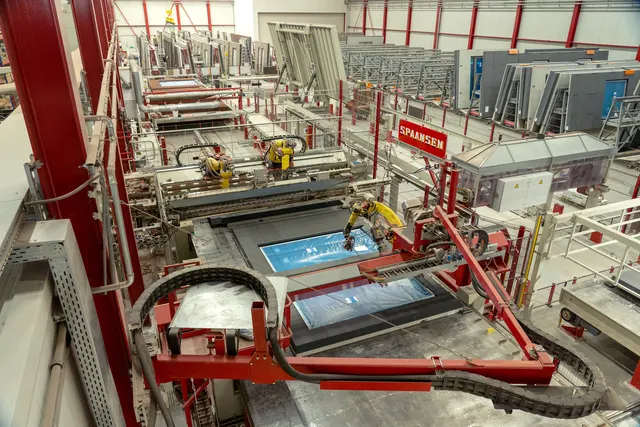
A construction factory operates as a single entity: people, machines, materials and information must be continuously aligned. A disruption in one area has an immediate knock-on effect throughout the rest of the chain. According to Van der Boon, it is precisely this need for integration that gives rise to three persistent misconceptions in practice.
“First, there is the oft-heard remark: ‘Our ERP can do that too.’ In theory, perhaps, but in practice it leads to customisation, workarounds and frustration. This is often followed by a second remark: ‘We have one system for everything.’ A successful digital transformation is not a ‘big bang’ and does not fit a ‘one system fits all’ solution; it starts with the biggest bottleneck and grows step by step. The final, frequently heard remark in the top three is: ‘Digitalisation is an IT project.’ The opposite is true: processes, people and culture determine success, not software alone.”
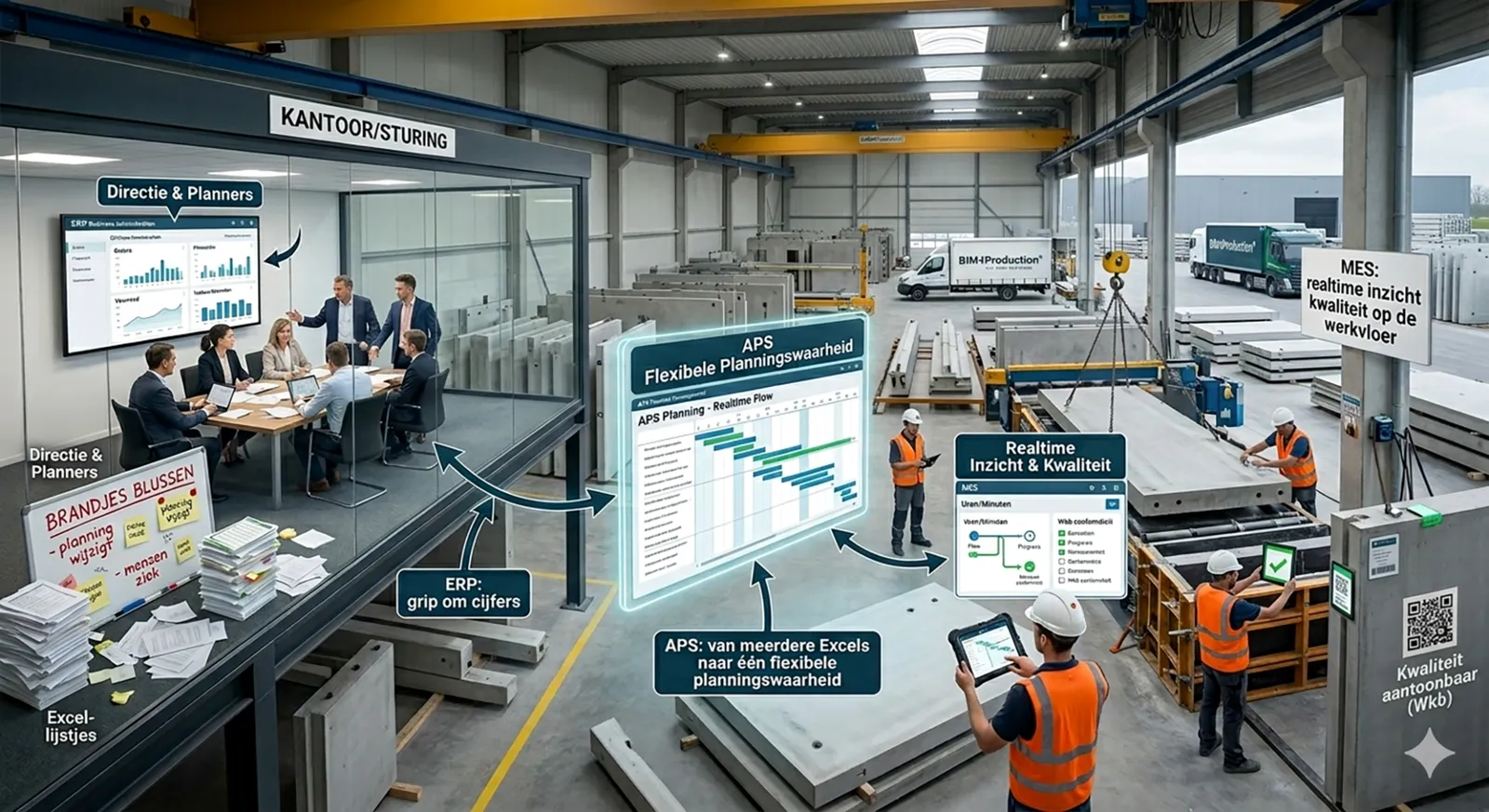
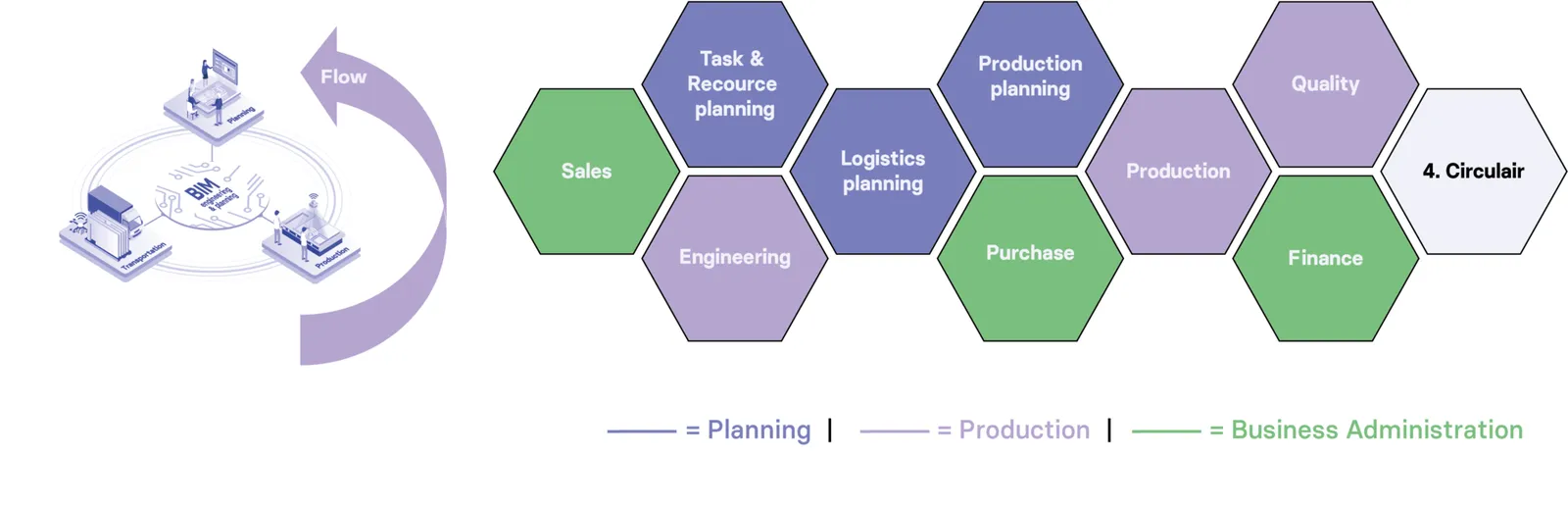
Recognising these misconceptions in good time creates scope for a system landscape in which the systems reinforce rather than hinder one another, says Van der Boon. “That is why a modern factory needs three systems that together form a digital backbone: ERP for business processes, MES for execution and APS for planning.” He goes on to explain the different systems briefly.
ERP: control over figures, not minutes
“An ERP system is usually an organisation’s administrative and financial project brain. ERP provides structure for orders, purchasing, finance and reporting. It is indispensable at enterprise level. But ERP works at a broad level: it looks at weeks and transactions, while production operates in hours and minutes. ERP is therefore less suited to managing production workstations or day-to-day production flow in detail.”
MES: where planning becomes reality
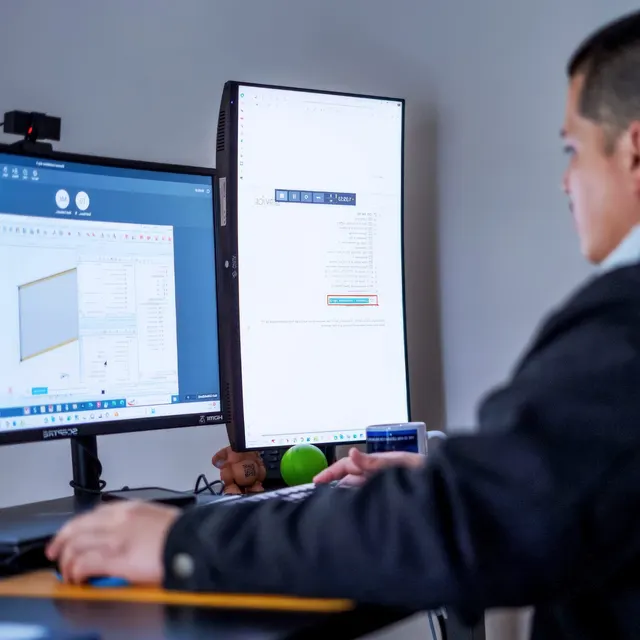
“MES brings the factory’s production reality into view. It gives employees the right drawings, instructions and quality checks at the right point in the production process. It also records progress and deviations in real time. The result: fewer errors, less paperwork, greater predictability and demonstrable quality assurance for every element, which is useful in prefab and in the context of the Wkb.”
APS: from aspiration to feasibility
“As long as schedules rely on Excel, orders and a dose of experience, they remain vulnerable. APS creates a single, realistic plan based on the actual capacity of people and resources. And if reality changes due to a breakdown or shifting priorities, APS adjusts the schedule as a whole. This improves delivery reliability and reduces the risk of unnecessary production downtime.”
BIM4Production®
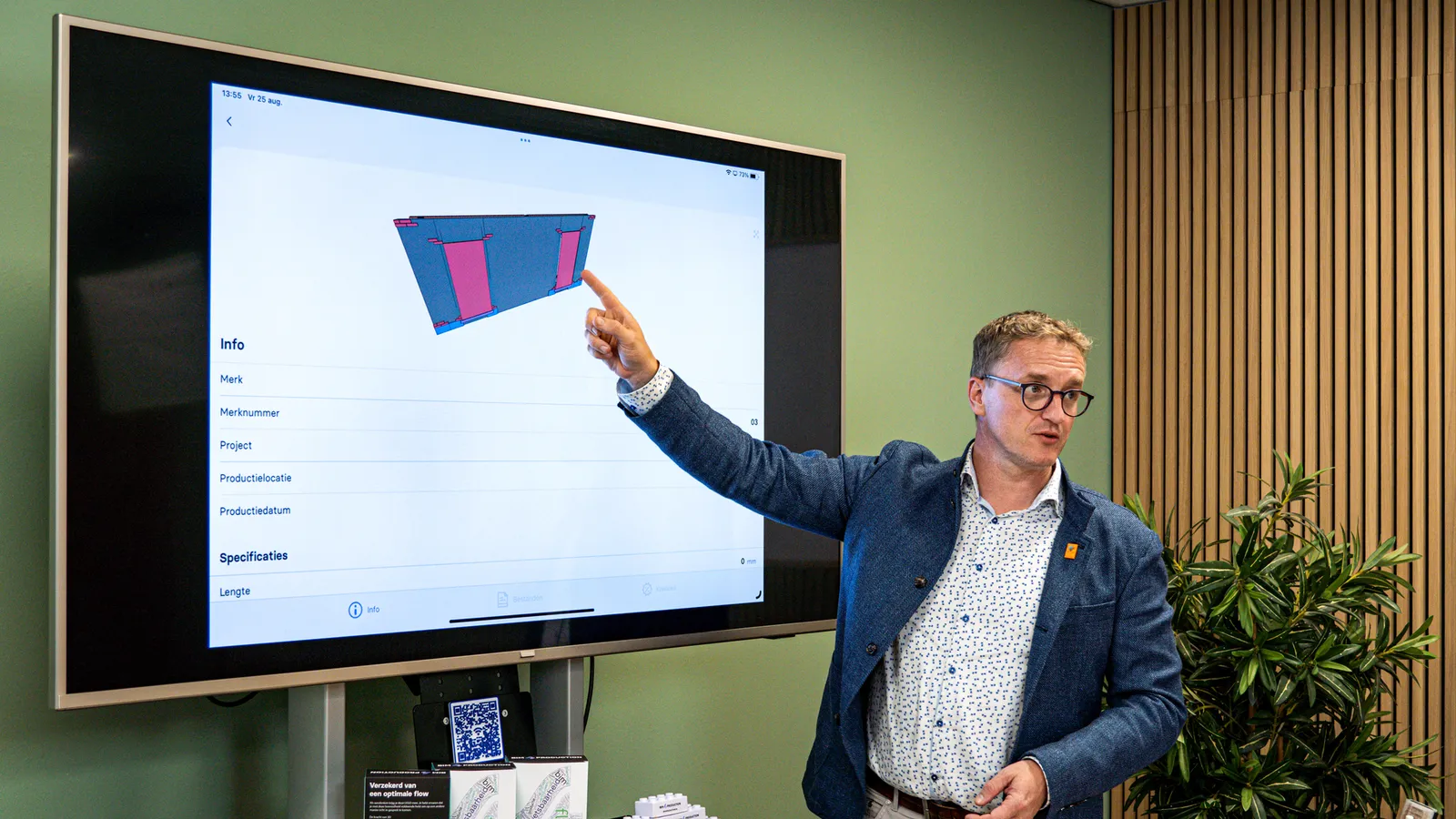
“The BIM4Production SaaS platform fits seamlessly with this three-part approach. It combines ERP information, independently of the ERP provider, an MES layer for execution and quality assurance, and a planning module that acts as an APS engine. Everything is integrated into a single production ecosystem, designed specifically for industrial construction factories. This creates a continuous flow of data, from order to element and from planning to production, fully compliant with the Wkb and without the pitfalls of standalone systems.”
Van der Boon concludes with a clear vision: “The question is not whether ERP, MES and APS are needed, but how to bring them into balance. Companies that manage this integration are not only building a future-proof IT landscape, but, above all, a factory that produces reliably. Every day.”
Have a business enquiry for BIM4Production®? Get in touch
Companies in this story
Keep following this
Get an email when a new story is published. No account needed.
- ThemeFrom facade model to production
- SubjectSoftware & automation
- CompanyBIM4Production®