Bonding and adhesion with confidence
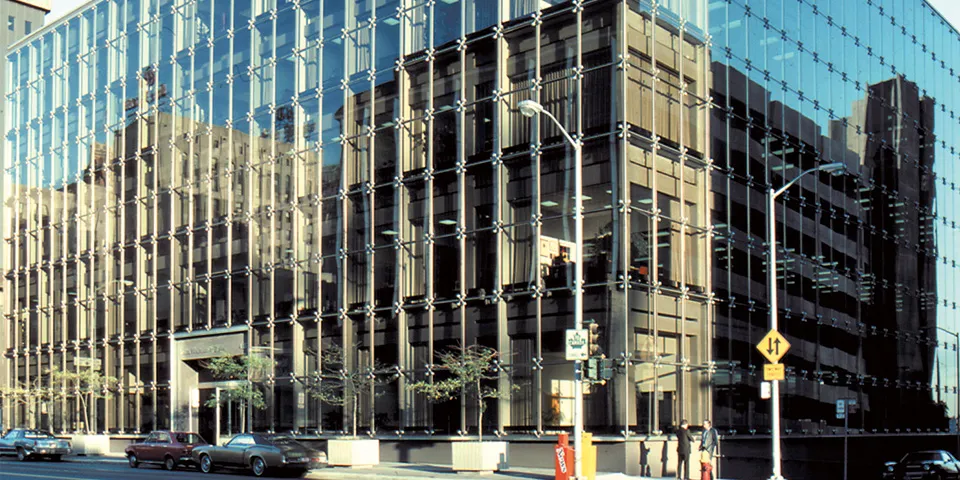
Silicone structural glazing is a curtain wall method in which structural silicone sealant is used to bond panels to a curtain wall frame. Glass, metal, ceramic and composite materials can all be bonded in this way.
Dow was an early pioneer of this technology in the 1960s. It enabled almost limitless design versatility and irreversibly reshaped the skylines of cities and towns worldwide. By using advanced technologies, architects were able to give their imagination free rein and create structures that had previously been deemed impossible. Structural glazing silicones are used to strengthen the structure while increasing the size of glazed openings and the transparency of the building, resulting in a unique aesthetic.
Successfully bonding and adhering the building envelope while meeting performance and quality standards requires careful planning and execution. Early collaboration, from the very earliest stages of project design, is strongly recommended. The aim is to create a smarter building by thinking innovatively and using suitable materials that bring the design to its full potential. From the initial stages through to handover, project teams need high-level support, including thermal modelling, performance simulations and laboratory testing of all materials that come into contact with the sealant, to ensure adhesion and compatibility.
Fifty years of proven silicone performance
Under normal design, application and maintenance conditions, silicone used in structural glazing applications is expected to last for more than fifty years. This was recently investigated in two separate independent scientific studies. Both studies confirm what industry experts have believed for years, and the hard data bears out what in-service performance has long suggested: DOWSIL™ structural glazing silicone sealants deliver long-term performance and durability.
The first study was carried out on the façade of ift Rosenheim. The building was constructed in 1985 and decommissioned in 2010 for renovation. The dismantled silicone structural glazing assembly and structural silicone were also re-examined in accordance with ETAG 002-1. Approximately 200 samples of 25-year-old sealant were cut from the units and passed the ETAG 002-01 specification. Theoretically, this qualifies the sealant for a further twenty-five years, bringing its total service life to fifty years. The second study involved a test specimen of DOWSIL™ 993 structural glazing sealant. At the Federal Institute for Materials Research and Testing (BAM), the specimen was simultaneously exposed to artificial weathering and complex, multiaxial mechanical loads in simulated durability tests. Fifty test cycles were completed, equivalent to fifty years. The sealant continued to meet the ETAG 002-01 performance criteria, confirming its robust, outstanding durability and highlighting its proven performance.
Dow Quality Bond™
Launched in 2007, the Dow Quality Bond™ programme helps ensure the best performance, safety and durability for building projects. It brings silicone bonding and adhesion to the highest standards by combining best-practice quality control, quality assurance and product application with specialist silicone applicators. Architects and consultants widely recognise the value of Quality Bond™, requesting and relying on its members to uphold application standards. For security,
safety and long-term peace of mind, or to access extended project warranties, trained fabricators and applicators can be recommended through the Dow Quality Bond™ programme. For
more information, visit qualitybond.com and www.dow.com/construction.
Question about this story? Ask your question
Keep following this
Get an email when a new story is published. No account needed.
- ThemeFacade design and construction
- SubjectFaçade cladding