Double-skin façades: choosing the right glass combination for optimum benefits
When designing a double-skin façade, it is important to choose the right combination of glass to optimise the benefits in terms of energy management, dynamic selectivity, thermal insulation and improved comfort, while minimising potential problems such as condensation, says Ralf Greiner, Manager, Product Applications for Guardian Glass in Europe.
A double-skin façade is a conventional façade with a second outer façade, usually made of glass, on the outside. The two façades, often referred to as ‘skins’, are separated by a void (cavity), which can range in width from a few centimetres to several metres. If mechanical solar shading systems are installed in the cavity, the outer skin also provides protection from wind and dirt.
A double-skin façade can be ventilated mechanically or naturally, depending on the type of ventilation system used in the cavity. These are known as active and passive (interactive) ventilated façades.
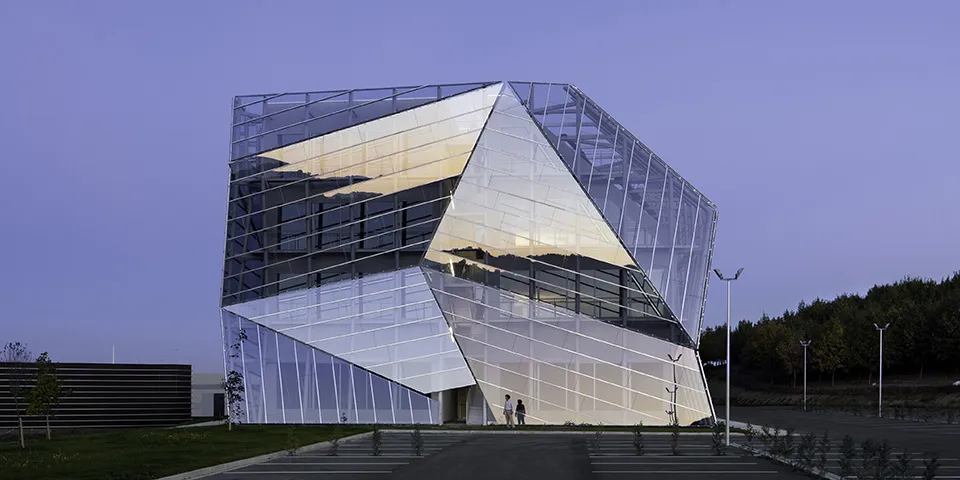
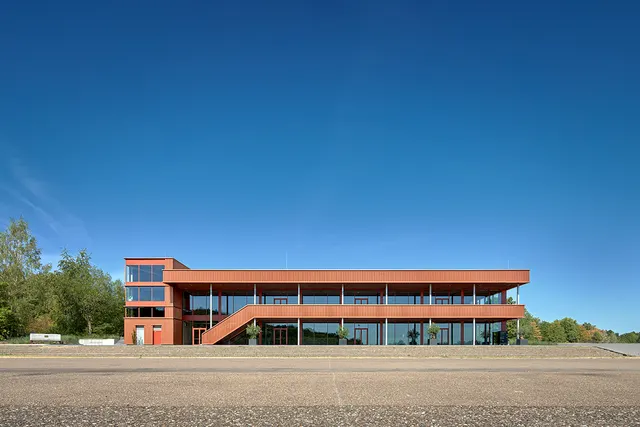
E8 building.
(Photo: Aleix Bague, GRDPR175)
Active systems have an outer skin of airtight insulating glass in front of the ventilated cavity. Air exchange is induced mechanically and takes place inside the building via heat exchangers. In winter, this offers the advantage of saving energy needed for heating through heat recovery. Active systems generally use more traditional types of glass for the outer insulating glass skin.
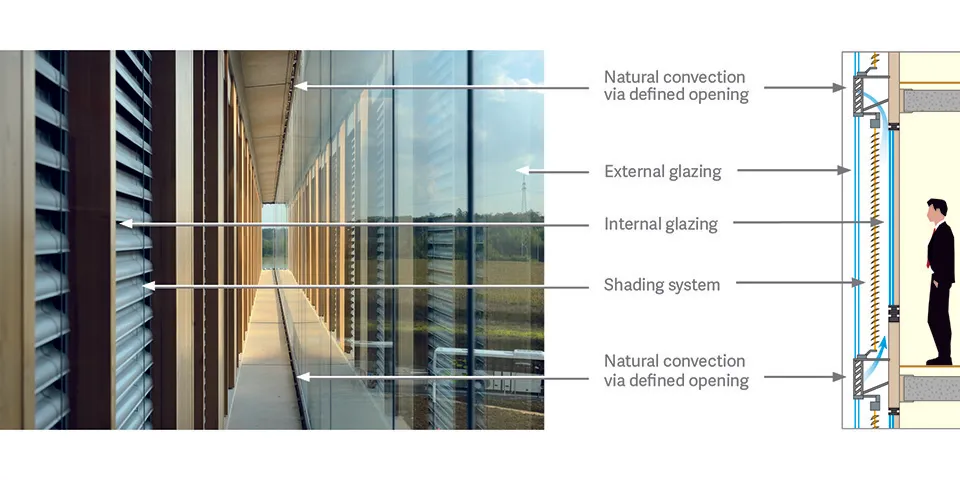
Passive ventilated façades are the most common type in Europe, particularly in commercial buildings. Here, air is exchanged between the cavity and the outside environment. Natural convection is created through purpose-designed openings, which are normally located above and below the outer glazing. Glass screens in front of a conventional structure are also possible, as are perforated façades, box windows and composite windows.
The benefits of a double-skin façade
As standards for protection against heat build-up become increasingly demanding, and therefore require low solar energy transmittance, double-skin façades combining energy-efficient glazing with mechanical solar shading are becoming increasingly popular. Although they have been installed in buildings over the past 20 years, glass technology has improved considerably during this period. This has helped increase their use. Today, innovative glass products and coatings are available for double-skin façades, offering a range of benefits, but only if the right combination of glass is selected for the outer and inner skins. The number of glazing combinations and options available today is impressive. This gives architects a full range of glass performance and aesthetic options to consider. They can choose the most suitable glazing in terms of glass performance, thickness, dimensions, thermal and mechanical strength (durability), solar control, colour and so on.
Choosing the right glass can offer benefits in terms of energy management, sound and thermal insulation, and the opportunity to enjoy fresh air from the cavity through open windows, improving comfort for building occupants. In addition, extra solar shading systems can be installed between the outer and inner glazing to provide dynamic selectivity, that is, the ratio between maximum daylight transmittance and maximum solar control.
Solar control coatings on the outer skin can significantly reduce energy transfer when the blinds are fully retracted, compared with a conventional solution without coatings. Users can operate the mechanical solar shading more intelligently, opening it or setting it to an intermediate position, and enjoy unobstructed views for longer without being troubled by the heat. The aim is to find the right balance for the building. Glazing solutions can help you achieve an almost perfect balance.
Solar control coated glass for solar regulation
Advanced solar control coated glass can actively optimise daylight transmittance (LT) and temperature control in the building. The glass can help make the building more energy efficient by reducing the need for air conditioning, heating and artificial lighting, all of which contribute to a more comfortable working or living environment for building occupants. These glazing solutions can therefore also help secure environmental certifications such as LEED, BREEAM, HQE, DGNB and others.
In passive ventilated façades, the usual aim is to reflect some of the short-wave solar energy directly through the outer glazing, reducing heat build-up inside the cavity and therefore the heat load. The use of glass coatings is significantly enhanced when combined with additional solar and glare protection inside the building. Excellent g-values are also achieved when the blinds are fully retracted or set to an intermediate position. The dynamic selectivity that can be achieved in this way makes the ventilated system particularly attractive.
Another benefit of coatings on the outer glazing is the opportunity to use different types of light reflection. This allows the architect to design highly transparent and seemingly ‘light’ structures, or to use higher reflectance to create a uniform appearance and conceal a patchwork of individually adjusted solar shading systems.
The challenge of durable coatings
While the inner glazing of a passive system is conventionally double or triple insulating glass, the outer single glazing is usually laminated safety glass, often made from heat-strengthened glass. Its residual load-bearing capacity ensures maximum safety in the event of breakage. The challenge when using high-performance coated glass is that the coating must be durable and suitable for use on monolithic or laminated glass, facing the interlayer. Most coatings on the market are highly sensitive to moisture and external climatic conditions, meaning they often need to be hermetically sealed, which inevitably limits flexibility too.
Combining highly durable solar control coatings, which reflect some of the solar radiation, with special energy-absorbing PVB interlayers further improves energy efficiency. In particular, spectral selectivity, the ratio of daylight to solar energy, can be significantly improved.
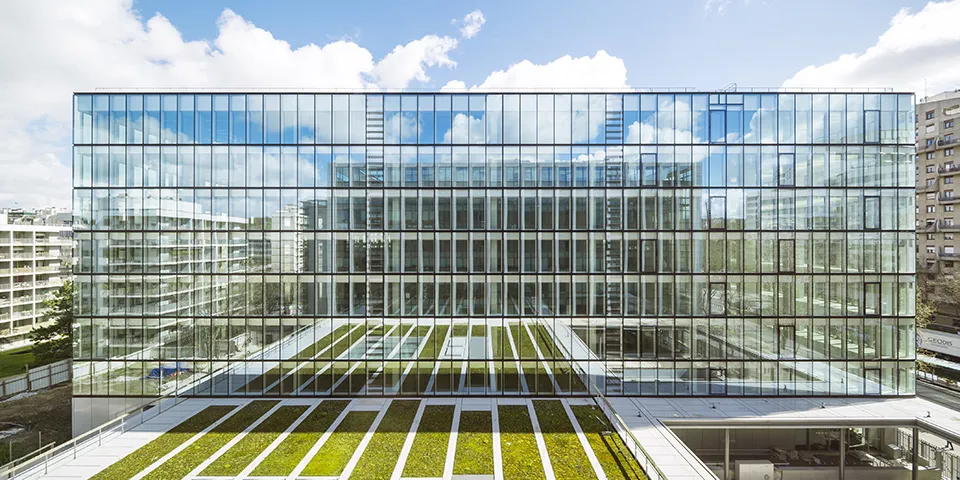
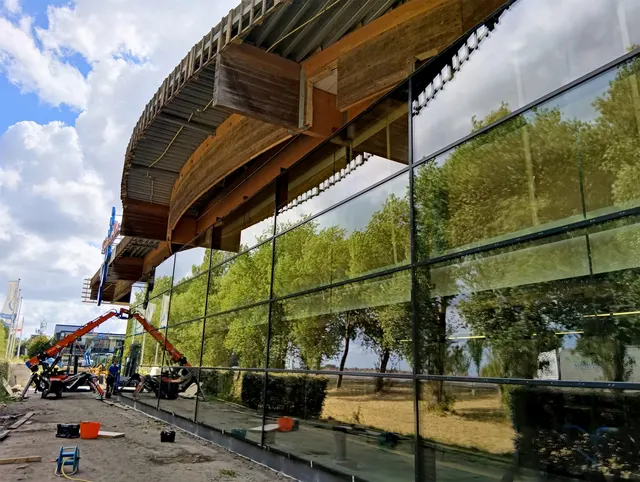
Le Cristallin.
(Photo: Sergio Grazia, GRDPR175)
Potential problems
Although architects may be familiar with the benefits of double-skin façades, there are some potential drawbacks that need careful consideration. Here, too, it is important to choose the right combination of glass to minimise these potential problems while optimising the benefits.
A double-skin façade with the wrong glass combination can also reduce the amount of natural light entering the building, while increasing the temperature in the cavity, which can lead to a shorter service life for electric motors, heat exchanger systems and so on, and cause condensation to form on the outer skin.
Condensation
In passive ventilated façades, condensation can form on the inside of the outer pane, depending on the building’s location and unfavourable climatic conditions. Mornings in spring and autumn can be particularly problematic, as any condensation can significantly obstruct a clear view from inside. This need not have serious consequences, however, as glass solutions are now available to prevent this natural phenomenon.
Anti-condensation coatings are extra-durable coatings specifically designed for the outer pane of glass. They significantly reduce the risk of condensation. Tests carried out under real building conditions have shown that these anti-condensation coating solutions produce slightly higher surface temperatures than an uncoated outer surface. This temperature difference significantly reduces condensation. While uncoated glazing develops condensation for many hours during comparative tests, coated glass remains clear and free of water droplets under the same conditions. One important caveat: it is essential to consider using glass with an anti-condensation coating during the project planning phase. It is not possible to apply these coatings after installation.
Other potential problems with double-skin façades include higher capital and operating costs. An extra skin around a building increases the load on the floor area. This must be taken into account during project planning. It can also lead to greater sound transmission between adjacent spaces in the building if the windows are left open.
A helping hand
For advice and guidance on choosing the right combination of glass for a double façade, Guardian Glass has a team of experts ready to help. The Guardian SunGuard® range of solar control coated glass includes a wide selection of products with attractive aesthetic and technical properties. These can help you optimise the performance of double-skin façades and minimise the problems that can sometimes arise.
Question about this story? Ask your question
Keep following this
Get an email when a new story is published. No account needed.
- ThemeGlass for light and comfort
- SubjectFaçade cladding