Surprisingly natural-looking cladding
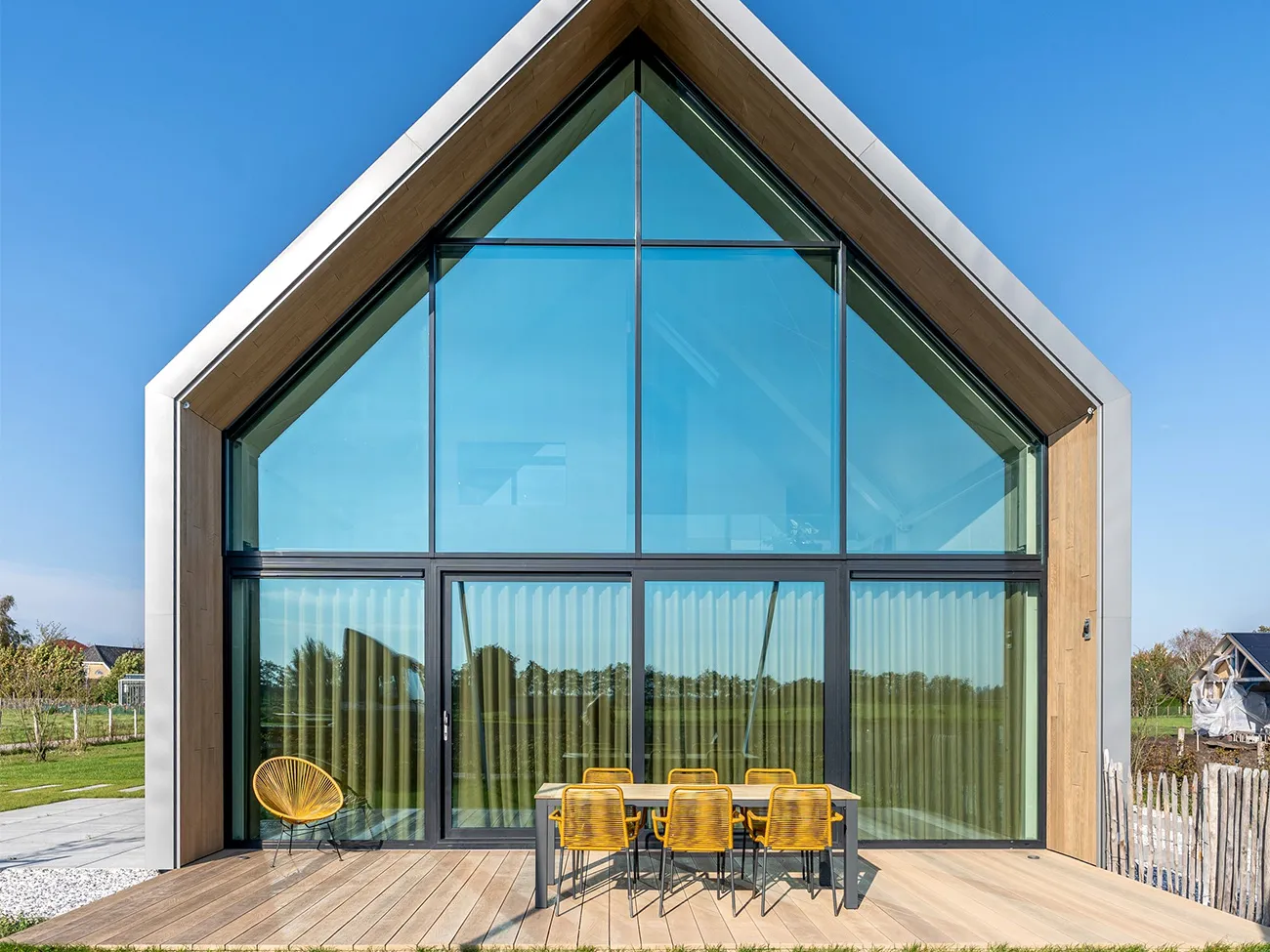
Choosing a lofthome already means opting for something special. But it is the choice of materials, details and accents that truly defines the home’s character. Today, however, it is no longer just about aesthetics: performance and ease of maintenance are also important considerations.
The look, feel & sound of real wood, without the drawbacks
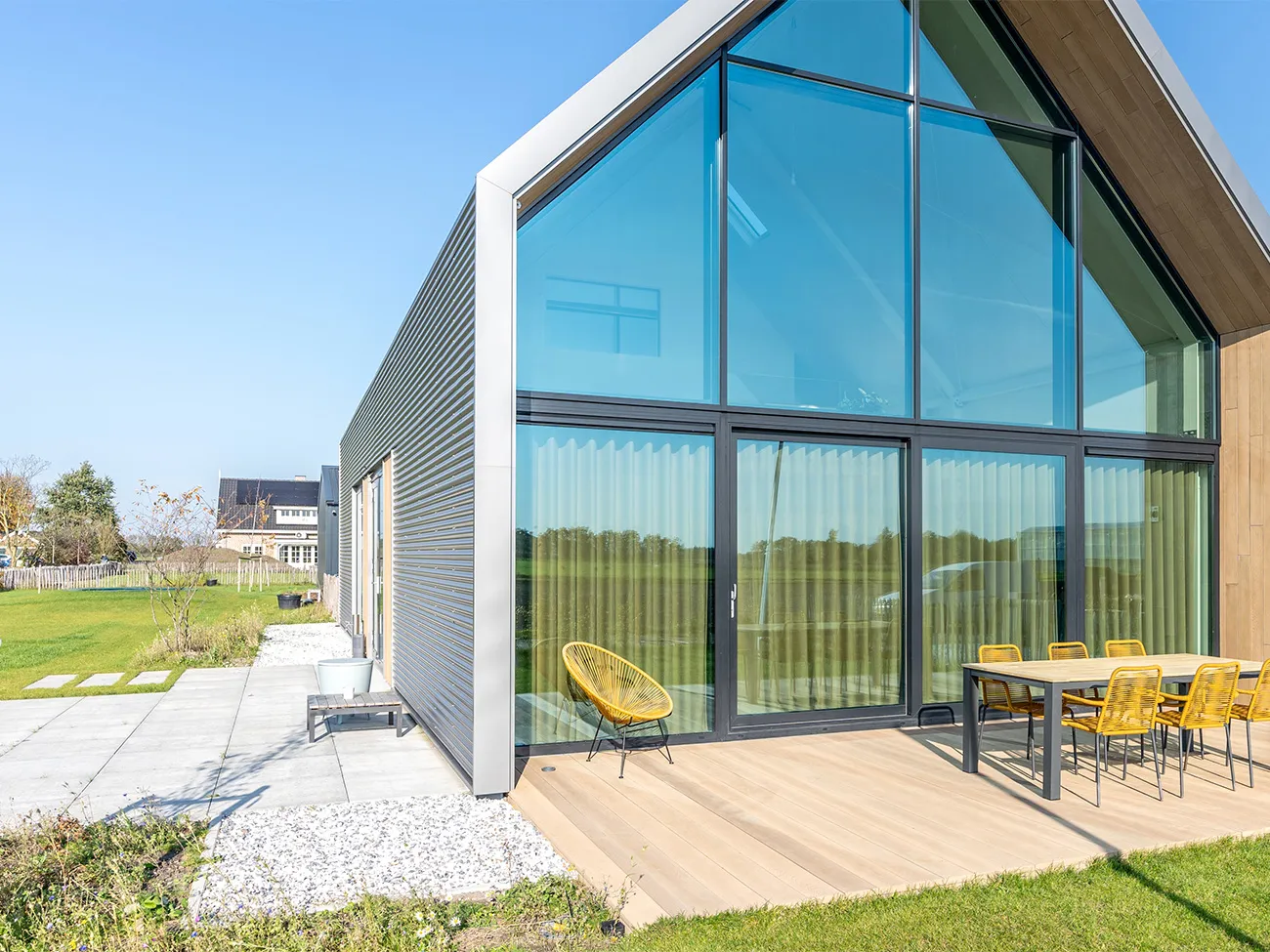
We speak to Patrick Smidt of AlterWood about the benefits of Millboard as cladding. We also see it used on a beautiful lofthome in South Holland, where owner Bas de Bruin talks about his choice of Millboard.
Natural beauty
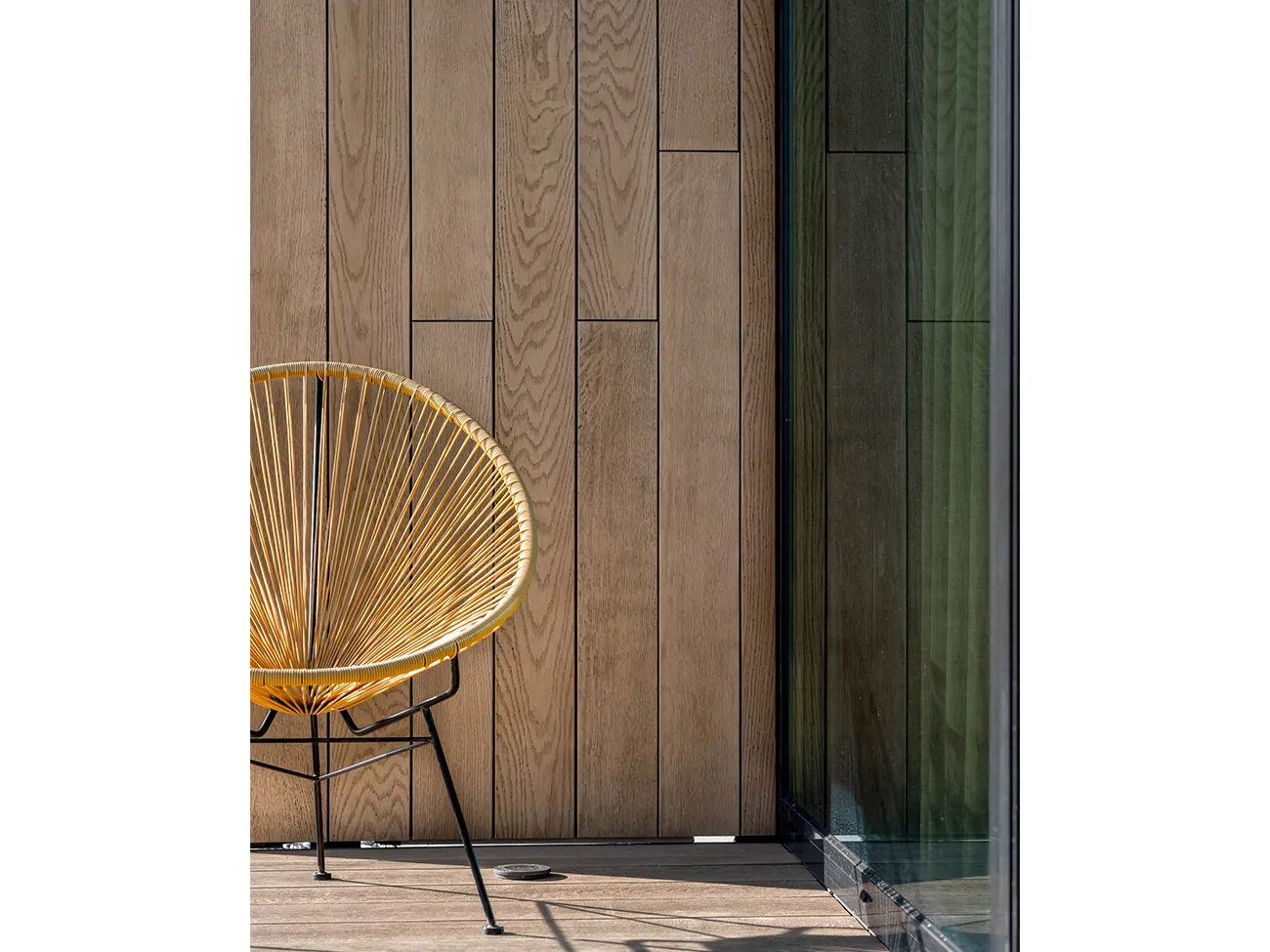
“I’m proud that Millboard allows us to offer the finest, most realistic-looking synthetic boards,” says Smidt. “After all, who wouldn’t want the look, feel and sound of wood, but without its drawbacks?” Millboard boards are moulded using casts of real oak boards, recreating the subtle nuances that are normally only found in natural wood. “That’s why they are almost indistinguishable from the real thing.”
High performance
But alongside natural beauty, high performance is becoming increasingly important in construction. “The woodgrain finish has a Lastane™ surface that is extremely durable, even in the most demanding environments and conditions,” Smidt explains. “Another benefit of this top layer is that it conceals the screws. After our specially developed Durafix stainless steel screws are driven in, the flexible top layer closes up again.” Millboard cladding is highly versatile, and Smidt is happy to describe it as one of the best-performing cladding products in the world. “Thanks to its positive properties and realistic appearance, our composite cladding has really taken off in recent years,” he observes.
Lofthome
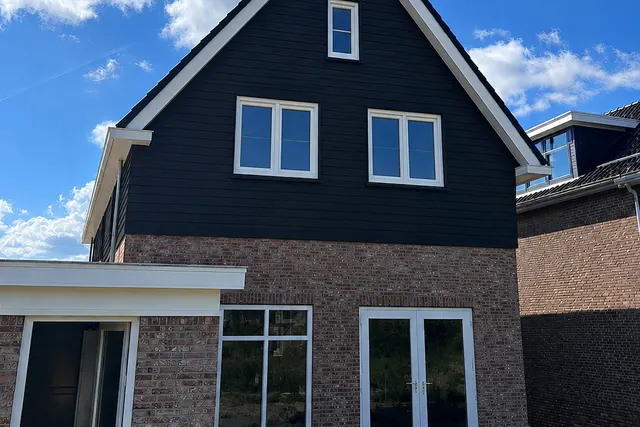
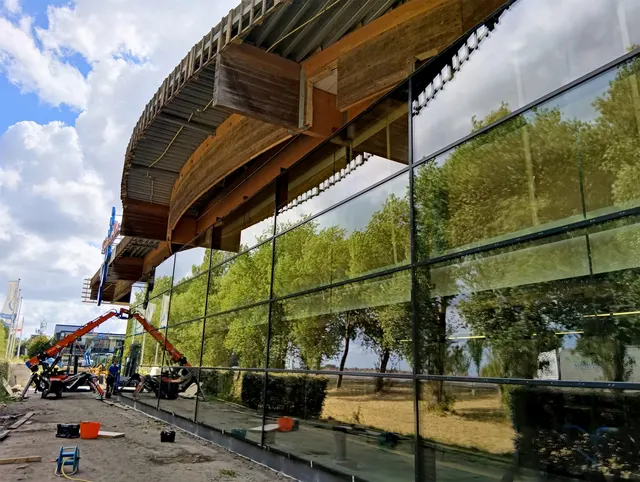
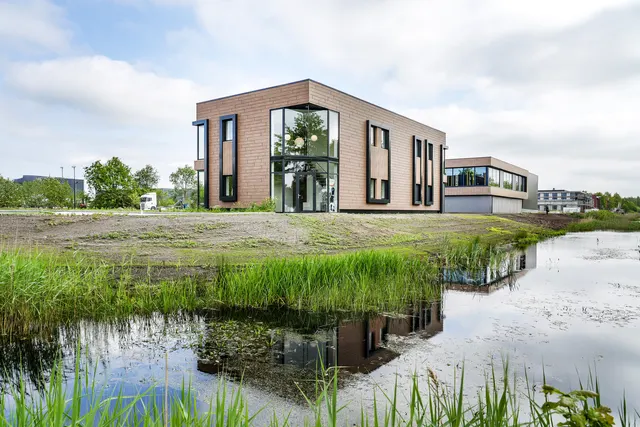
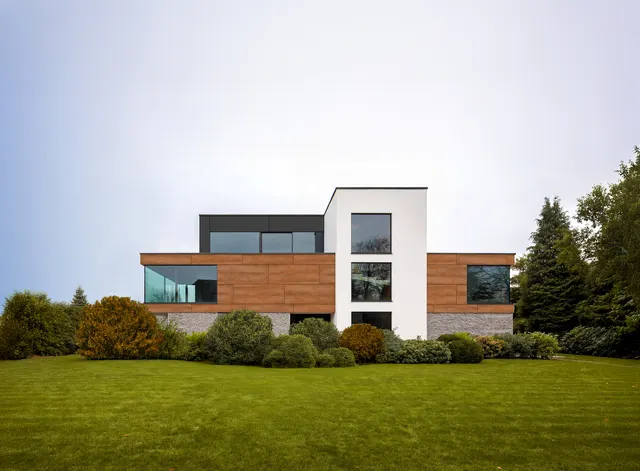
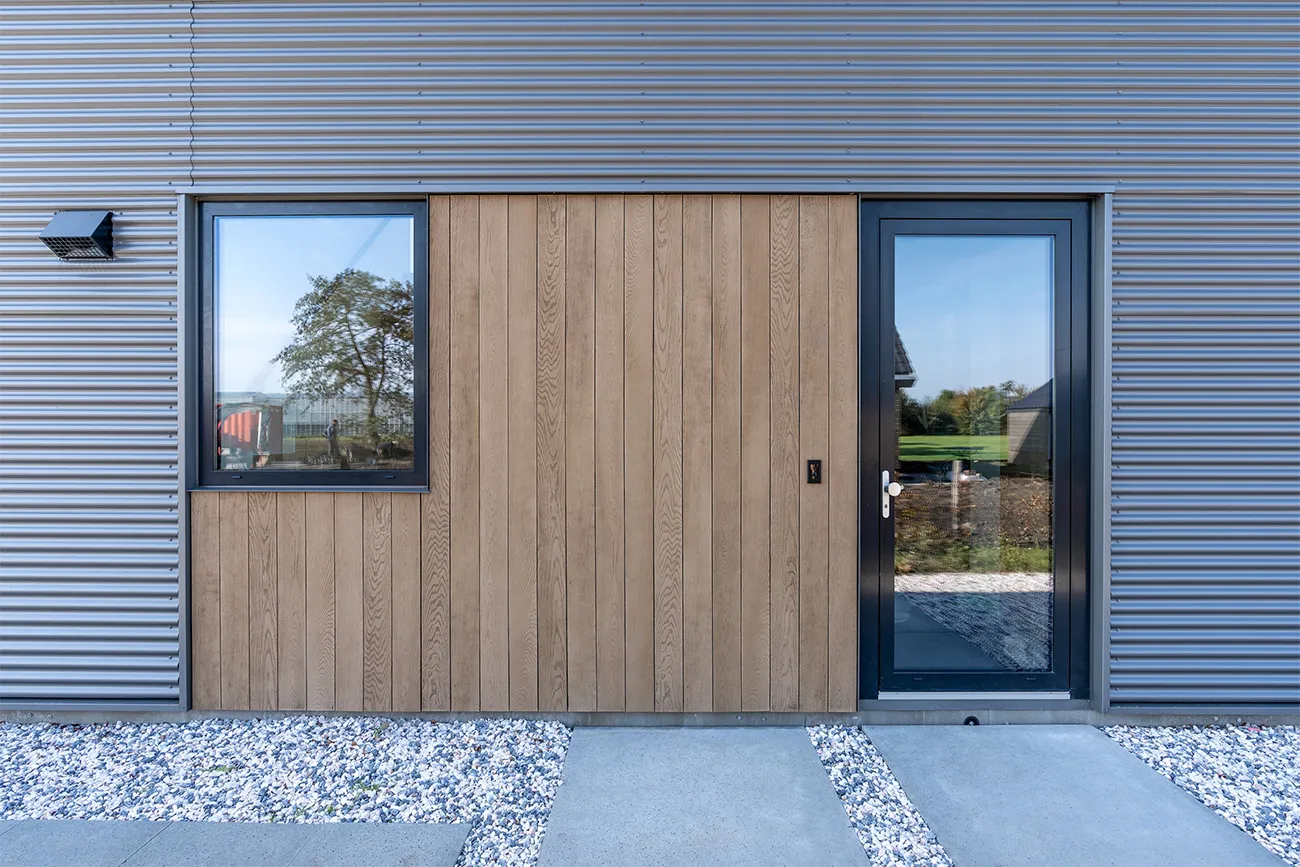
A fine example of Millboard used as cladding is a lofthome in South Holland. The 16 mm-thick cladding has been installed across an entire façade, on the underside of the roof overhang and as accents on the side façade. Owner Bas de Bruin says: “We chose a lofthome, designed by BKVV architecten, because of the look of this type of home: we like the basic shapes, like a house drawn by a child. We think a large glazed façade is fantastic. There are no load-bearing walls inside the building, either, so the interior can be laid out entirely as we wish, without restrictions. We had a beautiful double-height space created and made extensive use of light oak, for example on the doors and other details.”
Distinctive façade design
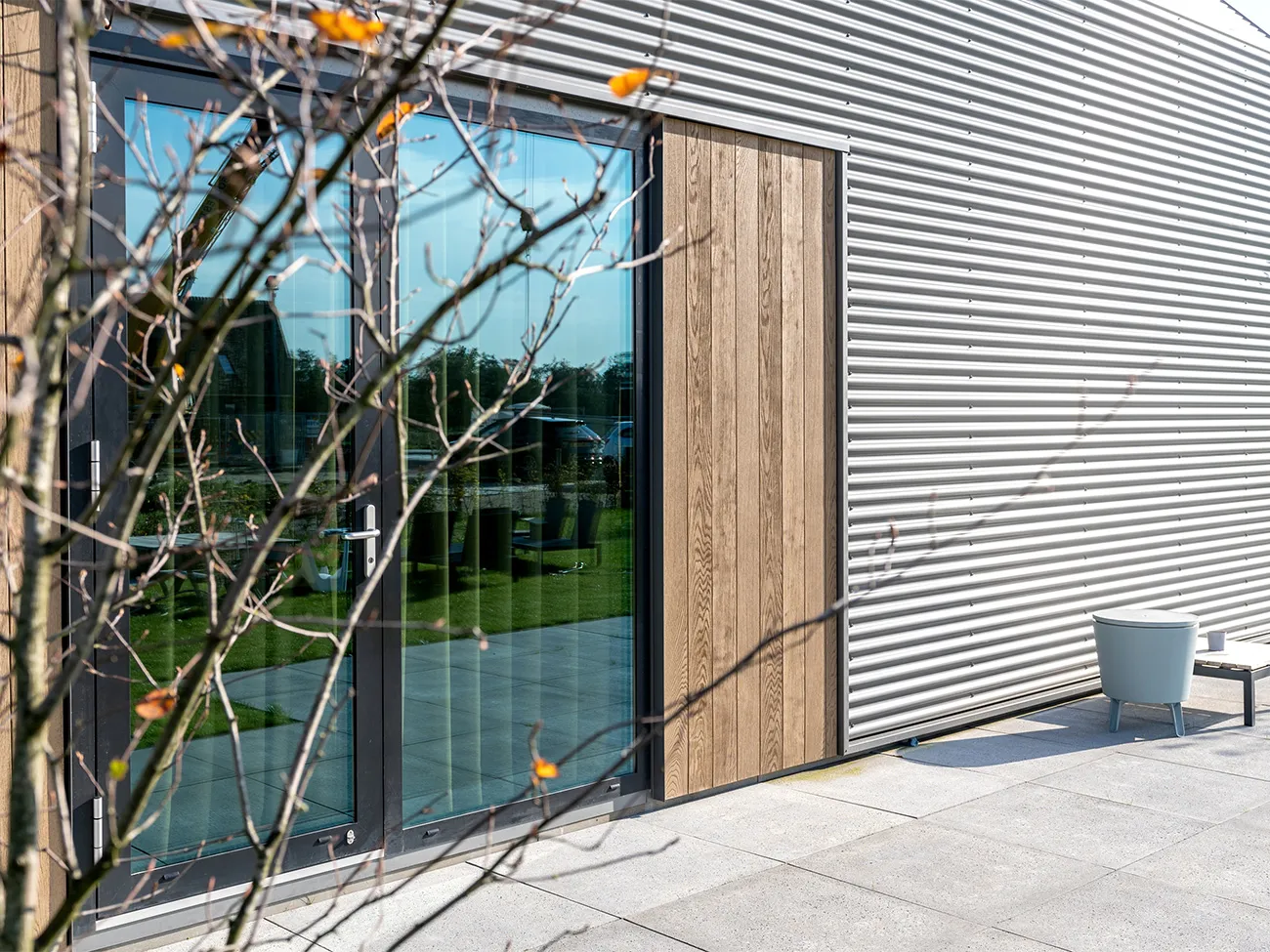
As with the interior, the owners had specific ideas for the outside of the home: “Most of the façade is made up of sinusoidal steel sheets. We wanted to use wood to soften the overall look. Or rather, we wanted the appearance of wood, but in a maintenance-free, splinter-free version that resists stains, UV radiation and the weather, and will not warp or rot. And that really does lead you to Millboard!” Golden Oak was chosen to complement the wood inside the home. De Bruin installed the boards himself on the battens and used a random pattern on the roof overhang for a playful effect. “It looks very good that the material closes back up when you use the special screws. And it is fixed really securely.” De Bruin is amazed at how closely it resembles real wood: “And at how it feels and sounds, too. When I held the wood, my brain said, ‘watch out for splinters’, but Millboard is completely splinter-free!” The owners also chose Millboard for the terrace beneath the 8-metre-high roof overhang, creating a pleasing consistency in material and colour. “We’ve really achieved the look we had in mind. When you look outside through the large glazed façade, it’s like looking through a mount,” De Bruin concludes proudly.
Question about this story? Ask your question
Keep following this
Get an email when a new story is published. No account needed.
- ThemeFacade design and construction
- SubjectFaçade cladding