FAC offers legal support to its members
Knowledge of legal matters and careful attention to the ‘small print’ on the back of a quotation are essential when delivering aluminium joinery and façade projects.
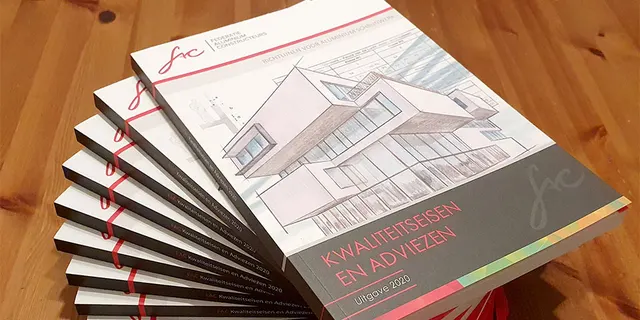
In the 2020 edition of its quality manual, the Federation of Aluminium Contractors (FAC) included a set of ‘Terms and Warranty Arrangements’ drawn up specifically for the aluminium joinery and façade construction sector by law firm Eeckhout-Ottevaere. Under a recent cooperation agreement with the firm, FAC members can now also submit their legal questions and problems for advice.
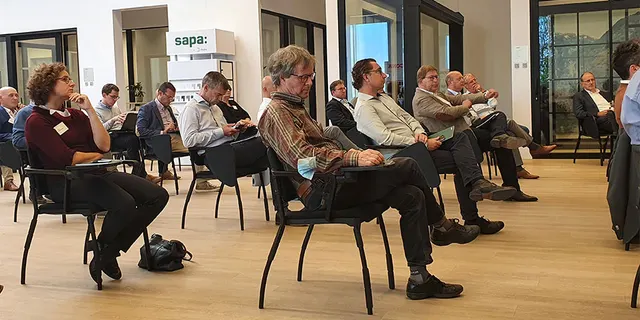
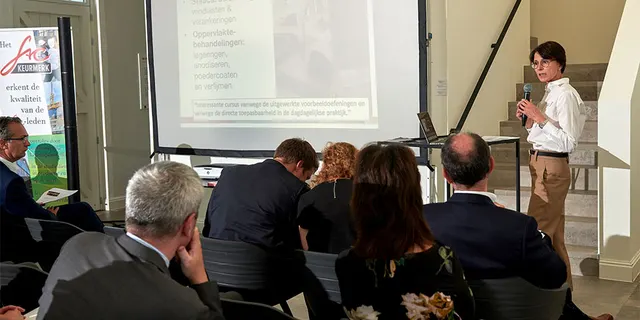
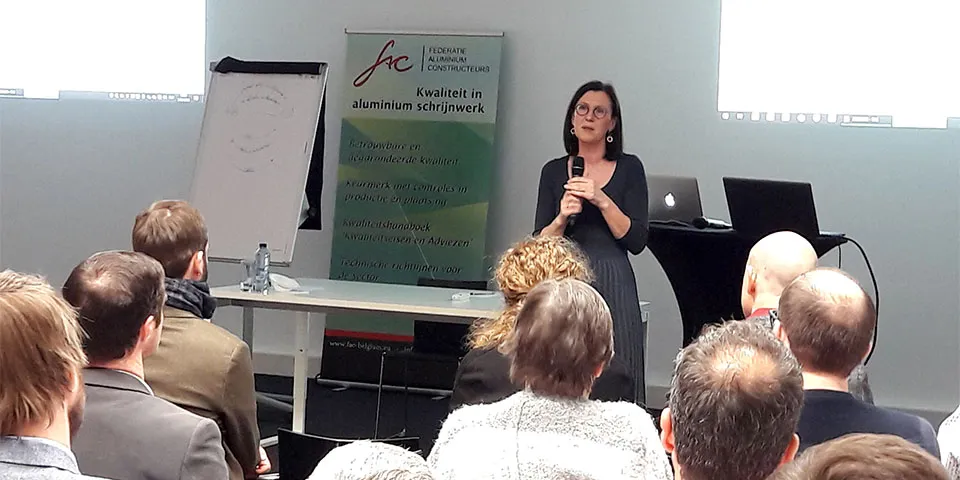
On 3 March, FAC invited two experts in the field to speak at an evening event for members and partners.
Ms Ann Eeckhout spoke about specific standard terms and conditions and topics such as liability, handover, non-payment and late completion.
Guy Schepers of Lexpert took a closer look at the meaning of arbitration and its potential for the aluminium construction sector.
Ms Eeckhout stressed the importance of specific standard terms and conditions, as they give contractors a much stronger legal position and greater protection than the general law. For the terms to be legally valid, the contractor must be able to prove that the client knew about them and accepted them.
Under the heading LIABILITY, Ms Eeckhout shed light on several topics.
For example, she warned against an obligation to achieve a specific result, where the contractor undertakes to deliver a particular outcome (e.g. airtightness) but cannot necessarily guarantee it as the only party involved. By contrast, under an obligation of means, the contractor is liable only if fault on their part can be proved.
A contractor may be held responsible for defects in execution if the work was not carried out in accordance with the plans, specifications and mandatory legal provisions, or in breach of the rules of good workmanship. Contractors also have a duty to provide information. If they expect a particular commission to result in a defect, they may refuse to carry it out or must warn the client in writing and seek to be released from liability.
Contractors are generally liable for 10 years for serious defects that compromise the stability of the building or a significant part of it. This period cannot be limited by contract because the consequences concern public policy and extend beyond the interests of the client alone. Any claim must be brought within 10 years of completion of the work. Under the FAC terms, however, this period starts at provisional handover.
For minor hidden defects that do not affect stability, the law does allow the contractual limitation of time periods. FAC has applied this in its terms, specifically by limiting the warranty period to 1 year (rather than 10 years) and setting a limitation period for legal proceedings. Claims are admissible only if brought within six months of the day on which the client became, or should have become, aware of the defect, rather than merely requiring notification within a ‘reasonable’ period.

Guy Schepers of Lexpert took a closer look at the meaning of arbitration and its potential for the aluminium construction sector.
With regard to HANDOVER of a commission, Ms Eeckhout recommended documenting provisional handover in writing. The date of provisional handover marks the start of the ten-year liability period. If a client does not respond to a request for handover, the FAC terms provide for deemed handover. Taking the work into use or paying the final invoice may also constitute deemed handover.
In the event of NON-PAYMENT, a contractor may suspend work after first serving a notice of default, preferably by registered post, and announcing the suspension. As a subcontractor, you may bring a direct claim only if an invoice that is due has not been paid.
In relation to LATE COMPLETION, Ms Eeckhout advised contractors to proactively ask the client for an extension to the completion period, and to notify them in writing when the work is complete, together with a request for handover. Delay penalties apply only after a notice of default has been served.
Guy Schepers of Lexpert explained the principles and advantages of ARBITRATION as an alternative to court proceedings for resolving disputes.
Arbitration is governed by an international legal framework, which means that an award can be enforced by any court in any country. In Belgium, arbitration is governed by Part VI (Arbitration) of the Judicial Code.
Arbitration means that parties entering into a contract agree to refer any future disputes to one or more ‘arbitrators’, who can be selected freely on the basis of their experience, expertise and recognition by their peers. Arbitrators, who must always be appointed in an odd number, act independently, impartially and with a focus on finding solutions. The main advantage of arbitration is that proceedings are quicker than a case before the ordinary courts. Arbitration is also less formal than proceedings before an ordinary court and is not public.
Given the advantages of arbitration, Guy Schepers called for wider use of the process in Belgium, as is already the case in the Netherlands. He also encouraged the contractors present to put themselves forward as arbitrators for the aluminium construction sector. Several attendees at the event immediately expressed interest in doing so.
Een zakelijke vraag aan Federatie Aluminium Constructeurs (FAC)? Get in touch
Companies in this story
Keep following this
Get an email when a new story is published. No account needed.
- SubjectFAC
- CompanyFederatie Aluminium Constructeurs (FAC)