Circularity and recycling: a challenge and an opportunity for the aluminium sector
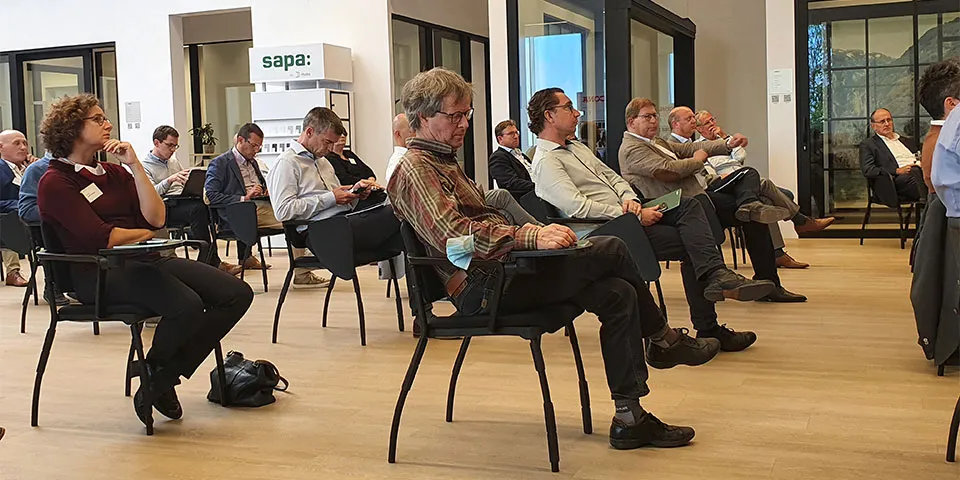
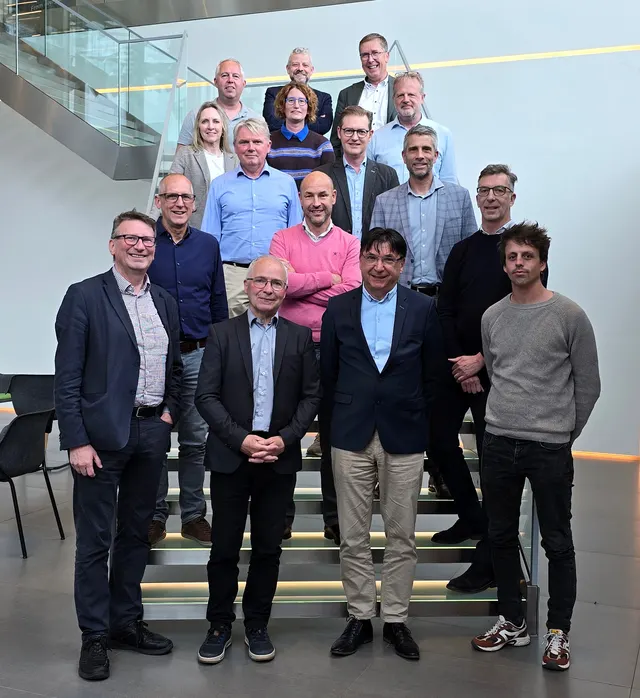
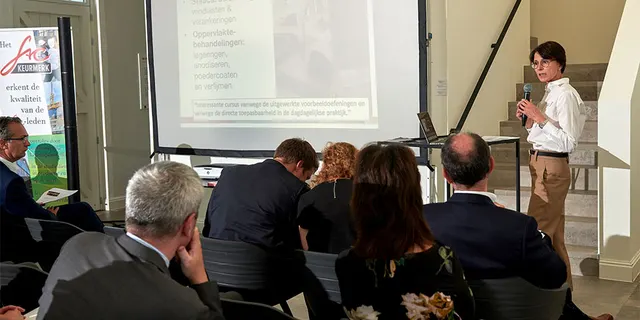
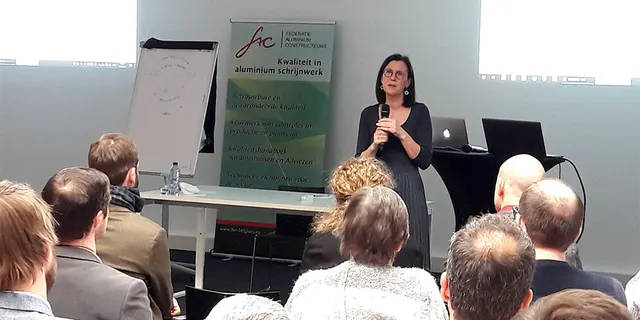
On 8 September, FAC organised an evening event on ‘Circularity and Recycling’ at Hydro Building Systems’ premises in Landen. It is no surprise that the subject attracted considerable interest among FAC members. After all, the construction sector accounts for a significant share of the global environmental impact, materials consumption and waste stream. The transition to a circular model gives the sector the opportunity to address its sustainability challenges while also making the most of new opportunities.
The principles of the circular economy can be divided into three main pillars for the construction sector:
- design and construction of flexible, adaptable buildings
- extraction and valorisation of materials from existing buildings
- development of new economic models that increase the added value of materials and buildings throughout their entire lifespan
FAC invited three speakers to discuss the subject from the perspective of their practical experience: Jona Michiels, Innovation Manager at Groep Van Roey, Tim Ost, Expert Circular Design at VK Architects & Engineers, and Joris Verhiest, Marketing Director Region West at Hydro Building Systems.
Successful circular construction starts with a life cycle assessment
Jona Michiels opened proceedings with a presentation on how Groep Van Roey has been experimenting with circular construction since 2017, and how it aims to contribute actively to solutions that make the construction sector more sustainable.
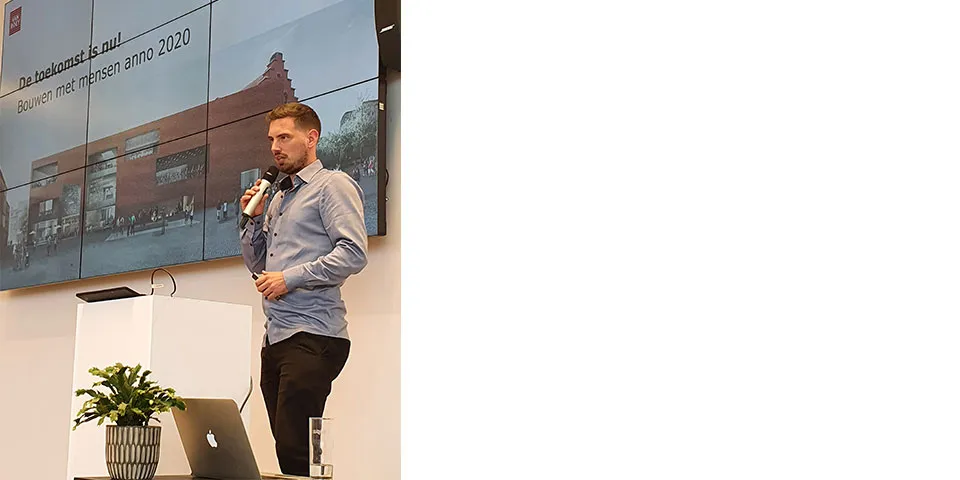
This family-owned construction group, which comprises 10 companies and activities ranging from construction alone to bespoke turnkey solutions, puts responsible business at the heart of its operations.
The construction sector is responsible for 40% of energy consumption in the EU and 35% of CO2 emissions. It also accounts for 31% of materials use and 33% of waste.
The construction sector’s inefficient use of materials urgently needs to be addressed. Many raw materials, for example, will become scarce or depleted in the coming decades. In addition, certain design and material choices in buildings have a greater overall environmental impact than, for example, energy consumption.
This is demonstrated by (a posteriori) life cycle assessments (LCAs) of construction projects, which map out the various stages and processes, from the extraction and processing of raw materials through transport, production, construction, reuse and landfill to recycling.
A life cycle assessment at the start of a construction project is therefore particularly valuable, as it provides a substantiated, comprehensive environmental score and enables better-informed, sustainable decisions on design, choice of materials and so on. A life cycle assessment offers objective, quantitative support for environmentally conscious circular construction, in which raw materials and building materials can be used and reused intelligently. This creates a closed loop, unlike the traditional linear model, which always draws on new raw materials.
Transformability and modularity are among the basic principles of circular construction. This means that a building’s function can be changed without generating excessive costs and waste streams, for example from office to residential use, and that materials and components can be easily dismantled for reuse or recycling. A ‘circular building’ can be described as a temporary home for materials that can be removed individually.
As well as pursuing environmental objectives, circular business models aim to reduce the cost of a construction project for the end user over its entire life cycle. It is therefore important to apply a ‘Total Cost of Ownership’ (TCO) approach from the design stage. This means that decision-making focuses not only on the initial investment cost, but also takes account of longer-term maintenance and operating costs associated with the way the building is constructed. TCO insights can lead to alternative design choices that may make the building more expensive initially but deliver savings over its entire lifespan.
The circular approach is gradually gaining ground in the construction sector. However, as Jona Michiels emphasises, implementation is not always straightforward. This also applies to a complex product such as aluminium windows and doors. That is why research and practical experience gained through pilot projects such as the Circular Retrofit Lab are so valuable in answering questions such as ‘When is reuse desirable, and in what form?’, ‘Are alternative business models such as Pay-Back or As-a-service possible?’, and ‘Are the current recycling channels sufficient?’.
Circular construction calls for an integrated approach
Tim Ost, Project Engineer Sustainable Design, explained VK Architects & Engineers’ circular approach. The design and engineering consultancy works in the fields of ‘Healthcare Design’ and ‘Building Engineering’, and offers a wide range of design services, including Sustainable Design and Facade Engineering.
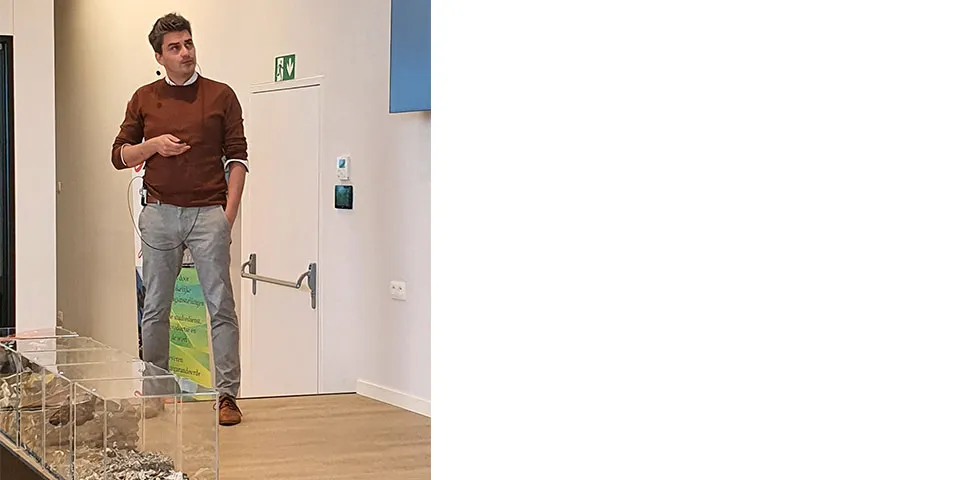
For every construction project, it aims for an integrated approach, with a sustainable outcome and a lower environmental impact in the long term as its objectives.
How can circular construction be put into practice?
Circularity applies at both building and product level, and VK Architects & Engineers seek to bridge the gap between the two, Tim Ost explained. The consultancy has developed its own framework based on three pillars to help clients bring circularity into their construction projects.
The first pillar concerns a building’s ability to adapt to change. This involves asking specific questions, such as how flexible the building needs to be and what its lifespan should be.
The second pillar focuses on material choices and the need for demountable and re-assemblable systems in line with the envisaged technical, functional, economic and aesthetic lifespan.
The third pillar focuses on the choice of circular business model. One of the best-known business models is ‘Product-as-a-Service’, for example Facade-as-a-service or Elevator-as-a-service, in which the user buys a service rather than a product. In this model, the manufacturer or supplier retains ownership of the product and remains responsible for its performance during and after its lifespan. The manufacturer therefore has every incentive to offer a high-quality, durable product. Identifying and tracking materials is also important, with a view to their eventual dismantling, reuse and/or recycling.
These final aspects also apply to the Take-Back model, in which manufacturers take back their products at the end of their life cycle for recycling or remanufacturing. According to the speaker, this model should be expanded through greater involvement of ‘urban miners’ (demolition contractors) who collect materials, for example at central urban depots, and make the activity more economically attractive by handling larger volumes.
How can circular construction be put into practice?
In the second part of his presentation, the speaker discussed a number of labels introduced to measure and improve the sustainability of buildings and products.
One of the best-known labels at building level is BREEAM, which assesses sustainability performance against criteria such as ‘building flexibility’, ‘materials efficiency’ and ‘environmental impact of construction materials’, and awards the building a certification based on the score achieved. CradleToCradle and EPD are examples of labels that measure and certify the sustainability of products.
Since 2018, the Belgian construction sector has been able to use the TOTEM web tool (Tool to Optimise the Total Environmental impact of Materials) to quantify and assess the environmental performance of buildings and building components. The method, which produces an aggregated score, applies generic life cycle assessments (LCAs) and takes account not only of environmental indicators but also of
monetisation factors representing the cost to society of repairing any environmental damage.
VK Architects & Engineers have also developed their own simulation tool, VKaLCA, which produces an LCA tailored to each project and product.
How can circular construction create value?
One of the circular projects involving VK Architects & Engineers is the ZIN project, which is replacing the former WTC I and II towers at Brussels North Station. VK Architects & Engineers are responsible for M&E Engineering, Facade Engineering, Fire Safety Engineering and the building’s sustainability. From 2023, alongside apartments, hotel rooms and public parking, the building will also provide office space for 3.900 civil servants from the Flemish government. The ZIN project is a true showcase for circularity. Maximum use is being made of the existing building, and up to 95% of its materials and equipment are being retained, reused and recycled. The building also has a flexible basic structure, allowing it to serve a range of functions and making future adaptations easier.
Circular construction gives aluminium an eternal life
Joris Verhiest concluded the evening event with a presentation on the sustainability challenges facing the aluminium sector and the solutions being developed by Hydro Group. Hydro is active in every segment of the aluminium value chain, from bauxite mining to scrap recycling, and supplies products and services to a range of industries. Hydro Building Systems offers a comprehensive range of aluminium windows and doors worldwide under the brand names Sapa, Wicona, Technal and Domal.
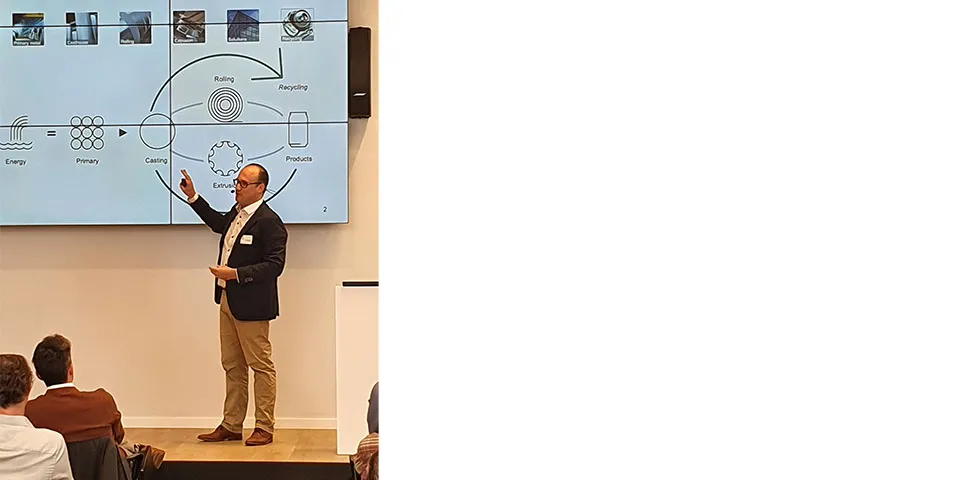
The rapidly growing international demand for aluminium presents major sustainability challenges for the aluminium sector. One reason is that bauxite is mined in scattered, sometimes remote regions, while the energy-intensive production of primary aluminium worldwide is still largely based on coal and natural gas. As a result, the average carbon footprint of primary aluminium is considerable. In addition, the aluminium windows, doors and facades sector accounts for a substantial share of the total construction carbon footprint, averaging 13%. Primary aluminium makes up 65% of the environmental footprint of an aluminium window, despite accounting for just 24% of its total weight. Using low-carbon or recycled aluminium in production significantly reduces the carbon footprint. And once its full life cycle is over, the aluminium window can be recycled into new aluminium windows without any loss of quality.
To help reduce the environmental footprint of the group and the sector as a whole, Hydro launched a new climate strategy aimed at cutting its CO2 emissions by 30% by 2030. This is equivalent to the annual emissions of 1,2 million cars or 4 million tonnes of CO2. The group is pursuing this ambition by reducing its own emissions through greener sourcing and production, and by helping customers reduce their footprints by offering greener products.
Hydro REDUXA and Hydro CIRCAL are two low-carbon aluminium products developed by the group.
Hydro REDUXA is a primary aluminium alloy with one of the lowest carbon footprints. Its carbon footprint of 4.0 kg CO2/kg of aluminium is less than a quarter of the global average (16.7), thanks to the use of renewable energy sources such as hydropower. An even lower carbon footprint (2.3 kg CO2 per 1 kg of aluminium produced) was achieved with the development of Hydro CIRCAL 75R, made from recycled post-consumer scrap. The key point, the speaker noted, is that aluminium scrap has intrinsically high value. With around 75% of all aluminium ever produced still in use, post-consumer aluminium scrap represents a virtually unlimited energy reserve that can, and will, play a crucial role in the future of the circular economy. Aluminium is an infinitely and 100% recyclable material, and producing recycled aluminium requires just 5% of the energy needed to produce primary aluminium.
Hydro has two sites in Europe, in Dormagen, Germany, and Clervaux, Luxembourg, where post-consumer construction scrap is fragmented, sorted and processed using a scientifically based method before being returned to circulation. This produces high-quality alloys with a high degree of purity. The entire recycling process is certified by the Norwegian auditor DNV-GL. Hydro also supports its sustainability efforts with a growing number of certificates. The entire production process is fully traceable, and the products are certified by independent third parties.
Examples of certificates include the previously mentioned BREEAM, Cradle-to-Cradle and EPD, as well as ASI, an independent certification system for the responsible management of aluminium. It was developed to ensure that proper social commitment is embedded in the management, production, use and recycling of aluminium. Hydro also supports ‘Duurzaam Schrijnwerk’, a publicly specifiable label established by BCCA together with the industry to support better window and door manufacturers in the face of unfair competition. The label sets out all the technical requirements and sustainability criteria laid down in a charter, which every company wishing to obtain the label must meet.
At the end of an enlightening evening, the message was clear to participants. Circularity is now an integral part of the construction sector, but remains a complex subject. Research and pilot projects have already generated considerable knowledge, but more initiatives are needed to ensure that the circular model not only enables market players to tackle their major sustainability challenges, but also allows them to seize a host of new commercial opportunities.
Question about this story? Ask your question
Keep following this
Get an email when a new story is published. No account needed.
- ThemeCircular facades with lower environmental impact
- SubjectFAC