








New front doors for interwar homes
Text Tamara BrouwersImage Frager
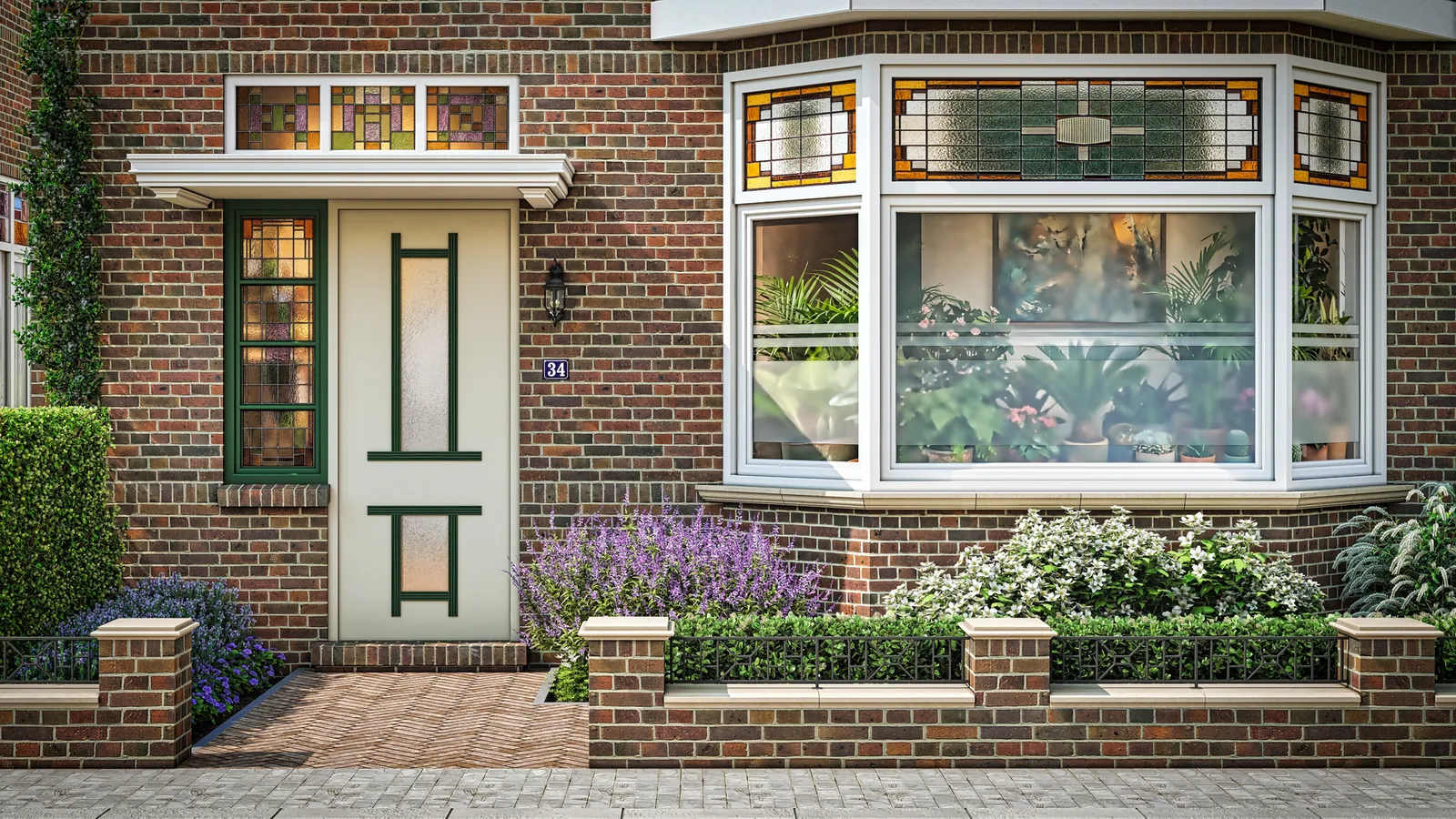
The renovation market is in full swing, says Harinck, producer of Frager door panels. General manager Franck De Munster is seeing a lot of activity, particularly in the Netherlands. “When people renovate their roof, façade or windows, they often replace the front door at the same time. It brings the whole home up to today’s standards again.”
Against this backdrop, the company developed a new collection of front doors for Dutch interwar homes. The models target the large stock of terraced houses built between 1920 and 1930. “Of the seven million homes in the Netherlands, around four million are typical terraced houses,” says De Munster. “Some architecturally stunning work was created during that period. We wanted to respect it rather than simply develop a standard door.”
His background as an architect helps him develop new models, he says. “You look at these homes differently. Proportions, the rhythm of façades and detailing all come into play. A flat, characterless framed door simply does not fit.”
A tribute to Dutch architecture
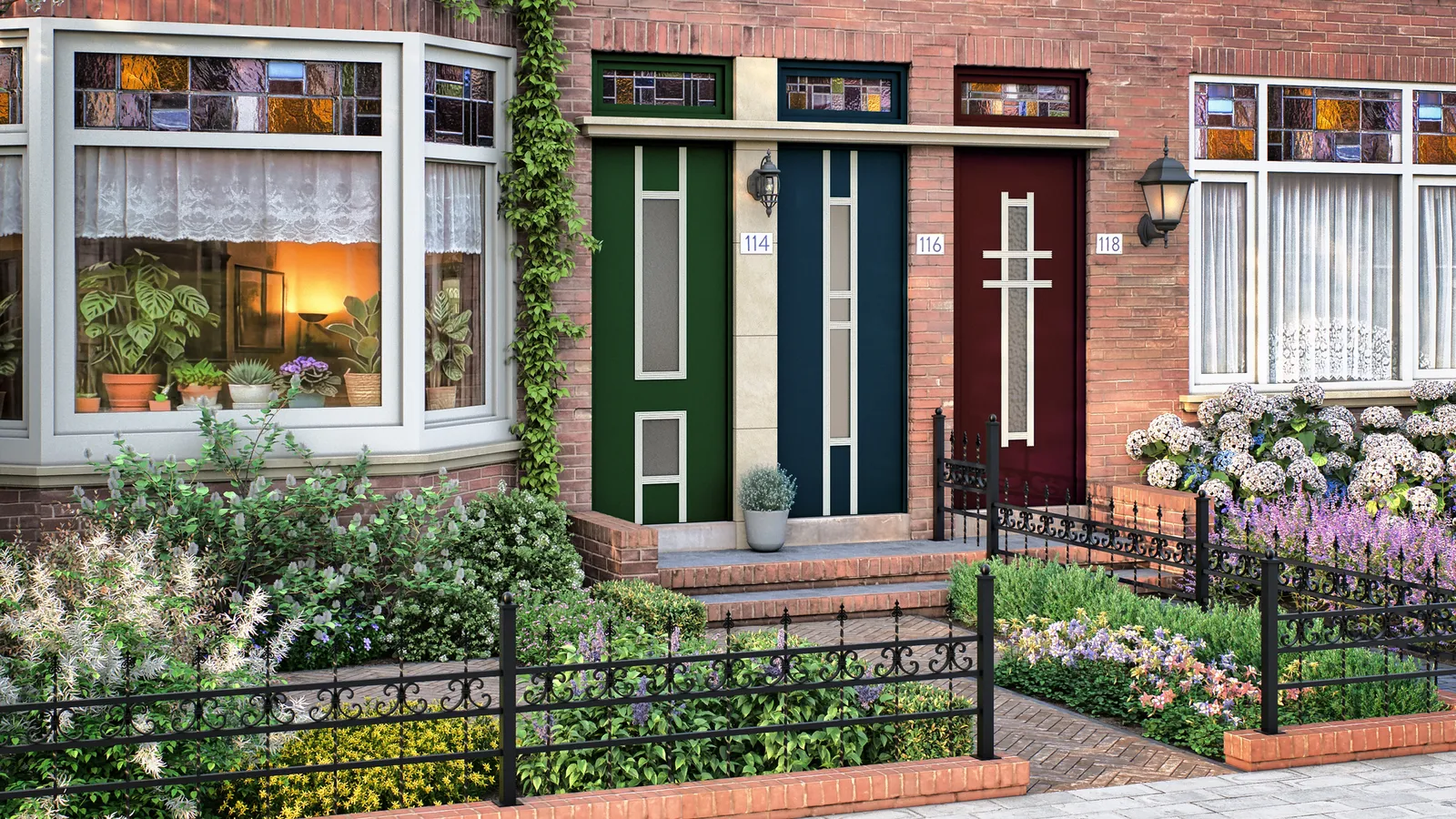
The collection currently comprises four models, named after Dutch architects: Blom, Bakema, Dudok and Berlage. Harinck is deliberately drawing on the different architectural movements represented in Dutch housing. “You see more classical elements in Dudok and Berlage,” explains De Munster. “Blom and Bakema are closer to a modernist, functional design language. We have tried to capture the spirit of each architectural style in a contemporary front door.”
The designs make subtle references to the front doors of the past in Dutch residential districts. “In the past, joiners personalised these doors with simple touches: a flat panel, battens, a small glazed area and a distinctive colour combination. That gave a home character.” This idea also provided the starting point for the new range.
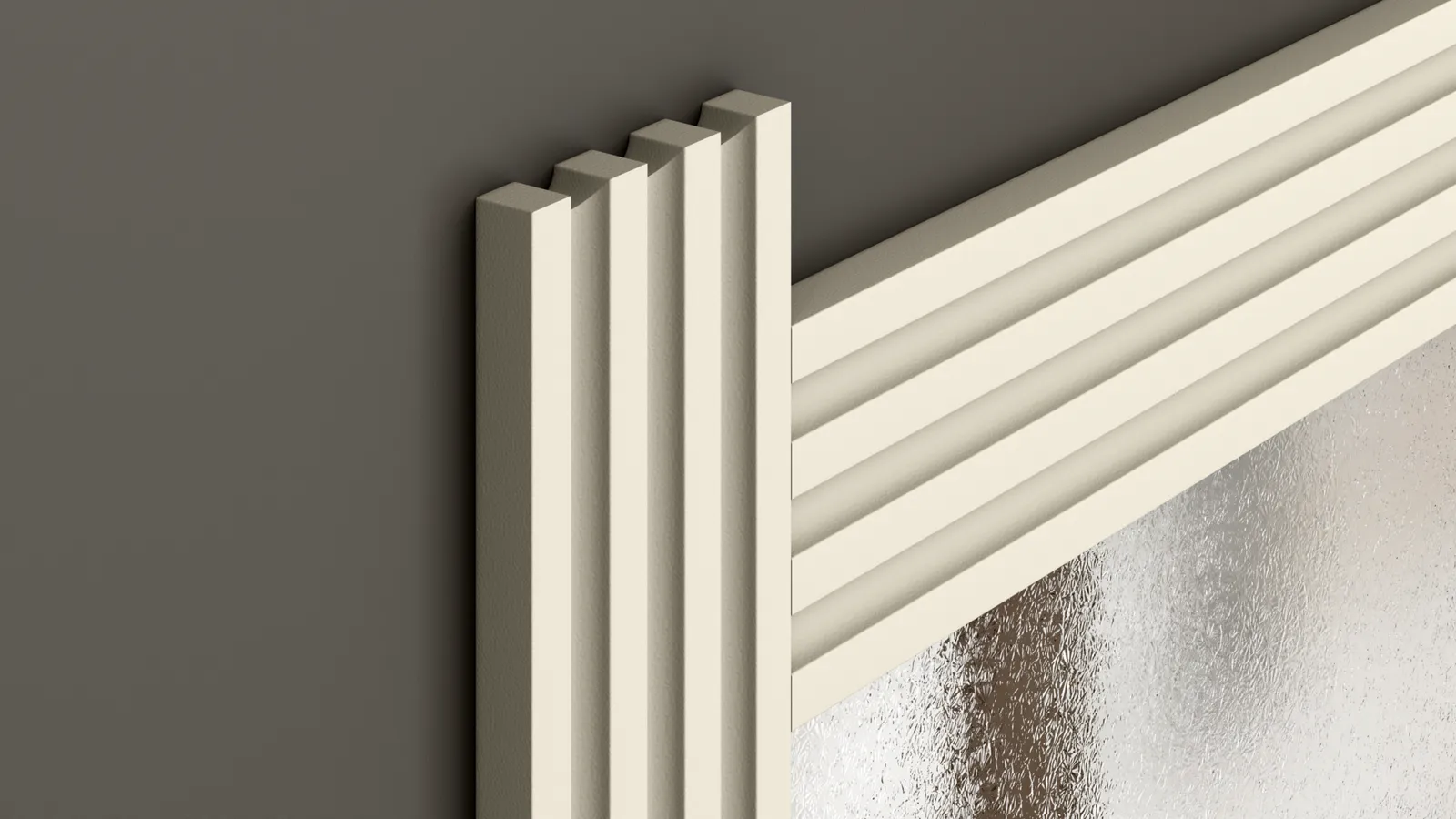
At the same time, Harinck translates these details into contemporary materials and techniques. Decorative mouldings are no longer made of wood, but from colourfast materials with a longer service life and lower maintenance requirements. The models combine flat panels with small glazed areas and contrasting colour accents.
Tapping into the renovation boom
De Munster says the range is part of a broader renovation boom in the Dutch housing market. “Interwar homes are being upgraded to meet current insulation and energy performance standards. People often replace several components at once.” Harinck is seeing the same trend in enquiries from the market. “Roof renovations, façade insulation and new windows often go hand in hand with a new front door nowadays.” Dutch subsidy policy is also helping, according to De Munster. “The Netherlands has made clear choices about sustainability. Those subsidies encourage people to make a real investment.” He sees a different picture in Belgium. “The government’s indecision there means the market is taking a more cautious approach.”
The first reactions to the collection have been notably positive, he says. “We often hear that this was something the Netherlands was missing. Few companies develop front doors specifically for this type of home and with respect for its architectural character.” Development is not stopping with these four models. “When we walk around Dutch cities, we keep discovering new details and building types,” says De Munster. “These will probably inspire more models.”
Question about this story? Ask your question
Keep following this
Get an email when a new story is published. No account needed.
- ThemeWindows, doors and entrances
- SubjectGeneral







