








Planning is production: ‘Producing in the order in which you deliver’
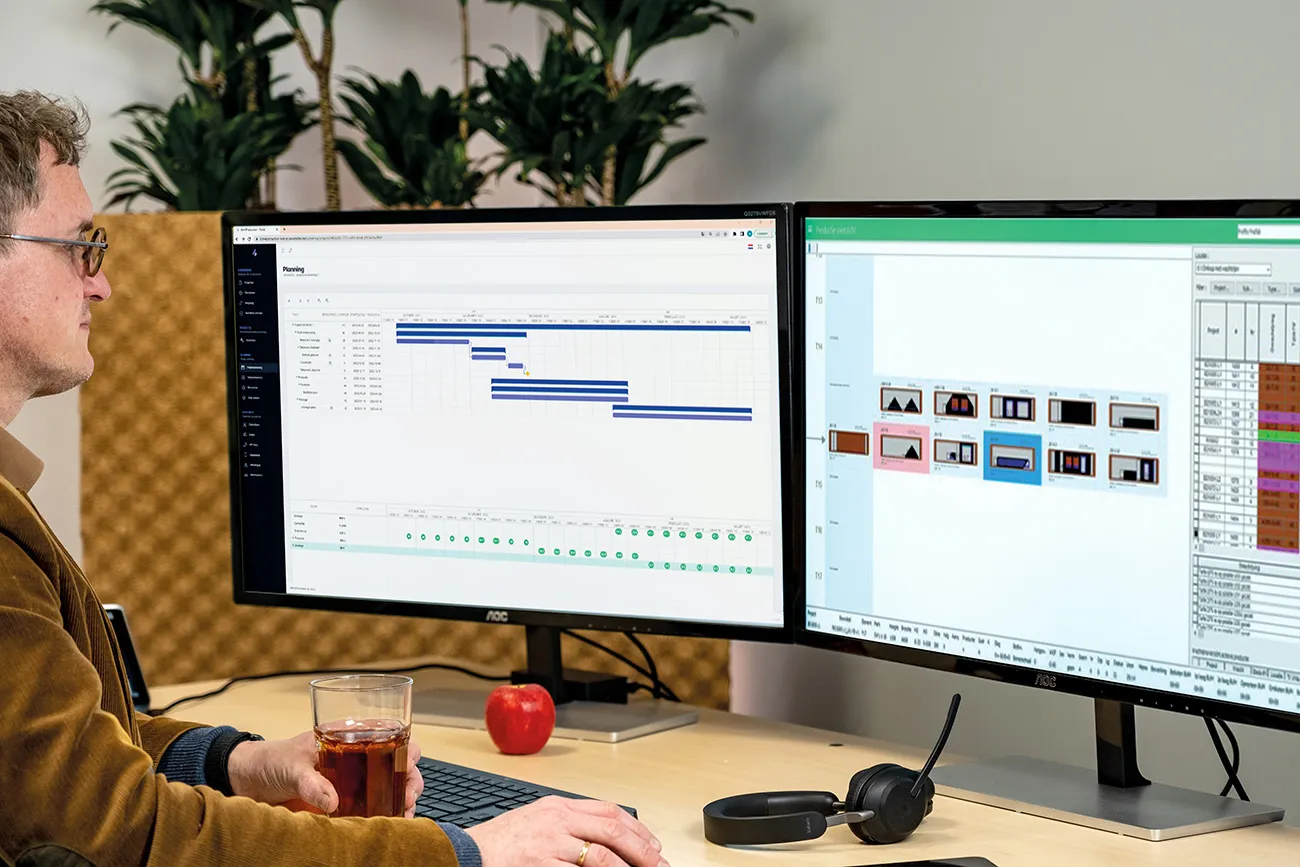
Construction is increasingly becoming a logistical challenge, requiring a different understanding of processes. Industrial building element manufacturers benefit from up-to-date planning based on real-time data. After all, it is not sales that determines planning and production, but the load configuration. In other words: what needs to be delivered, and when? This is a fundamentally different approach. Henk Jan Nieuwenhuis explains how, on the BIM4Production platform, he combines a single integrated plan with integrated production control.
In an ideal world, you want to be able to plan and produce just in time, says Nieuwenhuis. “Most companies’ frustration stems from the fact that production determines the plan, rather than the plan driving production. You don’t want a plan that is already ‘set in concrete’ six or ten weeks in advance. There is also a great deal of confusion because different departments have their own separate plans, creating multiple ‘versions of the truth’. That makes you anything but flexible. Projects are constantly shifting. If you are not flexible, you risk always producing at the wrong time, with all the consequences that entails. The closer production is to delivery, the easier it is to adjust the plan, so that you produce what you deliver. This also prevents unnecessary stocks of finished products. However, that requires insight and, above all, integrated planning and production control. We address this with BIM4Production Planning.”
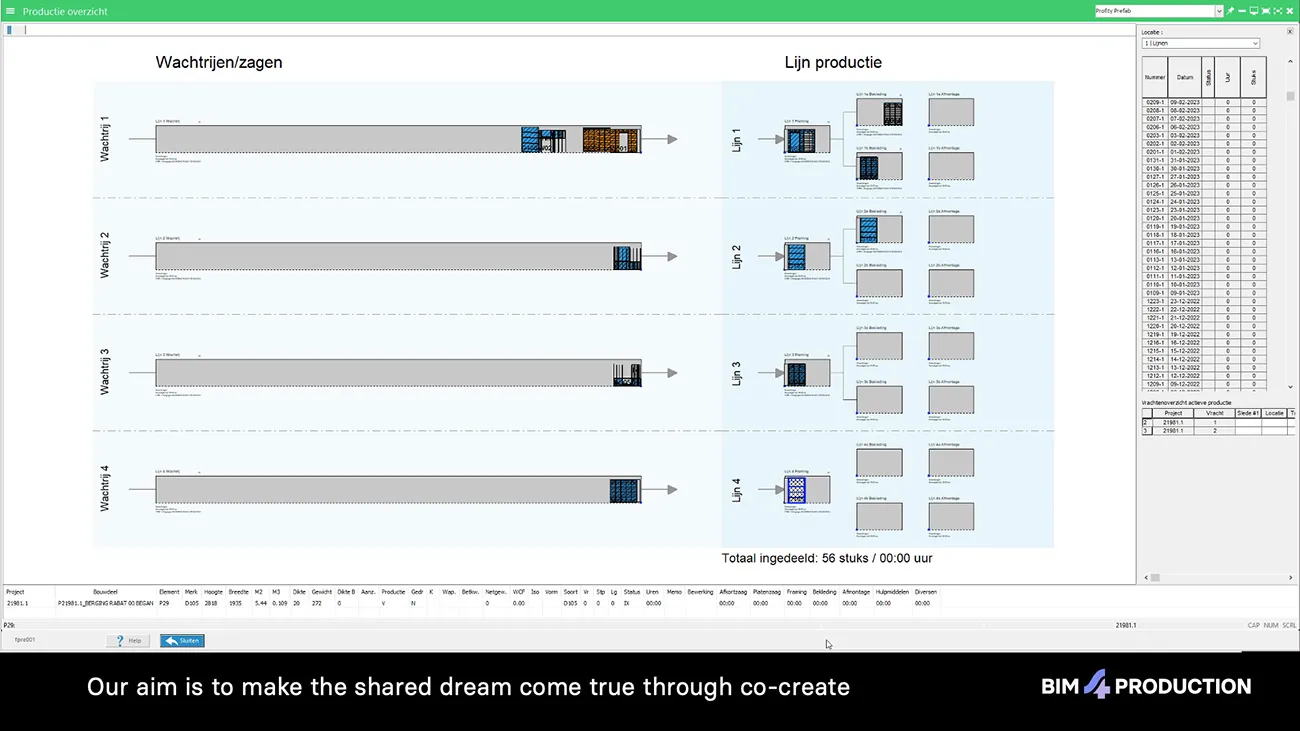
Element level
BIM4Production Planning is suitable for industrial building element manufacturers in the broadest sense. “The key to the solution lies in its starting point: an individual element, not a project,” explains Nieuwenhuis. “An individual element takes shape during the engineering phase. However, planning for industrial building element manufacturers proceeds from broad to detailed: from an outline plan at project or capacity level to a plan at element level, once a BIM model is available. At every stage, you want to avoid having separate planning files in all kinds of formats, because that results in two or more versions of the truth. The process starts with transport (when do you need something on site?) and works back through production to the earliest stage: when does the engineering need to be complete? So you essentially plan backwards. When do you need an element, when must it be produced, and when do you need to start ordering components and parts?”
From broad to detailed
Because the BIM4Production platform integrates both planning and production control (via MES), there is just one version of the truth. “One version of the truth, but presented in different ways,” Nieuwenhuis adds. “At the outline stage, we schedule a project across its lead time. For example, the system automatically calculates which steps need to be completed to have the final BIM model ready on time, so that production and delivery can take place on schedule. When the BIM model comes in, that is recorded as a step, whether it arrives early or late. And so all the essential steps are tracked. There is also an overall plan showing all the different projects in a single view. Once the engineering is complete, we move on to element planning. The BIM model is imported, and we can ‘pick out’ each individual element. Over the past period, we have invested heavily in developing element planning and tested it extensively at Danilith’s factory in Belgium.”
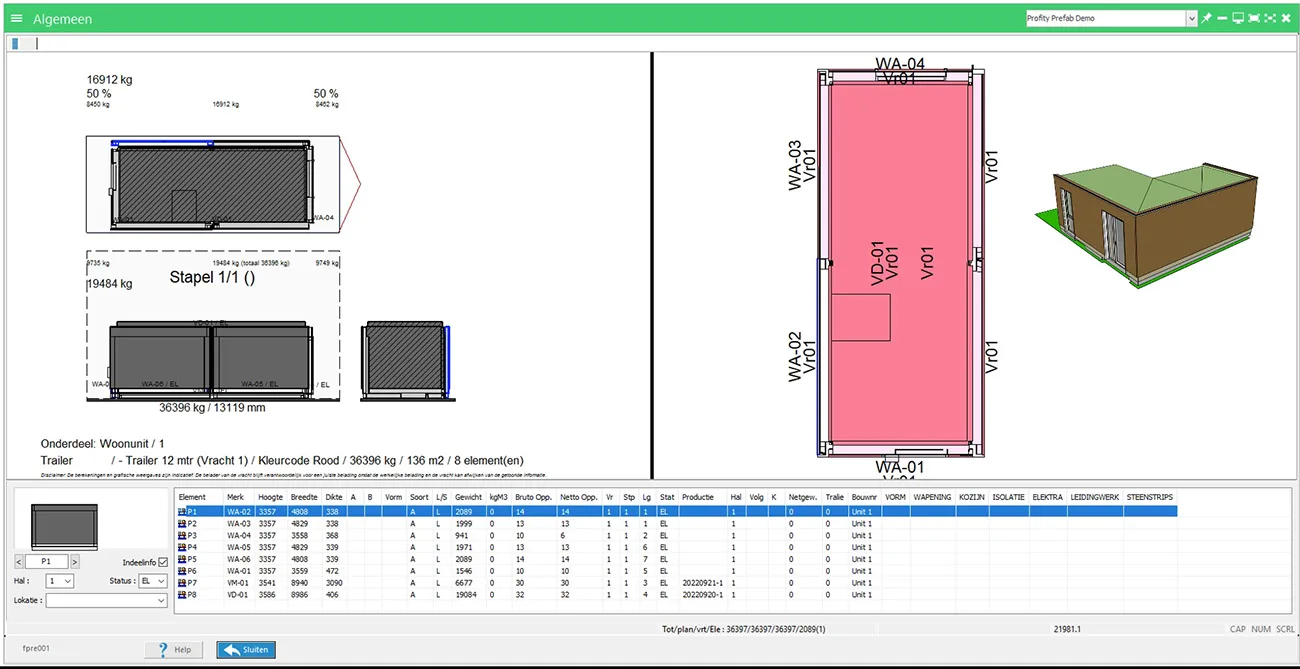
Elements App
The factory is visualised in the element plan. “The great thing is that we now receive real-time updates from the production environment on the position of the elements and their corresponding statuses. Every time an element is moved internally to another location, this is recorded in BIM4Production Planning. Planning and production have therefore become real-time,” Nieuwenhuis stresses. “In Danilith’s dashboard, you can see the elements move digitally through the factory. The planner knows exactly which production stage each element is at. That is because we have linked an MES system to the planning system. Previously, these were always separate systems. Real-time planning means you can produce in the order in which you deliver.” Companies without an MES system can share the same information with BIM4Production Planning via the Elements App. Nieuwenhuis says it is also possible to use RFID technology, with elements identified by a unique tag. “We will soon be able to use that same tag for quality control, both in production and during installation. We will roll out this functionality later this year, but we can already demonstrate it in our demo room.”
And that is not all. Nieuwenhuis says: “The planning challenge in prefab and system construction is one that involves industrial building element manufacturers working together. BIM4Production currently serves individual element manufacturers, but over the coming years we aim to achieve interoperability: a chain of manufacturing companies coordinating demand with one another. This, too, is Industry 4.0.”
Have a business enquiry for BIM4Production®? Get in touch
Companies in this story
Keep following this
Get an email when a new story is published. No account needed.
- ThemeFrom facade model to production
- SubjectGeneral
- CompanyBIM4Production®







