Double-sided tape simplifies the installation of stiffening profiles
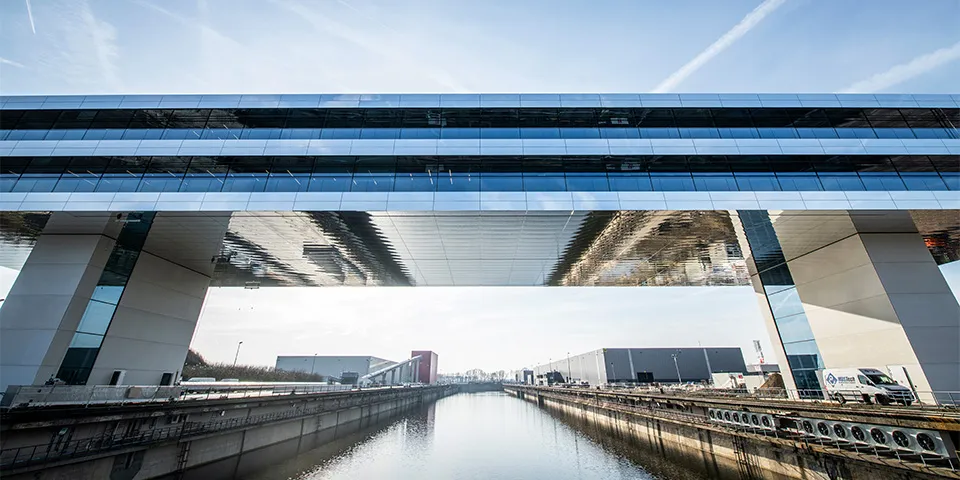
In recent years, tesa has seen growing demand for double-sided adhesive tape. These tapes are used, among other applications, to attach stiffening profiles to panels for decorative wall cladding or striking façades. Development work at the research centre in Hamburg led to tesa ACXplus, which is suitable for attaching profiles to panels made of thin metal or composite material.
Jens Emmerich, Technical Sales & Application Support: “By placing double-sided tape between a panel and a stiffening profile, our customers prevent the panel from moving in strong winds or coming loose due to vibration.” Liquid adhesive can also be used instead of tape. “However, adhesive needs time to dry, which can put capacity under pressure in the workshop. That is why tesa ACXplus offers high initial tack.”
Attach at a later stage
As a second drawback, Emmerich points out that every panel bonded to a stiffening profile with adhesive is fixed in place immediately. “There is no flexibility. With ACXplus, stiffening profiles can be pre-fitted with the tape and attached to the panels at a later stage. Once applied, the tape can absorb stresses caused by temperature fluctuations.” Limeparts Drooghmans chose ACXplus for the construction of Cordeel’s headquarters in Temse. Koen Vandersmissen: “A total of 5.500 m² of Alucobond panels were installed. Each panel consists of two aluminium sheets, each 0.5 millimetres thick, with a 3 millimetre polymer core. This revolutionary façade system allows the panels to be installed invisibly and without vibration, while also making it possible to remove each panel individually in the event of damage or when work needs to be carried out behind the façade.”
Minimalist design
Compared with the mechanical installation of a stiffening profile, using tape allows architects to achieve a minimalist design. Emmerich: “The last thing you want is for the material to be damaged. Tape remains neatly hidden behind the panel in the building envelope. You need no additional equipment, tools or energy, which reduces complexity.” The final production process depends on the customer’s various design parameters. “At the research centre, we test the customer’s materials to determine the level of stress the tape needs to withstand.”
Question about this story? Ask your question
Keep following this
Get an email when a new story is published. No account needed.
- ThemeFacade design and construction
- SubjectProduct information