Fibre-cement façade panels: attractive, durable and versatile fixing options
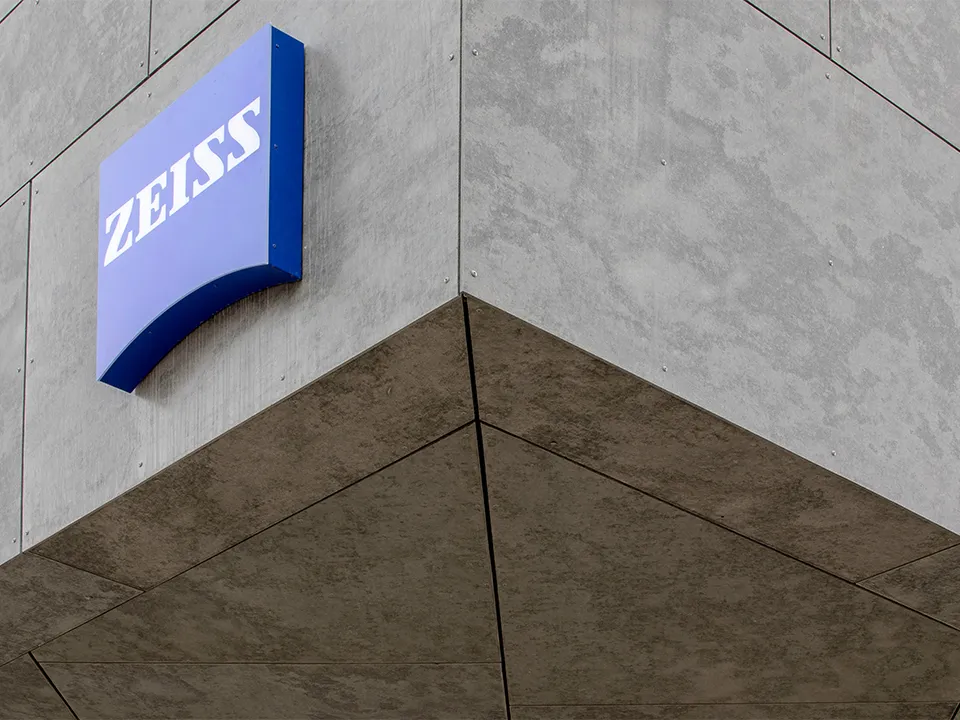
As a flexible partner for sustainable façade and roofing solutions, SVK developed its fibre-cement façade panels. Anouk Crauwels, Marketing Coordinator at SVK, talks about the material, its applications and installation methods.
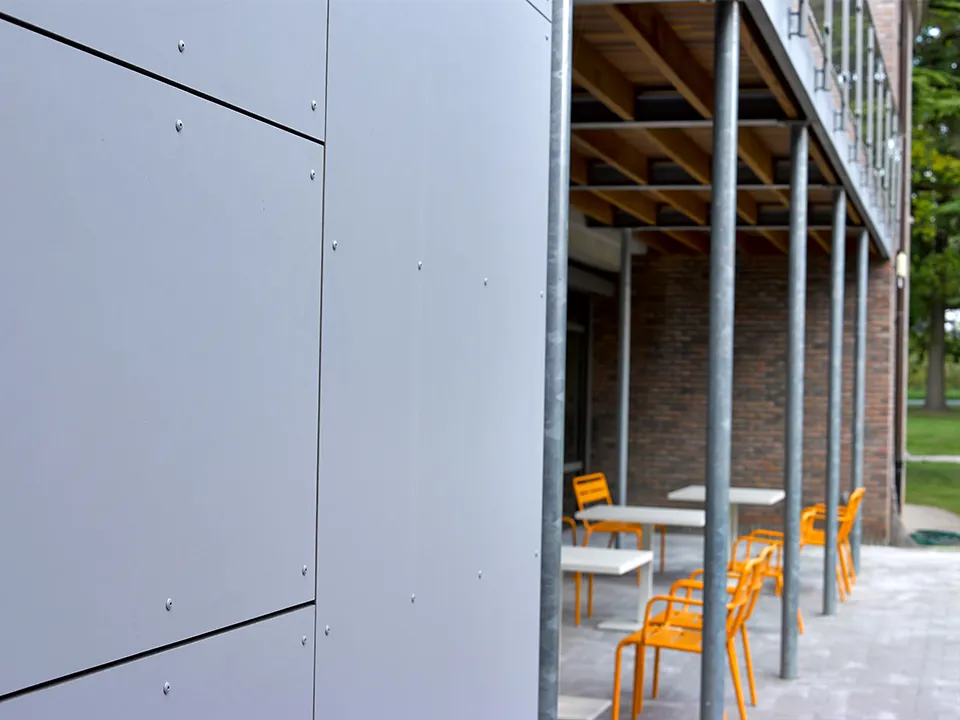
SVK has been producing building materials since 1905. Today, it specialises in the manufacture of fibre-cement products such as corrugated sheets, façade panels and slates. This family business with a rich heritage is focused on the future. “Fibre cement is a recyclable material, so it will become increasingly important in the coming years, both for renovation and new-build projects,” says Crauwels.
Versatile applications
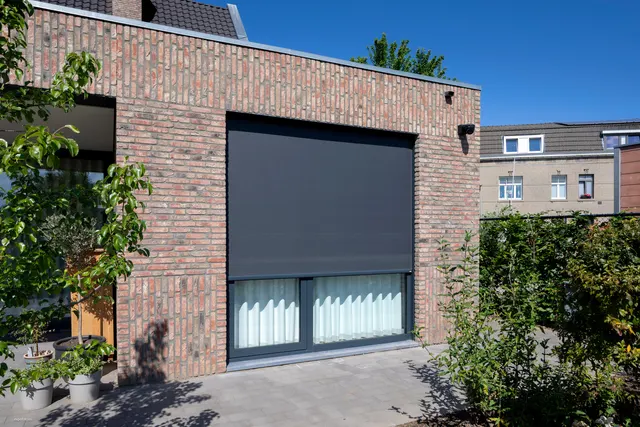
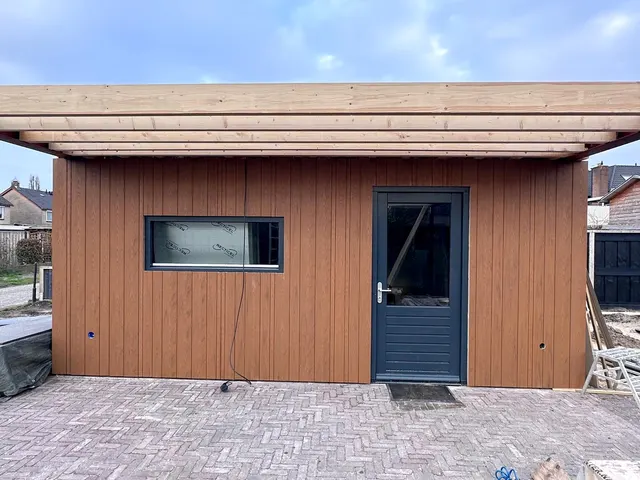
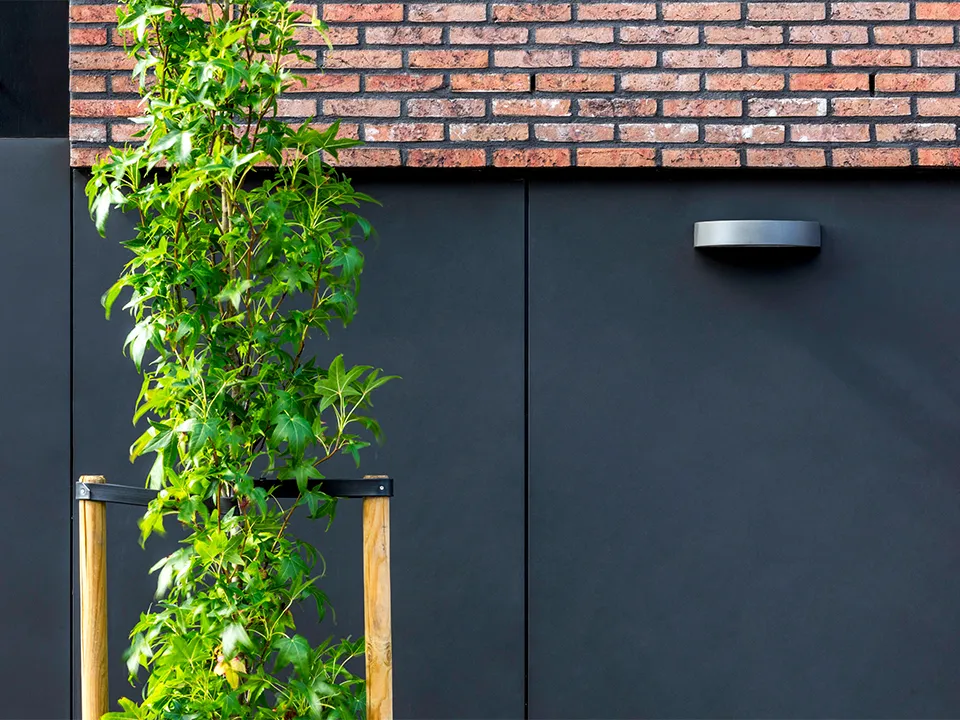
“Our double-pressed fibre-cement façade panels are high quality and have a long service life. They are extremely versatile, and offer unparalleled architectural freedom, allowing you to give every project a unique appearance.” Crauwels explains that the extensive standard colour range is available in various standard sizes, from which almost any shape can be cut. SVK also has its own paint-mixing facility and can produce almost any colour from 50 m² upwards. “This means creativity has no limits, which is exactly what we want to offer our customers. For both our Decoboard Classic façade panel with acrylic coating and our Ornimat panel with two-component polyurethane coating, we can produce many other bespoke colours in addition to the standard colours. What’s more, all our paints are water-based and, of course, UV-resistant.”
Crauwels also mentions Puro Plus, a lightly polished fibre-cement façade panel with a natural fibre-cement appearance. It is also very competitively priced. “All our fibre-cement products meet Fire Class A2, which means they are virtually non-combustible,” adds Crauwels.
Fixing methods
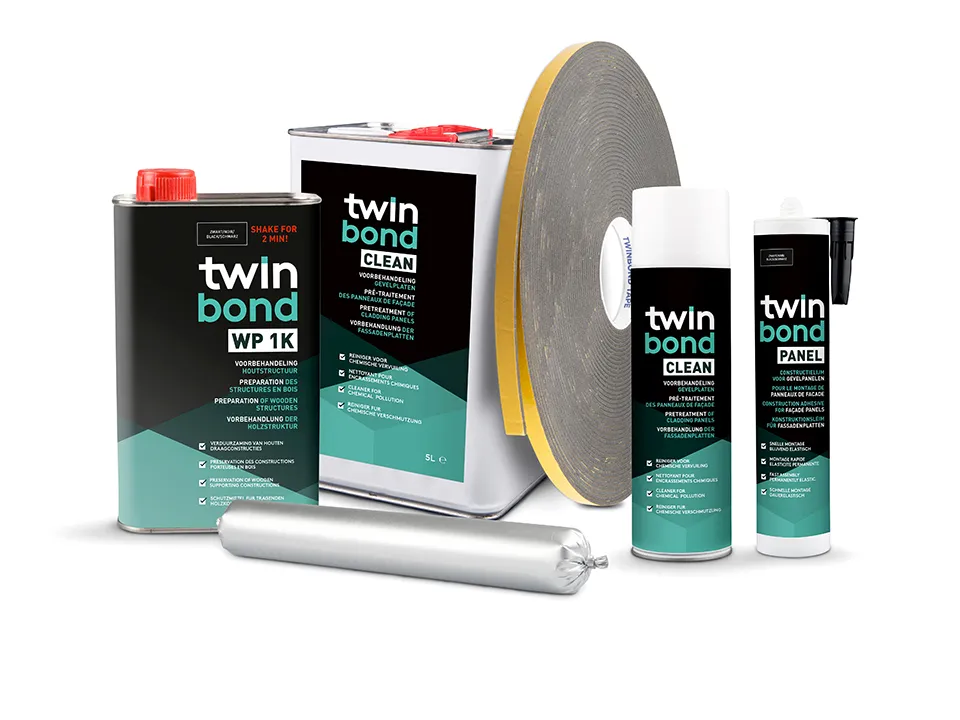
A façade panel must always be installed as a ventilated rainscreen. All SVK fibre-cement façade panels are ideally suited to bonding, making them highly suitable for concealed fixing. Frederik de Kegel, Business Developer TwinBond at Novatech International, says: “Installation is important for every panel and every specific project application. We provide advice and support to manufacturers, architects, distributors, contractors and installers. Our mission is to make complex things simple, and the TwinBond adhesive system makes that possible.”
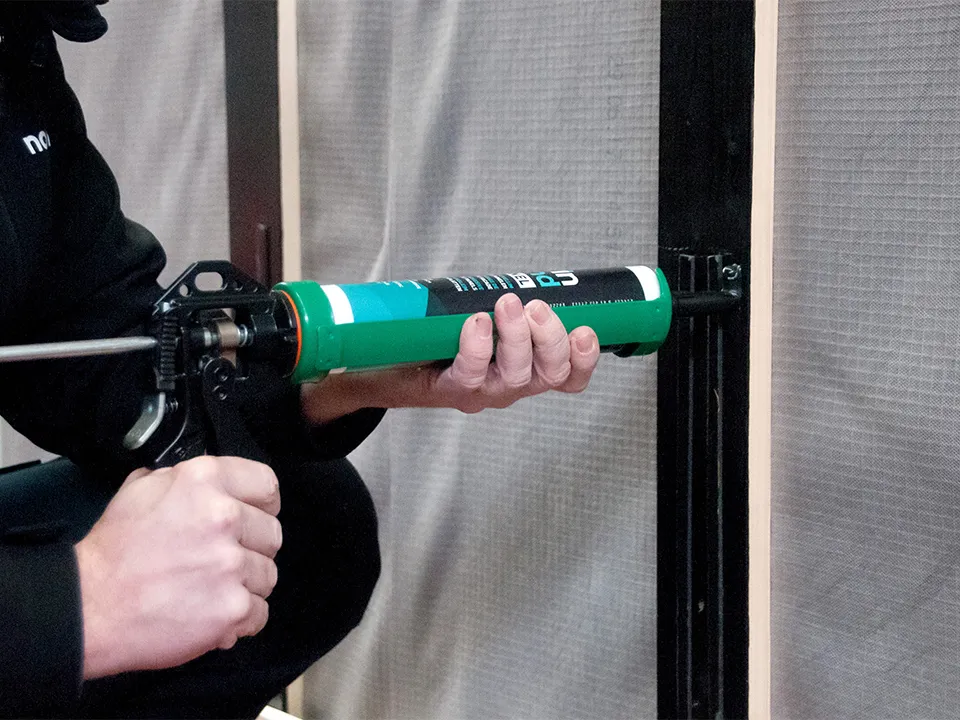
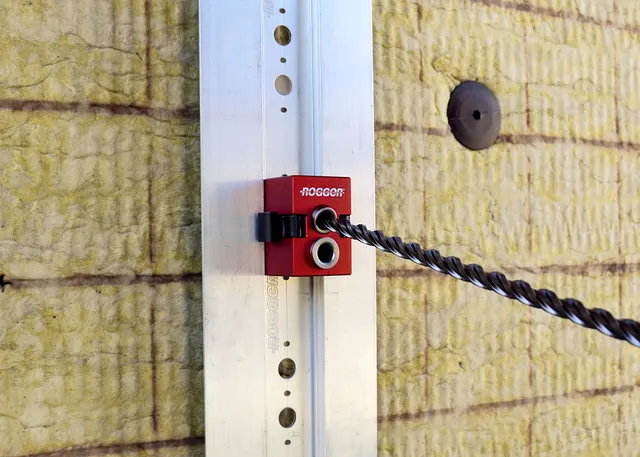
TwinBond is a system that enables you to deliver high-quality solutions with a limited number of products. “TwinBond Panel is our adhesive for bonding façade panels. Not all panels are the same, and the back coating plays an important role. That is why we place great emphasis on support and training. Clear guidelines and on-site support ensure trouble-free installation. We test every panel in our laboratory, to standards stricter than Komo requirements. This means we can not only meet the requirements of the Building Decree, but exceed them.” De Kegel considers bonding a very effective fixing method. “It is straightforward and creates a luxurious appearance. Architects are very enthusiastic about the many possibilities and the clean, modern look of bonded façade panels. The option of using larger panel sizes also gives designers greater freedom. In addition, there are no point loads, and the adhesive can absorb vibrations thanks to its high elasticity.” Crauwels adds that SVK façade panels can also be fixed with screws. The major advantage is that the panels can easily be removed from the façade again. “Here too, it is important for installers to follow the guidelines carefully. Choosing the right screw, depending on the material used and the climatic conditions at the project location, is an important factor. Screw holes should always be pre-drilled slightly larger than the screw diameter. This is important to allow for panel shrinkage and expansion. To prevent breakage or warping, it is important to maintain the correct edge distance. And to make the screw less visible, we colour its head to match the panel as closely as possible.” SVK therefore always offers a solution for visible fixing options for its fibre-cement façade panels.
Question about this story? Ask your question
Keep following this
Get an email when a new story is published. No account needed.
- ThemeFacade design and construction
- SubjectProduct information