‘Metal ceilings deserve to be seen again’
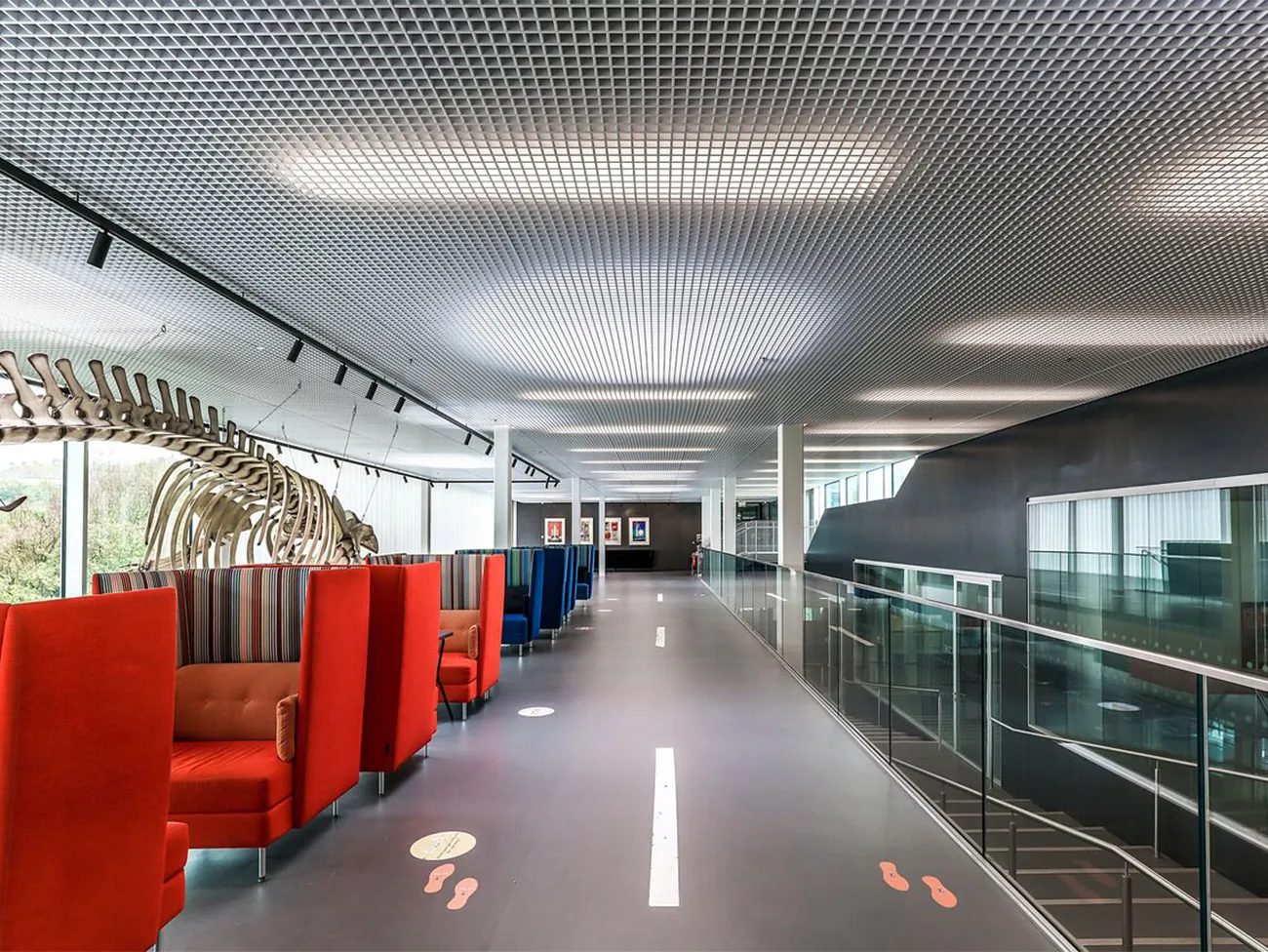
For a long time, the role of the interior ceiling was at best a modest one. As modern architectural styles came and went, ceilings often lagged behind in aesthetic terms. Some sixty years ago, Hunter Douglas Architectural was one of the first to launch a metal ceiling, opening up a wide range of possibilities.
Thanks in part to Metal Ceilings, the interior ceiling is no longer simply a practical solution for concealing cables and pipes in the ceiling void. Ceilings can now make a statement and, if desired, subtly indicate a direction within a building. From clean grid structures to linear or curved forms in every conceivable colour, the possibilities are virtually endless.
Versatile applications
Although Hunter Douglas Architectural’s metal ceilings have been around for some sixty years, they remain a timeless product that has effortlessly kept pace with changing needs and tastes. As Business Development Manager, Pieter van Rees is closely involved in the ongoing development of Metal Ceilings.
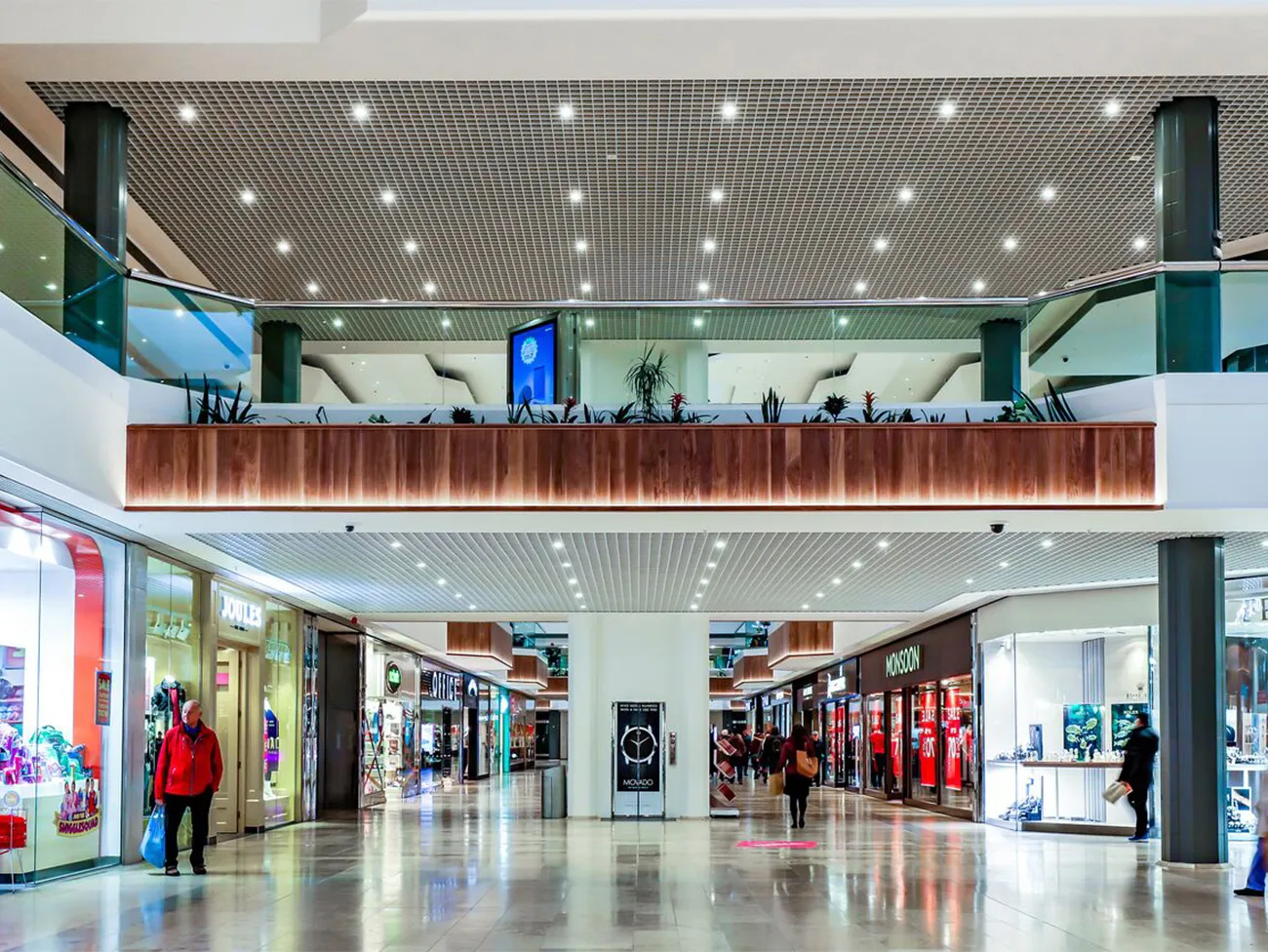
Over the years, Hunter Douglas Architectural’s Metal Ceilings have become a byword for quality and are being used in an ever wider range of ways. Van Rees says: “The versatility of Metal Ceilings has been amply demonstrated in many projects. The big difference between then and now is that, in the past, people were more likely to choose just one type of ceiling and use it throughout the entire building. Nowadays, that is often considered rather dull.”
‘A beautiful ceiling is becoming increasingly important’
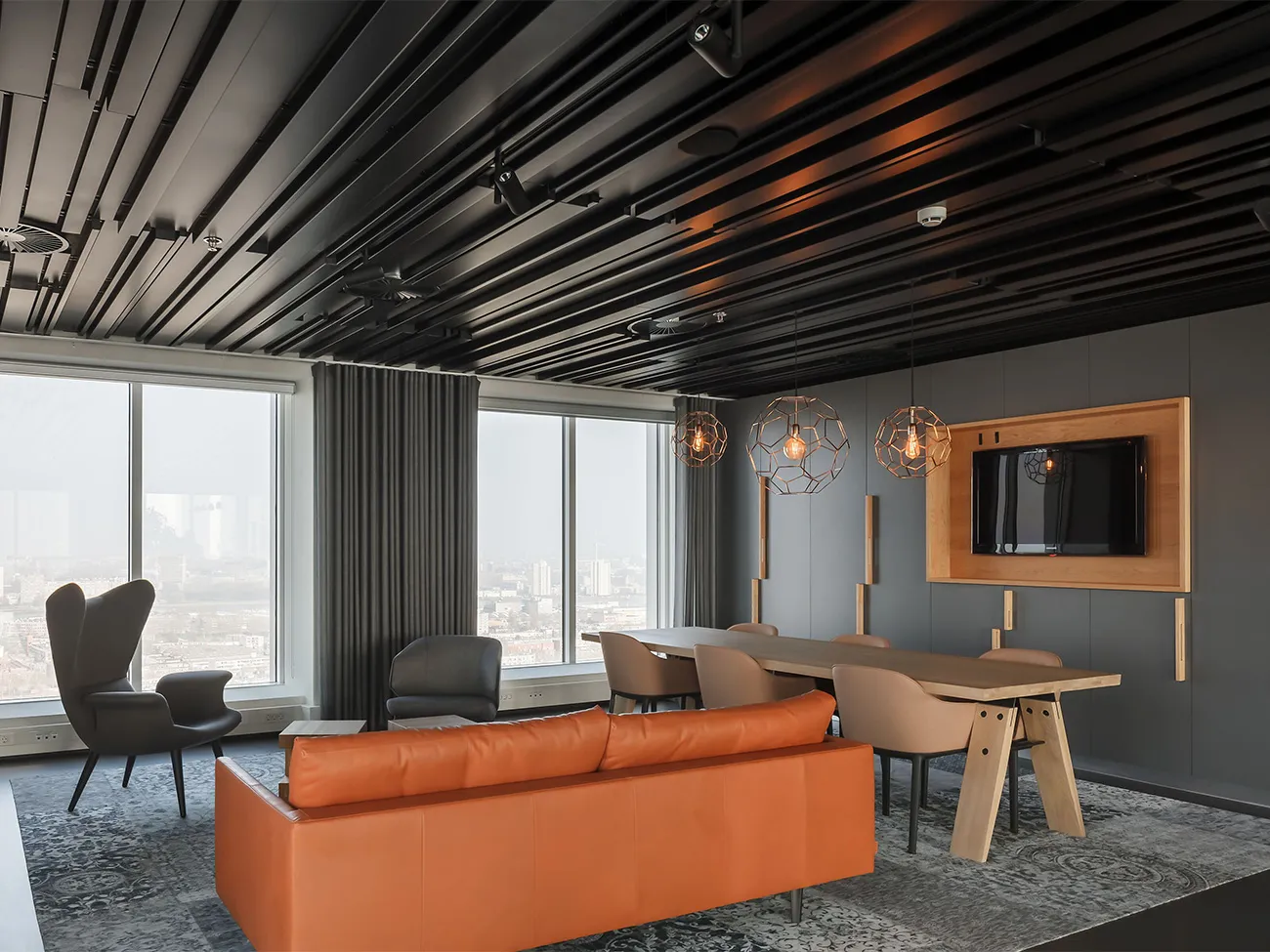
Over the years, the range of possible forms has expanded steadily, and Metal Ceilings are now available in a wide variety of types, sizes and coatings. Van Rees says: “With such a wide variety of forms, we are also seeing people experiment with different shapes within a single building. Several types are combined to create a unique, more playful look.”
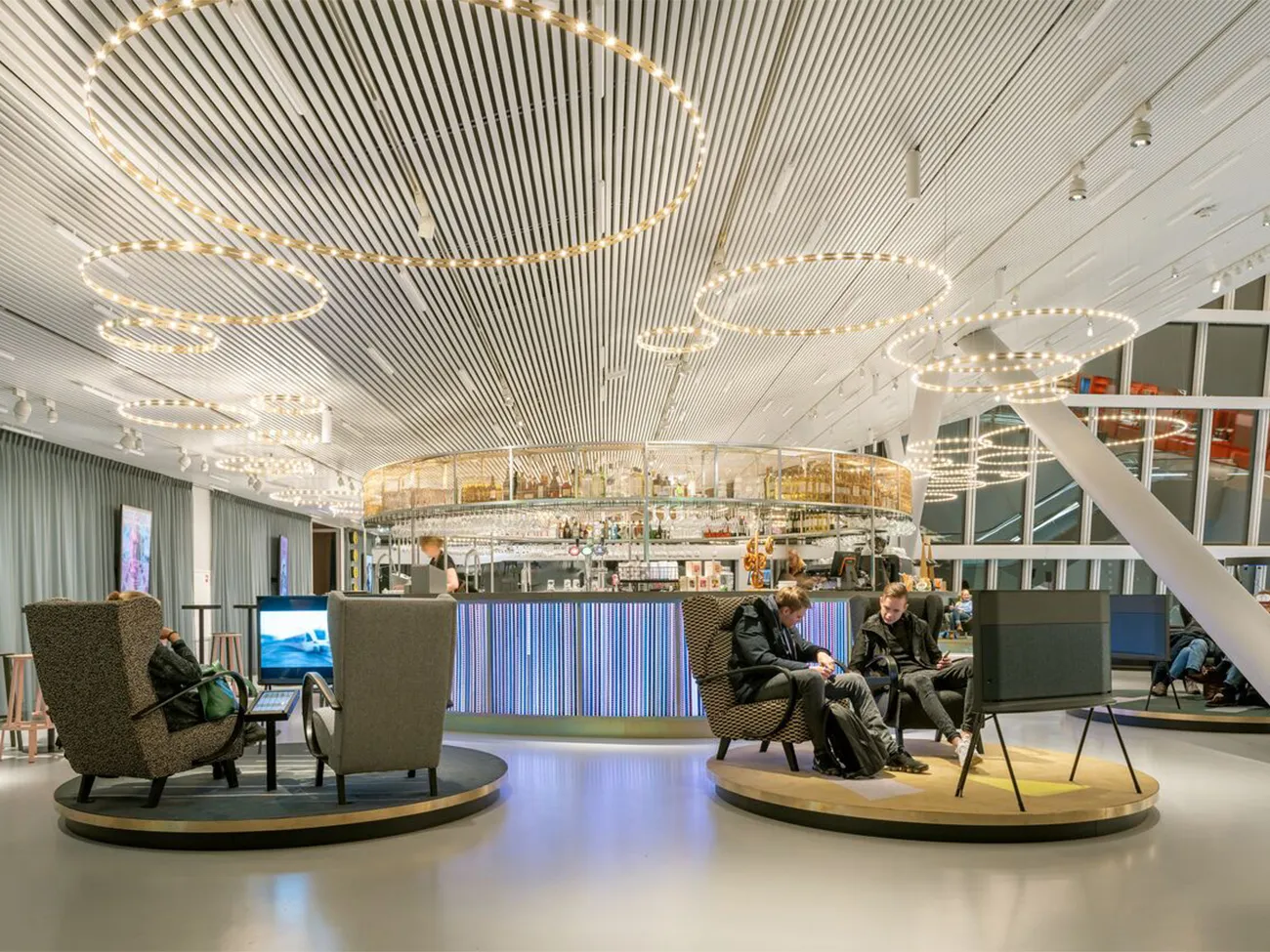
A versatile product lends itself to a wide range of applications. “The settings in which metal ceilings are used are also highly varied, and the range is growing all the time. A beautiful ceiling is becoming increasingly important. We are seeing this first of all in banks and large office buildings, in meeting areas and spaces where clients are received. They want a ceiling that makes an impression. In short, wherever large numbers of people gather, a good ceiling is essential. That also applies to railway stations and airports, where our metal ceilings are widely used too.”
Sustainable and functional
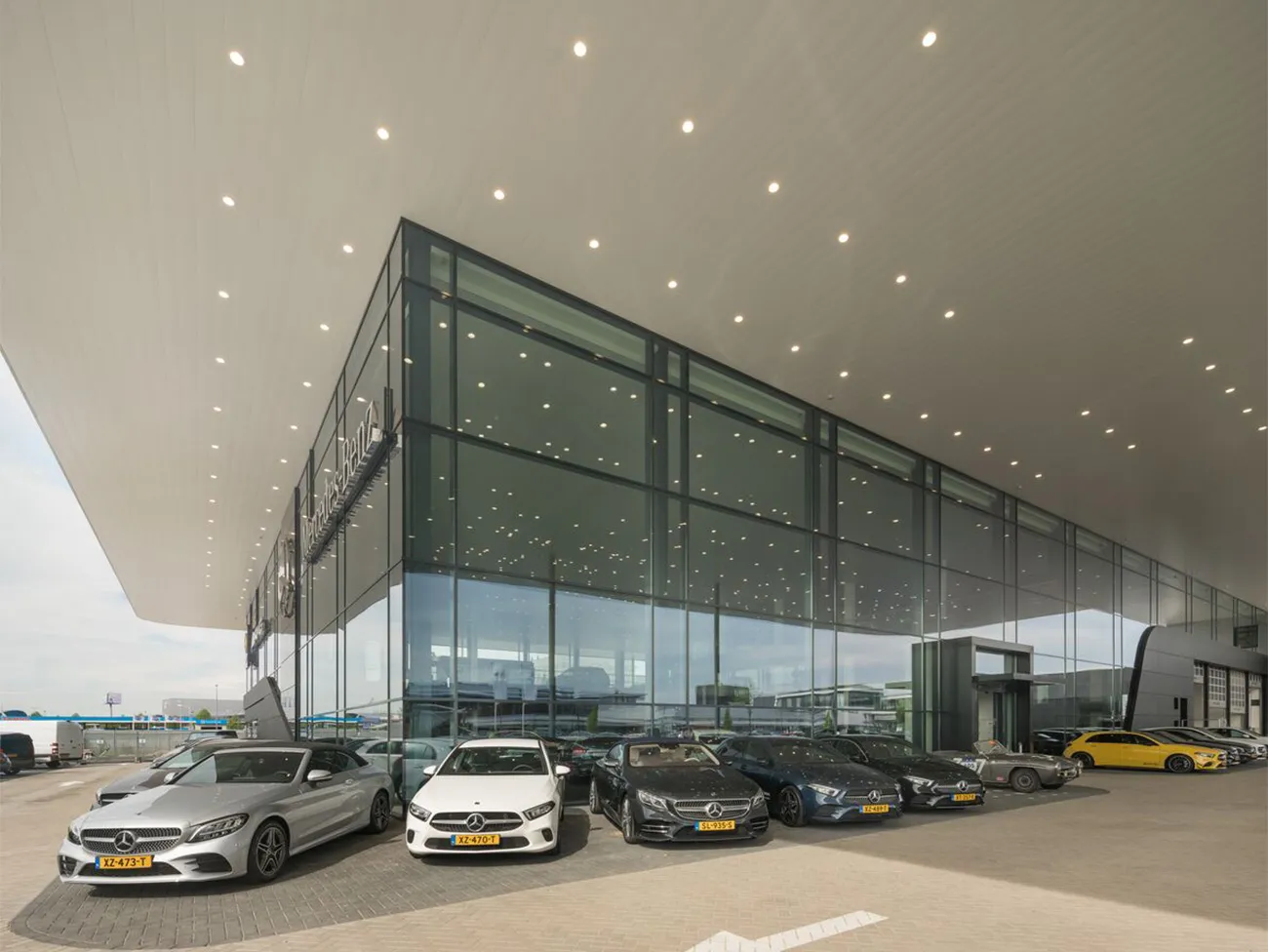
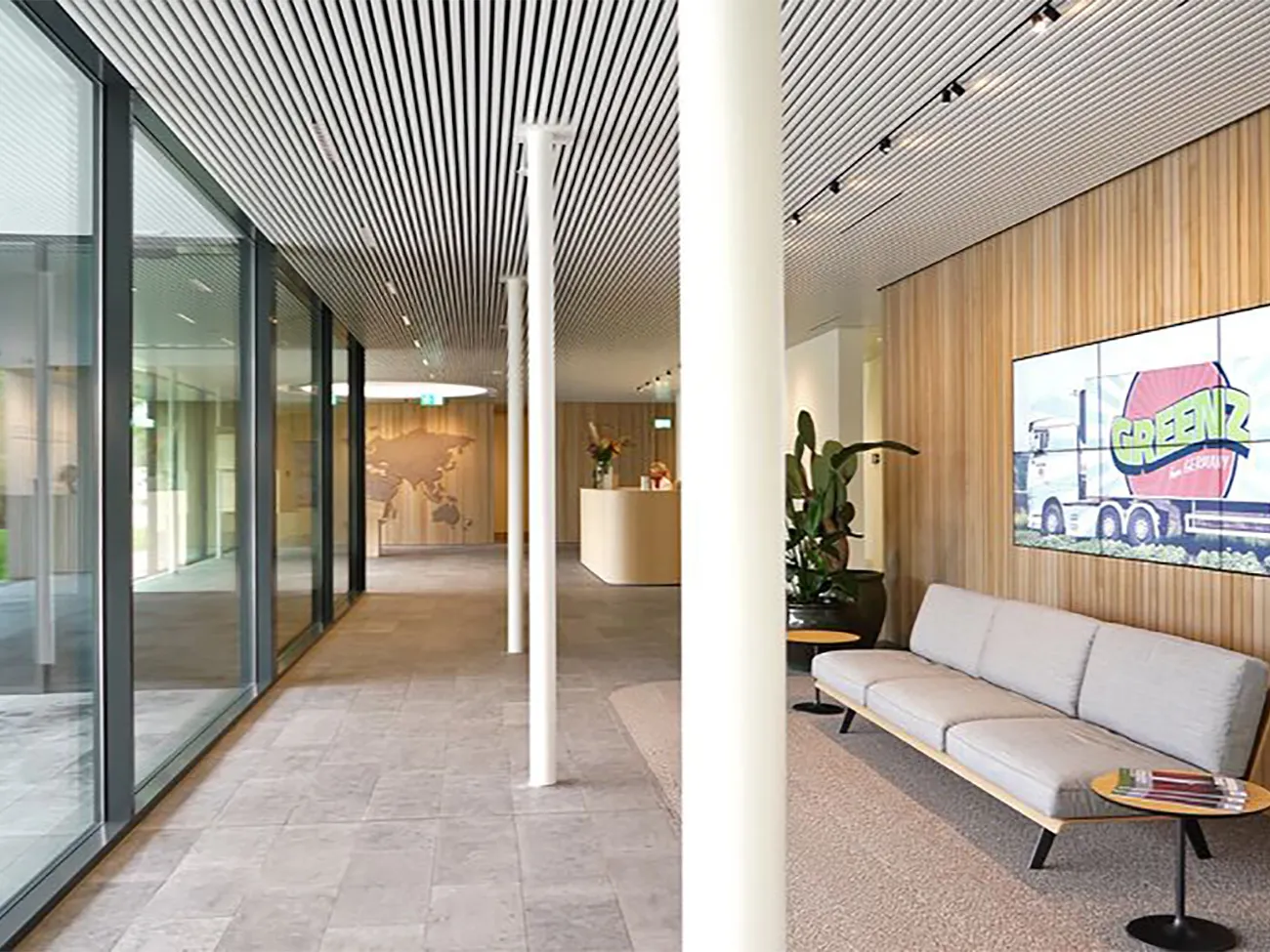
Metal ceilings are available in a multitude of different shapes, materials and finishes. Van Rees says: “In general, they are often linear systems that run in a particular direction. This allows a ceiling to create a sense of direction. Depending on the space in which it is used, that direction can be put to good use. Take a railway or metro station, for example, where a subtle ceiling pattern can guide visitors in a particular direction.”
“It is a sustainable and highly functional product. Sustainability was not all that important at first, but in recent years that aspect in particular has become much more important. Our ceilings are sustainable because they last a long time and are made from material that is easy to recycle. Around 80 per cent of the Metal Ceilings range is made from aluminium, with the remainder made from steel or stainless steel.”
Acoustic performance through perforations
Van Rees explains what sets Hunter Douglas Architectural’s Metal Ceilings apart. “First and foremost, Metal Ceilings stand out for their quality. They are beautifully finished design products that are easy to install thanks to their universal suspension system. Aluminium is also a lightweight material that can be modified easily. This also makes it easy to remove and recycle, making it sustainable as well.”
Good acoustics are essential in spaces where large numbers of people gather. Hunter Douglas Architectural’s metal ceilings take this into account too, as Van Rees explains. “The ceilings are finely perforated, with a layer of acoustic non-woven material behind the panels. This absorbs sound rather than reflecting it. This means a metal ceiling can also be used in noisy spaces, such as an airport departure hall or a railway station.”
Almost endless variations
Hunter Douglas Architectural’s metal ceilings are available in a wide range of variations. From linear ceilings to ceiling tiles and various curved forms, anything is possible. They can also be extensively customised, ensuring that the architect’s or designer’s intended aesthetic is matched with the right ceiling. The ceilings come in a range of standard colours, but can be finished in any RAL colour on request. Chrome finishes and special metallic colours are also available.
For Pieter van Rees, it is always a pleasure to see the combinations people come up with. “The days when little attention was paid to the interior ceiling are well and truly over. The ceiling is now part of the design, giving architects free rein to experiment with a range of beautiful designs. Thanks to their quality, flexibility and versatility, our metal ceilings fit perfectly with this growing trend. In short, ceilings deserve to be seen again.”
Question about this story? Ask your question
Keep following this
Get an email when a new story is published. No account needed.
- SubjectProduct information