Pressed corrugated profiles gain ground
Bespoke metal cladding is gaining ground, and pressed corrugated profiles in particular are growing in popularity. According to Maarten Zaat, director of Metal Cladding Systems, there is a clear reason for this.
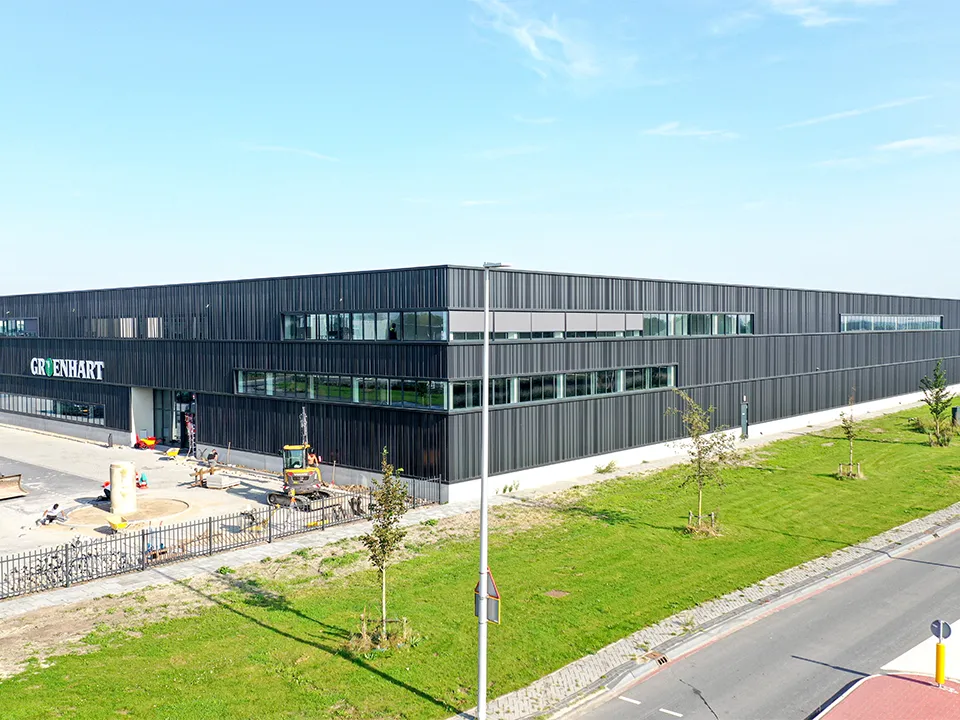
“For a modest additional cost, a building can be given a completely unique, contemporary appearance. Architects can even create their own pattern for a profile.” A fine example is Groenhart Group’s new head office in Purmerend and the TD building in Eindhoven.
Metal Cladding Systems acts as Benelux importer for three manufacturers of metal cladding and one manufacturer of GFRC cladding. “We represent, among others, MN Metall GmbH in Neustadt and Hans Laukien GmbH in Kiel,” says Maarten Zaat. “MN Metall has an extensive range of metal profiled cladding, including bespoke options, while Hans Laukien is investing heavily in bespoke profiled cladding alongside its roll-formed profiles. This expansion is driven by increased demand for pressed profile shapes in metal cladding. Pressed corrugated profiles in particular are becoming more popular.”
Bespoke cladding
The municipality of Purmerend imposed certain aesthetic requirements for the design of Groenhart Group’s new head office. “The new building is on a prominent site,” says Chanan Hornstra of HRH Architecten. “This brought a number of planning requirements, and it was also stipulated that the building should read as a single volume. For us as an architectural practice, the challenge was to ensure that the different functions, in this case offices, a distribution centre, warehouse, workshop and so on, were not visible on the exterior. We then explored cladding solutions with strong aesthetic appeal that were also affordable, and came across a metal-clad sports hall in the centre of the country. That led us to MCS. It turned out to have bespoke cladding by Hans Laukien.”
Individual design
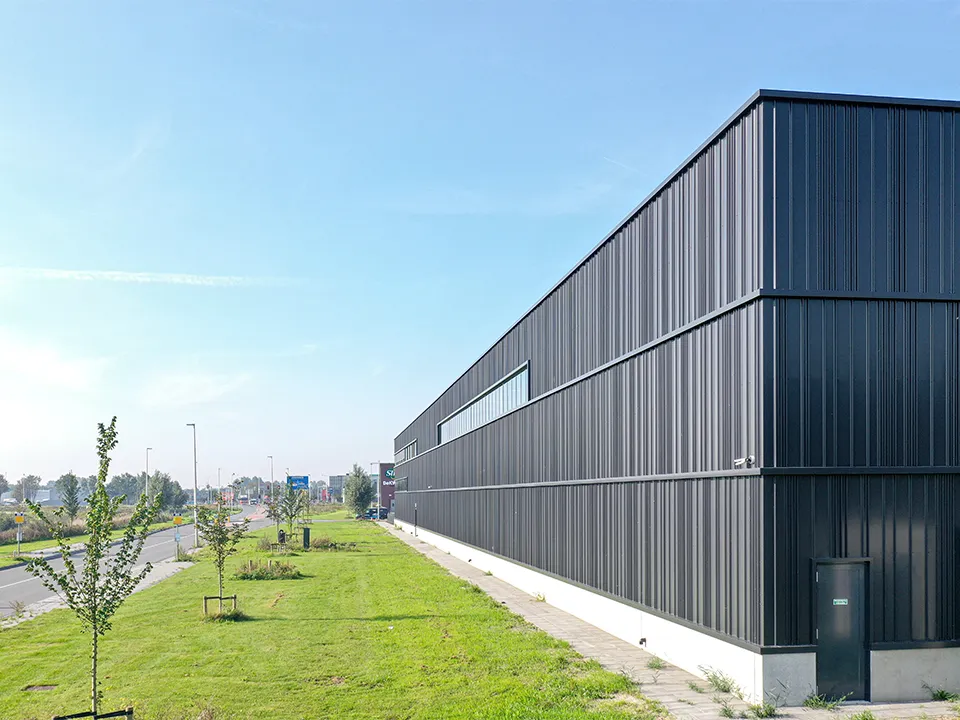
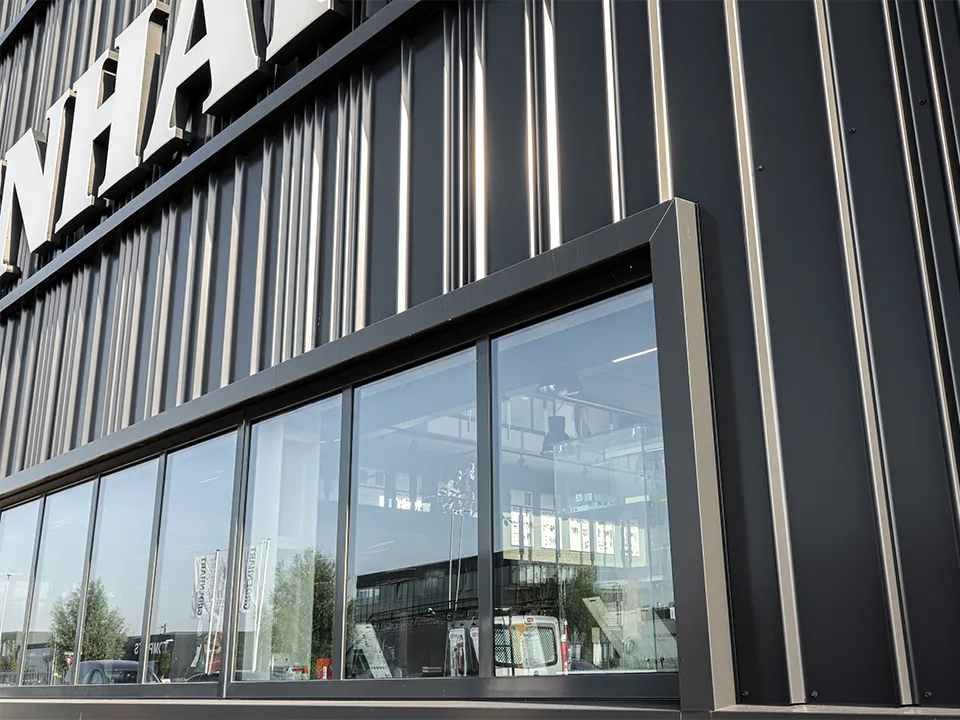
Bespoke work is quickly associated with high costs, Zaat acknowledges. “Yet, with products such as Hans Laukien’s profile systems, we show that for a modest additional cost in the overall construction budget, a building can be given its own identity. The difference in the supporting structure between standard roll-formed profiles and bespoke profiles is negligible. Only the outer sheet differs. But it gives the building real character. It is also possible to create a bespoke design for a profile. For example, you can vary the pattern using a single profile type by playing with the centre-to-centre spacing. Alternatively, you can choose several corrugation shapes with different profile forms for even greater variation. Groenhart Group’s new premises feature single-corrugation cladding in the Hans Laukien W40/70 profile, pressed in three different patterns and applied at random. We have received a great deal of feedback on this project. A wonderful design, detailed to perfection by the architect.”
A tour de force
As an architectural practice, we did not yet have much experience designing steel cladding, says Hornstra. “We really needed support, and MCS provided it with great expertise. They have all the knowledge in-house and know better than anyone what it takes to bring the design to life as intended. The irregular corrugation of the profiled cladding creates an attractive play of light and shadow and a striking appearance, while also making the building look less imposing. Every element of the façade is both aesthetic and functional. One nice detail, for example, is the use of a perforated version of the same profiled sheet where the façade adjoins the outdoor terrace. The result is truly stunning. From certain angles, you can see through the façade, albeit diffusely, and from the terrace there is a connection with the outside world. A tour de force.”
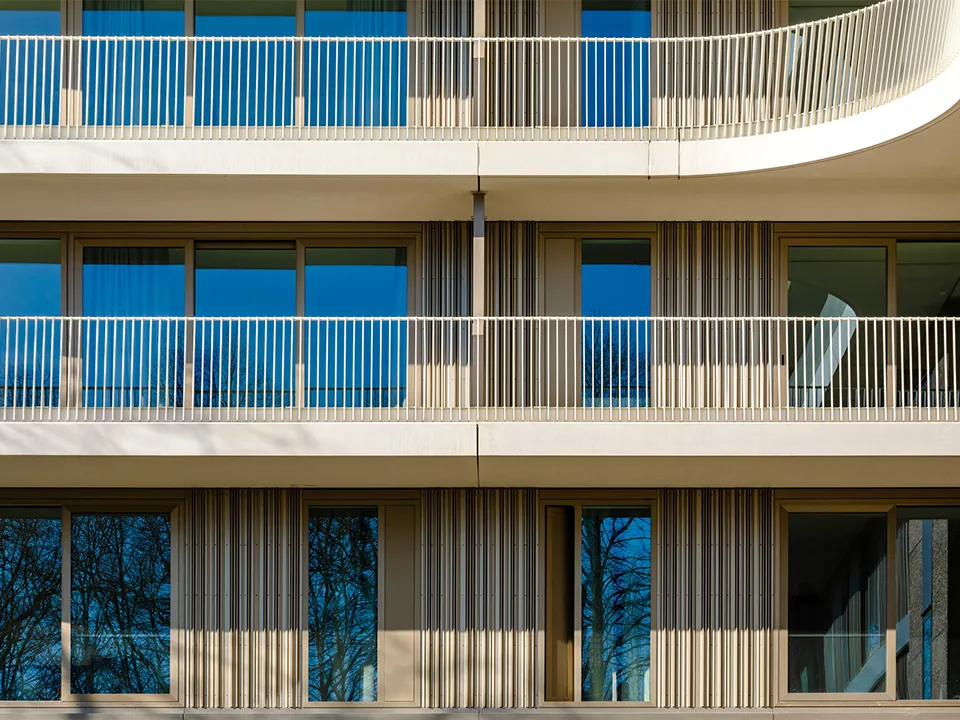
A project featuring a double pressed corrugation is the transformation of the TD building in Eindhoven. “The façade consists of bays of different widths. To detail the width of each bay with millimetre precision, we chose a variable pattern using two different corrugation shapes,” Zaat explains. “These are the Laukien W 15/40 and W 40/70, with corrugations 40 and 15 millimetres high, pressed in nine different configurations and anodised in colour. This is another impressive end result.”
Question about this story? Ask your question
Keep following this
Get an email when a new story is published. No account needed.
- ThemeFacade design and construction
- SubjectProduct information