Slimmer façades, rapid payback
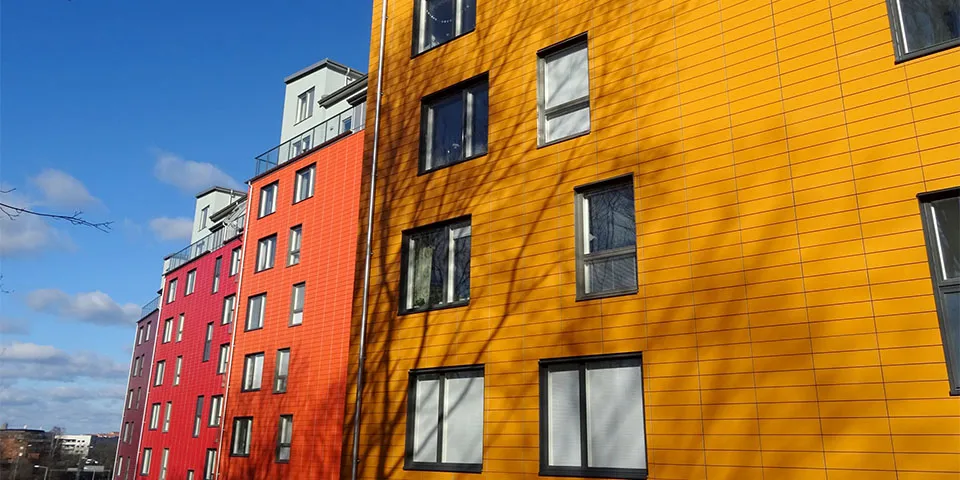
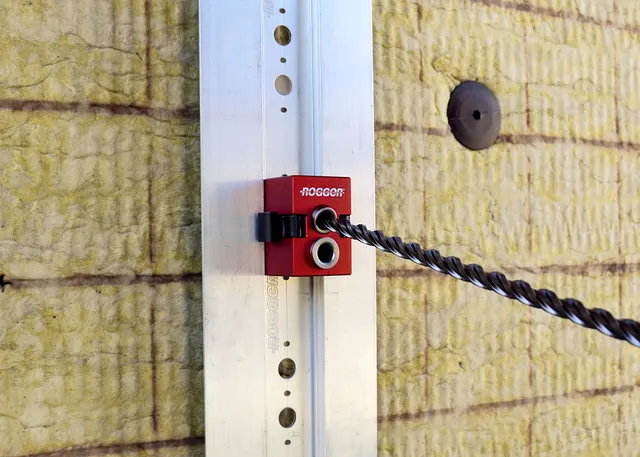
Last year, Schöck introduced the Gevellink platform at GEVEL 2020. A place for the façade industry where all its products, co-creations and supply programmes featuring Isolink® are available. Isolink® is a completely new approach to façade anchoring technology based on fibre-reinforced composite (Combar®), which solves a thermal bridging problem that has gone unnoticed in façades for years. To demonstrate the added value of Isolink®, Schöck recently commissioned independent research from DGMR into the payback periods (ROI) of Isolink® type TA-S compared with traditional metal façade anchors used in ventilated façades. The findings? Thanks to the excellent thermal properties of fibre-reinforced composite, the product has a maximum payback period of just two years. Peter Nijweide, Technical Account Manager Isolink at Schöck Nederland, discusses the main conclusions with us.
The energy-efficient tie anchors support the colourful cladding, consisting of ceramic tiles, on the Syllen residential complex.
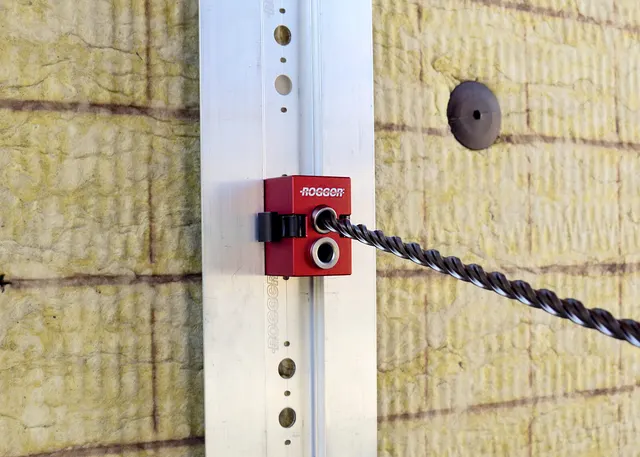
“The thermal properties of Isolink® deliver significant savings in insulation thickness, allowing ventilated façade systems to be more energy-efficient and slimmer. Fibre-reinforced composite avoids the thermal leaks caused by metal anchoring solutions,” says Nijweide. Compared with stainless steel and aluminium, fibre-reinforced composite conducts very little heat and has excellent strength and stiffness properties. “Isolink® costs more to purchase and install, but the product’s thermal performance makes a wide range of benefits and optimisations possible.”
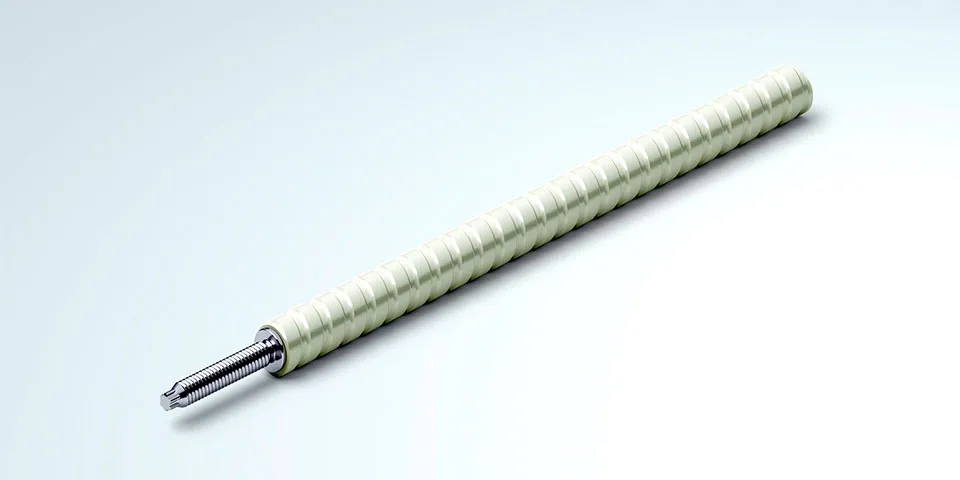
Isolink® is a completely new approach to façade anchoring technology based on fibre-reinforced composite (Combar®).
Significant savings on insulation
To gain a clear picture of the ROI, the study used two reference façades, Nijweide continues. He explains the scope of the research in more detail: “One reference façade had lightweight metal cladding weighing around 8.5 kg/m², while the other was in the heavier category, a ceramic façade weighing around 48 kg/m2. In both cases, the target insulation value was an Rc of 4.5 m²K/W. The comparison was then carried out across three office building sizes (small, medium and extra large), with the ventilated façade mounted on a concrete inner leaf. The study also took into account the cost of the anchors and installation (installing an Isolink® anchor takes a little longer), as well as the savings from using thinner insulation with Isolink®. For the lightweight façade, insulation thickness can be reduced by 2 centimetres, and for the heavier façade by as much as 7 centimetres. The higher the required Rc value, the greater the benefit that can be achieved with Isolink®. Less insulation also results in a slimmer construction, and therefore more m2 of usable floor area. This is offset by additional rental income. The calculations used three types of location: a business park, a centrally located site and a prime location.”
Unique performance
The report concludes that Isolink® costs more to purchase and install, but the product’s thermal performance delivers a range of benefits and the investment pays for itself within two years at most. Nijweide adds: “The study therefore shows that the Isolink® anchor is also a financially attractive alternative to traditional façade anchors. Isolink® is worth considering for all locations and façade types, given its relatively short payback period compared with a building’s lifespan. Isolink® is also highly suitable for façade renovation with virtually any type of façade finish, and can be used for connections to steel structures. The fibre-reinforced composite façade anchor meets fire class B in accordance with EN-13051 and is available in various diameters and any required length.” The DGMR study of Isolink TA-S will soon be available online as a white paper.
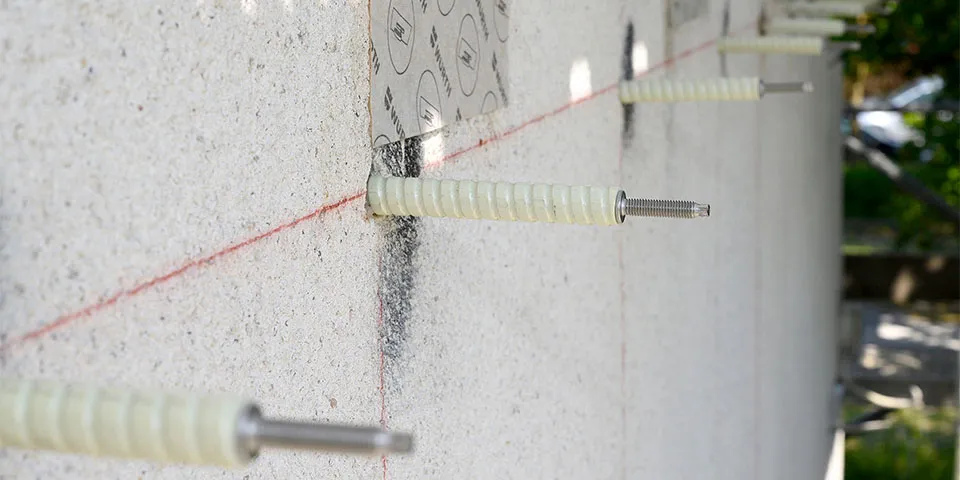
Isolink® costs more to purchase and install, but the product’s thermal performance delivers a range of benefits and the investment pays for itself within two years at most.
Co-creations featuring Isolink®
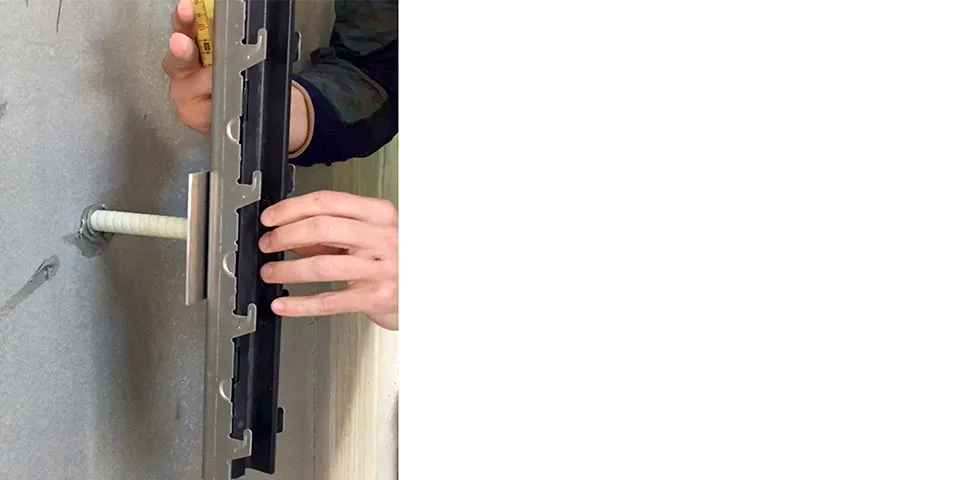
Schöck is increasingly working with partners, with Isolink® forming part of a complete solution. For example, in collaboration with GIP, Schöck developed a modern, future-proof alternative to conventional aluminium wall brackets: the VECO®-Isolink® system, launched under the Façade Solutions2 brand. The Syllen residential complex in Stockholm is the first project to use the VECO®-Isolink® façade anchor. The energy-efficient tie anchors support the colourful cladding, consisting of ceramic tiles. Isolink® is also part of the so-called ThermoFrame®. This system resulted from a successful co-creation between Leebo Intelligente Bouwsystemen and Schöck Nederland. ThermoFrame® is based on an inner and an outer frame made from LeeFrame® lightweight profiles. The two frames are thermally broken using Isolink® TA-S
Acquisition of GIP
In 2019, Schöck acquired a stake in the German company GIP, a leading supplier of integrated systems for ventilated façades. Schöck now offers the complete product range, which comprises a wide range of fixing systems for mounting virtually all types of façade finish on various structures. GIP, Façade Solutions2, ThermoFrame® and other premium solutions featuring Isolink® are the first strong shop-in-shop brands within Schöck, GevelLink.
Question about this story? Ask your question
Companies in this story
Keep following this
Get an email when a new story is published. No account needed.
- ThemeAn energy-efficient and comfortable building envelope
- SubjectProduct information
- CompanyLeebo Intelligente Bouwsystemen