Variable slope fastener offers unique benefits thanks to its sleeve-and-screw combination
Text Susan PeekImage SFS Group the Netherlands
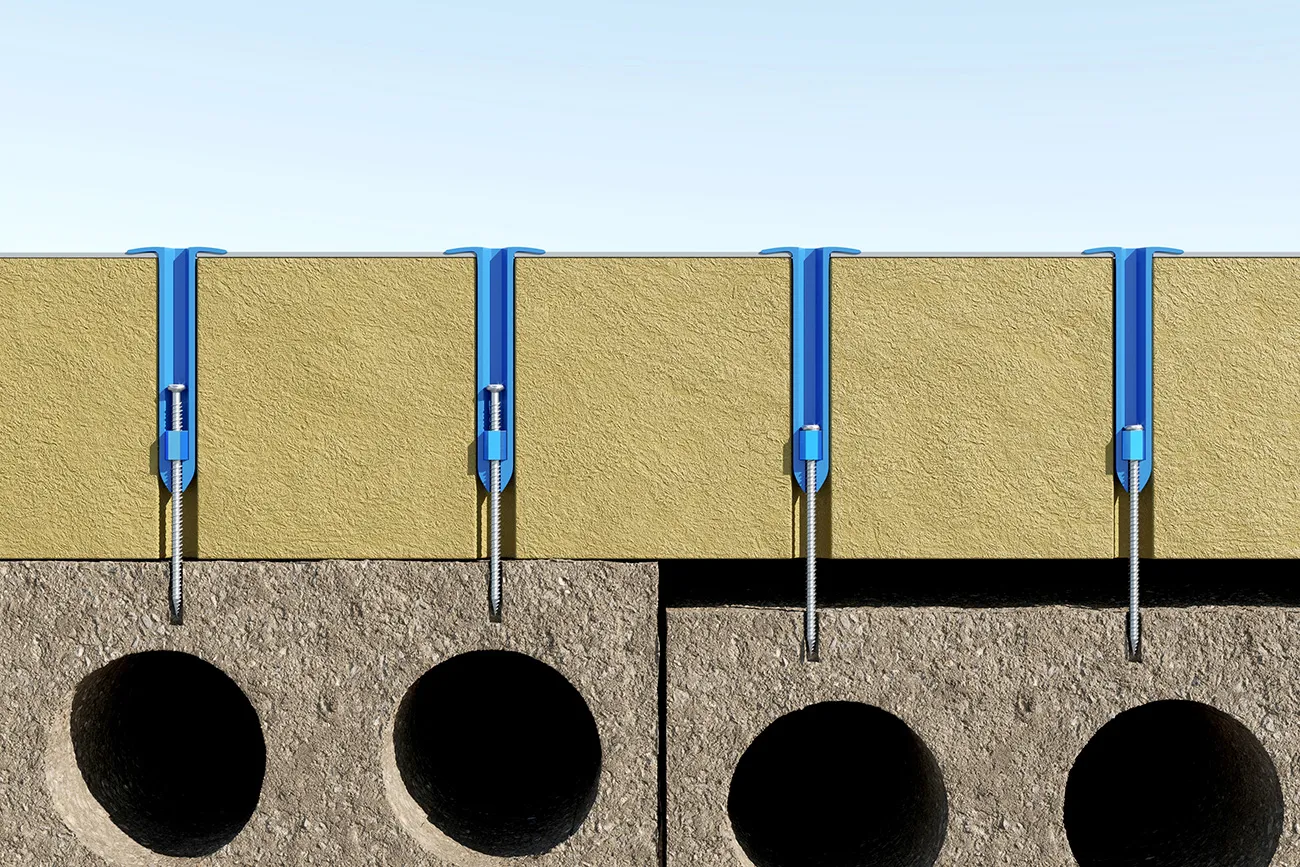
When roofing contractors have to deal with a difference in height between the concrete substructure and the roofing system, for example where tapered insulation is used, they need standard fasteners in different lengths to bridge the difference in thickness. This is inconvenient and time-consuming. Guardian, part of SFS Group the Netherlands, therefore developed the variable slope fastener: the ASTL.
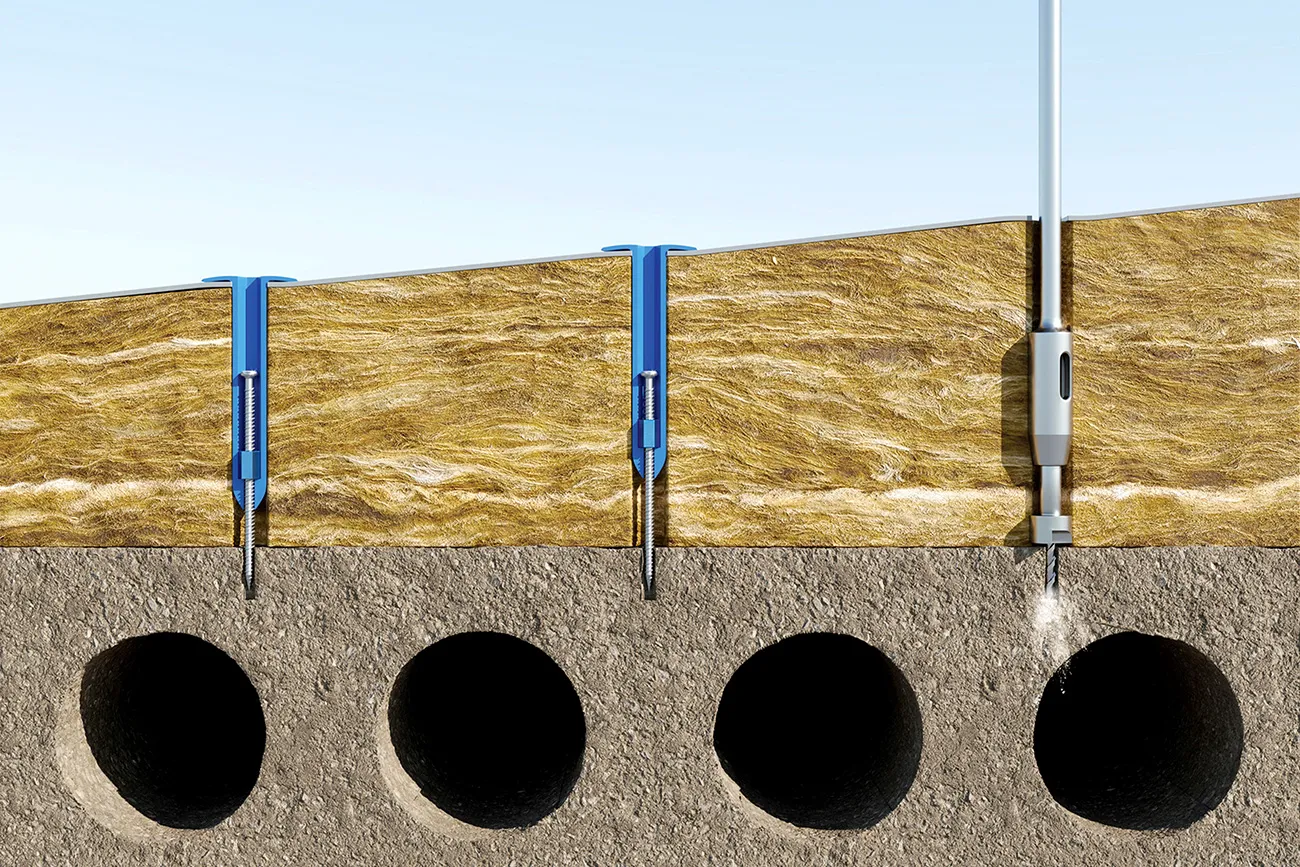
“Our patented slope fastener has been used successfully on a range of projects across Europe for years,” says Rick Dankers, Account Manager at Guardian. “Not only on projects involving tapered insulation, but also for fastening roofing systems to roof decks with height differences in (precast) concrete floor slabs, and on renovation projects where there are significant differences in the thickness of the existing build-up.”
Telescopic action
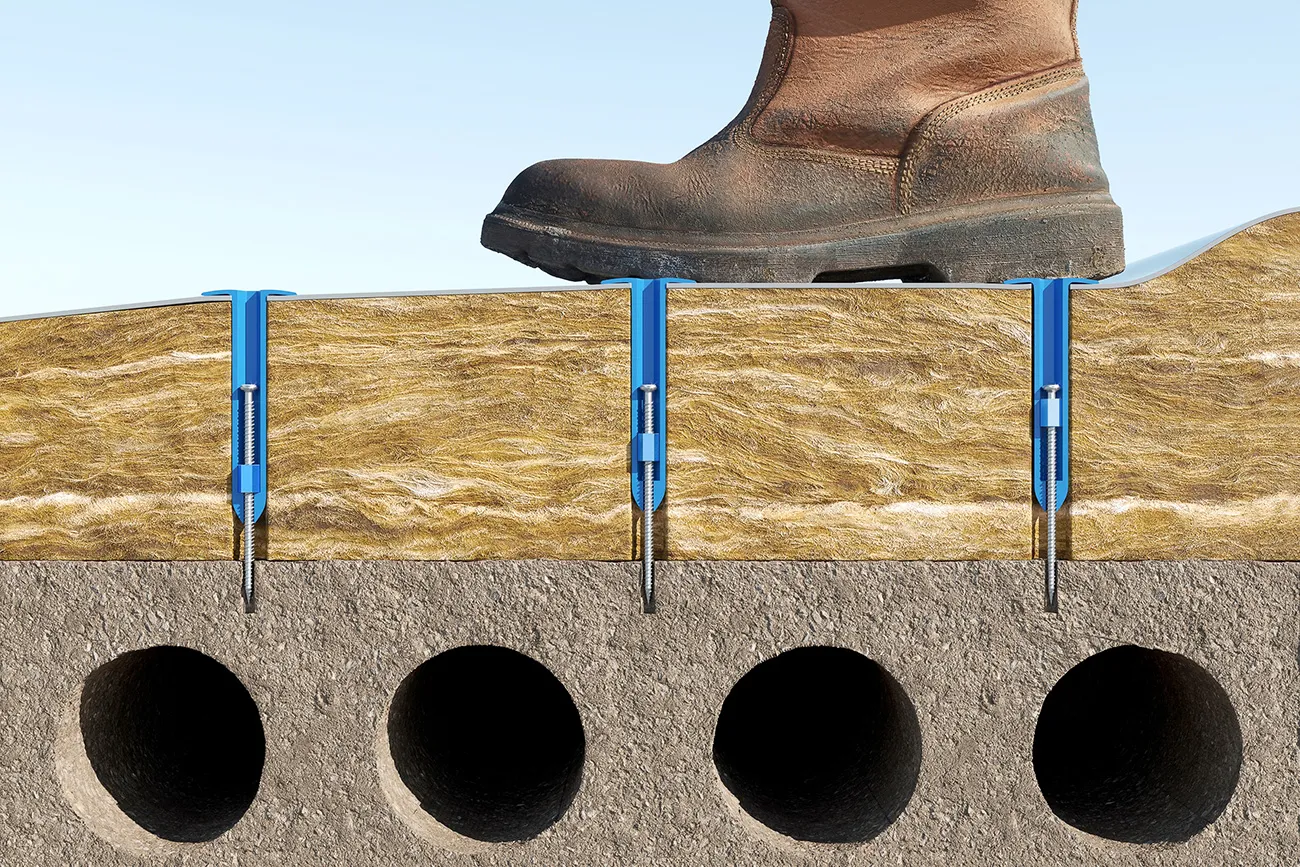
Rob van Doren, Field Engineer at Guardian, explains that Guardian’s ASTL is truly unique in terms of quality and efficiency. “Our variable slope fastener has a telescopic action, allowing the sleeve to move with the insulation. Because the screw can move freely inside the sleeve, the sleeve moves down together with the roofing when you stand on or beside it. This prevents the screw from damaging the roofing. The result is 100% confidence underfoot!”
Faster installation
Another major benefit is that the fastener is quick and efficient to install on the roof. “A single fastener can bridge a considerable difference in height,” says Dankers. “The ASTL can bridge a slope of 100 to 120 mm.” By comparison, a standard fastener-and-sleeve combination (sleeve with concrete screw) typically requires ten different build-up lengths, whereas the ASTL requires only two. “In practice, there are just two steps: drilling and fastening. The ASTL fastener then adjusts itself automatically: all you have to do is screw the assembly into place. Special tools are also available for working upright.”
Extra-secure fastening
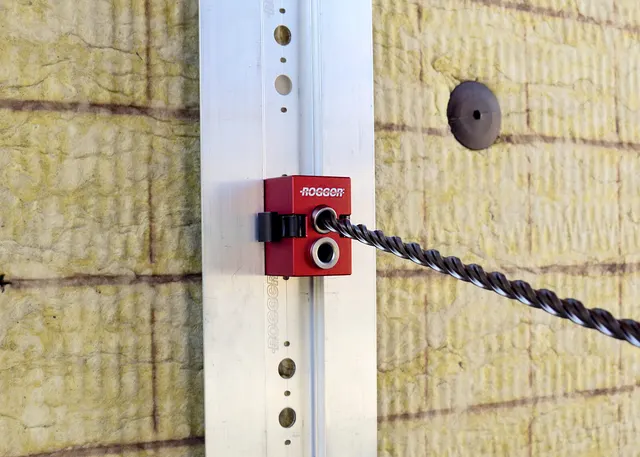
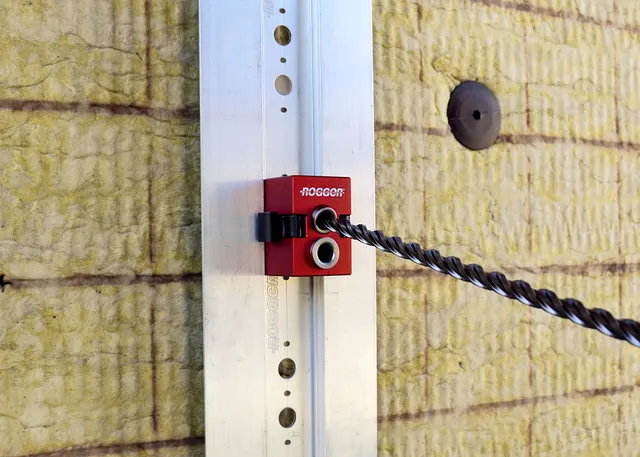
Van Doren explains that the ASTL can be installed with extra confidence when used with a drill stop. “This ensures you always drill to the correct depth. Another benefit is that the stop removes any drill debris, leaving a clean hole.” He concludes by emphasising that the ASTL has the same design values as a standard combination (600-800 Newton design load), but is well worth the investment: “The ASTL slope fastener represents only a small part of the cost of your roof, but it is an extremely important investment in damage and risk prevention.”
Een zakelijke vraag aan SFS Group the Netherlands B.V.? Get in touch
Companies in this story

Keep following this
Get an email when a new story is published. No account needed.
- SubjectProduct information
- CompanySFS Group the Netherlands B.V.