








Remarkable results in blow-in test with bio-based insulation
Text Roel van GilsImage Tholin
Fibre-reinforced magnesium oxide board plays a key role
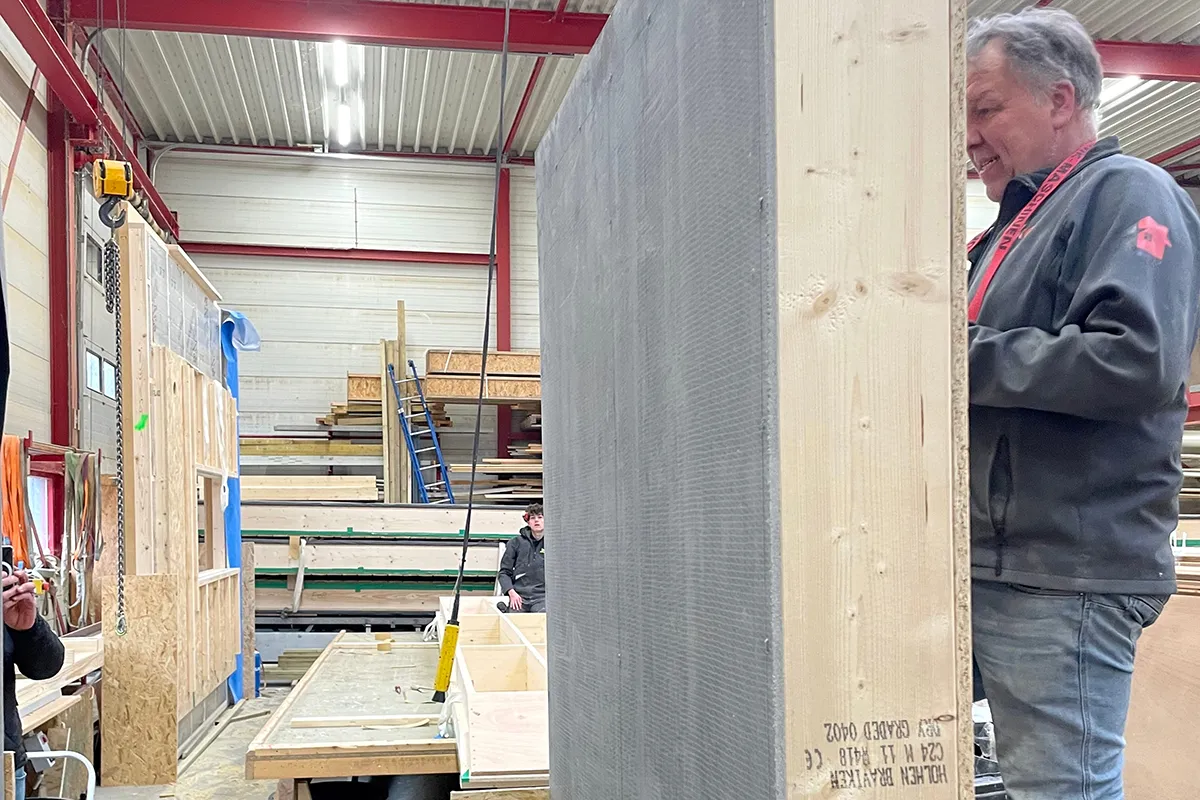
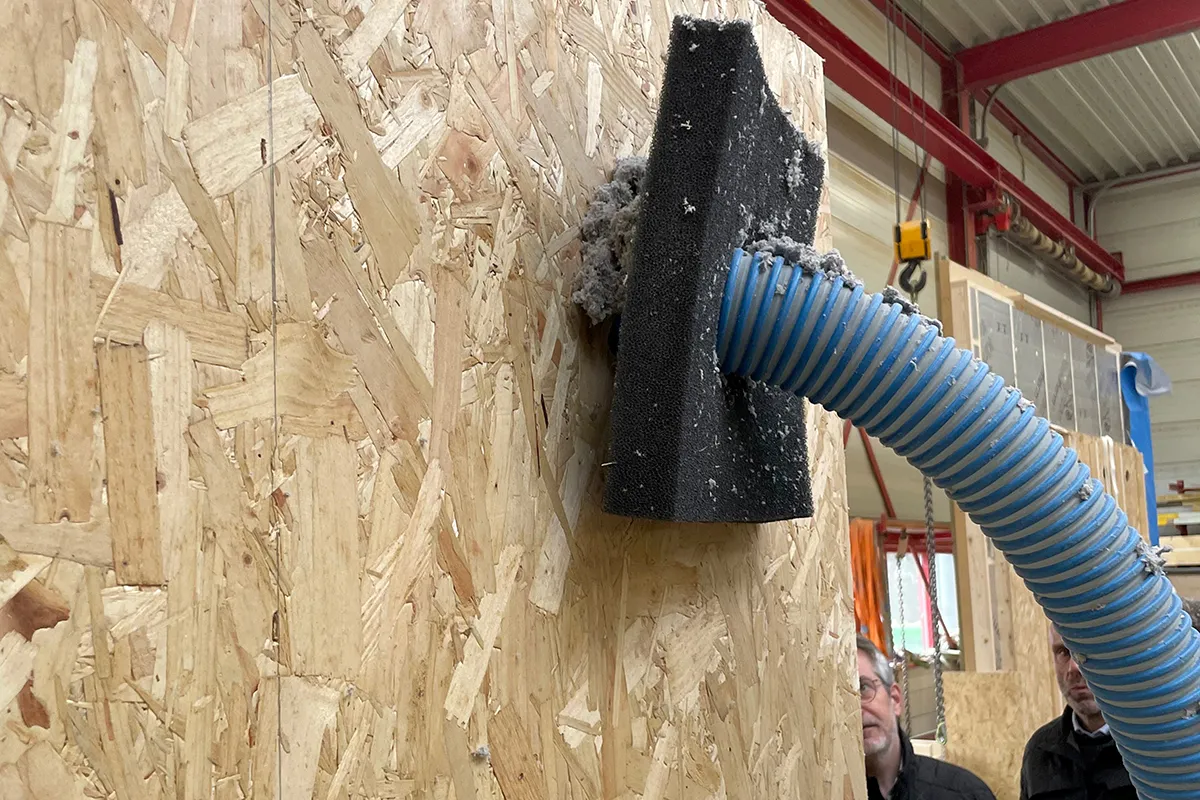
Fire safety and sustainability are crucial in modern timber and timber frame construction. When building with bio-based insulation materials such as wood fibre, straw and cellulose, choosing the right external sheathing board is essential. The board must withstand the high pressure generated during blow-in installation while also contributing to a fire-safe construction. Tholin put it to the test with Oldenboom and blow-in installation partner ThermoHouse. They organised a practical trial using the sustainable, non-combustible Wettershield as the external sheathing board. The results were remarkable: even the thinnest version, at just 4.5 millimetres thick, held firm where other boards failed.
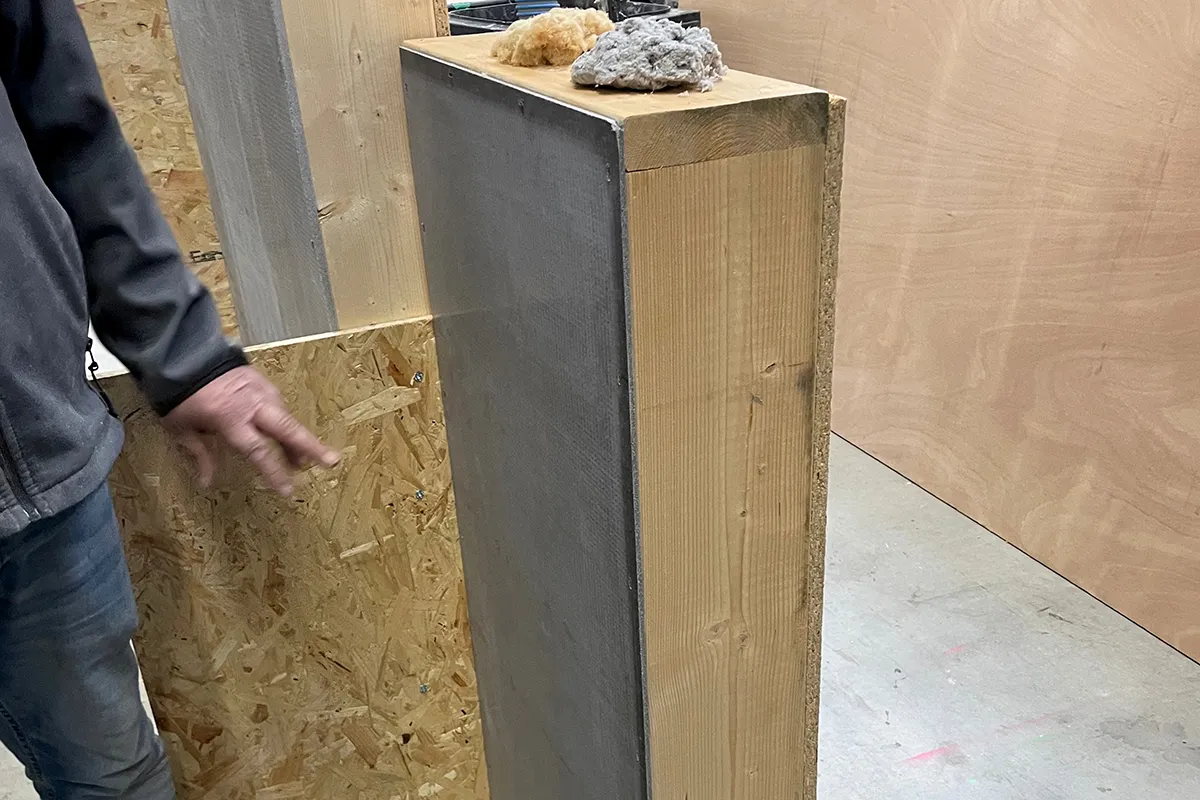
Cemrock Extreme X4, Wettershield is a high-quality mineral construction board based on magnesium compounds, developed for damp and fire-sensitive applications. The board is sustainably produced, lightweight, easy to handle, dust-free to work with and falls within fire class A1. There was still some scepticism: could a board just 4.5 millimetres thick withstand the enormous pressure generated when blowing in insulation materials? The practical trial at ThermoHouse provided the answer. “Where a cement-bonded and/or fibre-cement board quickly cracks or deforms in tests of this kind, Wettershield held firm,” says Gerrit van der Vegt, adviser and salesperson at Oldenboom. “Even under extreme overpressure, the 4.5-millimetre board did not break or crack, while a comparable 9-millimetre board made from another material failed. The result surprised not only us, but also the partners from Gutex wood fibre insulation and Tholin who were present.”
Fire safety
Alongside its ability to withstand high pressure, fire safety is a major consideration when choosing external sheathing boards. “The first fire tests using slender framing (38×89 mm) were carried out last year. The results were positive: EI 45 and EI 30 classifications demonstrate Wettershield’s excellent fire-resisting properties,” says Bart Jannink of Tholin, specialists in façade and construction boards. “This means the board can help meet the crucial requirement that occupants have between 30 and 60 minutes to escape safely in the event of a fire. And because Wettershield is fibre-reinforced, the structure remains stronger and less timber is needed in the façade. This not only produces a slimmer element, but also makes more efficient use of materials. With the right fixings, using screws into the framing at 60-centimetre centres, the result is a robust, vapour-open external envelope that is fully bio-based and fire-resistant.”
Building without membranes
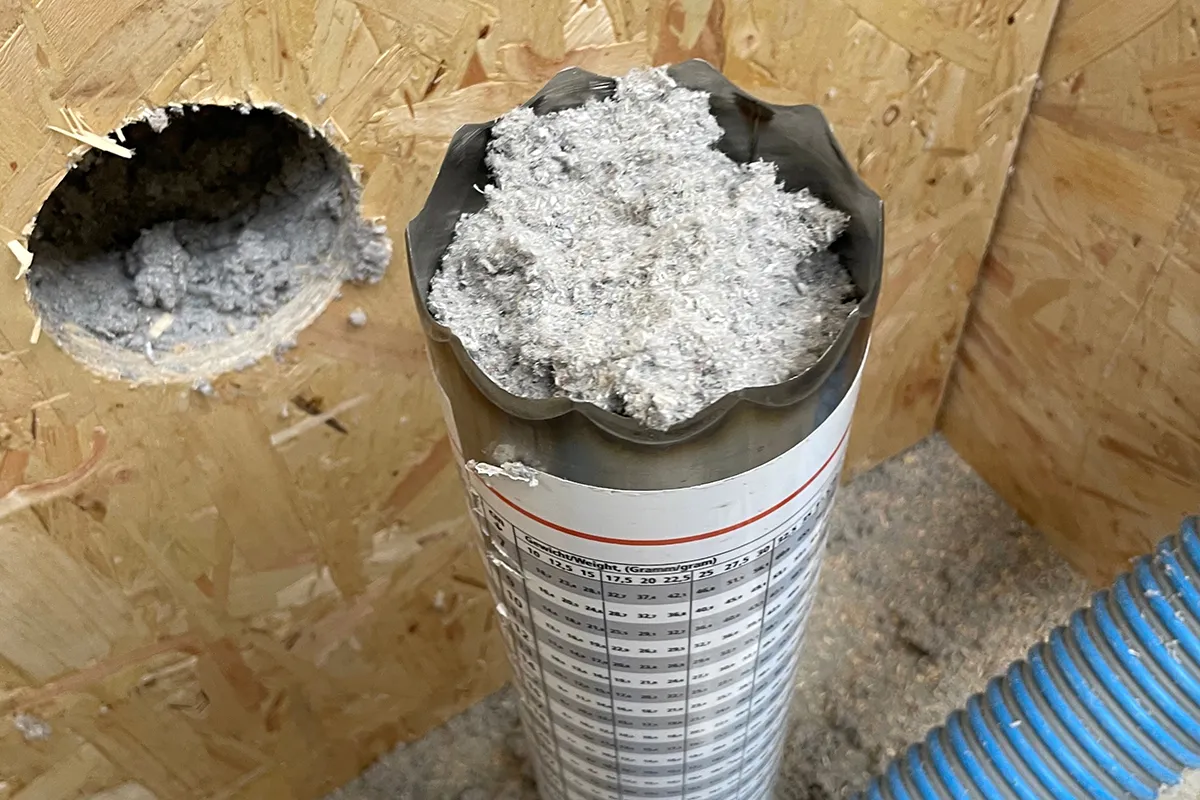
Oldenboom has positioned itself for years as a pioneer and supplier of natural building materials, with expertise in the timber and timber frame construction markets. “With bio-based materials such as Gutex wood fibre insulation, we show that it is possible to build without membranes,” says Van der Vegt. “Its vapour permeability (μ 19,8) creates a breathable construction that minimises energy loss while also saving a work step. Wettershield is not only strong and fire-safe, but also certified with ETA, EPD and a Greengold Card. In terms of value for money, it is an attractive alternative to traditional boards. We see great potential for its use, particularly in the timber frame construction market, but also in the bio-based construction sector.”
As a fourth-generation family business, Oldenboom works with passion and expertise, says Van der Vegt proudly. “Our slogan, ‘Natuurlijk karakter’, is more than a promise to our partners: we give honest advice and supply materials that do not deplete the earth’s resources. Timber and bio-based products play a key role in this. Where stone and concrete were once the norm, timber construction has now come of age and become more ‘sexy’, with proven sustainability, fire safety and aesthetic appeal. The Wettershield trial once again confirms our conviction: bio-based materials are not only a sustainable choice, but also the best technical solution for the future.”
Question about this story? Ask your question
Keep following this
Get an email when a new story is published. No account needed.
- ThemeAn energy-efficient and comfortable building envelope
- SubjectGeneral







