








Review: Building Fire Safety Knowledge Session
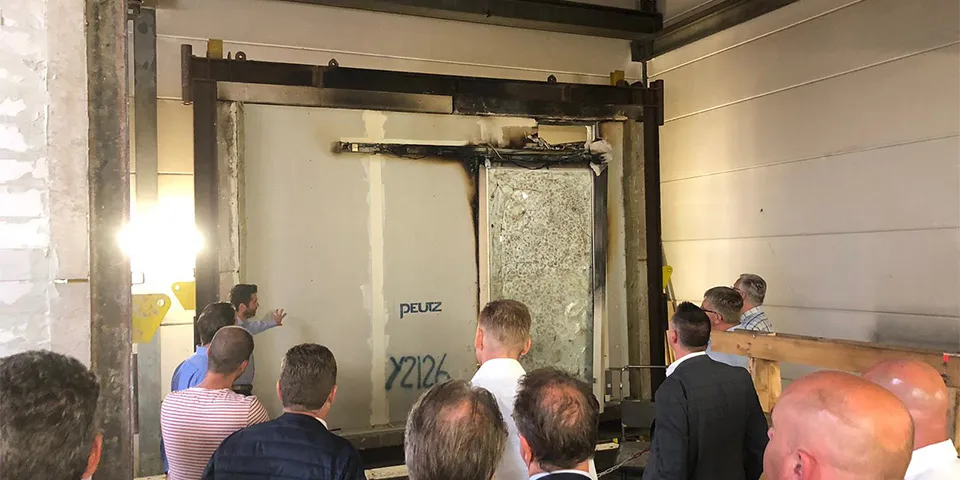
On Friday 6 September, we held a knowledge session on building fire safety in collaboration with consulting engineering firm Peutz Laboratoria in Molenhoek. Alongside our own members, members of sister organisations DumeboDWS and VMRG were also warmly invited to take part. The burning question was: How can the fire resistance of a structure and its fire behaviour be improved to optimise safety?
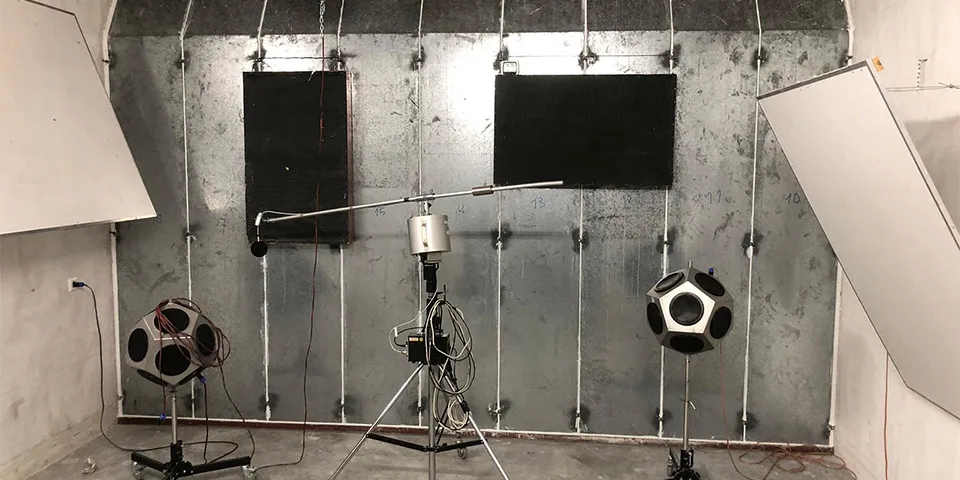
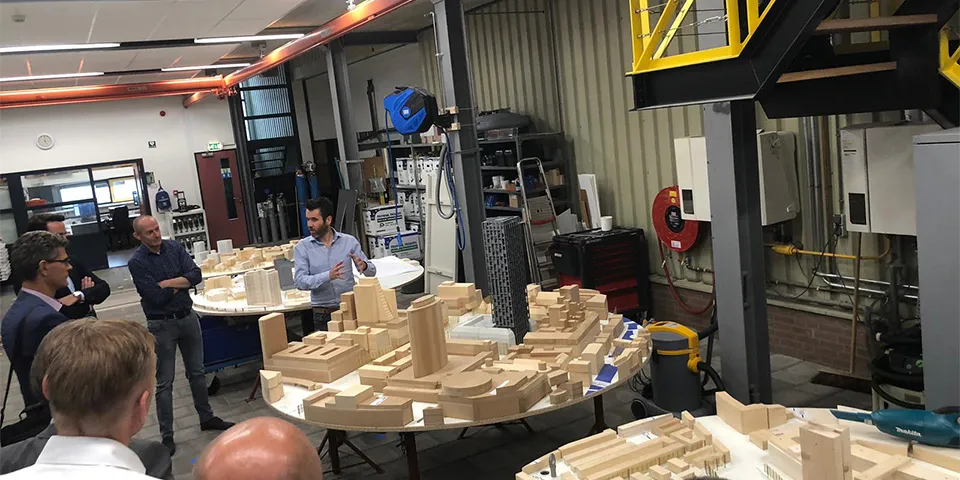
The Peutz Laboratory for Fire Safety gave a presentation offering further insight into the fundamentals of the fire resistance and fire behaviour of materials used in structural construction. After the knowledge session, participants enjoyed a tour of the laboratories for acoustics, building physics, fire safety and wind technology. ‘As a specialist in façade engineering, it was interesting to see how they carry out tests,’ says Thomas Goedebuure of Hilti Nederland, looking back on the afternoon. The wind tunnel particularly caught the imagination of Robert-Jan Steegman, MDG board member: ‘There happened to be a detailed scale model of part of Rotterdam in the wind tunnel. Peutz is conducting research into the effects on acoustics, wind and building physics of adding extra storeys to an existing building next to City Hall on the Coolsingel. It gave us more than enough to talk about at the networking drinks afterwards.’
Fire resistance and fire behaviour
‘Products must meet certain requirements in terms of fire resistance and combustibility (fire behaviour),’ explains discussion leader Harm Leenders of Peutz. ‘Testing these products determines the extent to which they meet these requirements.’ Recording these essential safety characteristics for each product type is important for the supplier of the material and, of course, for the users of the building. The fire resistance of the materials in a structure determines how long the structure can withstand a fire. Fire classification, or ‘reaction to fire’, establishes how combustible materials are. ‘In a residential building, hospital or school, for example, fire and smoke should not spread from one space to another within a short time, partly to allow evacuation and protect the building,’ Leenders explains. ‘Construction materials must therefore meet certain fire resistance requirements. The fire behaviour of, for example, floor coverings, internal walls, ceilings, wall coverings, façades and doors is also important.’ Fred Vasquez of Metaalunie considers this a very important and topical issue: ‘The Ministry has been paying a lot of attention to it since the Grenfell Tower fire in London in 2017.’
Testing tip
The atmosphere that afternoon was positive and open, prompting well-informed questions and active discussion. A shared concern about European legislation and requirements stood out. The key question was: what do we need to have tested? ‘Safety aspects such as fire resistance, fire behaviour and smoke resistance are laid down for each product type using harmonised European test methods,’ Leenders explains. ‘Legislation on the various aspects differs between Member States. Since additional requirements often apply in individual Member States, there is often no “joint” European approach. CE marking for fire doors, for example, was due to be established from 1 October, but the requirements for internal doors had not been harmonised in time. There is a great deal of uncertainty about what is expected of manufacturers.’ For anyone considering having a product tested, Leenders has one more tip: ‘Before starting the test programme, think carefully about what you want to do with the product. Avoid “gaps” in the scope of application by consulting closely with the testing institute.’
Shared interests
The aim of the knowledge session was to strengthen participants’ basic knowledge of these topics, while leaving plenty of room for questions and comments. ‘The key points about testing were clearly presented, and there was every opportunity to ask questions and address any sticking points,’ says Jack Hage of SABprofiel. ‘The diversity of the participants made it possible to discuss applications from the perspective of each person’s own field.’ Steegman looks back on a highly successful knowledge session: ‘It has left us wanting more. Together with DumeboDWS, we share an interest in delivering a high-quality façade and/or roof for a satisfied client. We will therefore continue to highlight metal roofing and façade products. We do this by organising knowledge sessions like this one, as well as other engaging activities. Our annual general meeting is scheduled for this autumn, when we will announce next year’s programme. We may also organise a similar knowledge session towards the end of the year. Keep an eye on our website!
Question about this story? Ask your question
Keep following this
Get an email when a new story is published. No account needed.
- ThemeSafe and verifiable facade construction
- SubjectGeneral







