








Sandwich panels with European Fire Class B
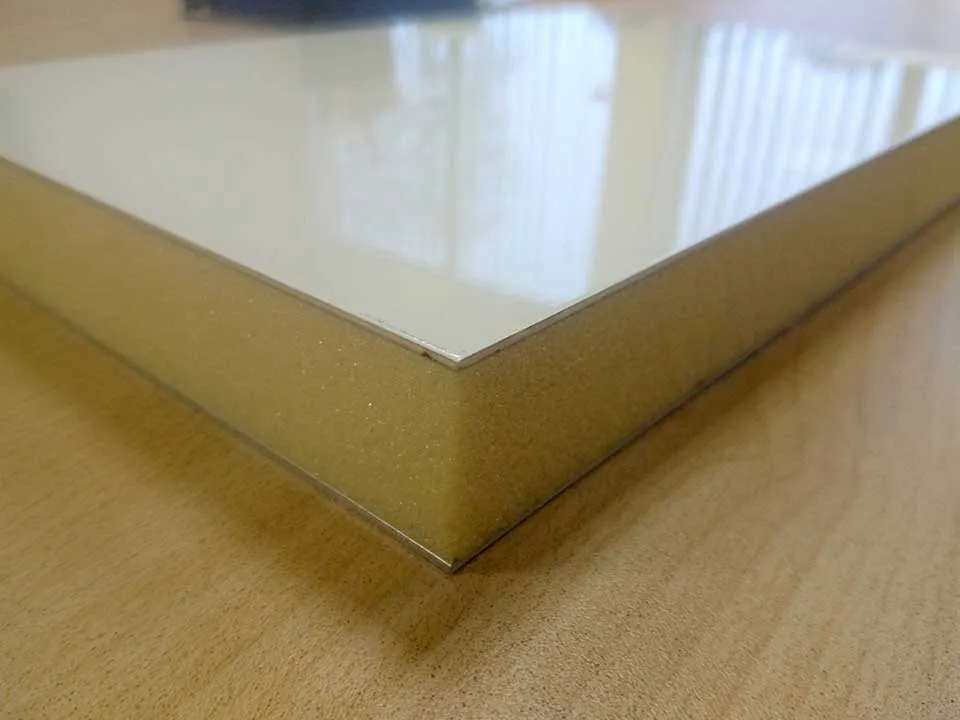
Fire resistance requirements, both under the Building Decree and those set by trade association VMRG, are becoming increasingly stringent.
“A positive development,” says Vincent Wijnja, Head of Sales at Panelen Holland. The company continues to focus on product and process development and has been exploring the options for some time to bring its most common sandwich panels into line with European Fire Class B.
European Fire Class B
The fire classification of a product consists of several elements and is fairly complex. A product’s fire class indicates the extent to which it contributes to the development of a fire and/or the formation of smoke. “We are focusing on Fire Class B,” says Wijnja, “which means very difficult to ignite.” The letter S (smoke) is used to indicate smoke production within a fire class, with three classes: S1: low smoke production, S2: medium smoke production and S3: high smoke production. The letter D (dropping) is used for flaming droplets. There are three classes: D0: no flaming droplets, D1: droplets burn for less than 10 seconds and D2: droplets burn for more than 10 seconds.
Building Decree
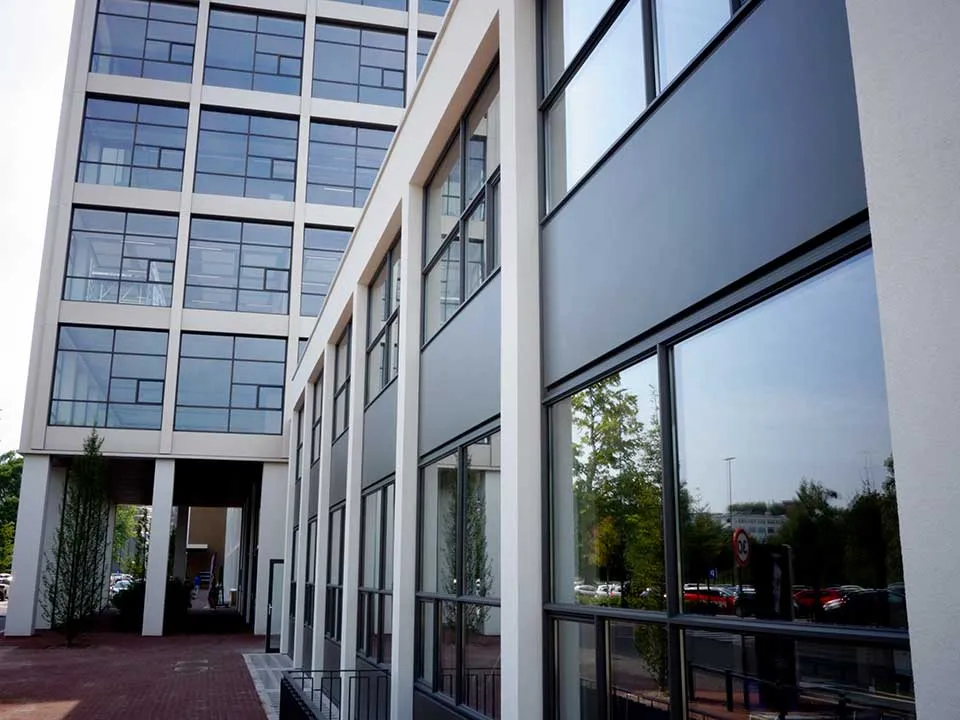
The Building Decree (as set out in the cited standard NEN-EN 13501-1) requires sandwich panels to meet Fire Class B when they are installed on the side of a building element that faces the open air and is more than 13 metres above ground level. Wijnja notes, however, that in practice sandwich panels are sometimes declared to be windows, allowing them to meet Fire Class D instead. “This is about safety, which is why Panelen Holland is committed to becoming the first sandwich panel manufacturer in the Netherlands to obtain a general certificate for Fire Class B for its range of sandwich panels. We hope these developments will help prevent the spread of fire, and that other sandwich panel manufacturers will follow our example.” The Dutch Building Decree increasingly specifies that products must achieve Fire Class B-S2, although flaming droplets are not yet covered.
Testing and development
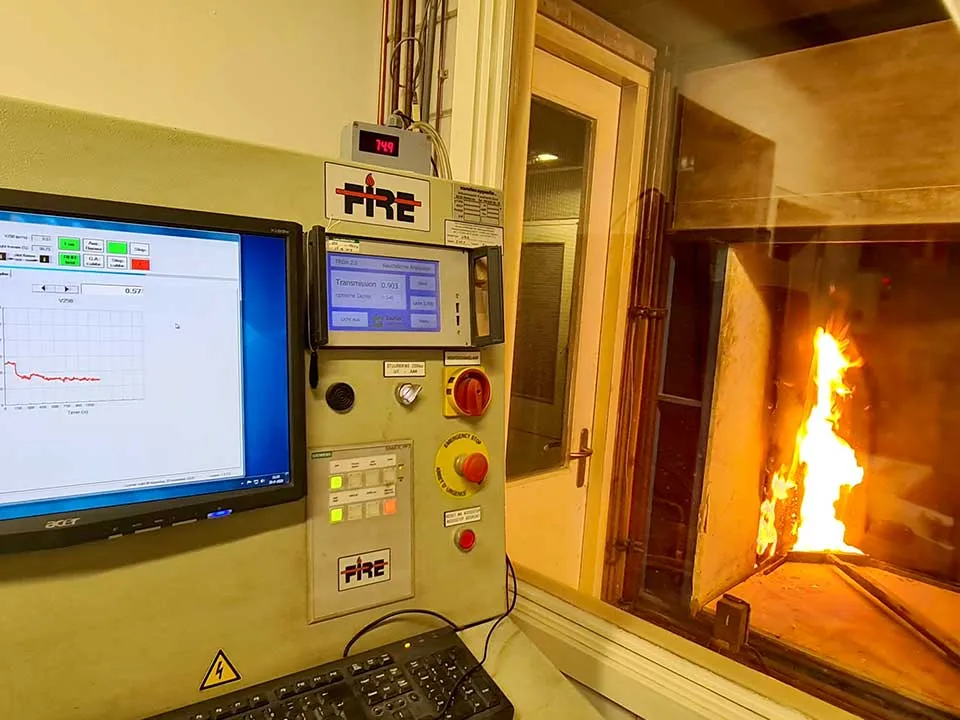
In early 2020, Panelen Holland began using a rigid foam core in its sandwich panels, with testing starting at Effectis in mid-2020. We covered this in our previous issue. “Unfortunately, all the disruption caused by the coronavirus pandemic is slowing down the testing process,” says Wijnja. “We can’t move fast enough! Our sandwich panels, with aluminium on both the inner and outer faces, have now been tested and meet Fire Class B-S2,D0. This applies to flat panels and rebated panels with a powder-coated surface finish, in thicknesses ranging from 14 to 204 millimetres.” Testing is now under way on panels with anodised aluminium sheets, followed by untreated aluminium sheets. “Testing of untreated and powder-coated steel in the same thicknesses is being completed. Next will be sandwich panels with enamelled toughened glass and Trespa. This will cover the vast majority of panels available on the market.”
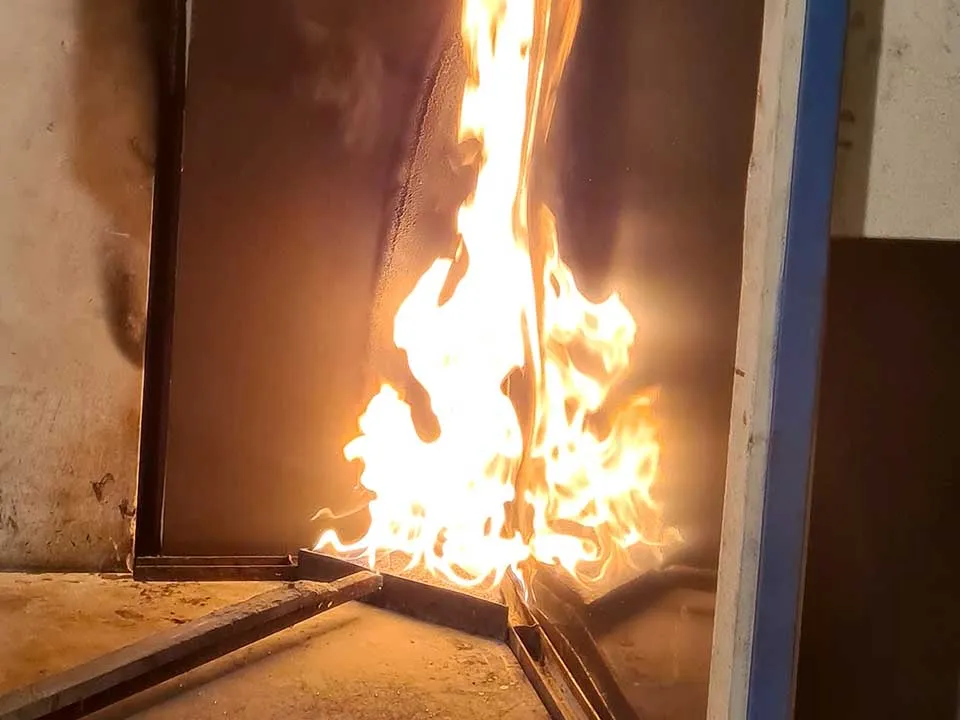
In addition to fire resistance, increasing attention is being paid to a product’s WBDBO (resistance to fire spread between compartments). What is the difference? Fire resistance is the property of a construction that enables it to meet the WBDBO requirement. The requirement is the same everywhere, but fire resistance is largely determined by the surroundings and can therefore vary from one location to another. If the WBDBO requirement between two compartments is 30 minutes, a fire starting in one compartment must not spread to the other for 30 minutes. Wijnja concludes: “Our aim is to have all our sandwich panels certified on the basis of this classification. This includes panels with an interchangeable outer sheet, such as glass, aluminium and steel, giving customers the greatest possible freedom of choice when selecting panels that enhance fire resistance.” The pre-test has now been completed successfully, and the final tests will take place over the coming weeks.
Question about this story? Ask your question
Keep following this
Get an email when a new story is published. No account needed.
- ThemeFacade design and construction
- SubjectGeneral







