Sustainability Report 2023: Contributing to a sustainable future
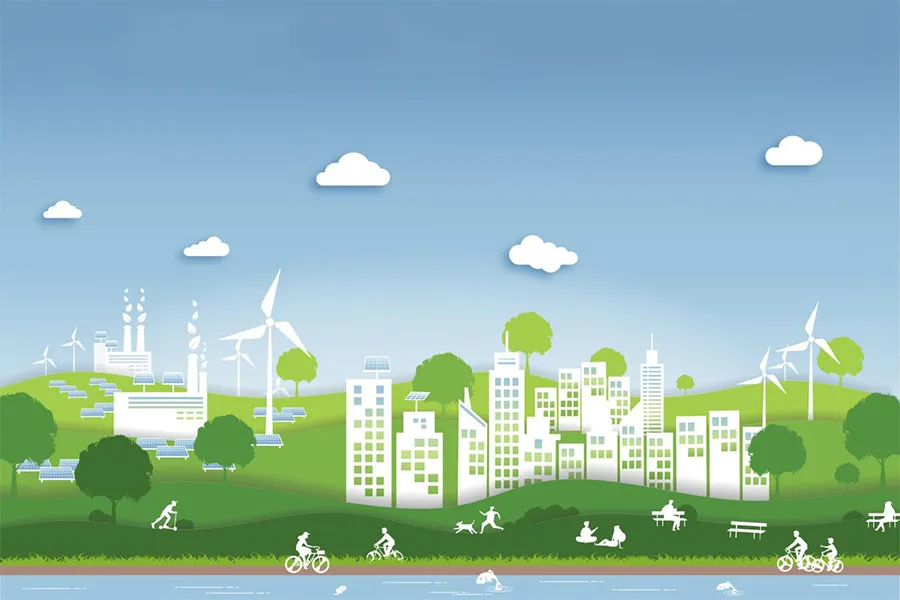
AGC Glass Europe aims to meet the AGC Group’s target of reducing greenhouse gas emissions by 30% by 2030 and achieving carbon-neutral glass production by 2050. The glassmaker is making progress on its decarbonisation journey, step by step. Details of this journey are now available in the Sustainability Report on the corporate website at www.agc-glass.eu.
The report sets out AGC’s approach and objectives, providing a detailed overview of every element of its roadmap and the latest progress on its decarbonisation journey.
Together, committed to sustainability
AGC regards sustainability as a fundamental part of its social values and a prerequisite for all its activities. It requires continuous improvement, with everyone at AGC involved. Through its policies, objectives and certified environmental management systems, AGC aims to contribute to a sustainable future.
Leading the way in decarbonising the industry
AGC Glass Europe monitors its carbon footprint every year and has developed an ambitious roadmap to achieve carbon-neutral glass production by 2050. AGC’s roadmap takes every part of the value chain into account. It covers sustainable sourcing of raw materials, the use of highly efficient furnaces, increasing cullet use, switching to green electricity and, finally, optimising transport.
2022 highlights
Sustainable sourcing
- Local sand extraction. Using “good enough” sand means less transport, fewer processing steps, less waste and lower consumption of natural resources.
Recycling
- Glass recycling: AGC Glass Europe recycles approximately 1,000,000 tonnes of cullet per year, saving around 1,150,000 tonnes of raw materials and avoiding 700,000 tonnes of CO2 emissions. Cullet accounts for almost 30% of our raw materials on average, and this share will increase significantly.
- Recycling DeSOx waste as a raw material: in 2022, 4,600 tonnes of sulphates were recycled as a raw material, bringing the total since the programme began in 1999 to approximately 59,500 tonnes.
Highly efficient furnaces
- Electro-boosting. An interdisciplinary AGC team is installing electro-boosting on float production lines to partially electrify all production lines across Europe. In 2022, the first furnace at Moustier was fitted with electro-boosting technology during a cold repair. The technology was also installed on the float line at Seingbouse* (France)
- Hybrid melting. AGC and Saint-Gobain have announced that they are collaborating on the design of a pioneering float glass test line, which is expected to significantly reduce direct CO2 emissions.
Using green energy
- In 2022, total green electricity production amounted to 28,927 MWh of recovered and self-generated energy. This saved almost 2,100 tonnes of CO2 in 2022.
Glass at the heart of sustainable architecture
Through a holistic approach to reducing carbon emissions, AGC now offers its customers Low-Carbon float glass, with 40% lower carbon emissions. It aims to lead the development of new products with improved environmental performance and to enhance people’s health and wellbeing, thereby playing an important role in sustainable architecture.
Discover more at www.agc-glass.eu
Find the latest progress on our decarbonisation journey (in English) at
https://www.agc-glass.eu/en/sustainability/latest-news-our-decarbonisation-journey
(*) The installation at Seingbouse was partially funded by a grant under the French economic stimulus programme “France Relance”, financed by the European Union through NextGenerationEU. The “France Relance” programme, managed by ADEME, supports the decarbonisation of French industry.
A business enquiry for AGC Glass Europe? Get in touch
Companies in this story
Keep following this
Get an email when a new story is published. No account needed.
- SubjectGeneral
- CompanyAGC Glass Europe