








Testing the complete build-up prevents problems
Text and images Swisspearl
Fire-safe façades
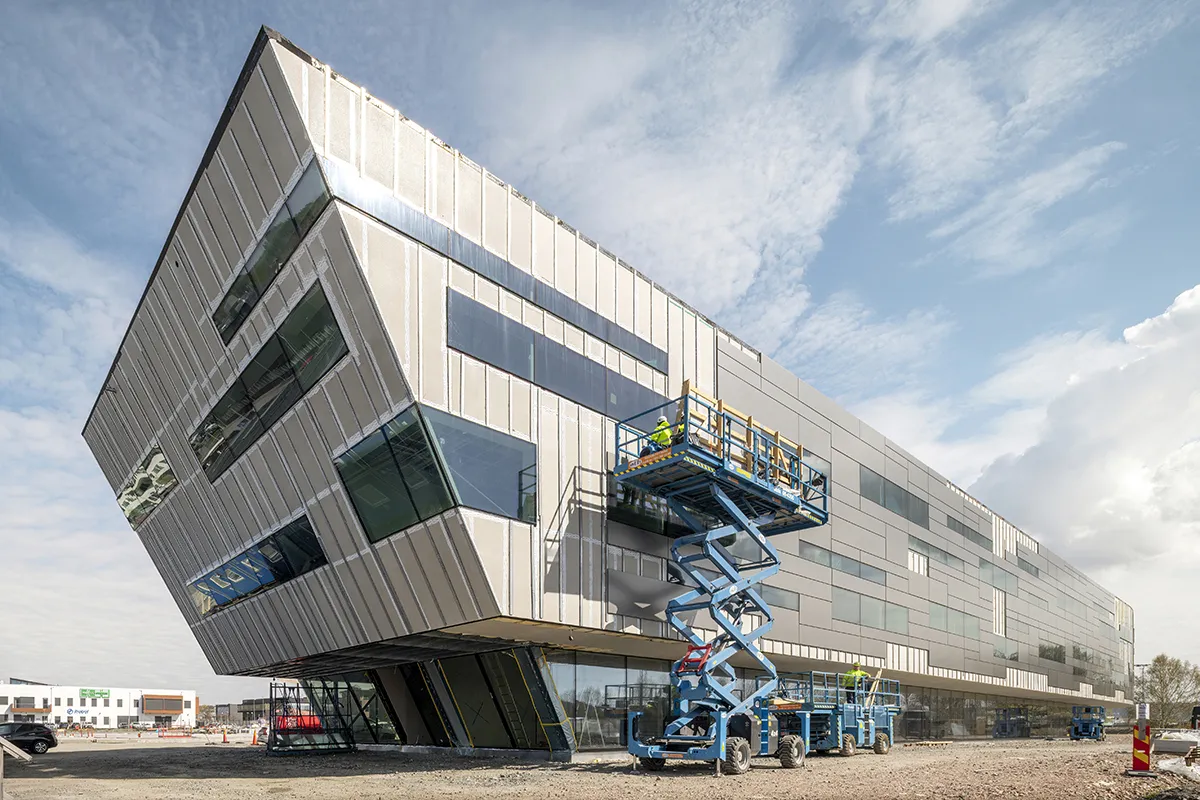
A façade does much more than simply protect a building from rain and wind. It plays an important part in aesthetics, energy efficiency, sound insulation and fire safety. The latter has attracted considerable attention in recent years. Façade fire safety is more complex than is often assumed: it is not just about the properties of individual materials, but above all how the complete façade build-up performs in real-life conditions.
Dutch building regulations assess façade fire safety at two levels:
- Reaction to fire classification (A1 to F), determined in accordance with NEN-EN 13501-1
- Resistance to fire penetration and fire spread (WBDBO), set out in NEN 6068 and NEN 6069
Depending on a building’s function and height, a façade build-up must meet at least fire class D, B (very difficult to ignite) or even A2 (virtually non-combustible). Façade cladding manufacturers are responsible for demonstrating the fire class. This is done through end-use testing and CE marking, which confirms that a product complies with European legislation.
Individual products versus the complete build-up
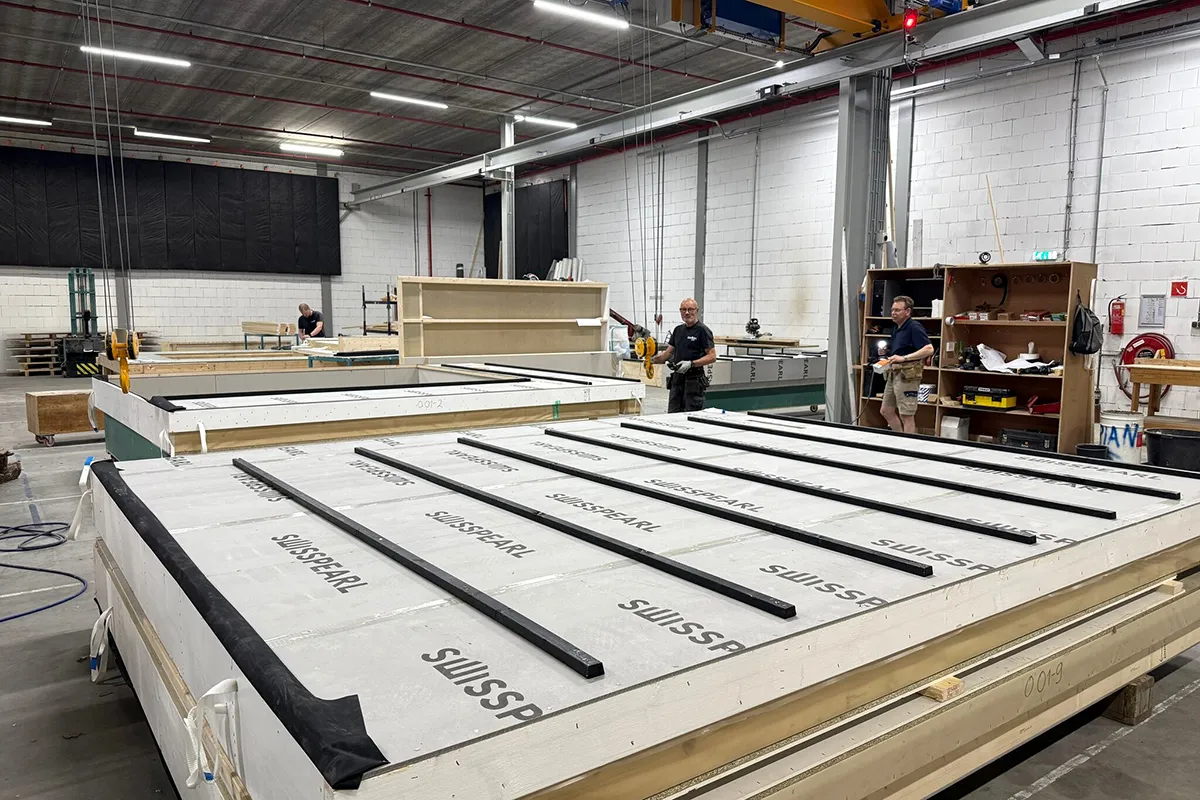
A common misconception in construction is to assess façade products individually. Each material, from insulation and battens to cladding and membrane, is assigned its own fire class. But even if all these individual products achieve fire class B, that does not automatically mean the complete façade build-up will perform to the same standard. The combination of materials determines the overall fire performance. Consider the role of a cavity, the connections between components or the effect of adhesives and membranes. To obtain a reliable picture, the façade must therefore be tested as a whole in an end-use situation, exactly as it will be installed in practice.
Contractors are responsible
This presents a risk for contractors and building owners. They are ultimately responsible for the finished result, and therefore also for the fire safety of the façade. If a build-up is found not to perform in practice, this can lead to delays, high repair costs or even liability in the event of damage. It is therefore crucial to check how the façade build-up has been tested and what guarantees the supplier offers.
Manufacturers such as Swisspearl play an active role in this. In addition to supplying façade materials, the company supports contractors and architects with technical guidance and advice on detailing. Testing façade systems as a whole in accordance with the requirements of the Bouwbesluit / Besluit Bouwwerken Leefomgeving (Bbl) delivers a reliable result, helping to reduce risks and ensure smoother project handovers.
Windstopper: protection and flexibility
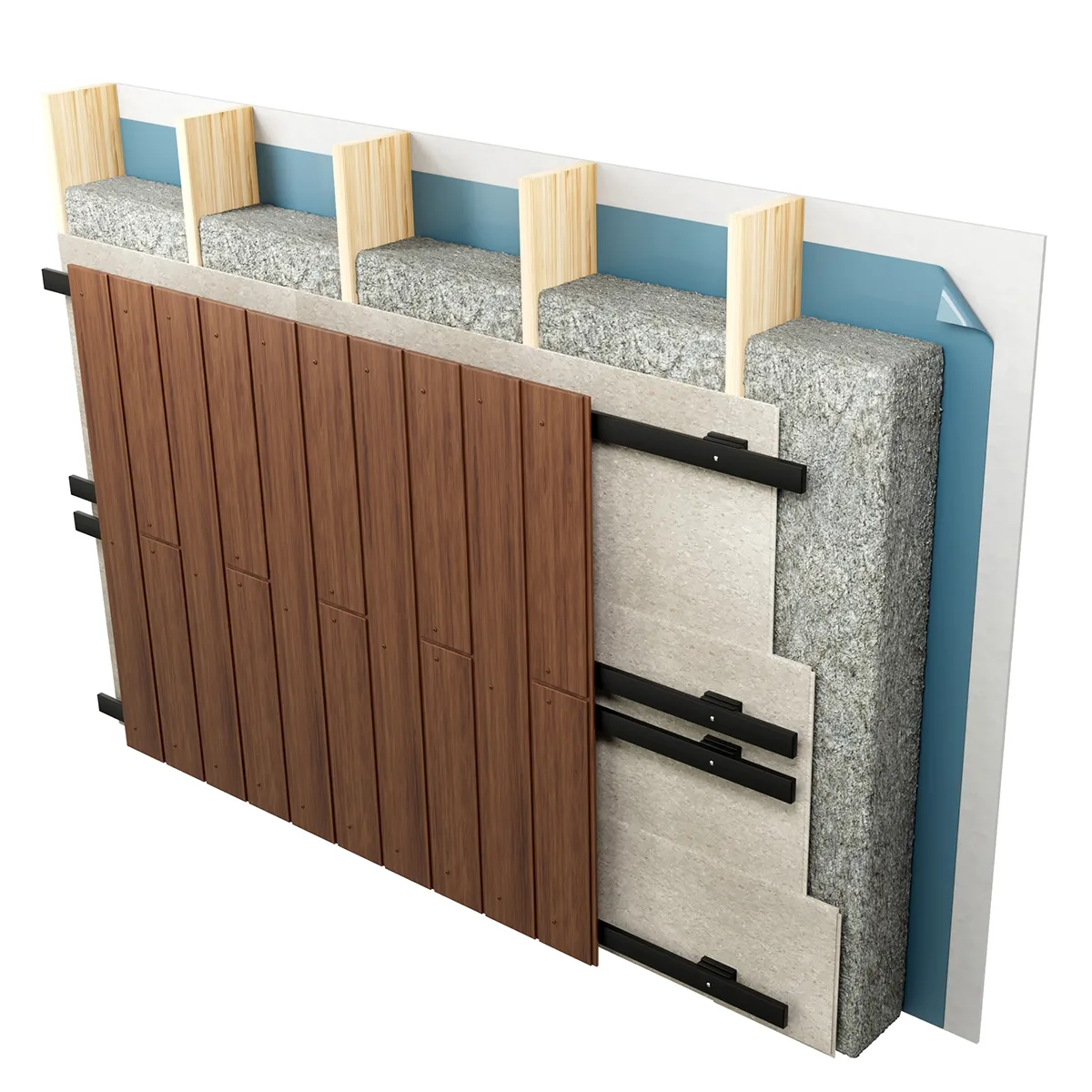
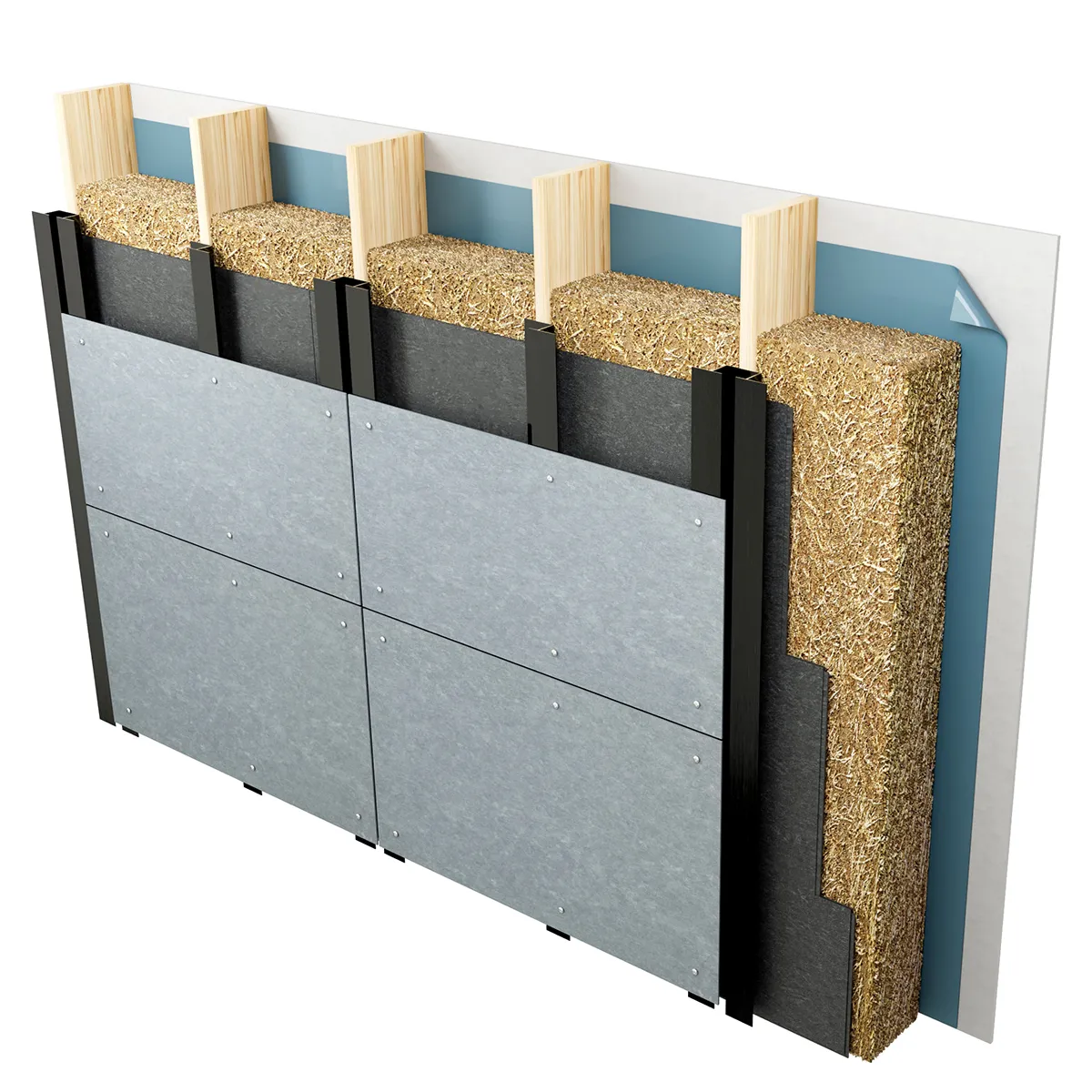
A practical example of a product that contributes to a fire-safe façade build-up is Swisspearl’s Windstopper. This fibre cement board is designed to ensure ventilation behind the façade while protecting the insulation behind it from fire, moisture and mould.
Windstopper is available in two versions, Basic and Extreme, and can even serve temporarily as façade cladding. The Basic version can be used as a temporary façade for up to six months, while Extreme can do so for up to twelve months and is suitable for open façades with up to 20% of the surface area open. With its Natural Grey and Anthracite colour options, the product also fits in well visually with modern façade designs.
Windstopper’s key features at a glance:
- Windproof and watertight, yet vapour-permeable;
- Fire-resistant and virtually non-combustible;
- Easy to install, including in prefabricated timber-frame elements;
- Also suitable for temporary façade applications;
- 20-year warranty when correctly installed.
Quality Assurance Act reinforces the need
The introduction of the Wet kwaliteitsborging voor het bouwen (Wkb) further highlights the importance of demonstrable fire safety. Whereas inspections were previously carried out by the local authority, responsibility will now rest with private quality assurance providers. Contractors must be able to demonstrate explicitly that their façade build-up meets the requirements of the Bouwbesluit / Besluit Bouwwerken Leefomgeving (Bbl). Collaboration is essential here. Suppliers such as Swisspearl support contractors and manufacturers of timber-frame elements with expertise, tested solutions and practical guidance, alongside their ‘guide to fire-safe façades’. This not only ensures compliance with legal requirements, but also raises the level of safety and reliability in construction.
Façade fire safety is not about individual materials, but the complete picture. Only testing the complete build-up in a realistic application (end-use) provides certainty. For contractors, this is the only way to avoid risks and comply with legislation that is subject to increasingly stringent checks. With reliable products such as Windstopper and technical support from experienced manufacturers, the construction industry can work together to deliver fire-safe buildings and smooth project handovers. Swisspearl also offers a wide range of modern fibre cement products as a high-quality finish for façades and roofs.
Een zakelijke vraag aan Swisspearl Nederland B.V.? Get in touch
Companies in this story

Keep following this
Get an email when a new story is published. No account needed.
- ThemeSafe and verifiable facade construction
- SubjectGeneral
- CompanySwisspearl Nederland B.V.







