Impressive domes: a ‘display case’ for Afsluitdijk pumping station pumps
Text Roel van GilsImage Aldowa
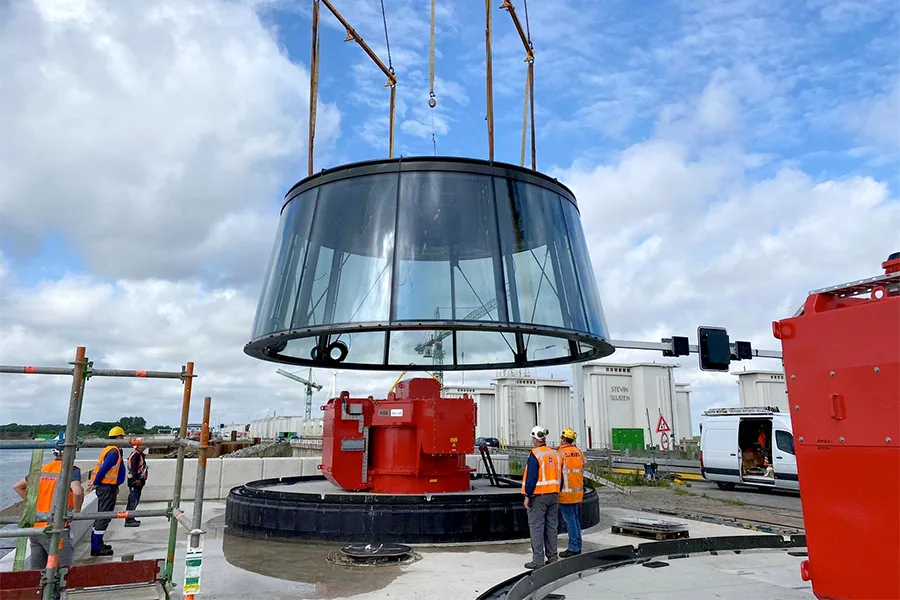
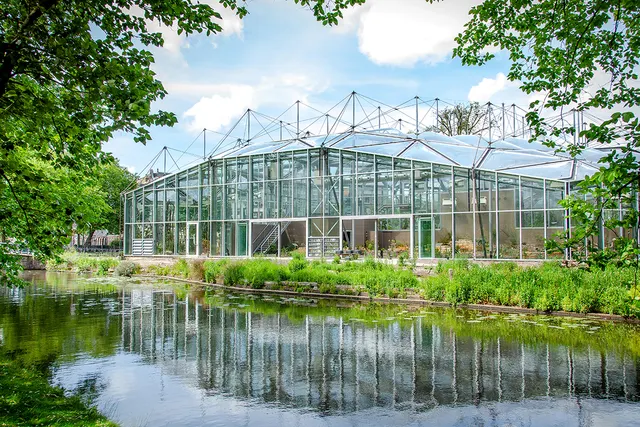
One of Europe’s largest pumping stations is currently being built in the Afsluitdijk at Den Oever. And the outside world is certainly meant to know about it! Impressive glass domes will sit atop the pump building, offering a view of the six giant pumps inside. The domes alone are works of art, a project that gave the engineers at Aldowa plenty of scope to show what they could do.
Together with the new sluice gates, the new pumping station will increase the discharge capacity from the IJsselmeer to the Wadden Sea. According to Rijkswaterstaat, this is necessary because more water is flowing into the IJsselmeer via the rivers and surrounding areas, which could lead to flooding. The six pumps can discharge around 275,000 litres per second between them. That means they can fill an Olympic-size swimming pool in around 9 seconds. An impressive feat of engineering, concealed inside two pump buildings. To show the outside world that something special is happening inside these buildings, the pump houses will be ‘capped’ with six impressive domes.
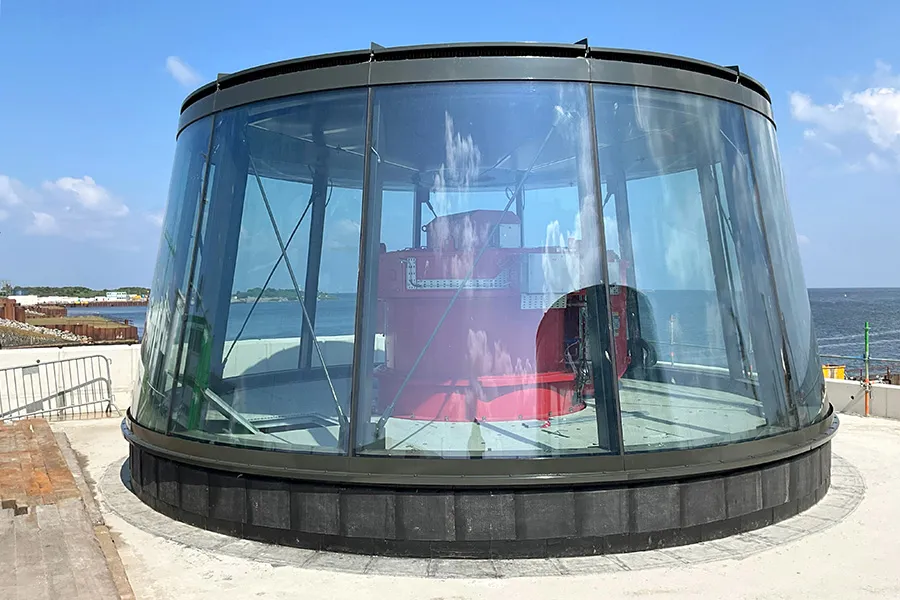
An architectural tour de force
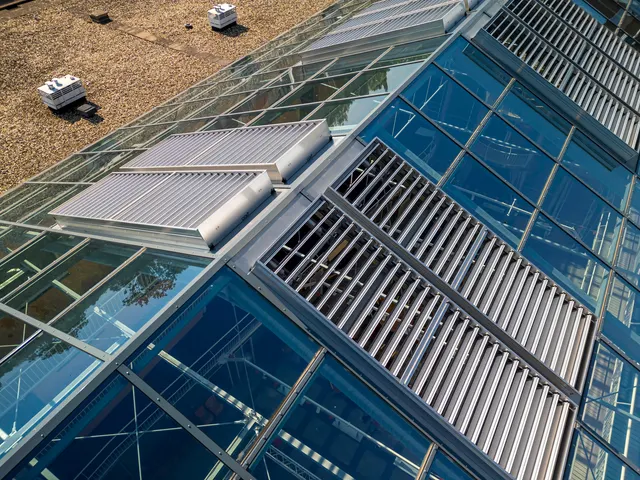
The domes are works of art, yet they also complement the Afsluitdijk’s original character and restrained lines. Unusual lines, exceptional architecture and striking façades: these are the kinds of projects Aldowa loves to get its teeth into. It is no surprise, then, that the specialist in metal and composite roof and façade cladding was asked to make the complex roof design for the six glass domes buildable. “The domes are 4 metres high, have a diameter of 8.70 metres at their widest point and taper towards the top. They are built around a steel frame, with round glass panels made from 73-millimetre-thick glass and a roof consisting of rolled and folded aluminium cassette panels,” explains Richard Sliep, project manager at Aldowa. “We were commissioned by Jos van den Bersselaar Constructie, which won the contract for the domes from the Levvel construction consortium, to deliver the roof structure, both the exterior and the acoustically perforated ceiling panels on the inside. Bersselaar led the transport and installation, following a successful collaboration at the engineering and construction stages.”
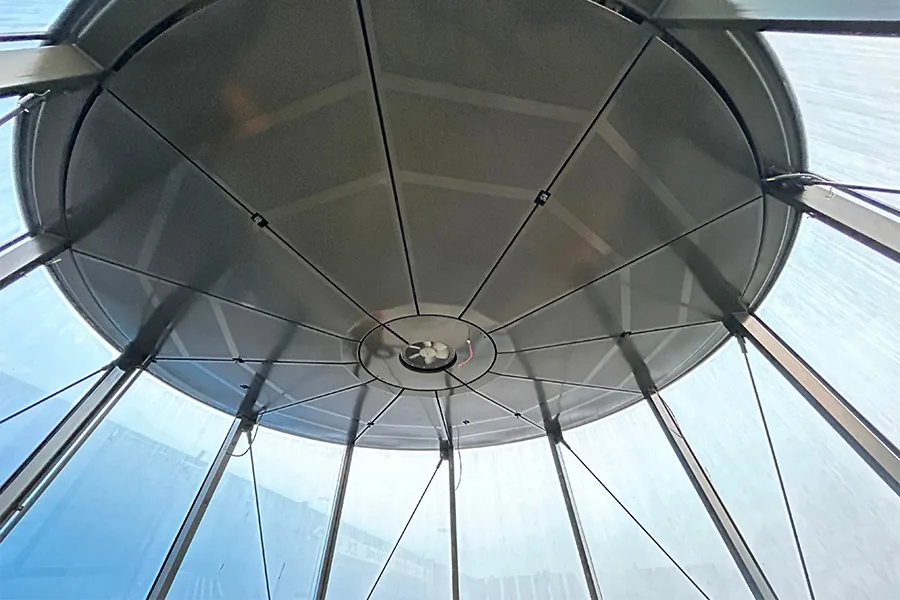
Complex pie slices
The roof of each dome consists of twelve segments, like slices of a pie. “That sounds simple, but it is anything but,” Richard stresses. “Each slice consists of ten separate components, welded together to form a single cassette panel, which also incorporates stiffening elements. You will be able to walk on the panels. What makes them unusual is that they have a slight curve along their length. By welding them to a curve, we avoided having to roll them, but that also made the process even more complex. A steel fin is also incorporated into every joint between the cassettes to provide lightning protection.”
Extremely demanding requirements
The roof panels had to meet such demanding requirements that Aldowa obtained additional certification specifically for this project. “We are dealing with very high wind loads here, as the domes are almost at sea,” says Richard. “Our welders therefore obtained additional certification for execution class 3. The location also meant that the aluminium had to meet extremely stringent requirements. It had to be a special Tectura Norf grade, an alloy suitable for pre-anodising. We also had to use thicker aluminium, both for the panels and for the omega profiles, to meet the structural calculation requirements. All the cassette panels and welds were also tested and inspected by an independent party.”
Installing the domes is one of the final milestones in the construction of the pumping station. They will be transported to the site by pontoon and then lifted into their final positions. “That is a major operation in itself, given that each dome weighs 30,000 kilograms. Once all six have been installed, we will return for a day to fit the drip edges at ground level. And then we will have another fine reference project to our name,” Richard concludes.
Question about this story? Ask your question
Keep following this
Get an email when a new story is published. No account needed.
- SubjectGlass