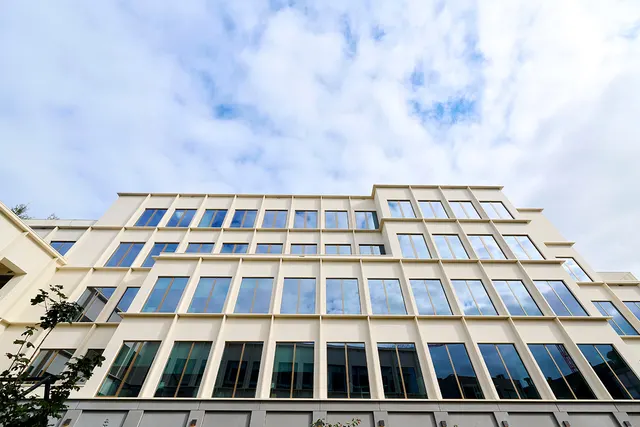
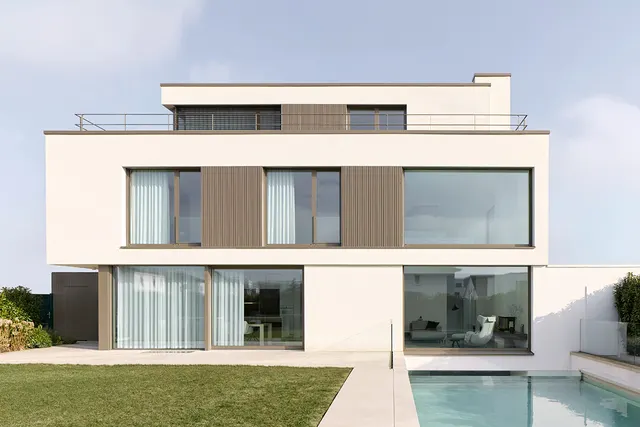
High insulation value and European fire class B thanks to a rigid foam core in sandwich panels
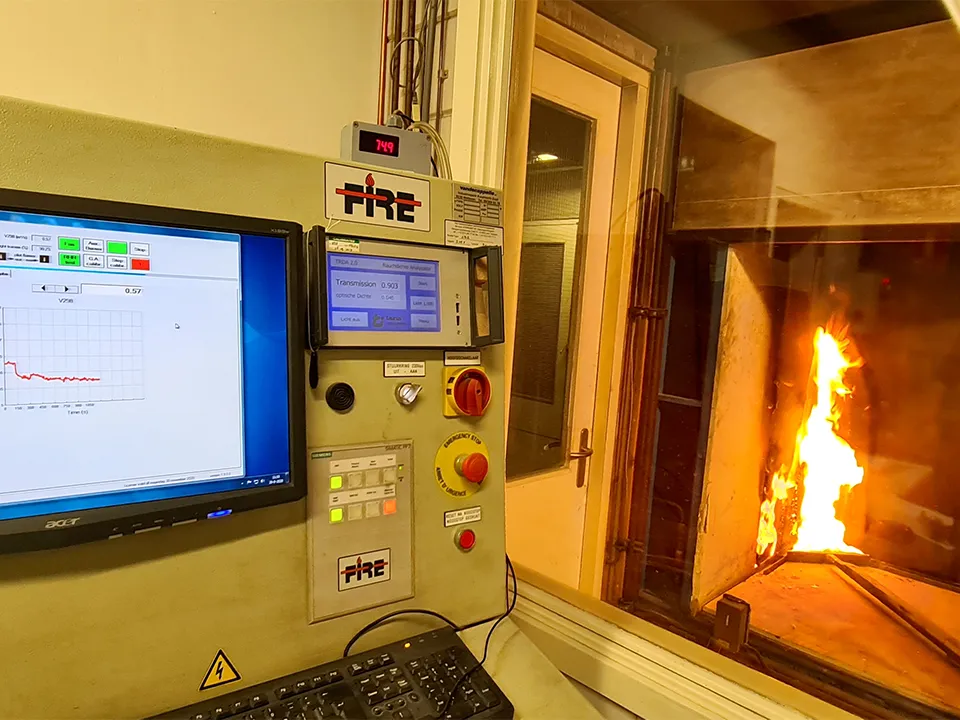
In response to increasingly stringent fire-resistance requirements, set by the Building Decree and the VMRG trade association, among others, Panelen Holland continues to focus on product and process development.
For some time, the company has been investigating how to achieve fire class B for the most common sandwich panel configurations. “We are investing a great deal of effort in this,” says Vincent Wijnja, head of sales at Panelen Holland. “The aim is to limit the consequences of a fire as much as possible.”
An initial step, taken in early 2020, was to replace the standard eco-polyurethane (PUR) core with eco-polyisocyanurate (PIR). Wijnja explains: “Since PIR itself has fire class D, we set out to find a combination of materials that would enable the complete sandwich panel to meet fire class B.”
Extensive testing
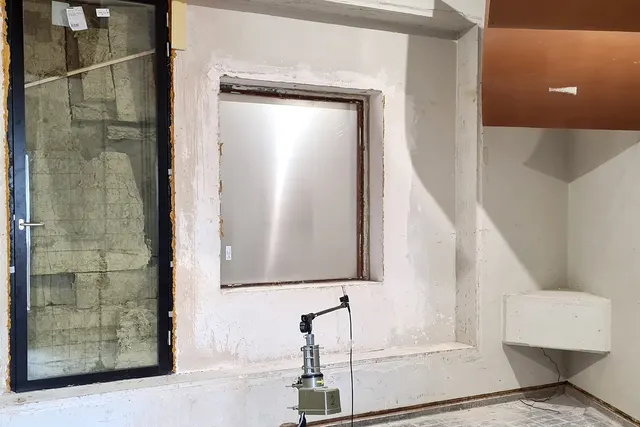
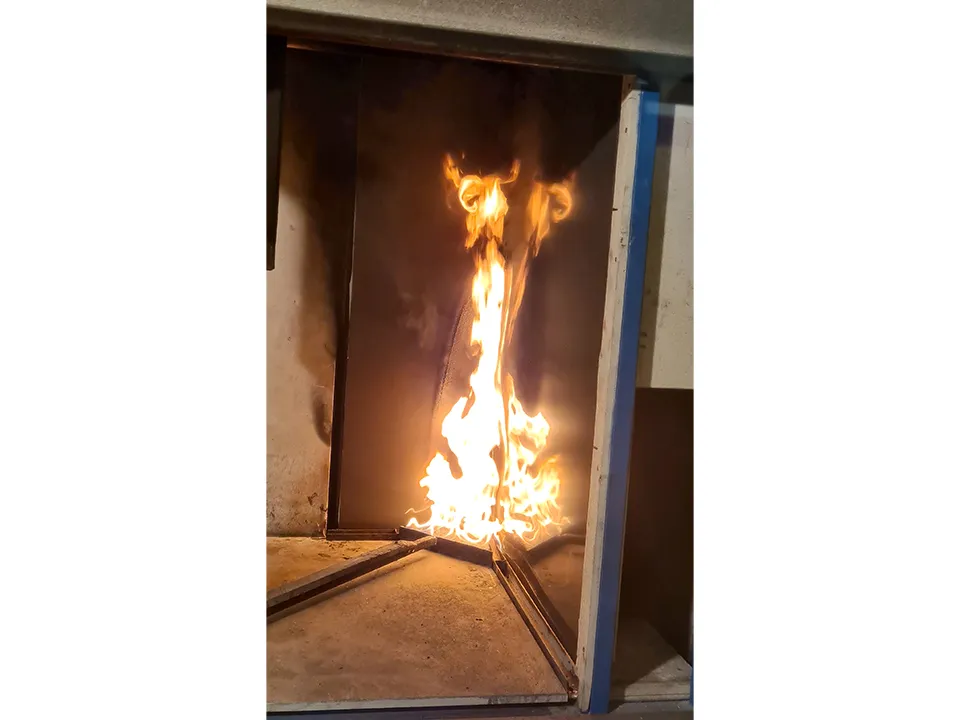
Testing began in mid-2020 at Effectis, a globally recognised company specialising in fire research, with extensive knowledge and expertise in testing, engineering and modelling, certification, inspections and training. “The research is divided into several categories: flat sandwich panels, tapered sandwich panels and different thicknesses in four different materials: aluminium, steel, Trespa and enamelled toughened glass. The tests on aluminium at the testing centre have been successful, and the certificates are being prepared. Testing with steel is still under way, while Trespa and enamelled toughened glass are due to be tested in early 2021.”
Fire classification
A product’s fire classification indicates the extent to which it contributes to the development of a fire and/or smoke production. The higher the fire classification, the lower the likelihood that a fire will start or grow as a result of the product’s contribution. In the Netherlands, there are seven Euroclasses for reaction to fire. The first letter in the fire classification indicates how combustible the product is, ranging from A to F. A means non-combustible, while F means highly combustible. For fire class A1, the product must make no contribution to a fire; fire class A2 means practically non-combustible, while class F covers the most combustible products, or products that have not been tested.
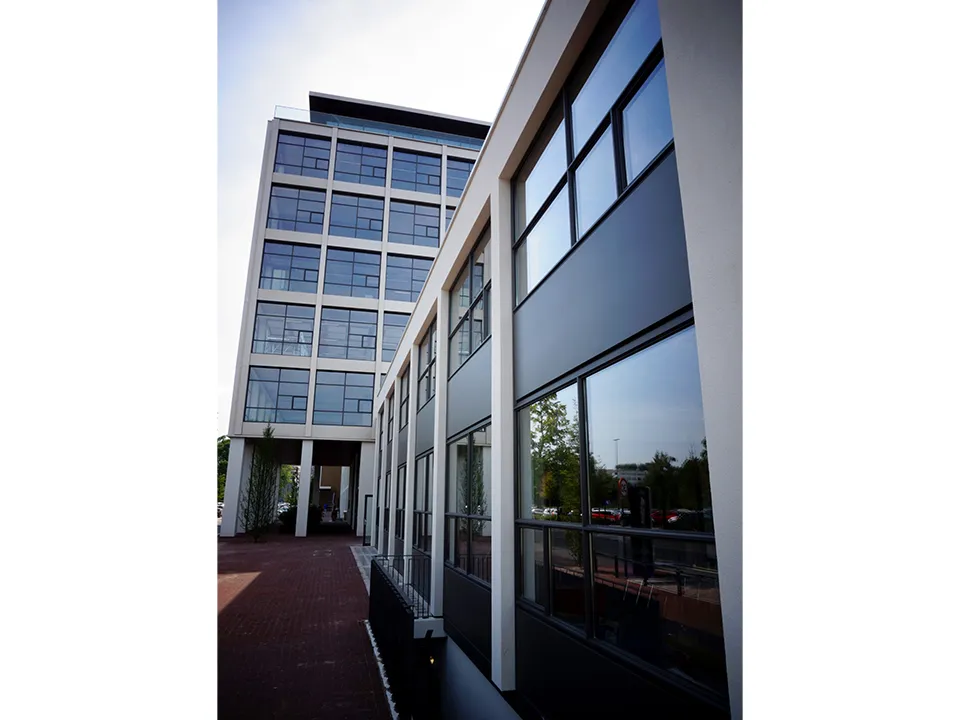
European fire class B
“We are focusing on fire class B. During the test, there is no flashover, so the product makes only a very limited contribution to the fire. In short, the product is very difficult to ignite.” Wijnja explains that CE marking requires not only a classification from A1 to F, but also a classification for smoke production and flaming droplets, which are shown on the CE label. Smoke production within a fire class is indicated by the letter S (smoke), with three classes: S1: little smoke production, S2: medium smoke production and S3: high smoke production.
The letter D (dropping) is used for flaming droplets and particles that fall during a fire. In the Netherlands, there are also three classes: D0: no flaming droplets or particles; D1: particles burn for less than 10 seconds; and D2: particles burn for more than 10 seconds.
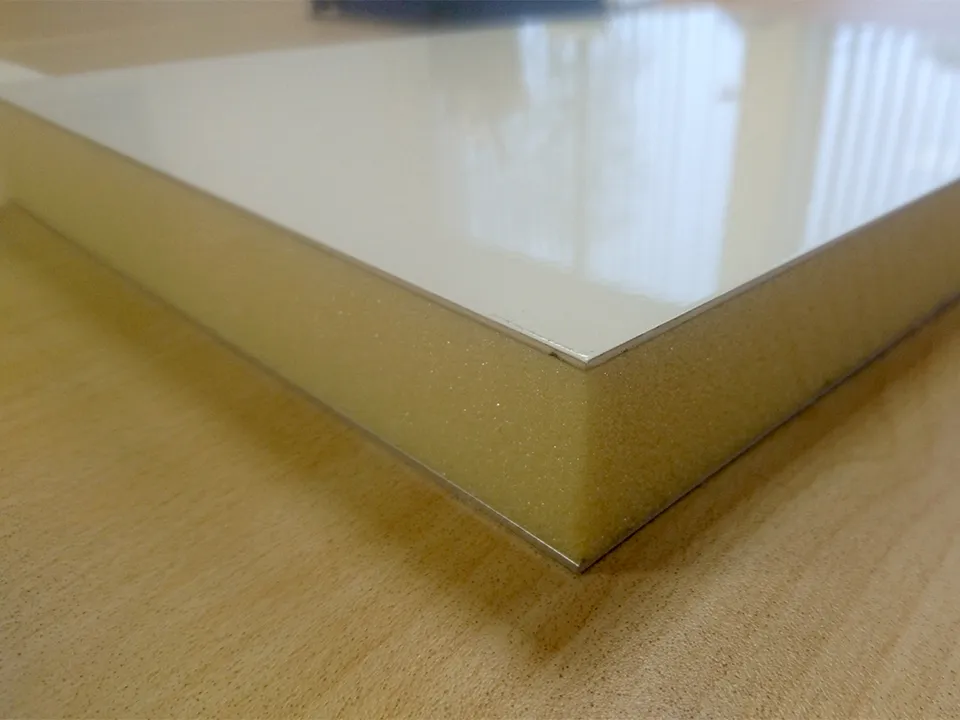
Building Decree
Under the standard cited in the Building Decree (NEN-EN 13501-1), sandwich panels and other products must meet fire class B when installed on the side of a building element facing the outside air and at a height of more than 13 metres. However, Wijnja notes that in practice, sandwich panels are generally treated as windows in buildings, allowing them to meet fire class D. “Because this is ultimately a matter of building safety, Panelen Holland wants to become the first sandwich panel manufacturer in the Netherlands to obtain a general fire class B certificate for its range of sandwich panels, sending a signal to other sandwich panel manufacturers to follow suit.” The Building Decree also often requires a B-S2 rating (droplet formation has not yet been specified), which Wijnja considers a good thing. “The number of fires, and therefore the damage to buildings caused by fire, continues to rise. Statistics show that arson is often the cause, both inside and outside buildings.” Wijnja concludes: “Panelen Holland hopes these developments will help prevent fires from spreading.”
Question about this story? Ask your question
Keep following this
Get an email when a new story is published. No account needed.
- ThemeAn energy-efficient and comfortable building envelope
- SubjectPanels & profiles