Solar shading performance classifications: important for the façade industry

As also set out in BENG, solar shading plays an important role in the façade as a whole. This is particularly true in the Netherlands, where the climate is highly changeable: sunshine and clouds alternate, sometimes at very short intervals.
The function of solar shading is essentially to block solar radiation and regulate light entry. The European standard EN14501 Blinds and shutters defines a number of classifications, which have recently been revised.
We discuss this with Evert Bos and Lindsay Hovenier of Verosol, a leading, forward-thinking company specialising in the design, manufacture and distribution of high-quality metallised window coverings. “Verosol stands for ‘heat control, light control & view through’,” says Hovenier. “That also includes glare control, meaning protection against discomfort glare. Together, these are precisely the areas on which the standard is based.”
Significant overlap with daylight standard and BREEAM-NL
The performance class for glare control is described in EN14501 and was significantly revised in the 2021 version. For HEA-3, BREAAM-NL uses the EN14501:2005 standard. Bos expects BREEAM-NL to adopt the revised tables too, with implications for the solar shading to be used. According to Bos, the revised standard overlaps considerably with daylight standard EN17037:2018. “Both standards contain the same selection tables, which help users choose the minimum performance class the solar shading must meet. The façade orientation and building location are taken into account, as are the glazing type and the position of workstations relative to the window. Ultimately, it is how the space is used that determines which value, light transmittance or solar transmittance, matters most to its users.” The tables are based on Daylight Glare Probability (DGP), the likelihood of discomfort glare occurring.
Reference glazing updated and expanded
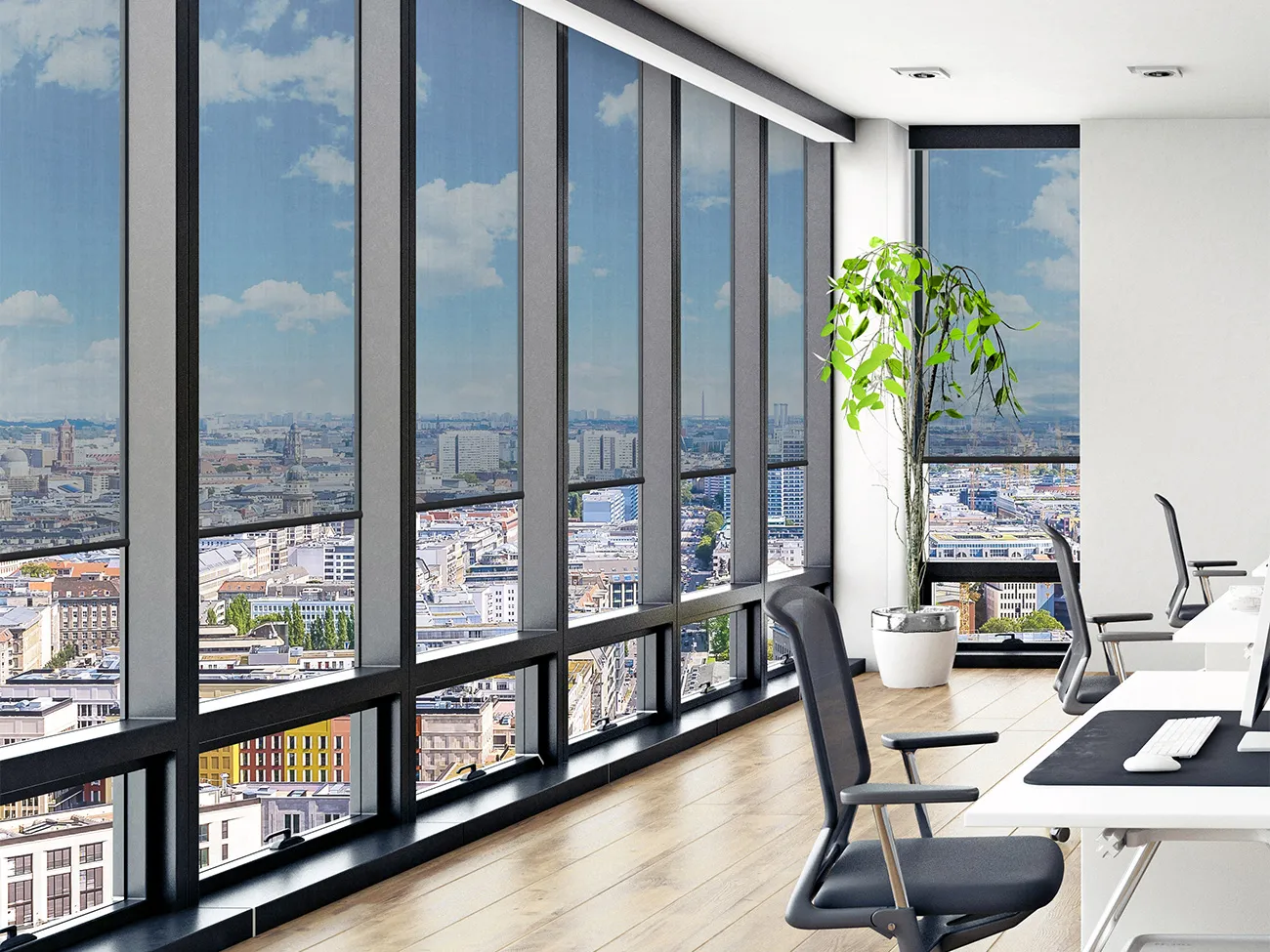
The reference glazing units we have known for years have also been substantially revised and expanded. “That’s a good thing,” says Bos, “because these new glazing units are much better suited to current building practice. Detailed information is important when determining the performance of internal solar shading. That is now possible.”
Targeted product development
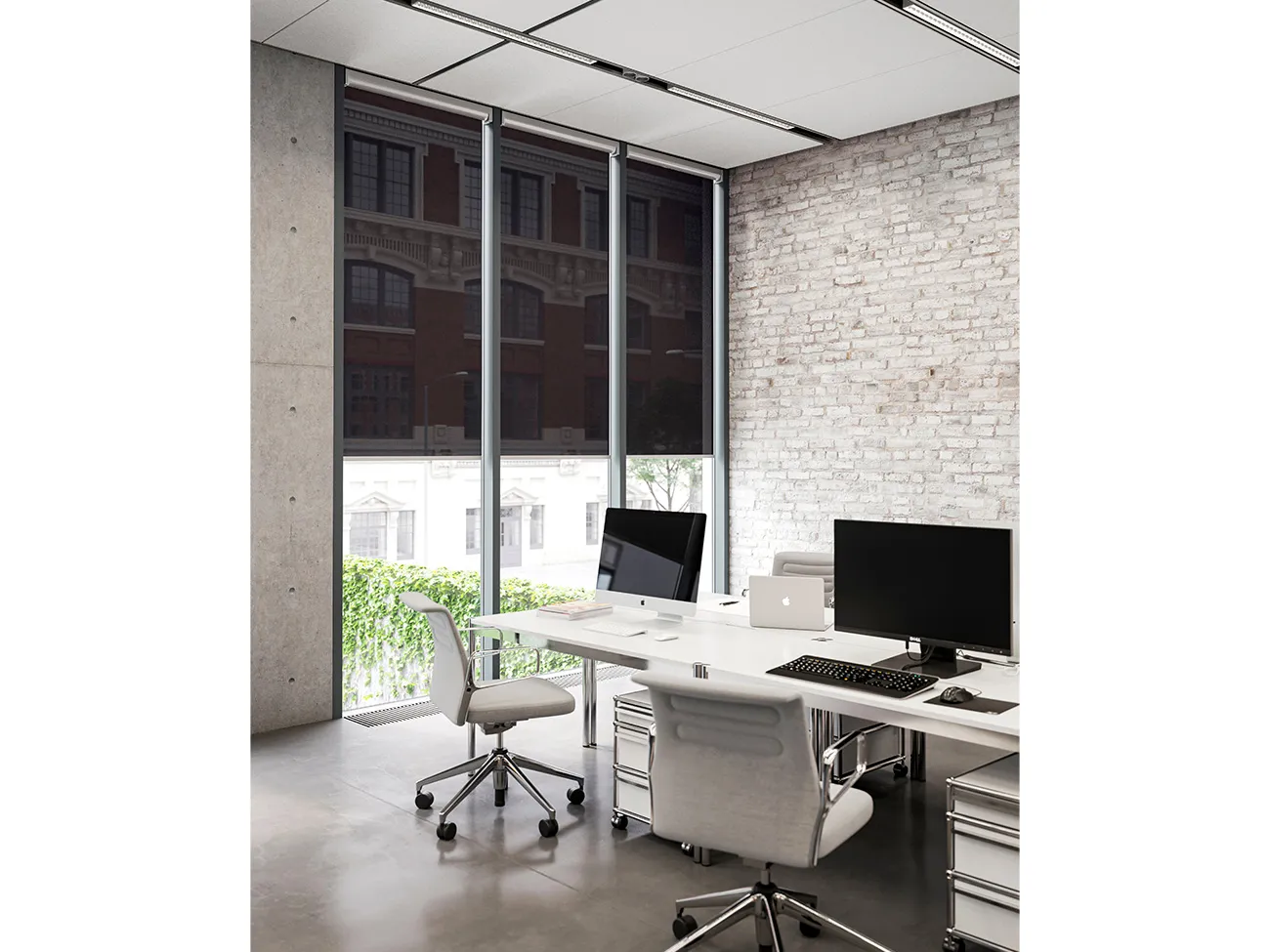
As a member of the standards committee, Verosol had been advocating a new classification method for years and brought issues raised by the industry into the process. “It is important to strike the right balance between thermal and visual comfort,” says Bos, “while retaining the view out. We see a lot of projects come through our Expert Centre, so we know exactly what is happening in the market.” Verosol has responded effectively to market demand and the new standard, which had been in the pipeline for some time, in its product development. “In developing our ClearView screen fabric, we have found the perfect balance between outward visibility and control of heat, light and glare,” adds Hovenier. These are three key categories in the new classification method.
Seeing is believing
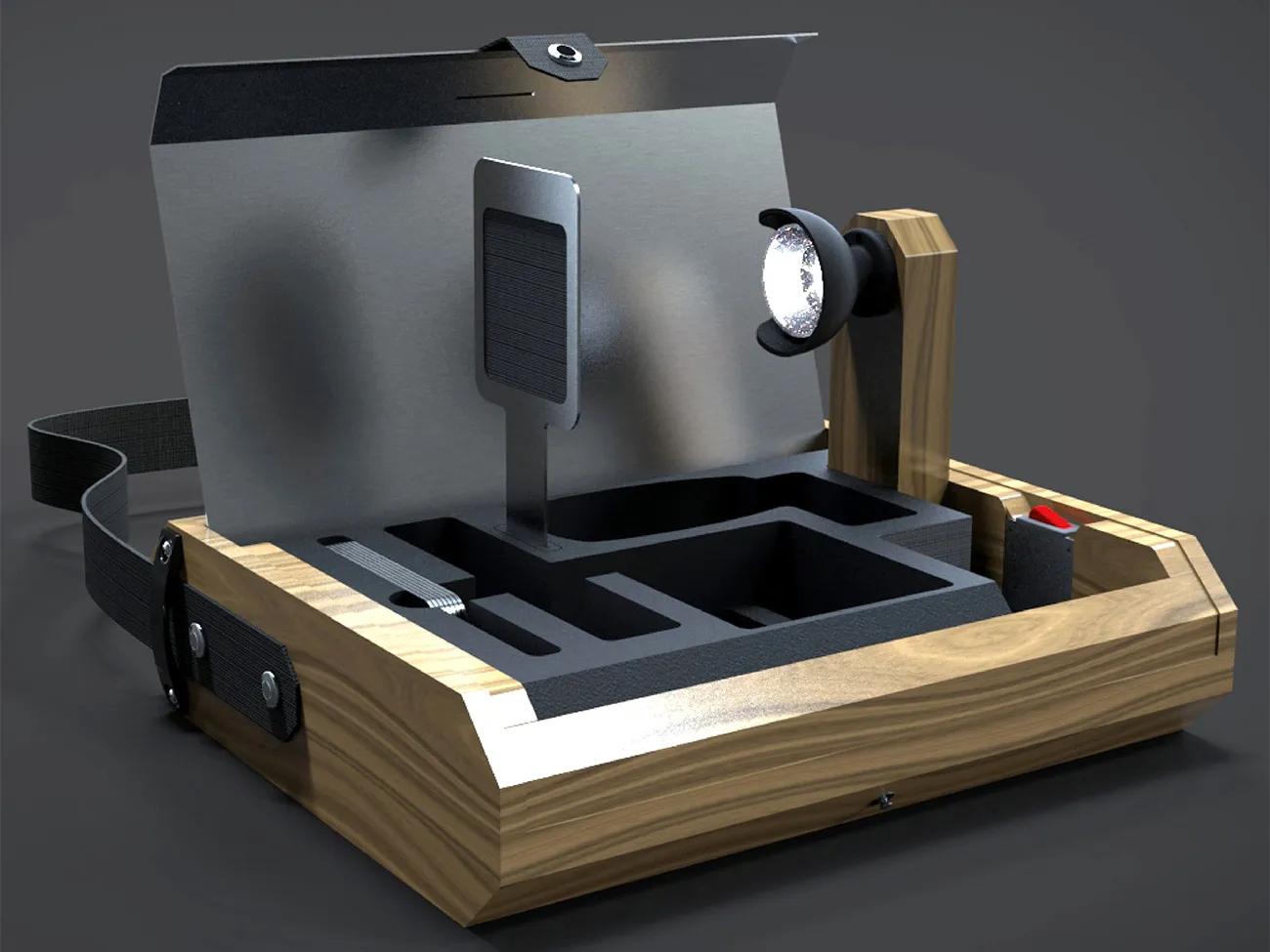
Bos: “The aim during development was to create a fabric with the best outward visibility combined with a low openness factor.” Verosol sees the new classification as a tool to help advisers recommend the right solar shading. “Explaining relatively abstract concepts such as glare factor and outward visibility can be quite challenging. It is much more about seeing and experiencing them,” says Hovenier. “That is why Verosol uses the Heat & Light Kit, so customers can experience for themselves how a product blocks heat and glare, and what the view out is like. Naturally, we are always fully up to date with the latest standards and advise and support our customers. We consider the project’s wishes and requirements, as well as the bigger picture,” Bos concludes.
Question about this story? Ask your question
Keep following this
Get an email when a new story is published. No account needed.
- ThemeAn energy-efficient and comfortable building envelope
- SubjectSolar shading