Polycarbonate rooflights and vertical cladding for a natural working environment
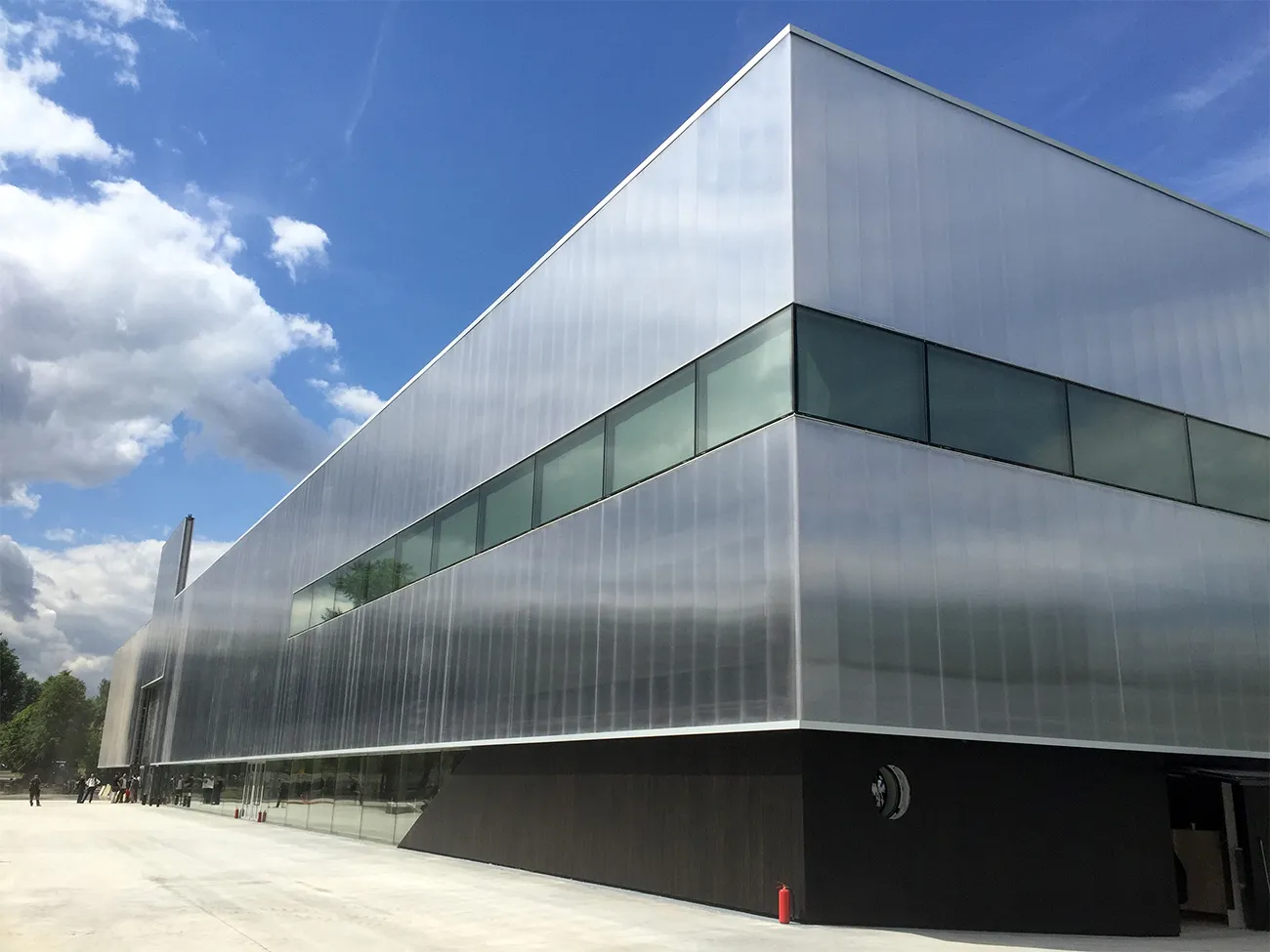
Natural daylight is, as we know, very important to people. Architects are continually looking for new ways to bring daylight into buildings. Since its establishment in 1996, Lemo Koepels Europe has evolved from a supplier of domes into a specialist in plastic daylighting structures.
The production hall at Lemo Koepels Europe in Noordwijkerhout manufactures a wide range of daylighting structures and canopies. From domes, boat shelters and dugouts to the most complex rooflights, everything is made in-house using computer-controlled machinery. “The acquisition some time ago of a sheet-metal workshop and an aluminium processing company means we can manage the entire production process for our daylighting structures in-house and ensure the quality we require,” says Ronald Meijer of Lemo Koepels Europe.
Thermal performance
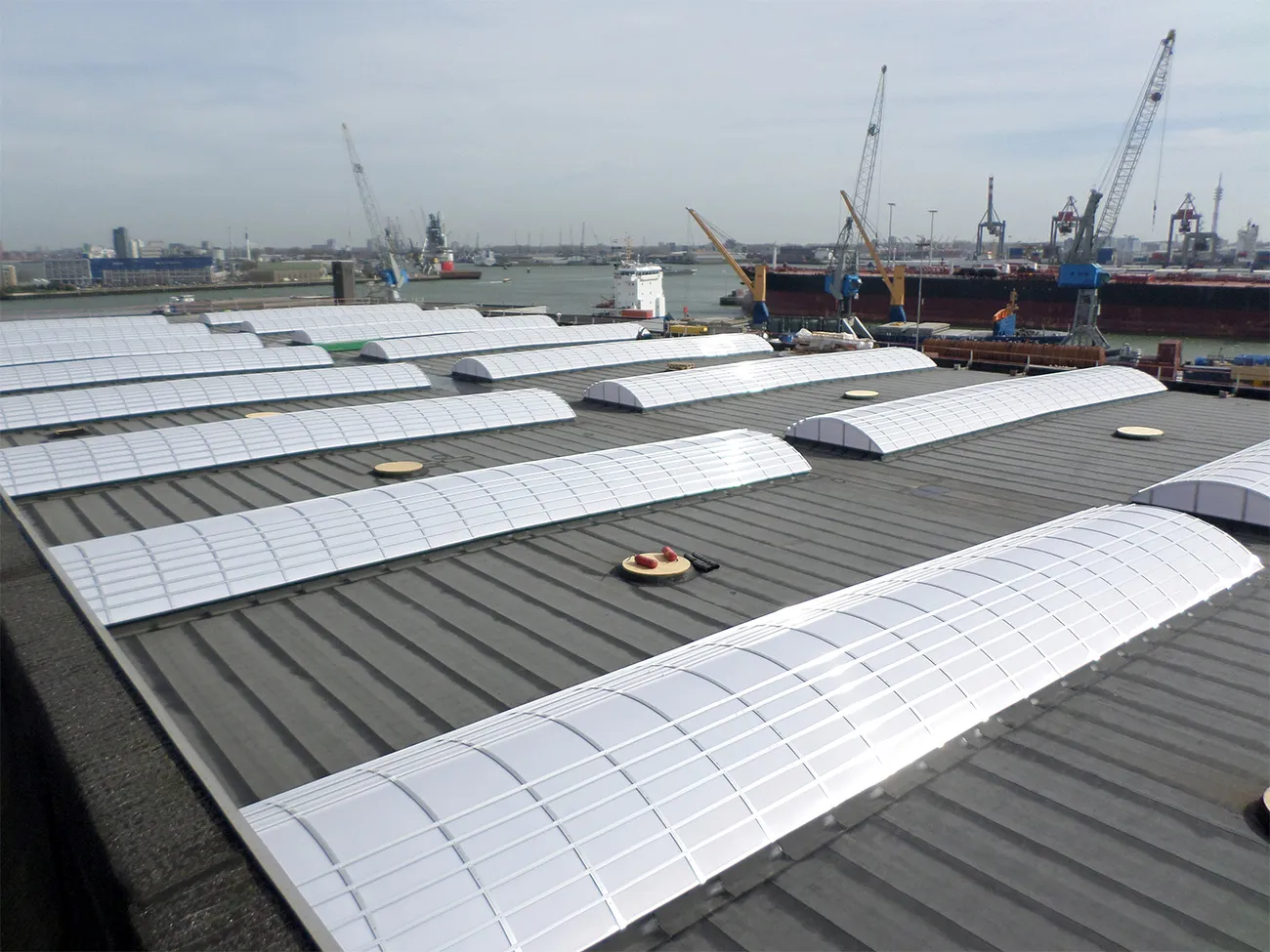
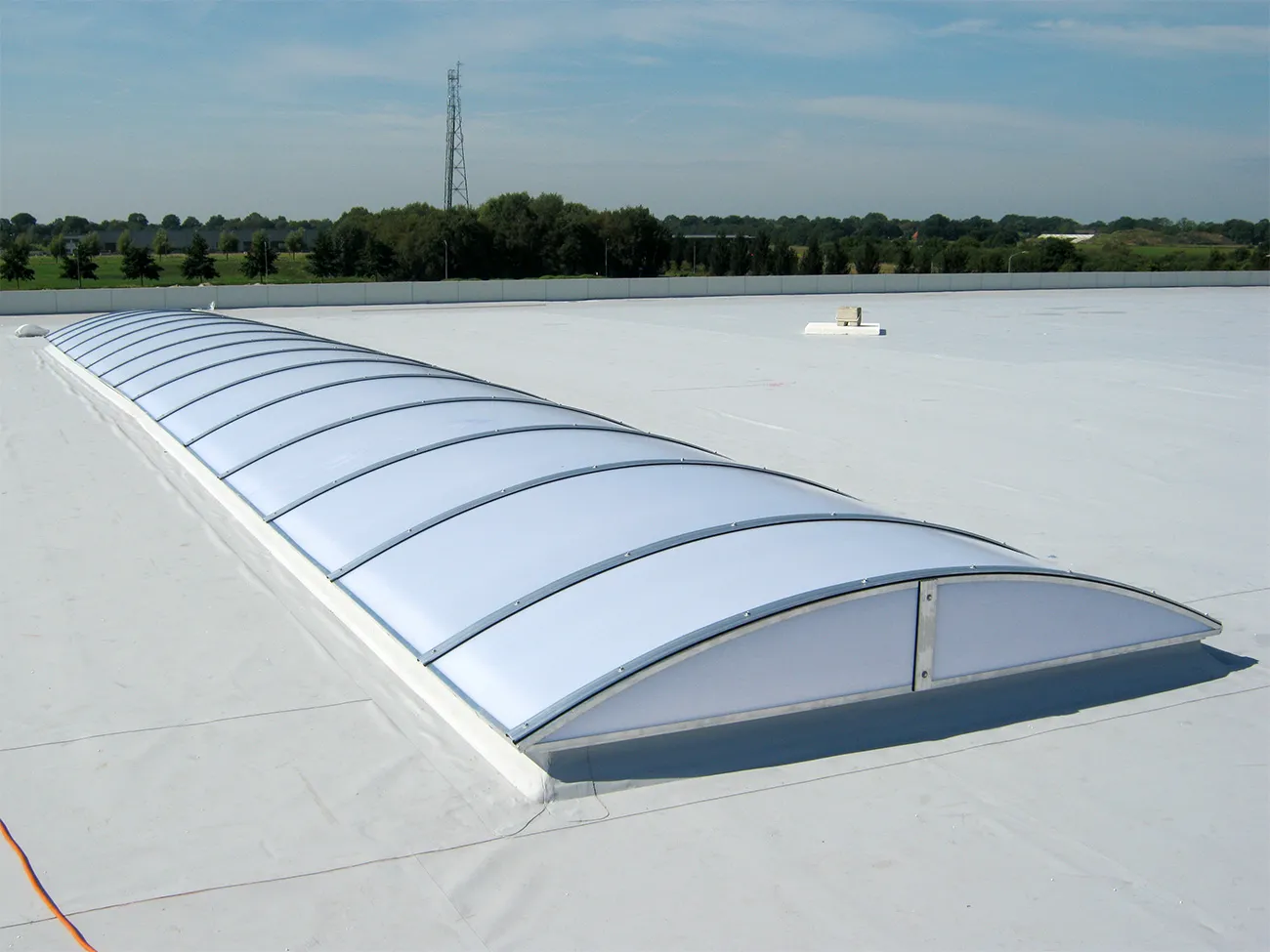
“In response to growing demand for better insulation, we have developed several new high-performance rooflights in recent years,” Meijer continues. “These range from barrel-vault rooflights with double glazing and an additional cavity, achieving a U-value of 1.0 W/m2K, to our own free-spanning sawtooth rooflights, with a U-value as low as 0.4 W/m2K. By using suspended ceilings, our rooflights can also be installed in areas fitted with sprinkler systems.”
Safety and quality requirements
As is widely recognised, safety is an increasingly important issue. Lemo Koepels can make all its rooflights fall-through safe to 1,200 joules (SBI). Meijer says: “To achieve this, we have worked with SKG to equip our rooflights with a specially developed system. Our rooflights and polycarbonate panels also meet the highest quality requirements. All structures comply with the project specifications, NEN-EN1301-1 and fire classification B-S1-D0. In addition, all glazing can be fully recycled at the end of its long service life, helping us to minimise our environmental impact.”
Vertical glazing
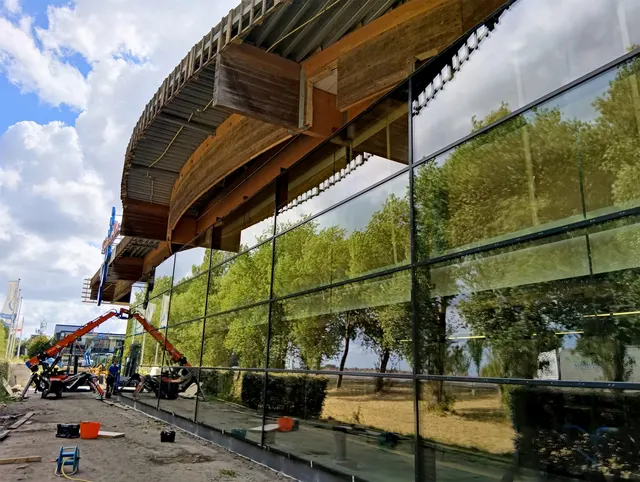
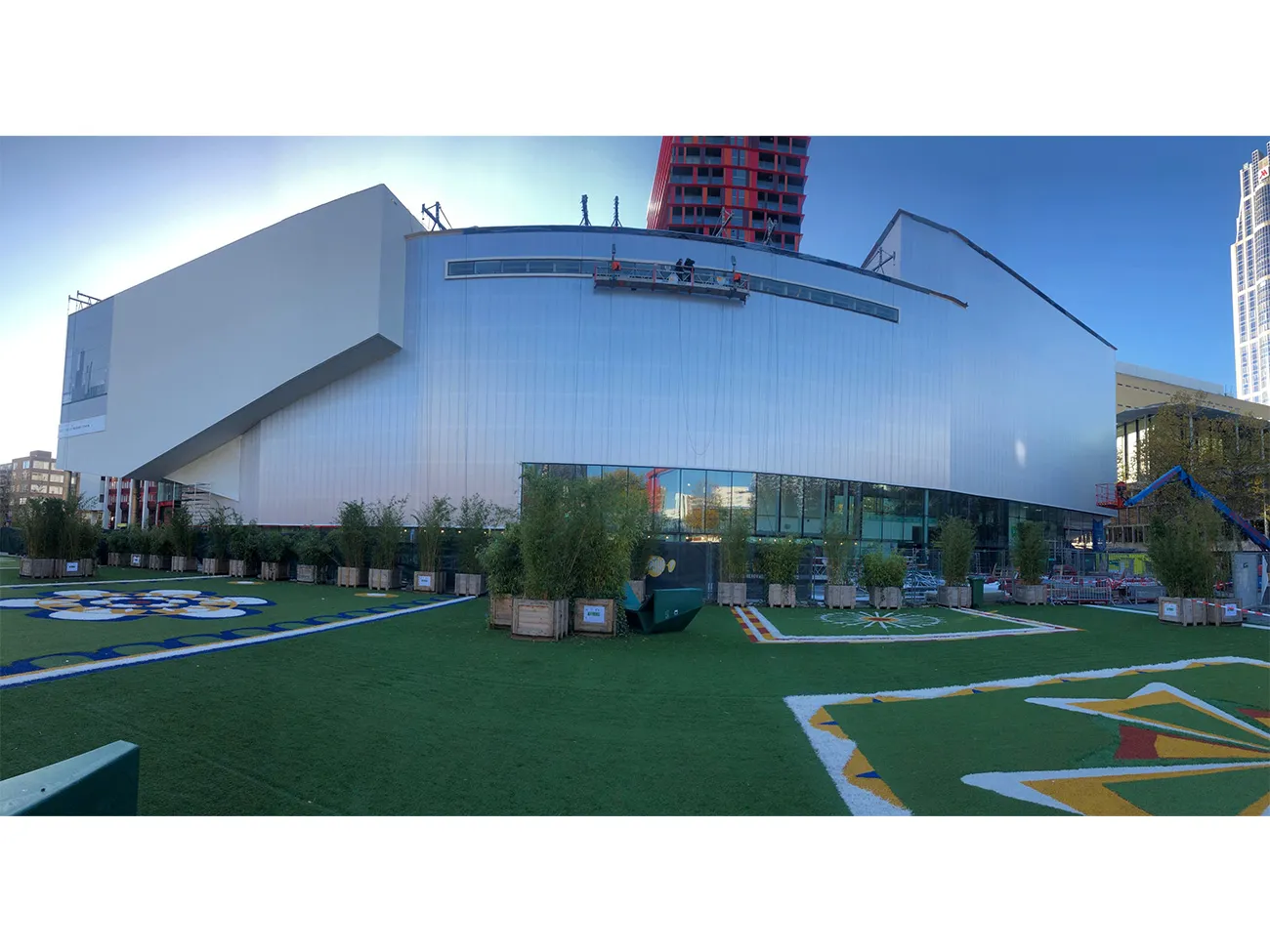
Alongside barrel-vault rooflights, Lemo Koepels has in recent years become the leading supplier of polycarbonate façade panels. “With the use of solar panels, architects are increasingly choosing to bring natural daylight into façades,” Meijer notes. “Working with Gallina, we have added a wide range of polycarbonate panels to our product range. Combined with our own profiles, they offer endless possibilities for bringing natural daylight into façades. This gives architects the freedom to experiment with designs and colours. With thicknesses of up to 60 mm for single glazing and 130 mm for composite glazing, and U-values as low as 0.4 W/m2K, our panels are ideal for use between sandwich panels and/or concrete façade sections.”
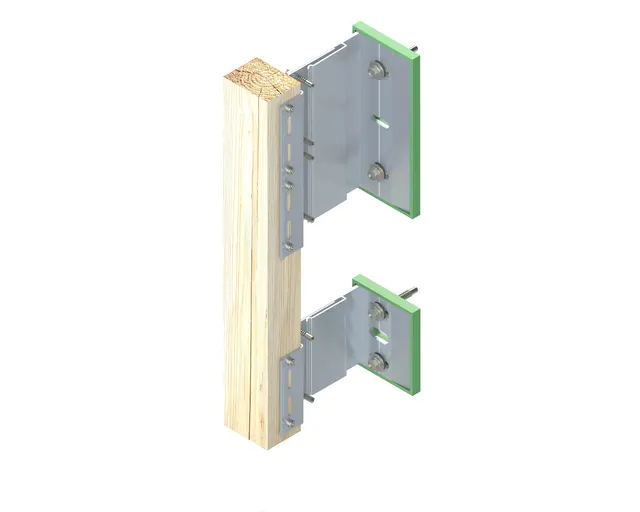
For larger spans, Lemo Koepels has developed a number of continuous panel anchors, eliminating the need for additional steelwork when installing large translucent façade areas. “Bicolour panels also give architects the freedom to choose an exterior colour that complements the building’s appearance, while specifying an opal finish on the inside to create beautifully diffused daylight. Adding LED lighting behind the glazing opens up endless possibilities. Another common application is internal walls: thanks to the panels’ low weight and the continuous panel anchors, we can create walls up to 6,000 mm high without intermediate rails.”
Question about this story? Ask your question
Keep following this
Get an email when a new story is published. No account needed.
- ThemeFacade design and construction
- SubjectFaçade cladding