








As global warming accelerates, solar shading must be the first line of defence against building overheating.
New research findings show that the time is right to make automated solar shading mandatory under the European Energy Performance of Buildings Directive (EPBD).
Smart solar shading could cut the energy used for air conditioning in European buildings by up to 60% by 2050. This could avoid up to 100 million tonnes of CO2 emissions and save €285 billion. These are the findings of scientific research by Guidehouse, the first study to compare the impact of solar shading with the use of air conditioning in buildings. According to ES-SO, the umbrella organisation for the European solar shading industry, the study demonstrates the urgent need for automated solar shading to make buildings more climate-resilient and energy-efficient. ES-SO is therefore calling for it to be made mandatory under the European Energy Performance of Buildings Directive (EPBD).

Combating building overheating
As an umbrella organisation, ES-SO is convinced that automated solar shading is the best defence against climate change and can form a fundamental part of the solution. Based on the findings of the Guidehouse study, ES-SO is urging EU policymakers to make solar shading mandatory under the EPBD as the first solution in the fight against overheating, before active cooling such as air conditioning.
Anders Hall, President of ES-SO: “Buildings are currently the largest consumers of energy in Europe. They use 40% of our energy and are responsible for 36% of greenhouse gas emissions. The findings of the Guidehouse study are truly impressive, with potential energy savings of up to 60% for cooling buildings by 2050. This research shows that there is no room for delay and that solar shading must become the first solution in the fight against building overheating. We look forward to a future in which buildings are more climate-resilient and less dependent on energy.
Study: solar shading vs air conditioning
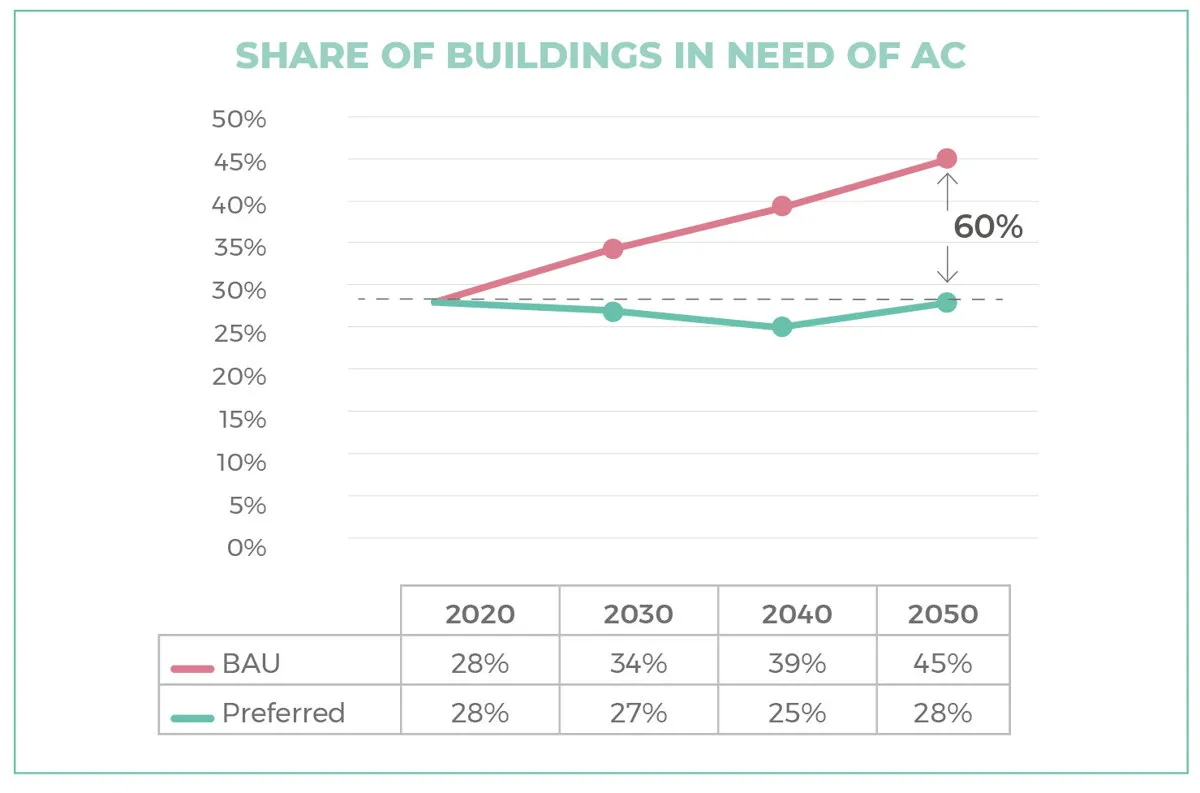
Climate change goes hand in hand with higher temperatures and longer, more intense heatwaves. The number of buildings requiring air conditioning is expected to rise by 60%. In its study, Guidehouse, an adviser to public and commercial markets around the world, analysed the impact of solar shading compared with the use of air conditioning in buildings.
The simulations and scenarios make the findings clear: if smart solar shading is used as the first measure before active cooling (the preferred scenario), we can halt the growth in the number of buildings requiring air conditioning between now and 2050.
Positive impact of solar shading
The Guidehouse study findings show a clear positive impact of automated solar shading on the planet, society and people.
- Planet: a CO2 reduction strategy
Between now and 2050, up to around 100 million tonnes of greenhouse gas emissions (*) could be avoided in the preferred scenario of the Guidehouse study. This reduction of 100 million tonnes of CO2 emissions is comparable to the annual CO2 emissions of 22 million cars.
(*) The CO2 factors are aligned with the EPBD Impact Assessment 2021 and are based on the European Commission’s Climate Target Plan 2030. - Society: an energy-saving-first strategy
In the preferred scenario, solar shading could reduce the energy used for cooling buildings in Europe by 60%. According to the Guidehouse study, this energy saving (around 870 terawatt-hours of electricity) is equivalent to the final energy consumption of Spain, a country with a population of 47 million. - People: a more cost-effective strategy
The study also shows that solar shading is a much more cost-effective investment than active cooling, such as air conditioning, potentially saving up to €285 billion between now and 2050. This amount is comparable to the combined GDP of countries such as Finland and Luxembourg.
Shady Attia, Professor of Sustainable Architecture and Building Technology at the University of Liège, also points to the enormous potential contribution solar shading can make to the European Green Deal. “Today, fewer than 50% of buildings are fitted with solar shading, and much of it is not automated. The findings of the Guidehouse study confirm my belief that solar shading is a much better solution than air conditioning for our planet, and that we urgently need to consider automated solar shading to make buildings more climate-resilient and energy-efficient.
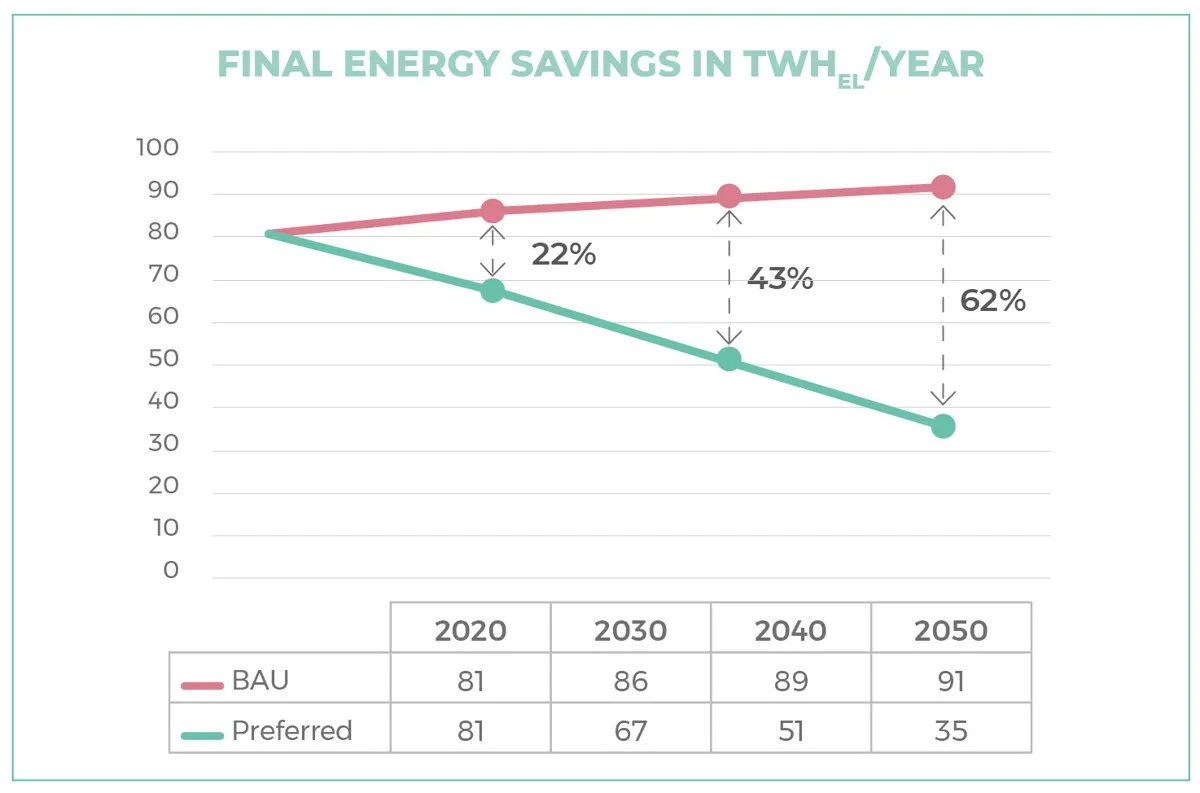
(1) Source: Solar Shading, Guidehouse Germany GmbH, 5 November 2021
Question about this story? Ask your question
Keep following this
Get an email when a new story is published. No account needed.
- ThemeAn energy-efficient and comfortable building envelope
- SubjectGeneral







