Aesthetic and durable aluminium through careful surface treatment
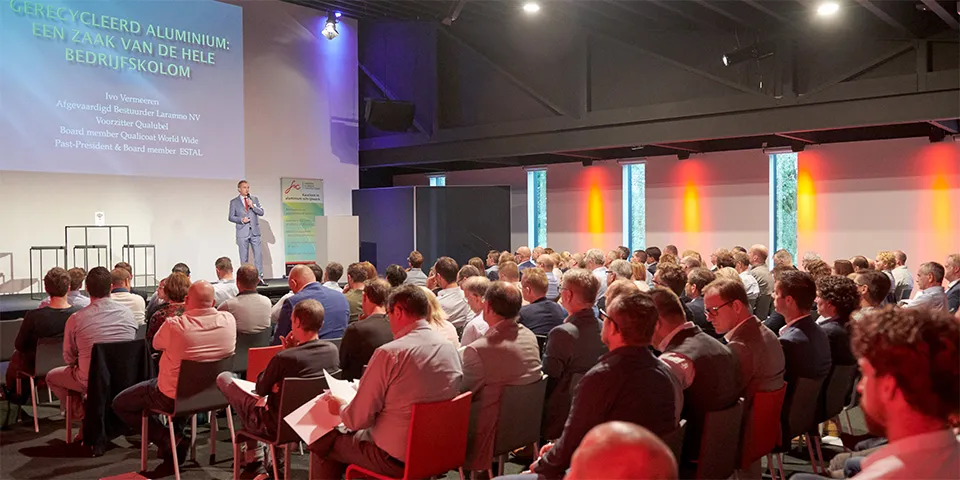
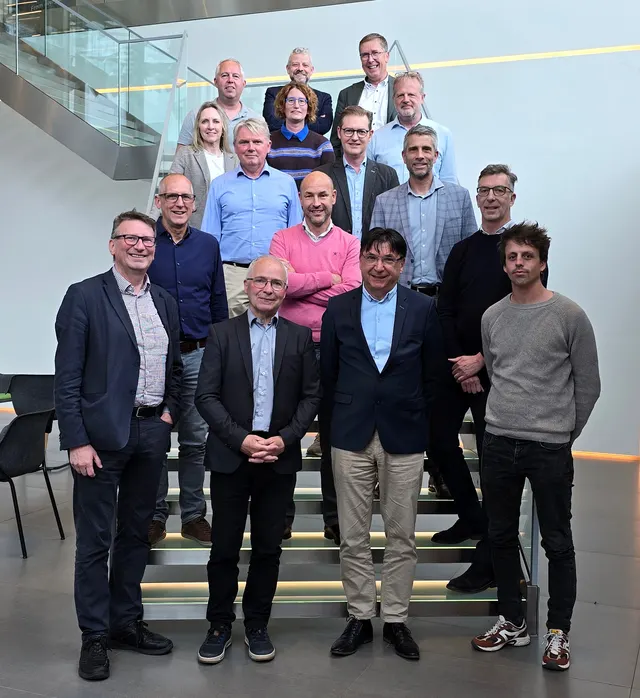
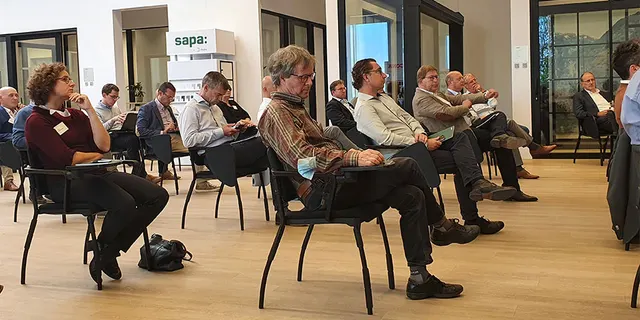
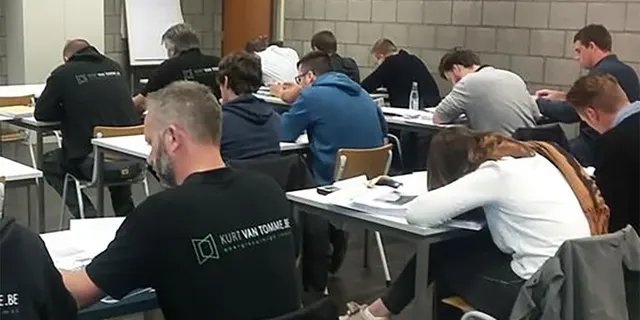
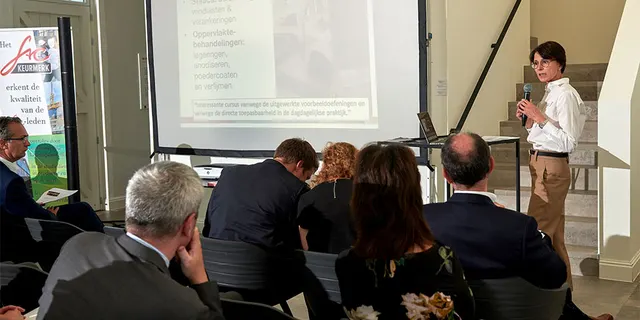
In response to questions about the surface treatment of aluminium, Federatie Aluminium Constructeurs (FAC) organised an evening seminar on 11 September, attended by more than 110 participants. Several experts explained aspects of surface treatment relevant to aluminium fabricators. Recycled aluminium was also discussed.
Promoters of sustainable, high-quality aluminium
Ivo Vermeeren, chairman of Qualubel and director of ESTAL, outlined the organisations committed to high-quality surface treatment. The non-profit association Qualubel is the general licensee in Belgium for the international quality labels Qualicoat (for powder coating) and Qualanod (for anodising). These labels are awarded to powder coating and anodising companies that demonstrate that their surface treatments comply with specific quality guidelines covering facilities, processes, materials, procedures and finished products. Qualubel is one of ESTAL’s 24 members. The European Association for Surface Treatment not only represents its members’ interests internationally, but also actively seeks solutions to technical, economic and environmental issues relating to the production and use of coated or anodised aluminium, and aims to promote the exchange of knowledge among its members. ESTAL has been part of the European Aluminium association (EA) since 2015, completing the aluminium value chain within EA. EA in turn promotes aluminium as an innovative, sustainable, first-class material that will contribute to the European Commission’s goal of making Europe the world’s first climate-neutral continent by 2050. EA is forecasting not only a drastic reduction in CO2 emissions from primary production, of up to 70%, but also an increase in recycled aluminium, which by 2050 is expected to meet almost as much of European demand as primary aluminium. “The essential role of high-quality surface treatment in this story needs no further explanation,” said Ivo Vermeeren.
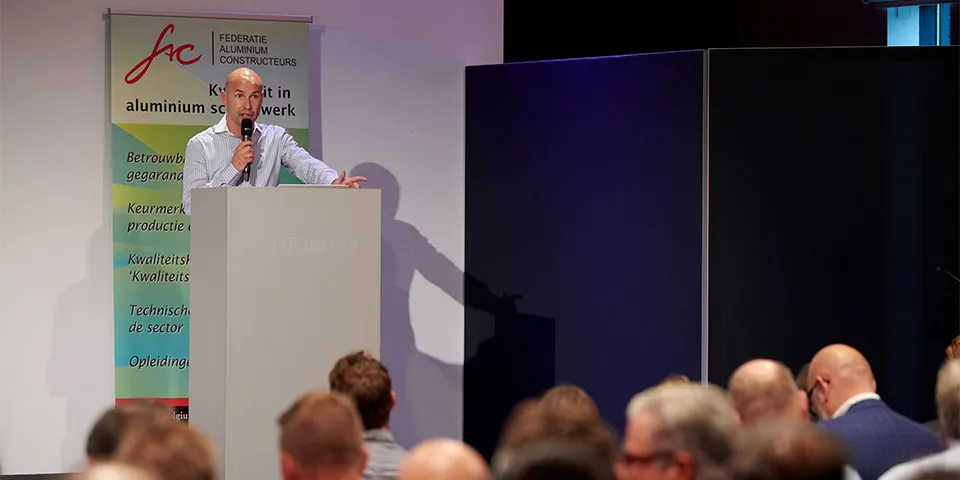
Following the four engaging presentations and a vote of thanks from FAC board member Joris Verschueren, FAC concluded the evening seminar with a networking session.
Worry-free powder coating
The next speaker focused on several points to consider in relation to powder coating. For architectural applications, it is important to take sufficient account of exposure to sunlight and the building’s geographical location when selecting the powder class.
Although Class 1 is generally sufficient in Europe, compared with Class 3 in Dubai, Class 2 is recommended for popular dark powders, which heat up more quickly and are prone to discolouration. Climate change in Europe will also place increasing demands on powders. Care is needed when ordering aluminium in a particular RAL colour from different manufacturers. Each manufacturer has its own RAL definition, so providing the powder codes is essential to avoid colour deviations. For buildings in particularly aggressive environments, such as coastal areas and industrial zones, Qualicoat developed the Seaside label, based on an earlier initiative in France, which sets additional requirements for the coating system.
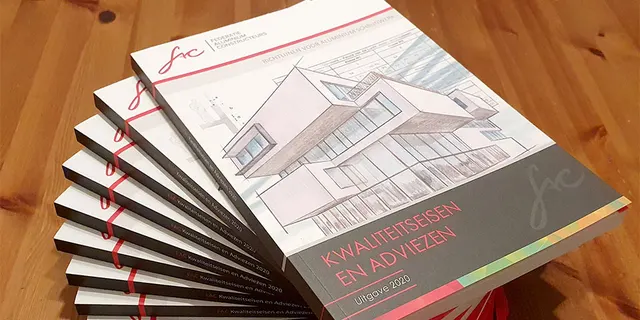
The European Commission has still not made a decision on the announced ban on the use of Chromium VI, first expected in 2014 and then in 2017. Reliable alternatives are now available, however, and process parameters have become much stricter. Ivo Vermeeren also warned about the causes of potential paint problems, such as press marks, extrusion lines, the use of poor-quality oils and greases, missing drainage holes and clouding in metallic colours. Once the aluminium has been installed, proper maintenance, as explained in detail in the FAC quality handbook, is essential to the material’s service life. The speaker advised having cleaning instructions signed for receipt at handover and keeping a record of cleaning visits.
Avant-garde anodising
Remco Baartmans, CEO of Dutch company Alumet, outlined the activities of his anodising business. Founded in 1967, Alumet has focused on anodised façade products for the past ten years and, in recent years, on colour as well. Anodising is an electrochemical process carried out in five steps: mechanical pre-treatment, chemical pre-treatment, anodising, colouring and sealing. Unlike the wide range of colours available with powder coating, the choice in anodising is more limited. Alumet currently offers a palette of 24 colours and will soon add 8 more.
Anodising preserves aluminium’s natural character, provides highly durable protection and requires little maintenance. Anodised aluminium is also fully recyclable, and it is possible to apply a new colour. For sheet material, it is important to use a single grade, the speaker said. This makes it easier for the anodiser to produce a uniform colour across the building. Achieving a single colour is more difficult with profiles (6060-6063 alloy), where purchases are often made from different suppliers and the variations can be significant. This issue is likely to grow as the use of recycled aluminium increases. Demand for gloss, meanwhile, is a clear trend. A few years ago, Alumet developed a new technique, Panelox, a double-anodised panel in one or two colours with a special design. Panelox offers a playful, aesthetic appearance and will be used in prestigious projects, including the ‘Across the Ages’ museum in Oman and the Bright residential tower in Rotterdam. Remco Baartmans concluded his presentation by announcing that Alumet would bring a new factory and production line into operation by April 2020, specialising in chemical brightening and new colours.
The fight against corrosion
Kris Deferme, director of the non-profit association VOM and Key Account Manager at Galva Power, focused on selecting the right coating system for (galvanised) steel as the first step towards combating corrosion and achieving durable paintwork. Factors to consider include the corrosion class, expected service life, properties such as anti-graffiti performance, cathodic protection, pre-treatment, the organic coating, design precautions and maintenance. The choices made for each of these factors will determine the quality of the final result.
Qualisteelcoat is an international quality label for coating steel with organic coatings. It was established as a tool to enable buyers of steel protection to assess their suppliers’ paintwork against the same quality requirements throughout Europe. Qualisteelcoat’s requirements go beyond corrosion protection and also cover mechanical properties, weather resistance and decorative appearance. As Qualisteelcoat licensee for Belgium, the Belgian Association for Surface Treatment of Materials VOM also oversees the content of the technical specifications. Belgium currently has eight Qualisteelcoat label holders.
Recycled aluminium: a value-chain-wide challenge
Aluminium is 100% recyclable. In the aluminium window and façade construction sector, aluminium scrap is not ‘downcycled’, as it is in some other sectors. Recycled aluminium must be of the same quality as primary material. This is a challenge for the entire value chain, Ivo Vermeeren said in his second presentation.
Surface treatment companies are facing two worrying findings. Firstly, the presence of copper and zinc, and the ratio between them, causes filiform corrosion. Additional chemical stripping of the powder coating is an option, but it is environmentally unfriendly, slows production and is therefore costly. In addition, an extensive study of certain Qualicoat tests has shown that some coatings do not perform well on secondary aluminium.
To address these challenges, ESTAL set up a pan-European working group to carry out a joint study by pooling knowledge and research from different countries. Through this study, ESTAL aims to strike a balance between what is technically and commercially viable for extrusion and what is feasible for surface treatment companies. The initial findings were presented at the ESTAL Congress, held in Istanbul from 18 to 21 September. We look forward to the next steps in this area.
Een zakelijke vraag aan Federatie Aluminium Constructeurs (FAC)? Get in touch
Companies in this story
Keep following this
Get an email when a new story is published. No account needed.
- ThemeExtending the life of existing facades
- SubjectFAC
- CompanyFederatie Aluminium Constructeurs (FAC)
- CompanyAlumet