








In search of the façade of the future
Will everything stay as it is, with innovations taking place organically? I doubt it. The environment is changing so rapidly that it will force the pace of change to accelerate.
It is more likely to be a revolution than an evolution. We can already see the government intervening, under pressure or compulsion from Europe and environmental groups, or otherwise. Through BENG, MPG, CO2 targets, nitrogen, PFAS, the Quality Assurance in Construction Act, and so on. So it is time for everyone to think about where they stand. Do we wait and see? Do we change with the times and adapt? Or do we see opportunities in these changes? With this article, I hope to draw you away from the daily grind for a moment and challenge you to sketch out a vision of the future for yourself. It need not match the picture I paint here, but it is important to give it some active thought from time to time.
When thinking about the façade of the future, it is useful to consider values or functions. A façade is currently seen as a boundary between inside and outside. Among other things, it must insulate against heat and sound, enhance the architecture, withstand the elements, provide fire resistance and not contribute to the spread of fire. It must also be partly transparent to let in light and provide views. So far, a brief list of requirements. What stands out in practice is that façades are static. Conditions inside and outside change almost hourly, yet, astonishingly, the façade is a rigid element designed to deliver one set of predetermined performance criteria for 30-50 years or even longer. Opening a window or sliding open a vent is sometimes the only ‘dynamic’ element of a façade. In recent decades, and particularly with the BENG standard, solar shading and, potentially, automated ventilation have been added.
A challenge
To set you thinking, let me ask a few questions out loud:
• Why doesn’t the façade play a more important role in regulating the indoor climate? Why do we delegate this function to building services engineers, who install a complicated network of ducts and cables? We bring in air from the roof, even though the same air is right outside the façade. Why do we remove heat that we have just let in through the façade? That is not efficient, is it? What is more, those ducts and cables get in the way when floor plans are changed, hampering flexibility.
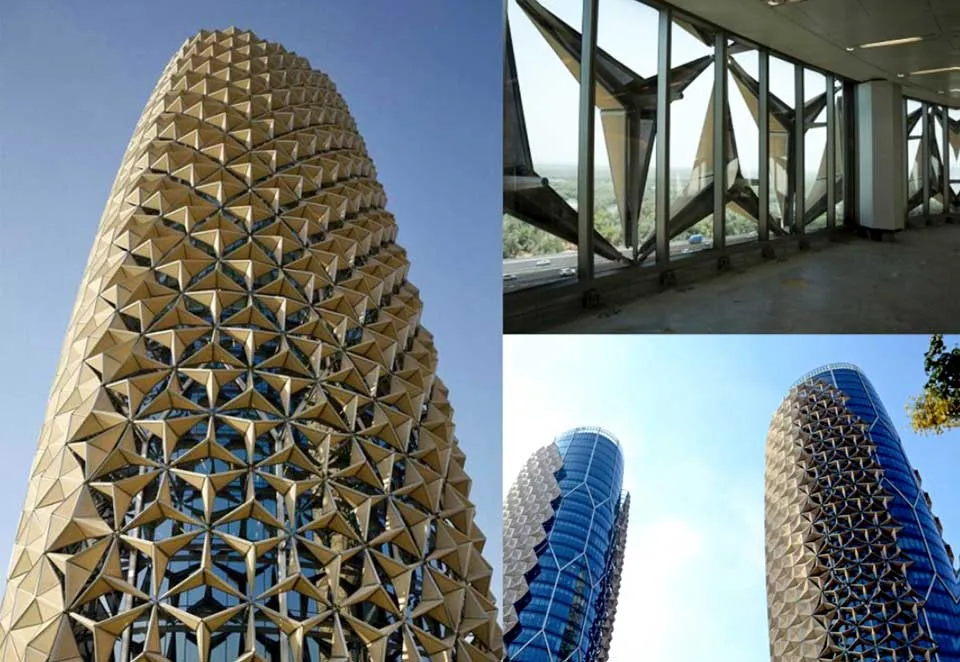
• Why don’t we learn more from nature? Flowers and plants open and close in response to external conditions, to let in light or retain moisture. A highly movable façade, in other words. See the example alongside, or search for terms such as biomimicry or kinetic façades.
• Why shouldn’t façades in prominent locations be used to communicate with the surroundings? Façade elements could combine to form a large screen for displaying messages. Perhaps just high-quality PR, such as the photos and images on Wetransfer. This could be attractive for buildings next to a railway, major road or even flight path.
• Why does a façade have a predetermined insulation value? That may be defensible in winter, but in summer the priority is often to get rid of heat, and you would want to switch the façade to a summer setting.
• Why can’t façades be easily replaced? The lifespans of the structural frame and the façade are not the same, after all, and demand for changes is increasing.
Thinking in terms of value
‘What on earth would that cost?’ I hear you ask. Certainly an important question, but if we are prepared to translate functionality into operational benefits, it also creates a business model. That shifts the focus from costs to returns (value).
• Flexibility pays off when a building changes hands or its use changes. Imagine owning a large retail unit or office building that has had no tenant since the pandemic, with online shopping and working from home continuing to gain market share.
• Buildings that demonstrably improve comfort and create a healthier indoor environment under all conditions lead to better work performance. Extensive research in schools has examined the relationship between air quality and learning outcomes, and this link has already been demonstrated.
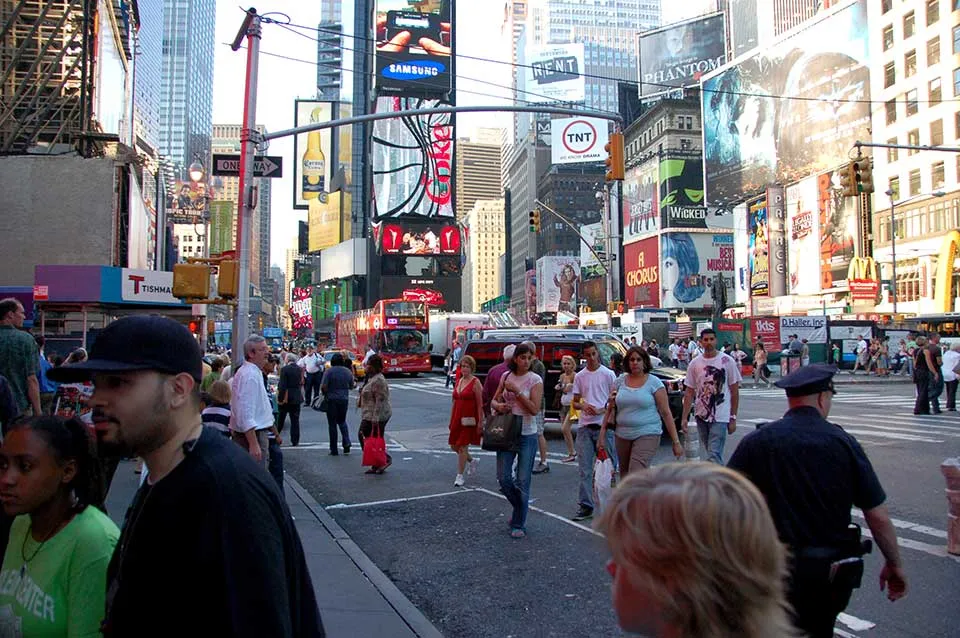
• Buildings with PR value. Advertising towers are now built solely for this purpose. For buildings, it could be an attractive added benefit. Did you know, for example, that buildings in Times Square, New York, generate more revenue per m2 of façade than per m2 of floor area? Renting out office space has become a secondary benefit there!
• Being able to sell on second-hand façades will be worth money in the future. Designing for disassembly from the outset pays off.
We need to act
This article is intended to challenge you as a designer, consultant or manufacturer. A few decades ago, today seemed much like yesterday and tomorrow much like today. We could afford to sit back a little. But the world is now changing faster than ever. Climate change and climate agreements are presenting us with a major challenge. Material scarcity is looming. The rising prices of timber, steel and aluminium over the past 20 years have made us aware of scarcity and the value of materials. This and many other changes are leading to circular buildings that can be dismantled and reused when their use changes. We are also now moving towards industrialised construction, the only way we can deliver our annual 75,000-100,000 homes and other buildings.
Because we in construction are essentially service providers (you ask, we deliver), it is not in our DNA to plan strategically for likely changes that society and the market want, or even demand. We have always managed to adapt. But with the current pace and scale of change required, that is no longer enough. There is also a limit to how much we can adapt before reaching a dead end. In short, we need to act.
Testbed and innovation debate
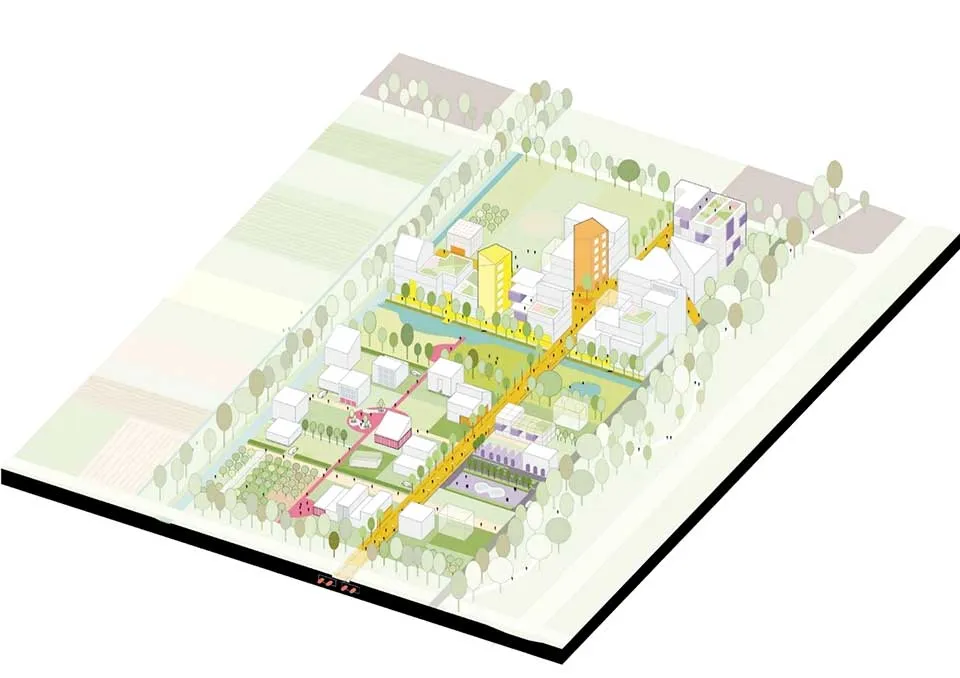
In the previous issue, I reported on Living Lab 040, a new testbed for the Netherlands, where we will explore the buildings and ways of living of tomorrow. I promised to keep you updated. We are now preparing the first experiments, and I will return to that later. I mention the LAB now mainly to point out that we are seeing relatively few disruptive initiatives in the field of façades. At least, not in relation to façade functionality and movement, with sensors and actuators, display functions, specialised security and climate control. Nor are we seeing many circular concepts in which the supplier retains ownership. The latter is already part of a number of housing concepts, however. Kloeckner-ODS, for example, is active with an ‘as a service’ concept. It promotes this approach in part through Harvest Bay. Velux is also active (a pitched roof is a kind of façade, after all). Its focus is not solely on the window, but on the indoor climate. This includes the use of home automation and collaboration with other suppliers, for example of natural ventilation systems. Naturally, Velux embraces the Active House philosophy, which is specifically about quality of life and sustainability as value. There are now various other initiatives, but more on those next time.
For now, I simply want to challenge you to think about new façade concepts. If you want to get involved and lead the way, or if you want to debate this or exchange ideas, get in touch with the lab: WWW.LivingLab040.nl. I would be glad to hear your contributions and views in the debate, so we can refine our vision of the future together.
Jos Lichtenberg
Jos Lichtenberg is Professor Emeritus of Building Innovation at TU/e, initiator of House of Tomorrow Today and the Slimbouwen movement, and, together with Monique Donker, of Living Lab 040.
Question about this story? Ask your question
Keep following this
Get an email when a new story is published. No account needed.
- ThemeAn energy-efficient and comfortable building envelope
- SubjectGeneral







