








Minimum requirement of 72 per cent reflectance for internal blinds comfortably exceeded
By increasing the reflectance of its internal blinds, Verosol is responding to the requirements that will apply to new-build planning applications from next year. Applications for environmental permits for non-residential buildings, like those for housing, must meet BENG requirements from 1 January 2020. BENG stands for nearly zero-energy buildings.
Product manager Evert Bos says this is the first time that internal blinds can be explicitly included in the calculations used to assess these requirements. Verosol’s metallised blinds filter daylight in such a way that it remains possible to see outside, without disruptive glare. The internal blinds also provide solar shading and insulation.
NTA 8800 calculation method
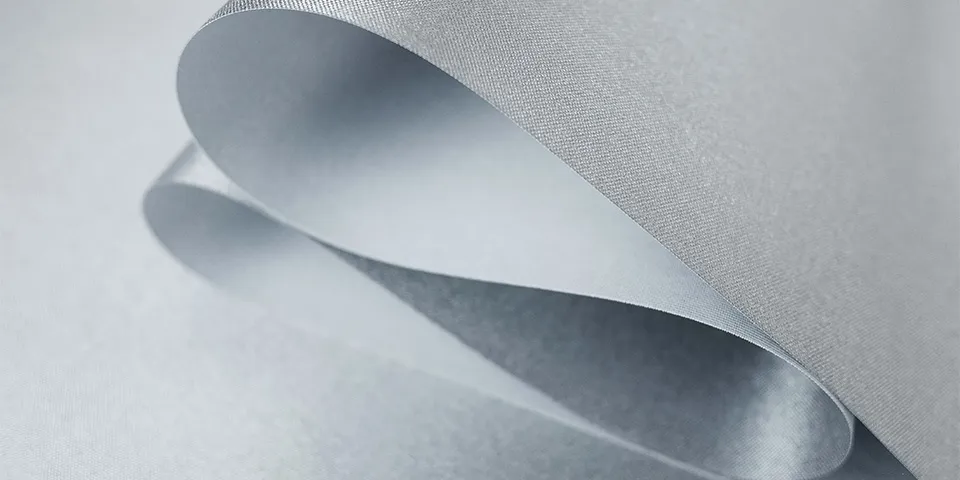
The solar shading and insulating properties can be included in NTA 8800, the calculation method used to determine a building’s energy performance. For internal blinds to be explicitly included in the calculation, they must reflect at least 72 per cent of sunlight. Verosol comfortably exceeds this threshold, achieving 85 per cent reflectance with its SilverScreen fabric. Years of development went into achieving 85 per cent performance, in a laboratory where the behaviour of the solar spectrum is simulated and measured.
Under the NTA 8800 calculation method, admitting and blocking sunlight must happen automatically. “It must indeed form part of the building’s climate control system. That makes sense: if you want to achieve the required performance, you need to be sure the blinds are used when needed.” Verosol has developed its FourC blind control system specifically for this purpose.
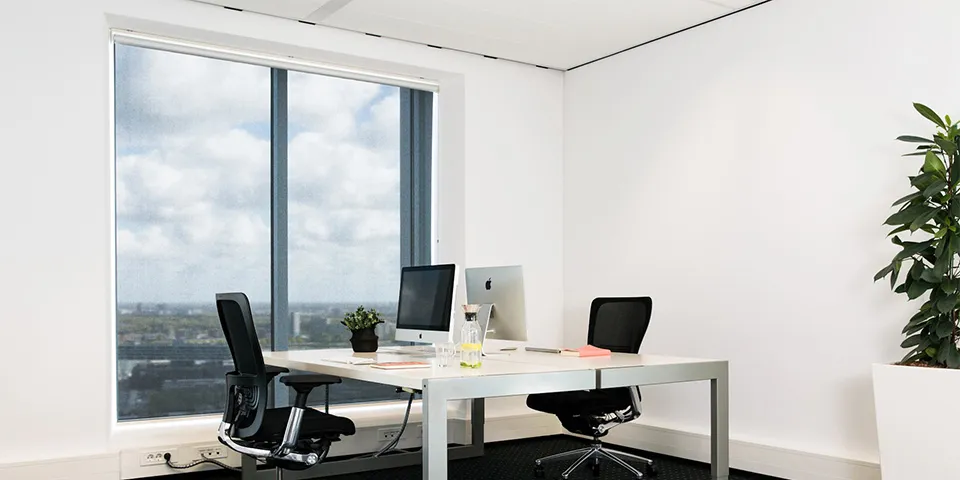
Verosol’s internal blinds are metallised by applying an ultra-thin layer of aluminium to the fabric.
The function of metallisation
The metallised blinds create an additional air layer and a surface that radiates little heat towards the glass. The minimum sunlight reflectance of 72 per cent has proved relatively easy to achieve. At the same time, the Eibergen-based company believes that the more reflective a fabric is, the more effective it is. The updated 85 per cent reflectance therefore blocks even more heat than the 72 per cent version, making the improved SilverScreen the most reflective internal blind fabric in the world once again.
Admitting sunlight into a building inevitably brings energy in with it. “Half of solar energy is in visible light,” says Bos. “When you let visible light in, you also let heat in. That’s why we help users admit only the daylight they need.”
Preventing cooling loads
Preventing cooling loads is an important principle in the NTA 8800 calculation method. In the past, cooling loads could still be weighed against energy gains, but that is no longer possible. “As a result, you have to start by analysing what you can do to minimise heat gains.” Verosol’s metallised internal blinds, with a reflectance of 85 per cent, combined with FourC automation, provide everything needed to meet BENG requirements.”
Question about this story? Ask your question
Keep following this
Get an email when a new story is published. No account needed.
- ThemeAn energy-efficient and comfortable building envelope
- SubjectGeneral







