








New over-roof insulation system for in-roof PV roofs
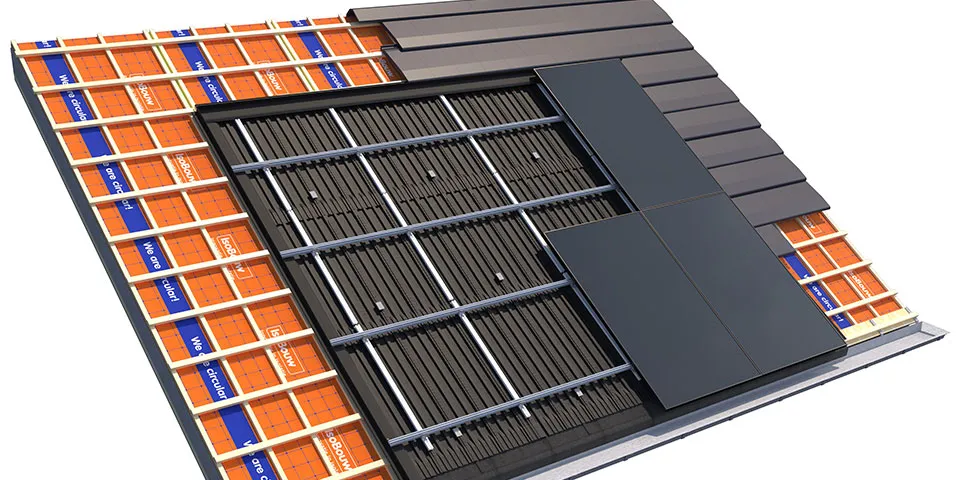
To meet the growing demand for PV systems, IsoBouw is introducing insulating roof panels specifically designed for this purpose. The SlimFix Solar roof elements for new-build projects were already well known. New to the range are the SlimFix RenoTwin Solar elements, providing a watertight, high-yield PV roof for renovation projects.
The ideal base for PV panels
Installing an in-roof PV system on an existing roof is a major challenge. For an attractive finish, the PV panels must be mounted on a smooth, level substructure, which is often missing in renovation projects. In addition, roof insulation upgrades and the installation of solar panels are usually extensive jobs that can cause considerable disruption to residents.
SlimFix RenoTwin Solar restores an old, sagging roof deck to a smooth, level finish and ensures correct building-physics performance. The insulation boards can be installed as a self-supporting system. Without time-consuming infilling of the substructure, they provide a level platform for PV panels with ease. The possible eaves overhang of up to 60 cm can create extra space for the PV panels.
A patented water-resistant underlay
A water-resistant underlay is installed on site over the insulation boards, without any additional carpentry. This makes the roof structure completely watertight. The design of the underlay ensures guaranteed ventilation of the substructure and optimum ventilation and cooling of the solar panels. This extends the service life of the roof structure and increases the output of the solar panels.
The insulation and underlay can be installed many times faster than with alternative systems. This is something that clients and residents are sure to appreciate.
Meets PV manufacturers’ requirements
PV panels, cabling, optimisers and micro-inverters must not be exposed to temperatures above the maximum permitted level. If the space beneath the panel is limited, ventilation and cooling may be inadequate. This can cause temperatures beneath the PV system to rise to extreme levels, potentially shortening its service life and/or causing damage. This is why PV panel manufacturers specify a ventilation gap of at least 100 mm beneath the panels.
The vapour-permeable IsoBouw Solar roofing system is the only system installed in accordance with PV panel manufacturers’ installation requirements. The distance between the PV panels and the substructure is always at least 100 mm. Good ventilation prevents extreme temperatures beneath the panels and allows condensation to evaporate.
Question about this story? Ask your question
Keep following this
Get an email when a new story is published. No account needed.
- ThemeAn energy-efficient and comfortable building envelope
- SubjectGeneral







