








Preventing overheating is better, more sustainable and no more expensive than having to ‘cure’ it
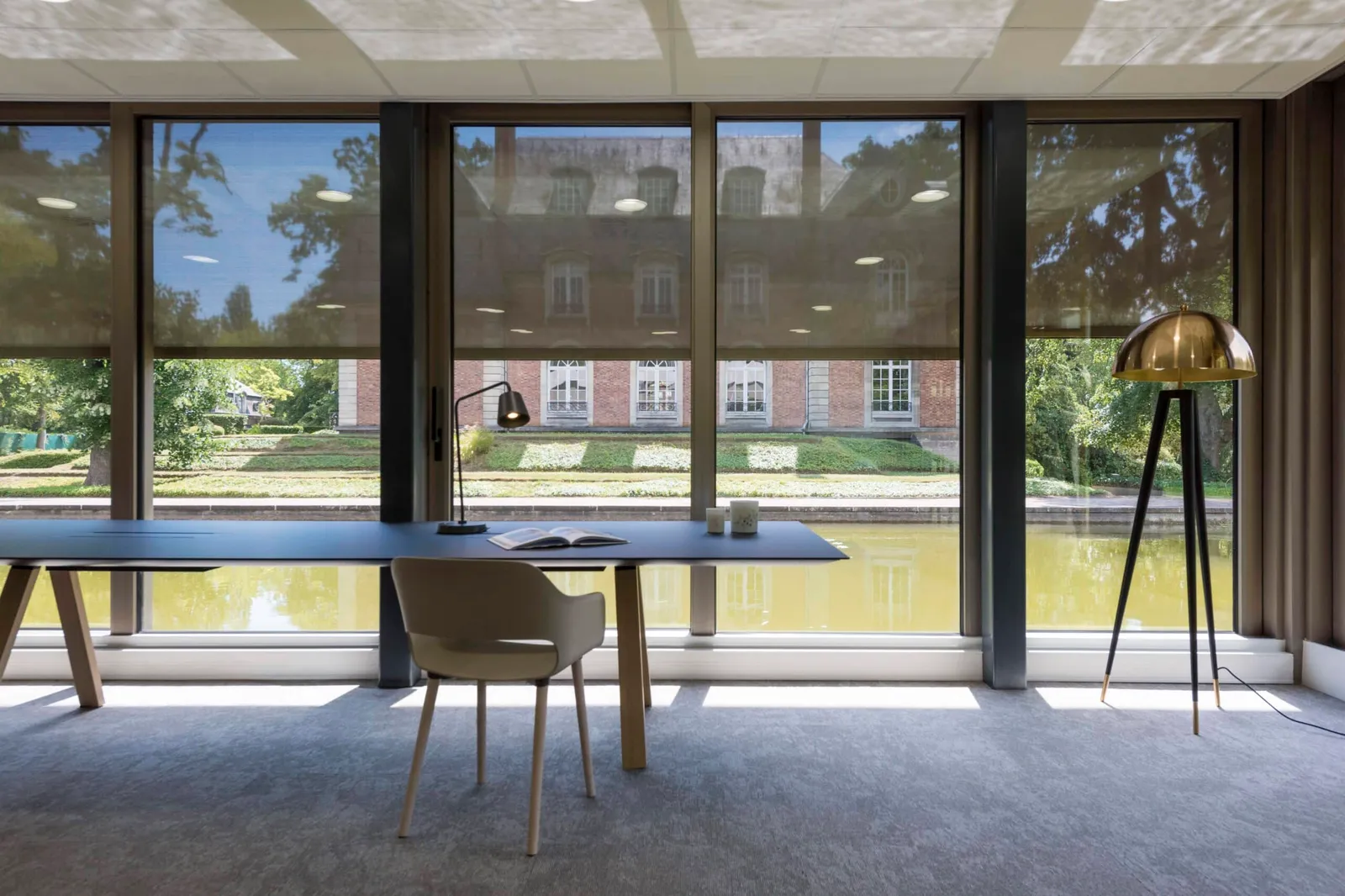
Coming home to a pleasantly cool house on a hot day, or keeping your head cool at the office in summer, starts with smart building design. Using the ‘Cooling Ladder’ as a guide also makes buildings liveable today and tomorrow. Read this and much more from the expert round-table discussion on overheating, an initiative by VEROZO, the Belgian professional association for solar shading and roller shutters, here.
“Smart building design can eliminate up to 80% of the cooling demand,” says civil engineer and architect Joost Declercq, research director at archipelago architects and affiliated with KULeuven. Laura De Wilde, adviser to NAV’s research department, agrees and adds: “The foundation of a climate-adaptive building lies in designing a high-performance building envelope. Passive methods such as natural ventilation, solar shading and thermal mass should ideally be incorporated from the design stage. Under the current EPB/EPC methodology, the balance is skewed, making it possible to focus more on technical systems than on the performance of the building envelope. As a result, resources are often misallocated, and a great deal of energy is still needed for cooling.”
Prof. Dr Ir in Building Physics and Sustainable Construction at KULeuven Hilde Breesch also advocates night ventilation through the stack effect as the holy grail in the fight against overheating in buildings. Together, these findings point to the same conclusion: in our climate, active cooling can be made entirely unnecessary, provided the building design receives sufficient attention. “It’s actually very logical,” explains Joost Declercq. “Start by orienting the building correctly and distributing the windows intelligently across the façades, according to their solar exposure.” With a new build, you start with a blank canvas. In a renovation project, the options are obviously different. Even so, measures can still be proposed to support climate-adaptive living. These include reorienting specific living areas, adding or activating more thermal mass, and installing external solar shading on critical glazed areas. Food for thought.
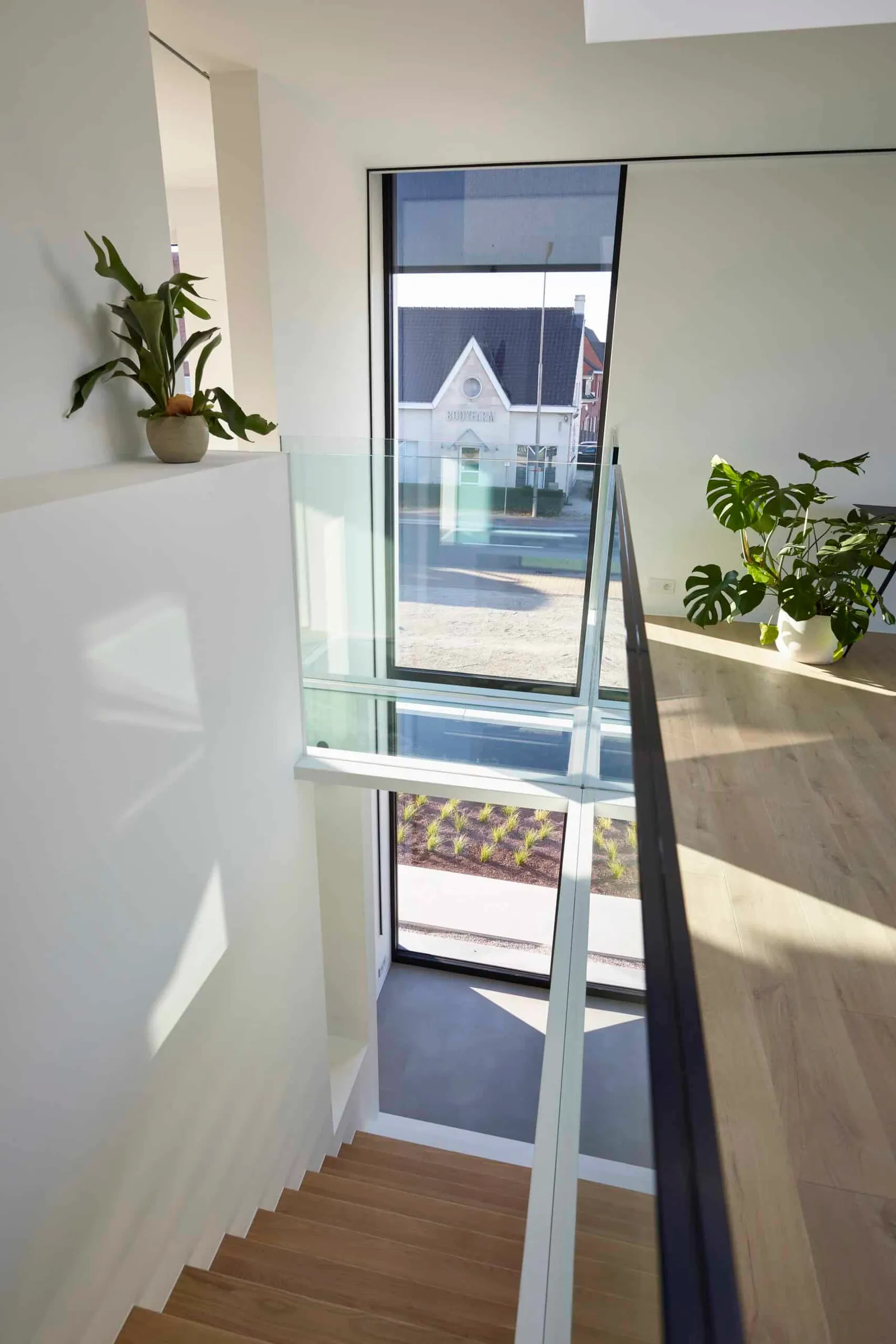
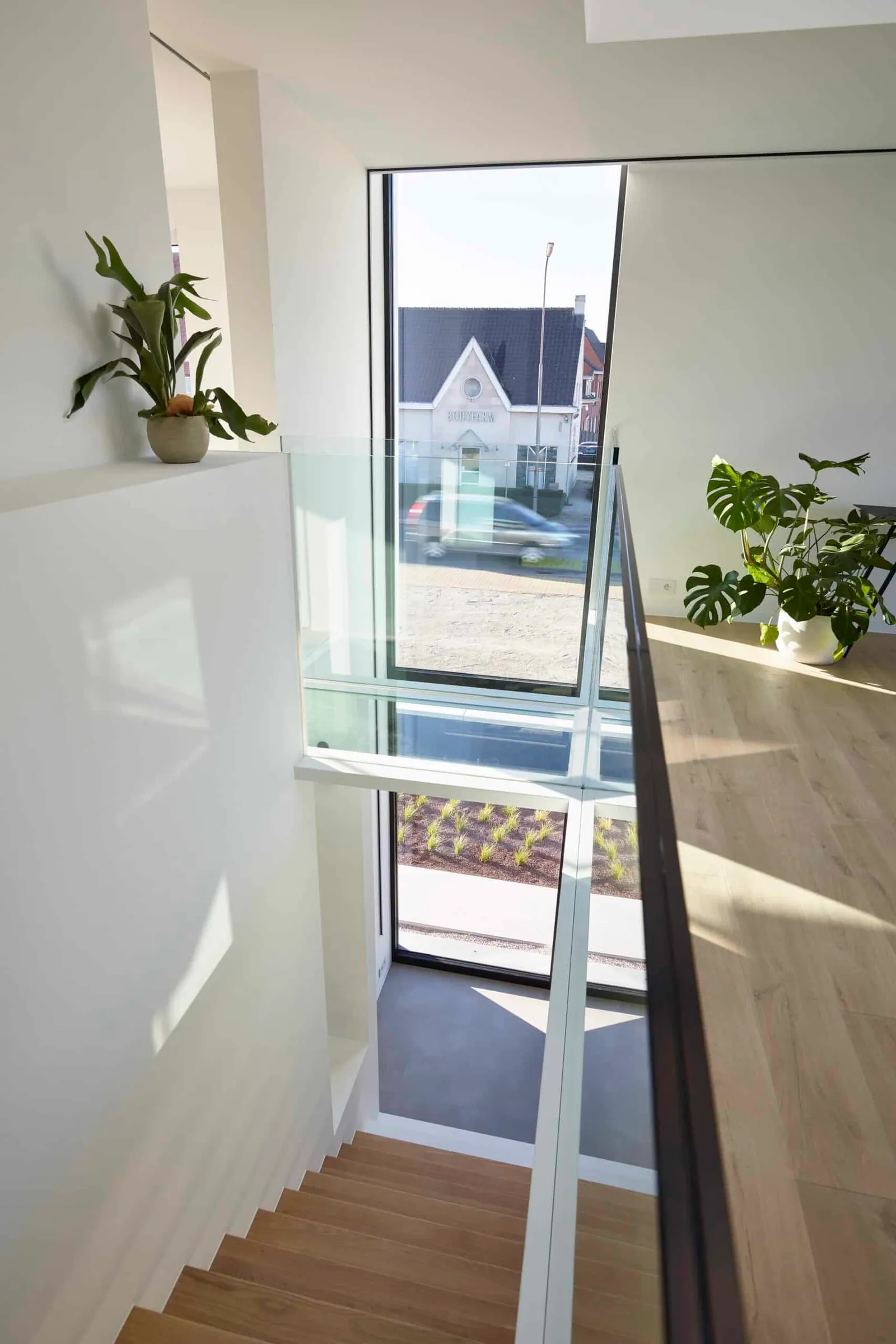
Too hot at home? The windows are (largely) to blame
In any case, the first priority is to stop indoor temperatures from rising too high. Prevention is always better than cure … especially when that means keeping the sun’s rays from shining directly on the glass and heating up the interior.
With the sun a major cause of high indoor temperatures, it is no surprise that climate change is extending the overheating season. Hilde Breesch: “There used to be a risk of overheating for three summer months. Now we have to take account of overheating in spring and autumn too. So it is a problem affecting longer periods throughout the year.” Prof. Ir Architect Shady Attia, head of the Laboratory of Sustainable Building Technology at the University of Liège, confirms this. “With better insulation, airtightness and larger glazed areas, we are seeing overheating more often in spring and autumn, and even on sunny winter days. Heat that enters a well-insulated building certainly stays there longer.”

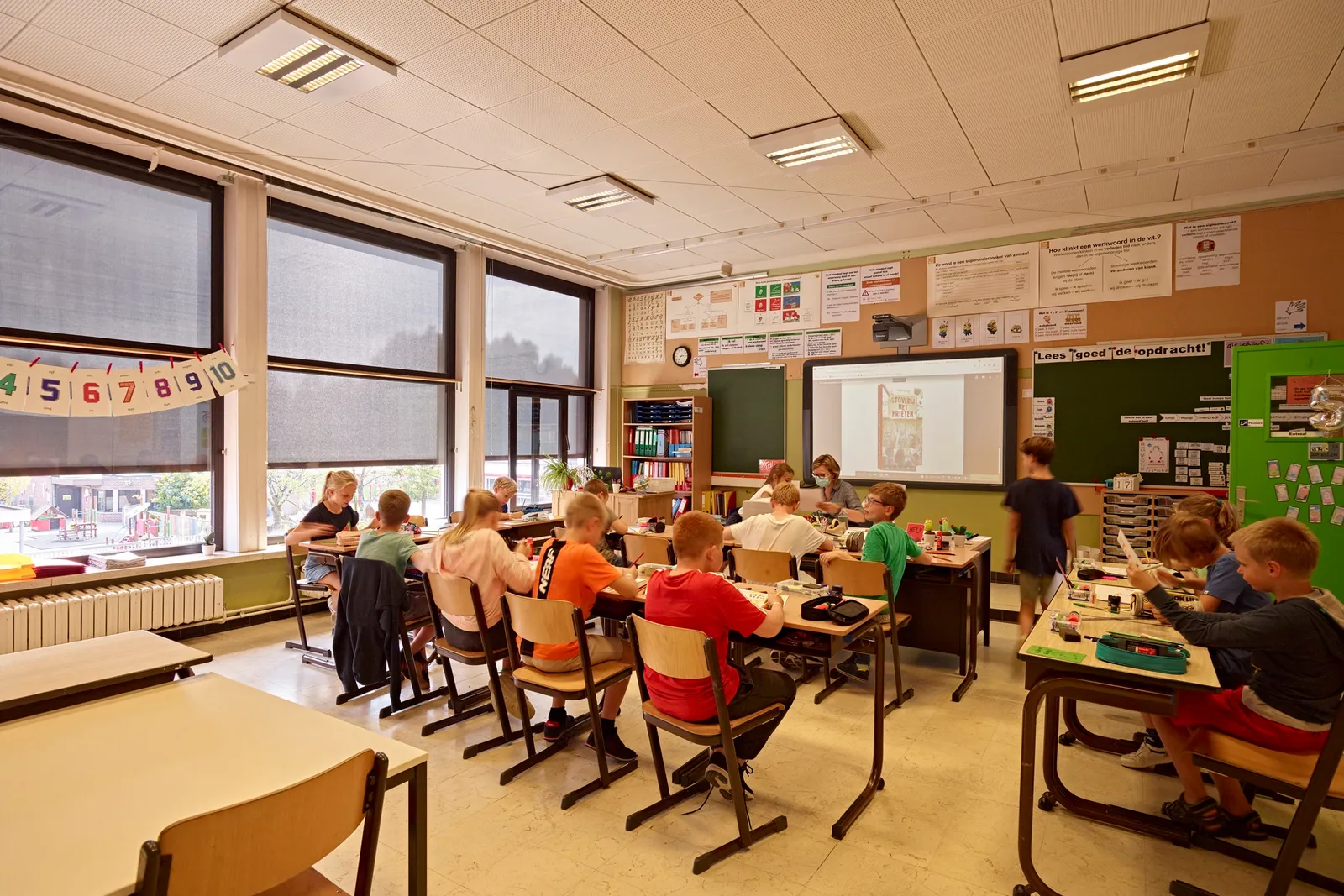
External solar shading: from discreetly integrated screens to striking architectural features
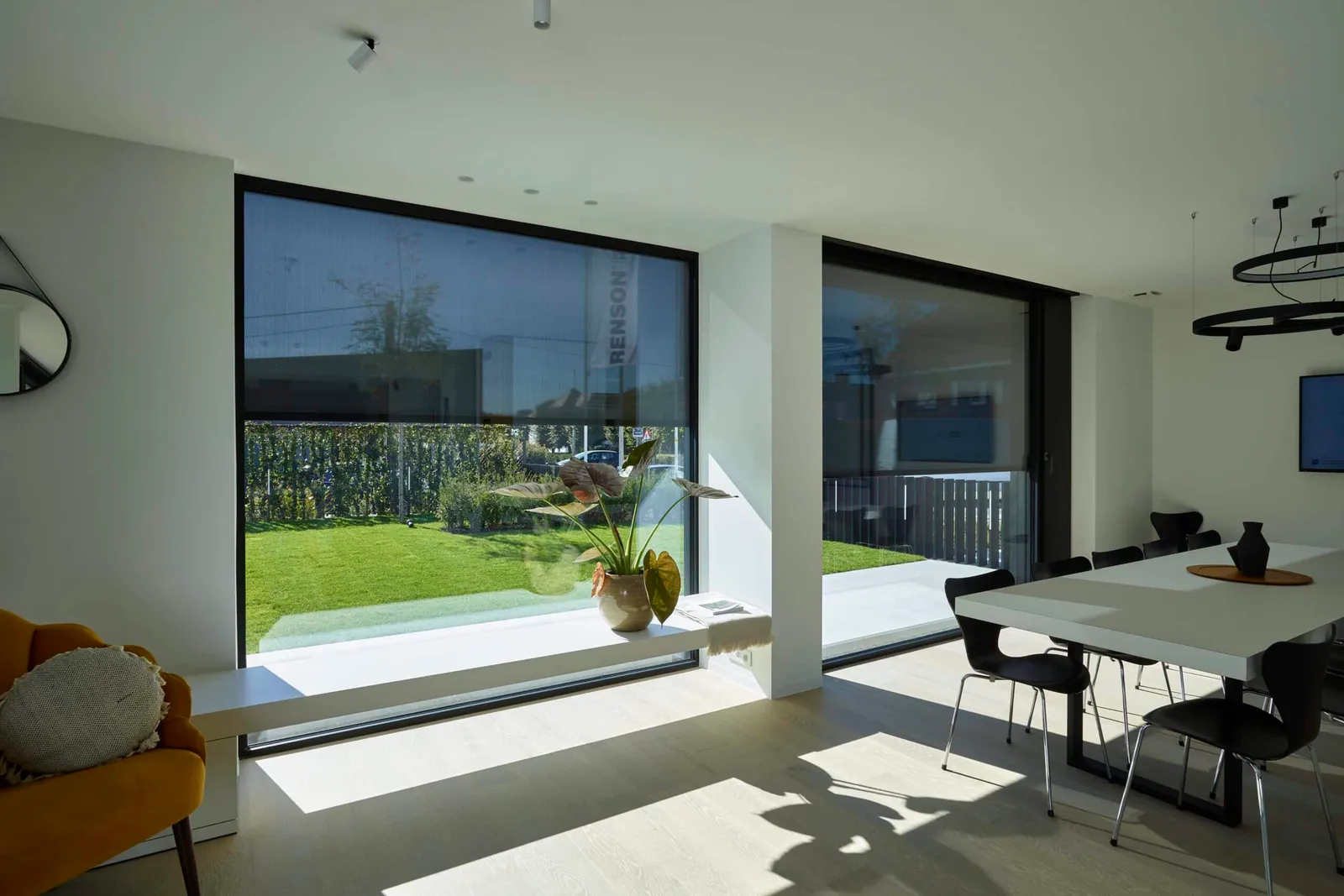
The key, then, is to protect windows from direct solar radiation on the outside. For example, with screens or fabric solar shading. If these are considered early in the design process, they can be integrated into the façade perfectly and, above all, very discreetly. Especially now that fabric boxes and side guides are becoming more compact and slimmer, they are barely noticeable even when installed later. With solar-powered screens, there is no need to drill through the façade to provide a power supply. There is now a tailored, wind-resistant fabric solar shading solution for every type of glazing, from vertical windows and corner windows to horizontal or sloping glazing, such as roof windows, rooflights or verandas.
If you want external solar shading to stand out as an architectural feature, an overhang, canopies above the windows or sliding panels in front of them are also options. Fixed, horizontal canopies above the windows or louvres in front of the glass provide shade in summer while still letting in as much as possible of the low winter sun. The view outside remains unobstructed. With sliding panels in front of the window, you can choose whether to let the sun in or keep it out.
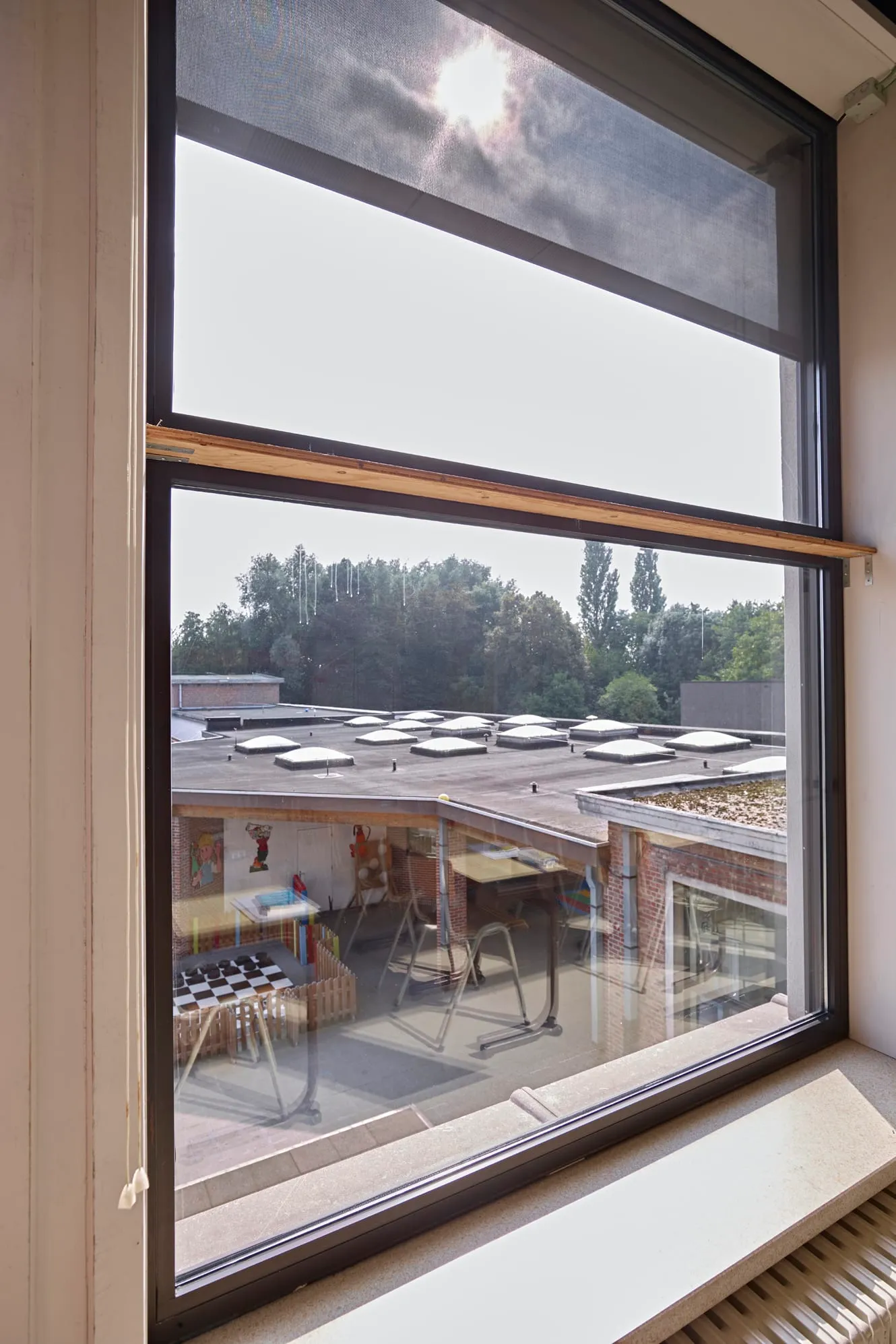
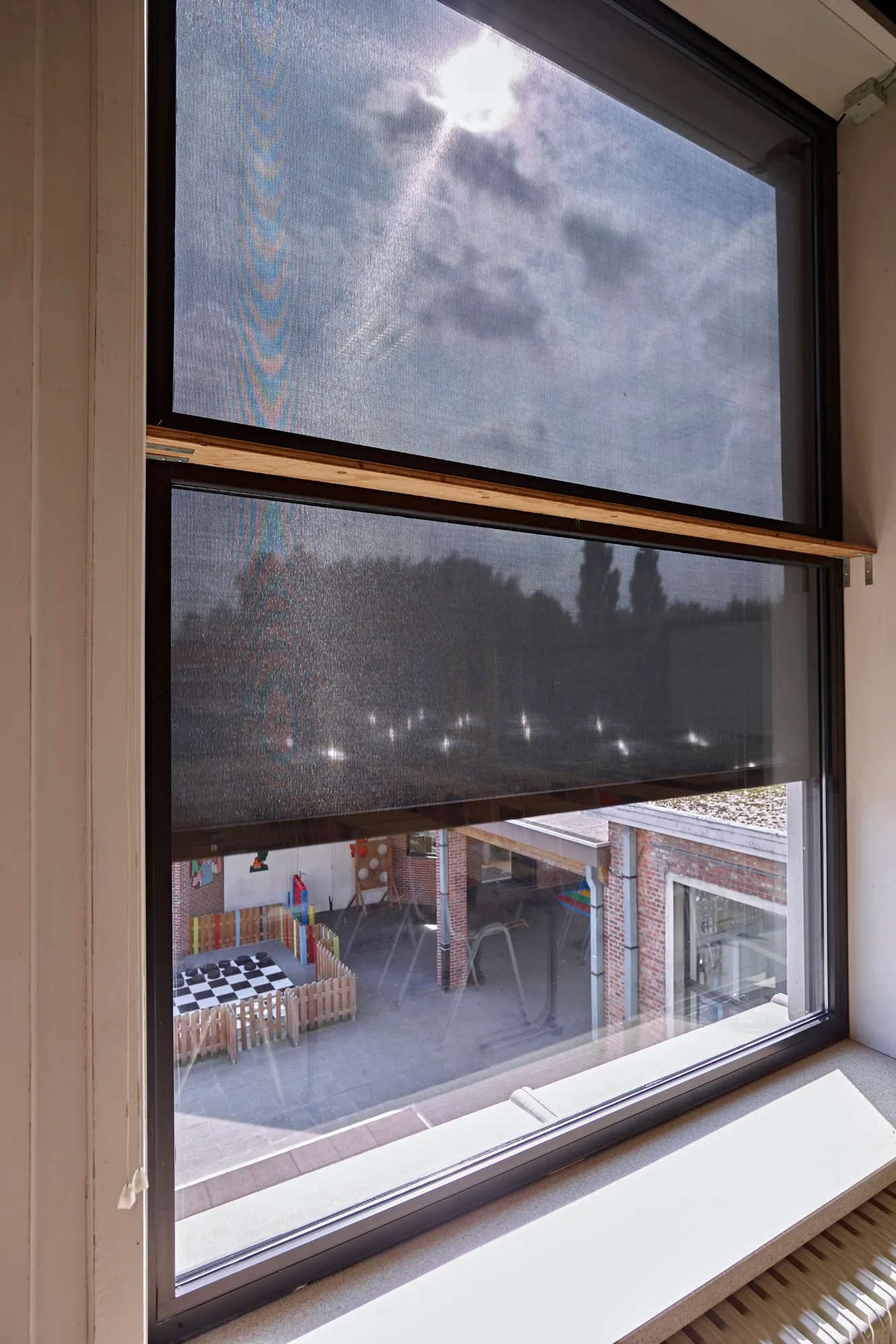
The Cooling Ladder as a ‘preventive’ guide
The Cooling Ladder, developed by the Dutch OSKA (Overleg Standaarden Klimaatadaptatie), provides a clear guide to a sustainable, long-term approach to overheating in buildings. It is particularly important to work through the four complementary steps in chronological order for every design or change of use:
- Provide natural cooling in the surroundings of buildings. Water and greenery play an important role.
- Prevent heat from entering the home. Take account of the orientation, size and position of façade openings, and solar shading, using canopies, a strategically positioned tree or screens.
- Remove heat passively, for example through (night) ventilation using the stack effect.
- Use active cooling systems, without refrigerants, only as a last resort.
“The aim is really to make step four of the ladder unnecessary through smart building design,” says Joost Declercq. “In our current climate, that is entirely possible, including by making sufficient use of external solar shading, as outlined in step 2 of the Cooling Ladder.” Glenn Reynders, Energy Ville business developer and Dr Ir at KULeuven, agrees: “In my view, this is one of the most underestimated investments in current housing construction, given its hugely positive impact on cooling demand and comfort levels.” Another advantage of dynamic external solar shading is that in winter you can still make the most of the free heat from the low sun. “That is not the case with solar-control glass or window films,” adds Joost Declercq. “Both also distort the daylight spectrum, which has a less pleasant ‘optical’ side effect for residents.”
“If you need instant solutions to keep indoor temperatures under control, that is a sign that something is wrong with the building design in the first place,” says Joost Declercq. “In our region, it is entirely possible to design a building that does not need mechanical cooling. As architects, we should be doing far more of that.”
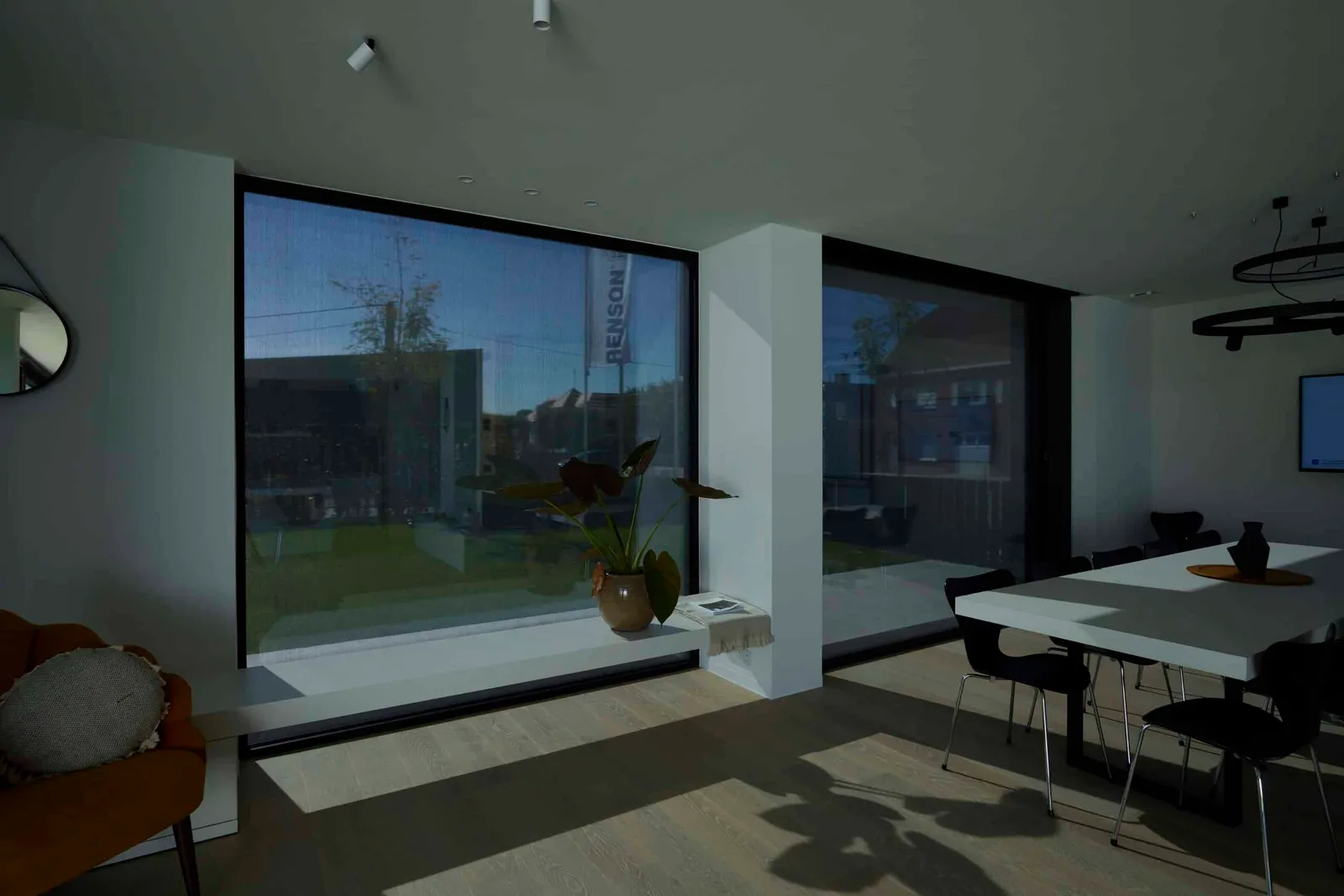
Night cooling as the ‘passive’ finishing touch
As well as solar shading, night cooling is an essential part of smart building design. Hilde Breesch: “If it is carefully planned, intensive ventilation through the stack effect is a simple, inexpensive and passive way to cool the interior. Opening a window or door downstairs and upstairs allows cooler night air to circulate through the building and cool the thermal mass, so it can buffer heat again the following day.”
“Of course, there needs to be enough thermal mass for that,” adds Joost Declerq. “Think of a building as a sponge that absorbs heat. A sponge also needs to be wrung out from time to time, so the building must be able to cool down at night through ‘night cooling’. Fortunately, periods when the outside temperature remains higher than the indoor temperature at night are very rare, and will remain so. And rest assured: a building with passive measures to prevent overheating does not necessarily cost more. It simply needs to be well designed.”
“Resilient buildings and cities can adapt to extreme weather conditions without major external interventions,” concludes Prof. Dr Ir Architect Shady Attia. “Climate resilience means maintaining comfort during heatwaves, ensuring sufficient night cooling, protecting vulnerable groups and achieving energy independence. A climate-adaptive approach therefore focuses not only on comfort, but also on reducing risks, damage and energy dependence. Well-designed buildings thus also contribute to collective climate resilience.”
Start building for tomorrow today by following the basic principles of climate-adaptive design in your next project. Find more expert insights and tips on the subject in the full report dated 15 May 2025, following this expert panel.
Question about this story? Ask your question
Keep following this
Get an email when a new story is published. No account needed.
- ThemeAn energy-efficient and comfortable building envelope
- SubjectGeneral







