Unmatched possibilities for a fire-resistant façade
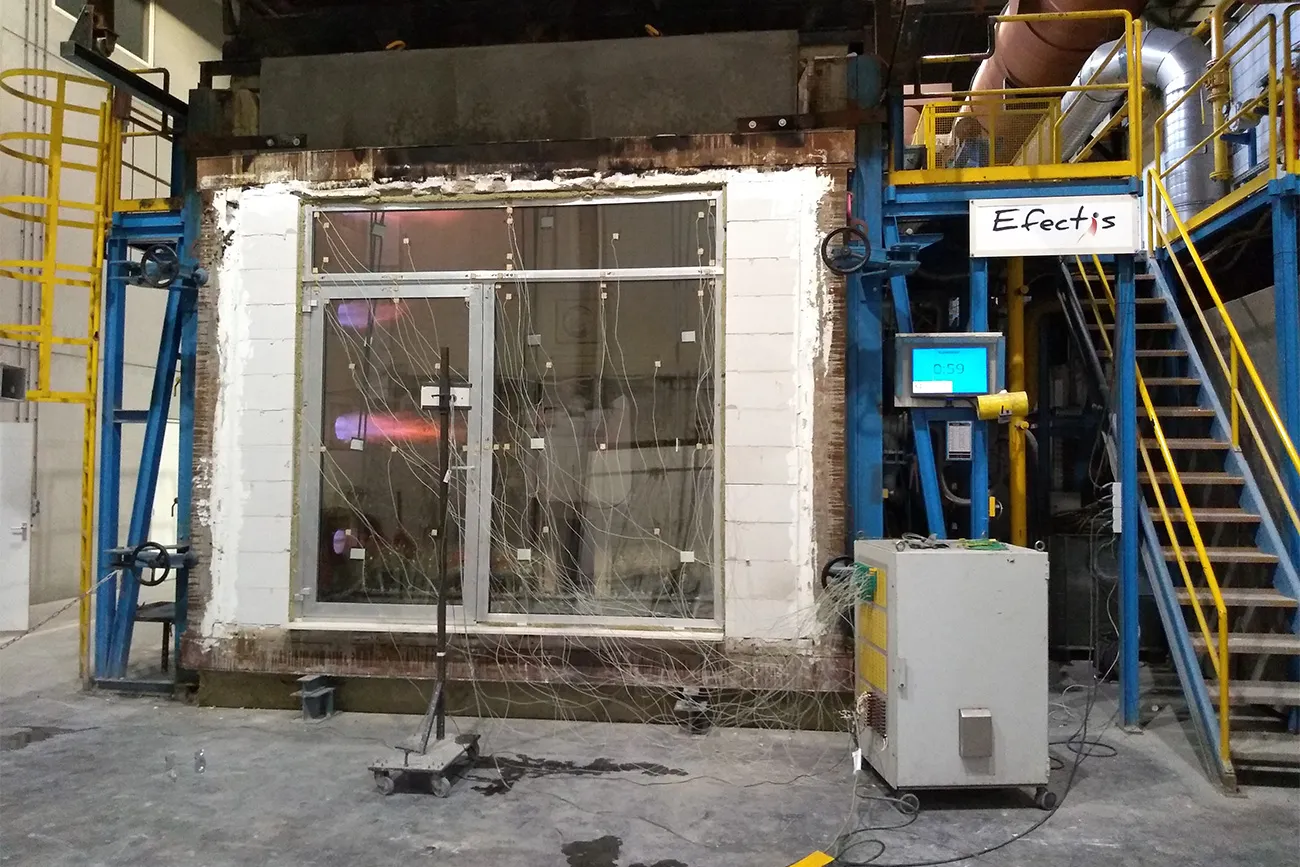
Fire resistance is a familiar term. For our employees and customers, however, it means much more. It is given considerable attention in the development of both new and existing products. Guaranteeing and ensuring safety involves numerous regulations, tests, reports and inspections. It is also important that fire resistance does not come at the expense of other qualities, such as thermal insulation, acoustic insulation or sustainability.
Fire resistance
Fire resistance is about ensuring people’s safety. Preventing the spread of fire and smoke is an important part of the design of our products. This is measured and classified using standardised test methods and criteria. Several fire-resistance ratings have been established. These are determined by how long a building element or structure can withstand fire and heat. Thirty minutes at 1000°C. These extreme conditions are the ultimate test of whether safety can be ensured.
Fire resistance is governed by regulations
To ensure safety and set a standard for the entire supply chain, governments have introduced various rules and laws. Since 2019, for example, regulations have required all products intended to provide fire resistance in external walls to carry a CE marking. To obtain this marking, our window and door systems must comply with the NEN 16034 product standard. This sets out the method used by an independent party to determine whether a window or door system with opening components meets the requirements. Our systems have undergone various tests, including a fire test in which the units are exposed to high temperatures. Can they withstand these temperatures for more than half an hour? Only then can a declaration be issued for that specific component.
RT 72 HI+ FR fire-resistant window and door system
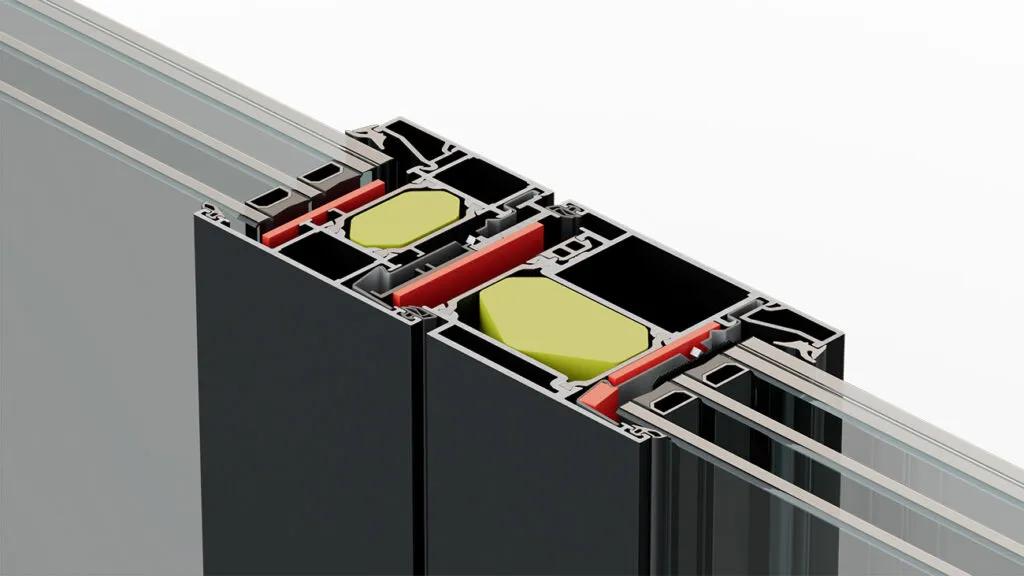
With the RT 72 HI+ FR system, Kawneer has developed a cradle-to-cradle-certified product with fire-resistance classifications E 30, EI2 20, EI2 30 and EW30. This modular profile system can be used for both window and door systems and offers a high level of insulation. Modular systems help simplify the manufacture and installation of building elements, as they consist of standard components that can be combined in different configurations. Without compromising transparency or design freedom, this system is future-proof, sustainable and fire-safe.
RT 72 HI+ FR: fire safety and flexibility in one system
The use of window and door systems tested for fire resistance in accordance with European standards is limited to the scope of those standards. In practice, there is often a need for a wider range of applications. Examples include larger window dimensions, windows in curtain walls, and combinations of windows and doors. Extended Application (EXAP) reports can help meet this need. Additional assessments from accredited laboratories and fire tests make it possible to use the profile systems safely and responsibly across a wider range of applications.
With its extensive EXAP, the RT 72 HI+ FR offers the widest range of fire-resistant applications on the market. For example, the systems have been tested in large sizes up to 1600 x 3000mm and can be combined with Kawneer’s other fire-resistant façade systems. In addition, the RT 72 HI+ FR offers a very high level of insulation and is available in almost all configurations within the RT range.
Question about this story? Ask your question
Keep following this
Get an email when a new story is published. No account needed.
- ThemeSafe and verifiable facade construction
- SubjectGeneral