Impact of the new European packaging law on façade construction
Environmental legislation for façade construction
European and Dutch legislation on sustainability and circularity is constantly evolving. In recent years, attention has often focused on the environmental impact of products and materials. Now, the focus is increasingly shifting to a less visible but everyday issue: packaging. The new European Packaging and Packaging Waste Regulation (PPWR) makes far-reaching changes to the rules governing packaging in Europe. But what does this regulation mean for façade construction?
The PPWR replaces the existing Packaging and Packaging Waste Directive (PPWD). The key difference is that the new regulation considers the entire life cycle of packaging, not just waste management. In addition, a European regulation applies directly in all Member States, leaving less room for national differences. The aim is clear: less packaging waste, more reuse, more recycling and a level playing field across Europe. The European ambition supports broader circularity objectives. Packaging must be designed more intelligently, be easier to recycle and, wherever possible, be reused multiple times. The proportion of recycled material and the avoidance of unnecessary material use are also under consideration. The first PPWR obligations take effect on 12 August 2026, with the rules then being progressively tightened towards 2030 and 2040.
What does this mean for façade construction?
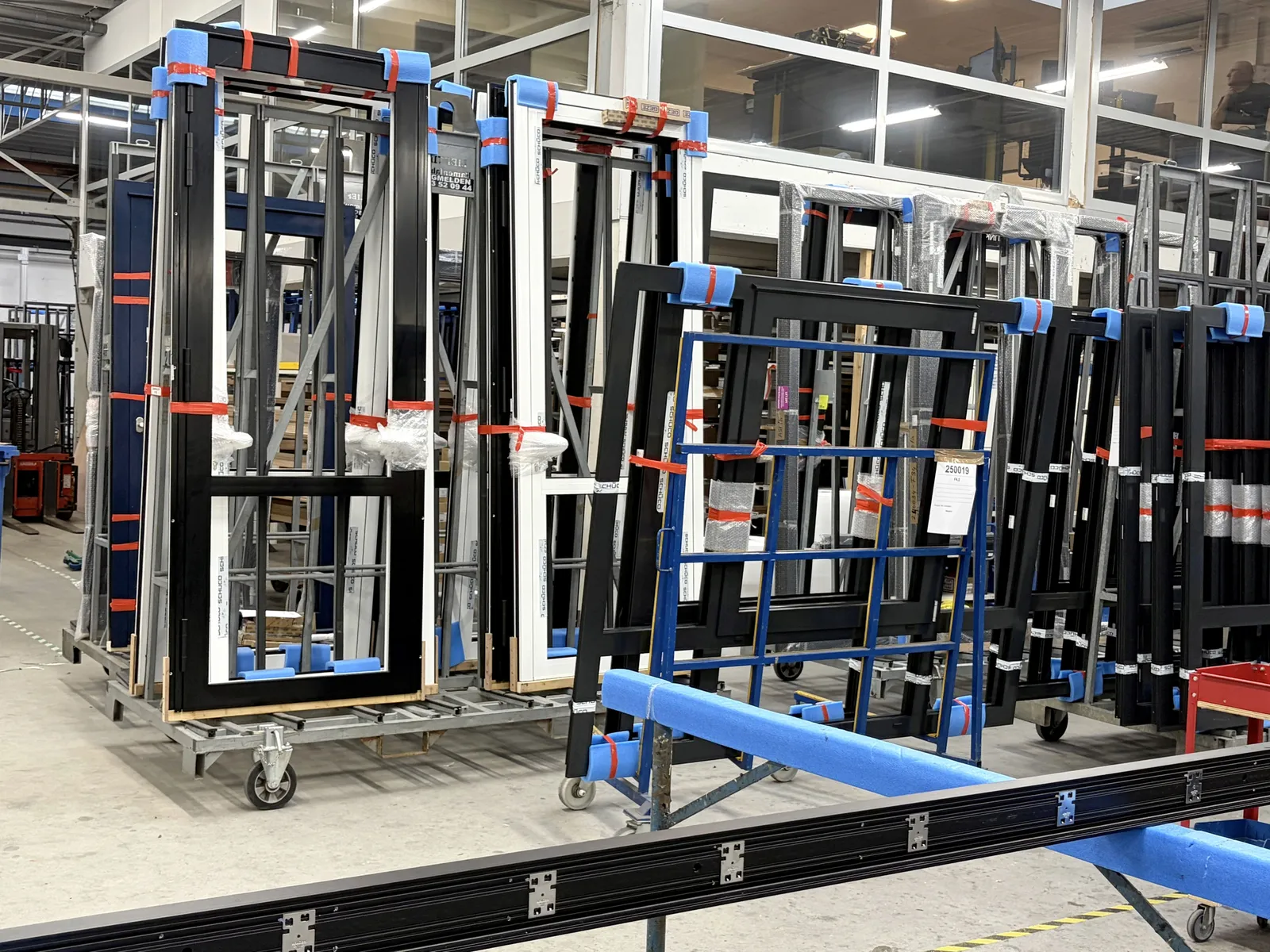
At first glance, packaging legislation may seem relevant mainly to consumer products. Yet the façade sector uses large quantities of packaging materials every day. These include stretch film around glass and frame stillages, plastic or cardboard corner protectors, strapping, shock-absorbing materials, tube nets for handles and various transport packaging. These materials play an important role in protecting high-value products during storage and transport.
That is precisely why it is worth looking at where opportunities lie. Can certain types of packaging be reduced? Are there materials that can be reused more easily? Can return logistics help packaging to be used more often? And which types of packaging are already being recycled without this being visible? These questions are becoming increasingly relevant as the PPWR is developed further.
Reuse is becoming more important
An important element of the PPWR is the promotion of reusable packaging. Targets are being set for the use of reusable packaging in various logistics applications. This involves looking not only at packaging design, but also at the logistics around it. Packaging can only be considered reusable if it can actually make multiple trips within an organised system.
For example, many companies already use steel or aluminium glass and frame stillages multiple times. Packaging materials are also sometimes returned or reused internally. The coming years will show how far these existing practices meet future European requirements.
More focus on data
Information will also become increasingly important, alongside physical packaging. The PPWR introduces various administrative obligations. Companies will need a clearer understanding of the packaging they use, the materials it consists of and the quantities placed on the market. In due course, data on recyclability and the use of recycled material will also play a part.
For many façade companies, this will probably mean that information currently held in different parts of the organisation needs to be better organised. This applies not only to packaging manufacturers, but also to companies that place packaged products on the market or import them. The detailed requirements will be developed further over the coming years through additional European implementing acts.
From legislation to practice
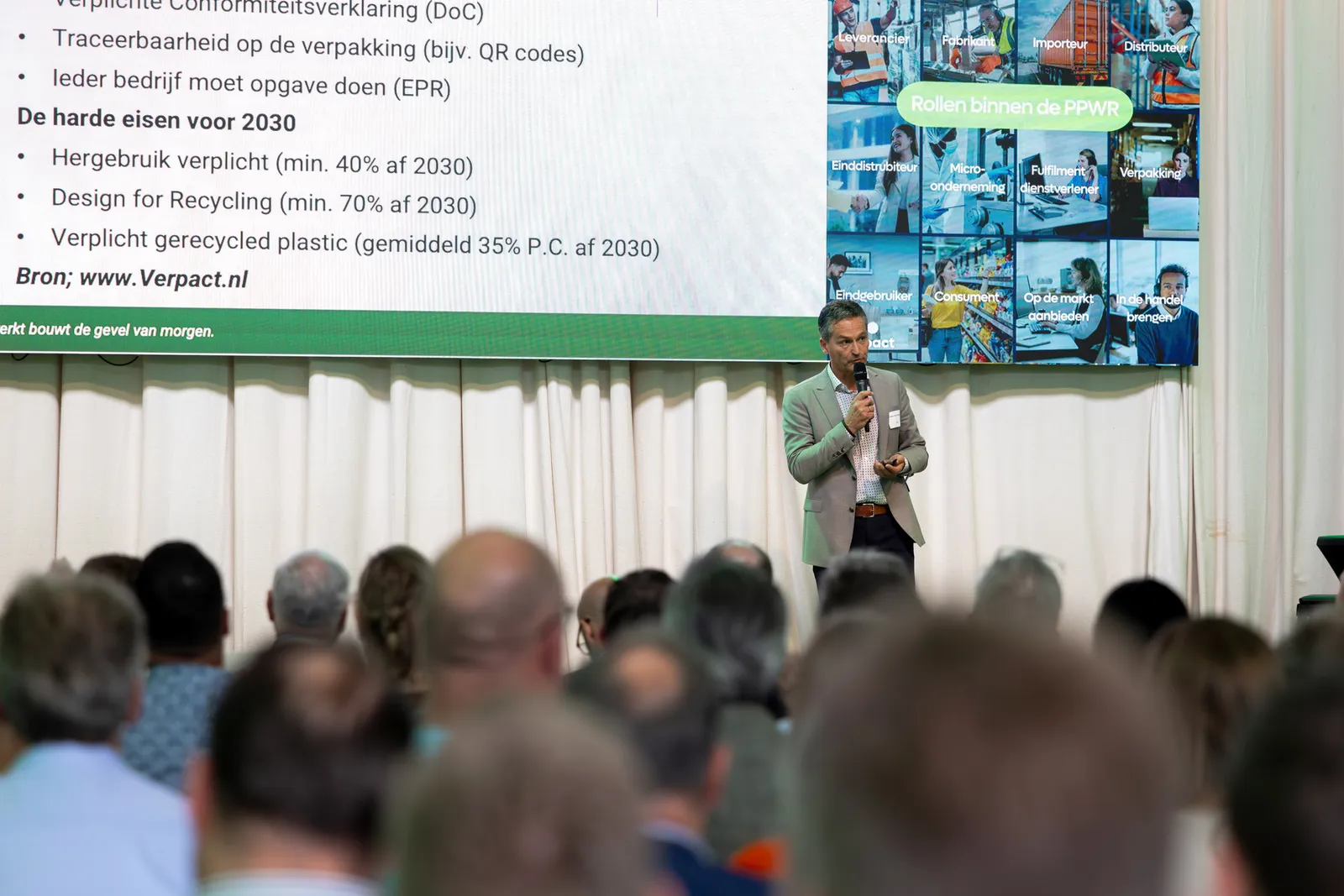
At the Symposium Circulaire Geveleconomie on 9 June, Edwin van Houten gave a pitch on the impact of the PPWR on the façade sector. It became clear that packaging is often seen as a necessary part of logistics, but is still only a limited part of existing circularity strategies. At the same time, there appears to be considerable potential here, not only in terms of sustainability, but also in cost savings, material use and supply chain efficiency. The biggest challenge may not be the technology, but gaining insight into the current situation.
Work is therefore under way to explore how the façade industry can gain a clearer picture of its packaging flows. This includes examining the materials used, reuse, recycling, logistical feasibility and the practical implications of the PPWR for companies in the sector.
Have your say
The PPWR will be developed further in stages over the coming years. Many details are still being worked out, which is precisely why this is the right time for the façade sector to have its say. The practical experience of façade contractors, system suppliers, logistics partners and recyclers is essential to developing workable solutions. As with other circularity challenges, sharing knowledge and working together can help ensure that the new legislation is not only practicable, but also creates opportunities for the entire façade sector.
Does your organisation use innovative packaging solutions? Do you already work with return logistics or reusable packaging? Or do you see challenges in the future implementation of the PPWR? Let us know at info@circulairegeveleconomie.nl.
Question about this story? Ask your question
Keep following this
Get an email when a new story is published. No account needed.
- ThemeCircular facades with lower environmental impact
- SubjectVMRG