








Online expert session: ‘A cyberattack, what now?’

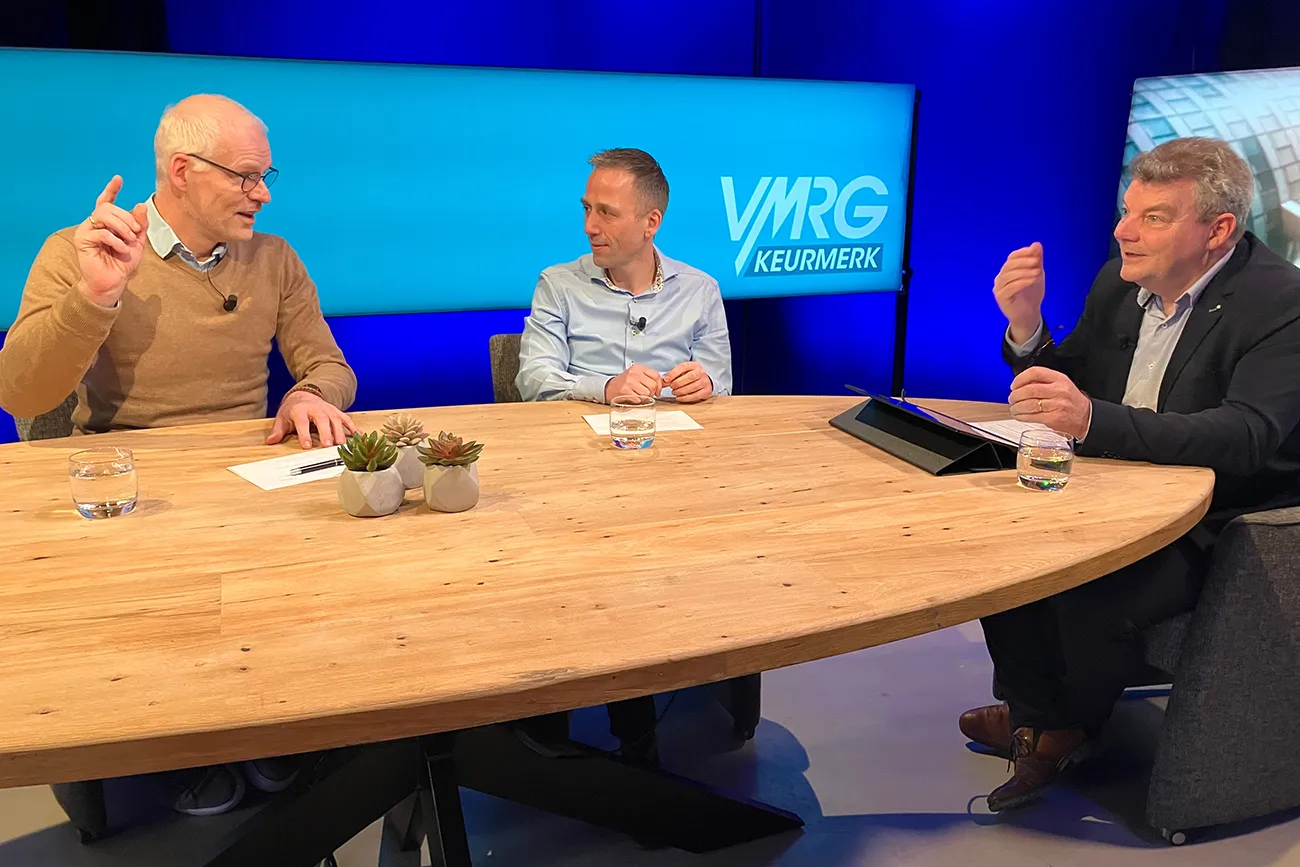
On 13 March, the VMRG held its online expert session ‘A cyberattack, what now?’. Experts Kelvin Rorive, founder of the Cyber Chain Resilience Consortium (CCRC), and Remco Visser, ICT manager at Rollecate and, unfortunately, someone with first-hand experience of a cyberattack, joined Henk Zoontjens, director at the VMRG, at the table. We look back at some of the questions discussed during the session.

Digitalisation in the construction industry is developing rapidly, and companies are being encouraged to keep pace. That is positive, but it also brings risks. Could you tell us a little more about that?
Rorive: Digitalisation is not just about individual companies. They are increasingly connected to one another through digital technology. If something goes wrong in that chain, it often affects more than one company. In my experience, 9 out of 10 cyberattacks are caused by a company in the supply chain that the victim works with.
The cause of a cyberattack often lies outside the company itself. Unfortunately, you have experienced a cyberattack. What happened in your case?
Visser: In our case, the cause was indeed a supplier. The supplier’s email environment had been hacked. An email was sent to us from their system with a malicious link, which someone clicked on. It soon became clear that we could no longer access our files and that data had been stolen. We also found a file in several locations in which the hackers demanded a ransom and threatened to publish the stolen data on the dark web. We then brought in an external company specialising in cybercrime.
What is the dark web, and what happens there?
Rorive: It is a part of the internet that ordinary search engines cannot find, and where a lot of criminal activity takes place.
What happened after you brought in a company specialising in cyberattacks?
Visser: A specialist company takes control straight away. The business then grinds to a halt, because a forensic investigation has to be carried out first. That investigation alone took almost a week. It is important to establish the cause. Everything is screened, then rebuilt and released bit by bit in a secure environment, outside the network. We also reported the incident to the Dutch Data Protection Authority and the police.
How often does this happen?
Rorive: The hard figures we have are for companies with cyber insurance, and they show that one in three of those companies is affected. Victims are found in every sector, and unfortunately we are seeing an upward trend in industry and trade.
The phishing email was apparently not recognised as such. Why was that?
Visser: The email came from a familiar sender we had already exchanged emails with. The suspicious link in the email only becomes visible when you hover over it with your mouse. But in practice, people do not do that if the email does not look suspicious.
Can a company prevent a cyberattack?
Rorive: People need to be aware that criminals will always find a way in if they want to. As a company, it is important to make things as difficult as possible for criminals, which means getting your cybersecurity in the best possible order. It is also a good idea to teach people to be sensibly suspicious. If in doubt, delete an email or ask an expert to look at it. That already significantly reduces the risk of becoming a victim.
How is communication handled during a cyberattack?
Visser: The first thought that comes to mind in your company is the fear of reputational damage. There is still a taboo around communicating that you have been hacked. This is sometimes called cyber shame. The specialist company we brought in took over our communications. You are dealing with hackers, so it is very important to get the right message to the right people at the right time.
Is it the IT manager’s responsibility to prepare the company as well as possible for a cyber crisis?
Visser: Cybersecurity starts with the board. If there is no awareness or perceived need at that level, there is little an employee can do.
Cybersecurity starts with the board. What if the board does not see the need for it?
Rorive: European legislation is on the way in this area: NIS2. It makes directors liable in cases of negligence. The legislation applies to companies of a certain size and with a
critical role in society. But even if it is not your own company, but your client, that has to comply with this legislation, your company will still be affected. So it is a good idea for every company to familiarise itself with this legislation.
Is it worth preparing your company for a cyber crisis if you will bring in a specialist company in the event of an attack anyway?
Rorive: Through the foundation I set up, we give companies the opportunity to practise responding to a cyberattack. Research among cyber specialist companies shows that it makes an incredible difference if a company that has been hacked already has a crisis team in place that knows exactly what to expect. It also makes an economic difference. So practising a cyber crisis is truly very important.
Interactive cyber crisis exercise
The VMRG, in collaboration with CCRC, is offering an interactive cyber crisis exercise for the boards of its member companies and everyone responsible for security. Participants are presented with a realistic exercise scenario. During a three-hour session, small groups, guided by a specialist, will learn and experience what is involved in handling a cyber crisis. The exercise will take place on Wednesday afternoon, 8 May, in Nieuwegein.
You can register directly via the VMRG website:
https://vmrg.nl/academy/cursussen/Cybercrisis-oefening
Question about this story? Ask your question
Keep following this
Get an email when a new story is published. No account needed.
- SubjectVMRG







