








SKG stars for hardware continue to evolve
Homeowners, architects, contractors and building owners have all heard of SKG stars for hardware. The construction industry knows that products bearing SKG stars are reliable and resistant to burglary. But what exactly do these stars mean? What does a product have to go through to earn SKG stars? Trends and developments in electromechanical and electronic hardware call for new, specific requirements. This article answers these and other questions.
1, 2 or 3 SKG stars?
Hardware products certified by SKG-IKOB, such as locks, cylinders, door furniture and hinges, carry 1, 2 or 3 SKG stars. The number of stars indicates how well the product performs against a number of criteria. The more stars, the better the product performs. Products without stars are not certified, and products cannot earn more than 3 stars. This system distinguishes between the performance levels of certified products and enables the market to make an objective comparison between products from different suppliers, depending on how the product will be used.
For a hardware product bearing stars to be brought to market, both the supplier and the product (including the installation instructions) must meet the requirements of BRL 3104. This assessment guideline (BRL) sets out all the requirements against which SKG-IKOB assesses the company and the product.
Certification assessment criteria
The product supplier must have a quality system in place to ensure consistent product quality. Product changes must be controlled and implemented in consultation with SKG-IKOB.
The test methods set out in NEN 5089 are used to determine whether hardware products meet the requirements for 1, 2 or 3-star classification. The tests carried out for this purpose fall into 4 main groups:
1. Durability tests (including in use);
2. Corrosion resistance tests;
3. Strength tests (resistance to burglary);
4. Installation and dimensional assessments.
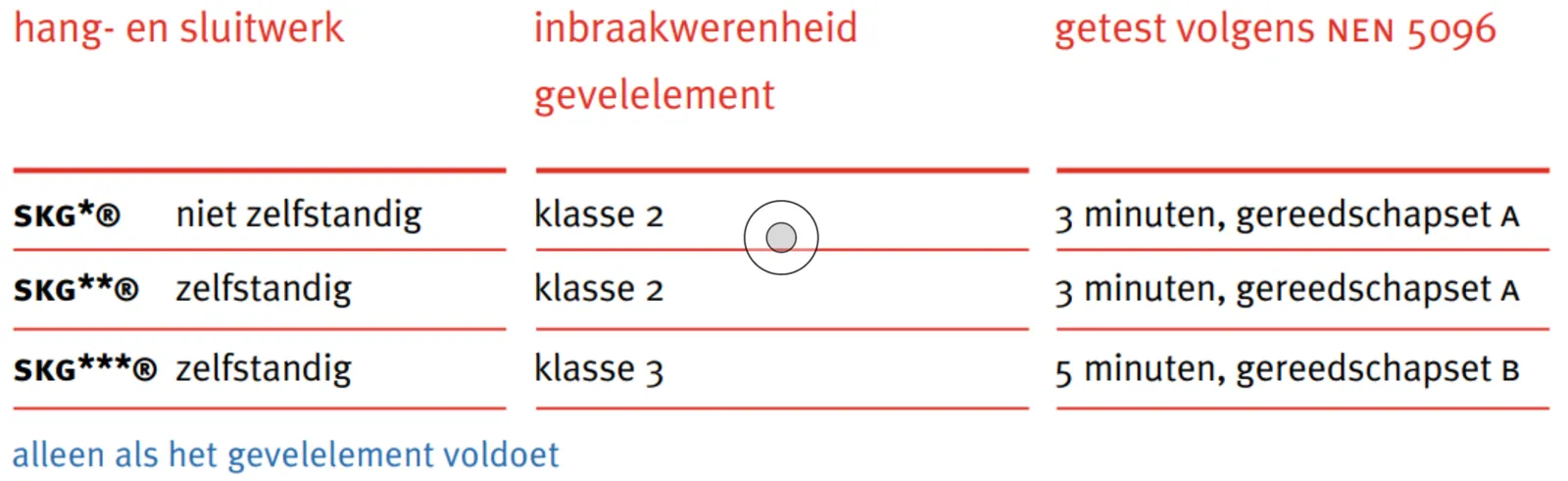
The strength tests assess the extent to which a product contributes to the resistance to burglary of roof and façade elements. Because the test method is aligned with NEN 5096, a link can be made between the number of SKG stars on a hardware product and the resistance-to-burglary class for roof and façade elements under NEN 5096. The following table shows this relationship. Although the hardware makes an important contribution to the resistance to burglary of the roof or façade element, the complete assembly must meet the required resistance-to-burglary class under NEN 5096.
The performance of a hardware product is also affected by its installation in the roof or façade element. For this reason, products must also meet requirements for the contents of their installation instructions to earn SKG stars, and these instructions are assessed in detail.
New additional requirements
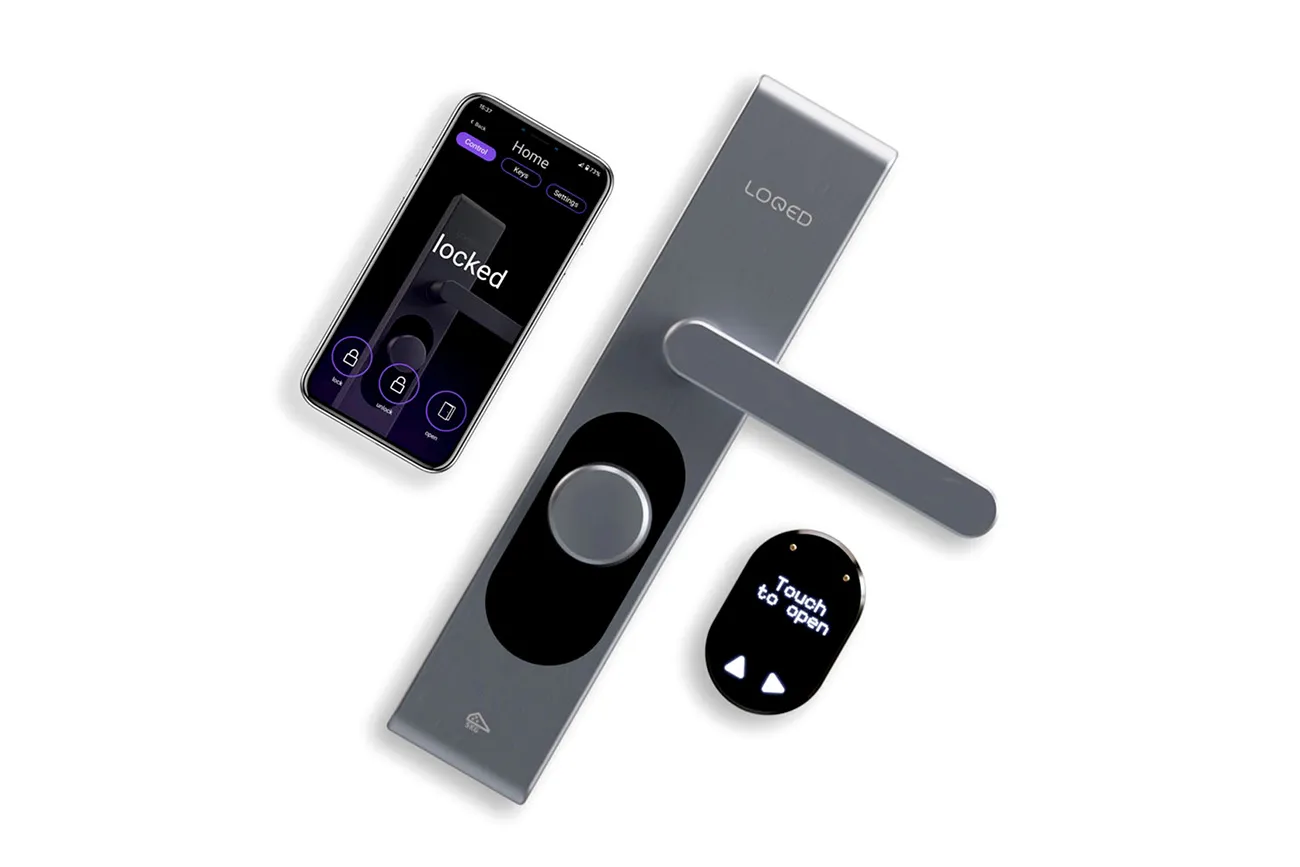
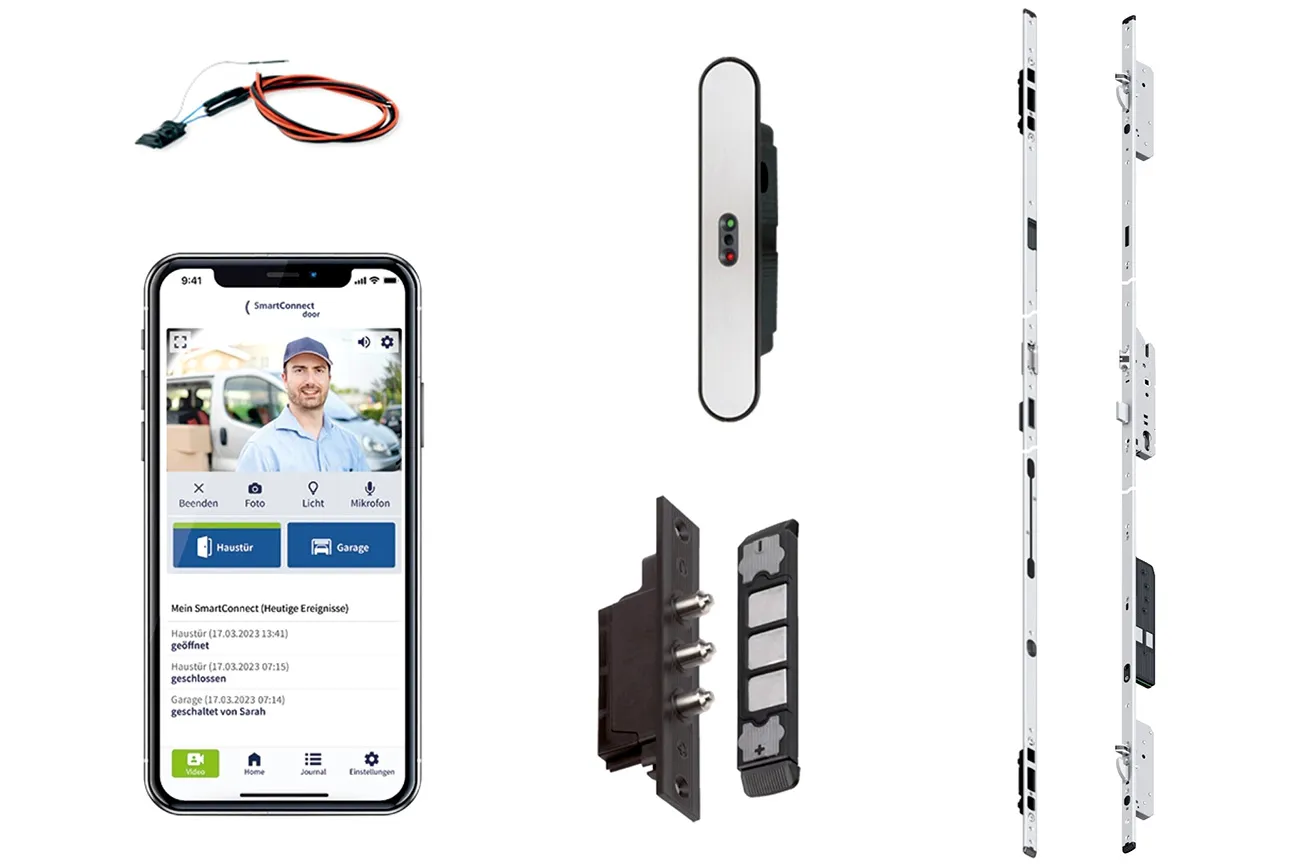
More and more products for locking and unlocking windows and doors incorporate electromechanical and/or electronic components. As the standard requirements do not adequately cover these products and their associated digitalisation, SKG-IKOB has drawn up additional requirements in close collaboration with the industry. These additional requirements are set out in AE 3104 (additional requirements to BRL 3104) and cover aspects such as:
- Signal transmission;
- Passwords, PIN codes and key management;
- Digital keys and electronic keypads;
- Biometric readers;
- Remote operation;
- Software (apps), firmware and updates;
The supplier records all properties and data relevant to products certified with SKG stars in a “declaration of conformity”. This forms part of the SKG-IKOB product certificate and is published at www.sterrenwijzer.nl. This also means that requirements are set for the ‘digital properties’, which are made transparent and communicated to product buyers.
Question about this story? Ask your question
Keep following this
Get an email when a new story is published. No account needed.
- ThemeWindows, doors and entrances
- SubjectVMRG







