








VMRG | Campus jewel
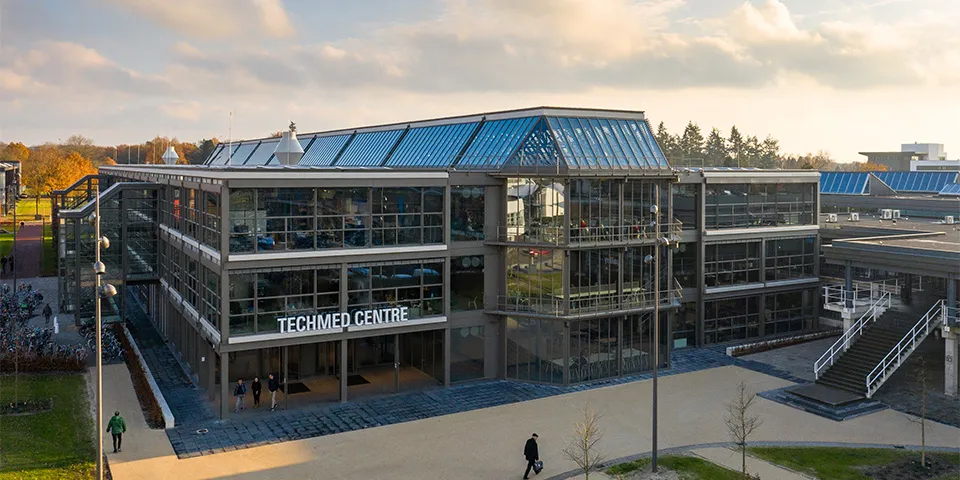
The ageing Technohal at the University of Twente has undergone a complete overhaul in recent years, to a design by Team T. The building’s architectural and cultural value, combined with its functional and technical potential, prompted the decision to give the Technohal a new purpose and transform it into a modern faculty building centred on sustainability and circularity. The building has gone from ugly duckling to campus jewel, with an exceptionally transparent appearance.
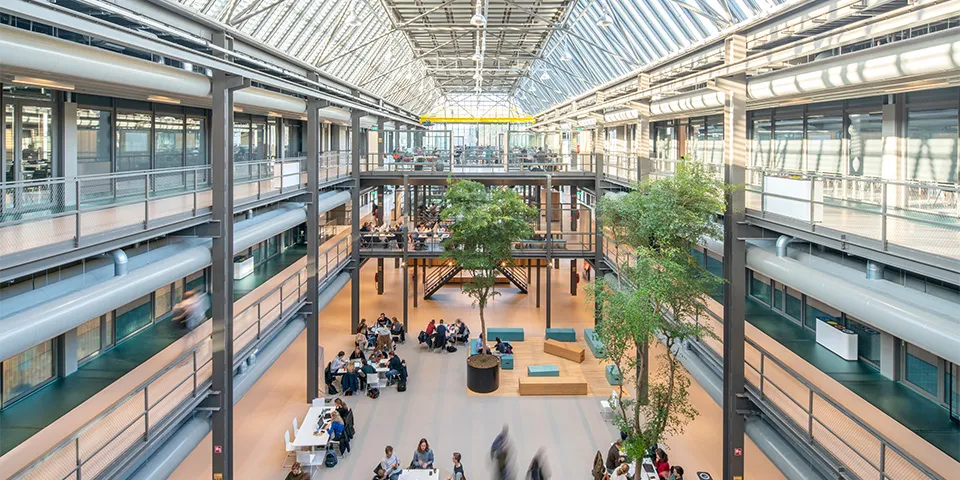
The new TechMed Centre is the flagship of the University of Twente’s health cluster. The building was almost completely stripped back and rebuilt by main contractor Dura Vermeer Bouw Hengelo, with a clear nod to its past. The complex has three floors, with glass external and internal walls that provide completely unobstructed views from almost every room. The building has already acquired a number of nicknames in a short time. Some call it an aquarium, while others call it the glass cathedral. The fact is that this multifunctional facility captures the imagination. Open ceilings and clear views of pipes, ducts and other building services components complete its industrial appearance.
Putty detailing
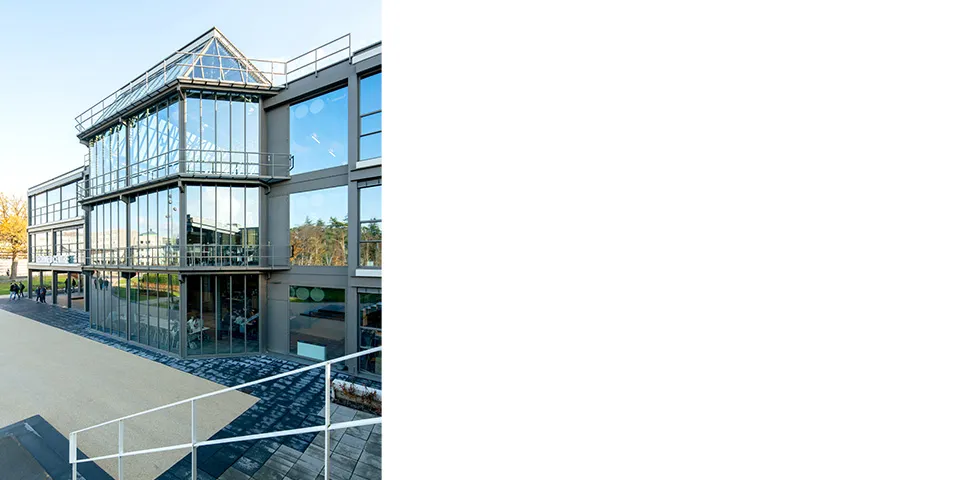
The architect wanted to preserve as much as possible of the original character of the old Technohal, with its steel and glass façades, says Jan Prikken of Rollecate, responsible for the façade sealing. “In the new design, naturally, the cold bridges formed by the welded saddle and T-profiles had to go. A slender profile was therefore essential. Forster’s insulated steel profiles proved to be the only worthy counterpart to the original façade.”
“The profile used is the so-called Forster Unico XS (extra small).” The initial idea was to use a standard solution, adds Mark Machielsen of Agentor, Forster’s representative in the Netherlands. “On closer inspection, the architect felt it did not quite meet the requirements after all. So we worked with Rollecate to develop a project-specific solution. Forster Unico is an insulated version of the classic steel profile and consists of 100% metal, thanks to its unique stainless steel insulator, with an Rc value that meets current requirements. The product is therefore 100% recyclable.”
Colour retention and durability
The original profile was not only narrow, but also glazed from the outside, with no glazing beads. According to Prikken, three considerations were central to developing the insulated Forster steel profile: achieving the right appearance, the correct profile width and the right colour. “A plain RAL colour on the profiles would have detracted from the overall look. That is why we chose Axalta powder coating BG 600 Bronze. We also found a way to replicate the putty detailing using a special sealant that we applied on site. Matching the sealant colour to that of the profiles was an additional challenge. Agentor took this on.” Mark Machielsen says: “We carefully matched the sealant colour to the profiles, and had the formulation extensively tested for colour retention and durability. We can come up with an idea on paper, but it also has to be functional and feasible to implement. Working with Rollecate, we also built a full-size mock-up on site, which was tested there for resistance to wind and water.”
Efficiency gains
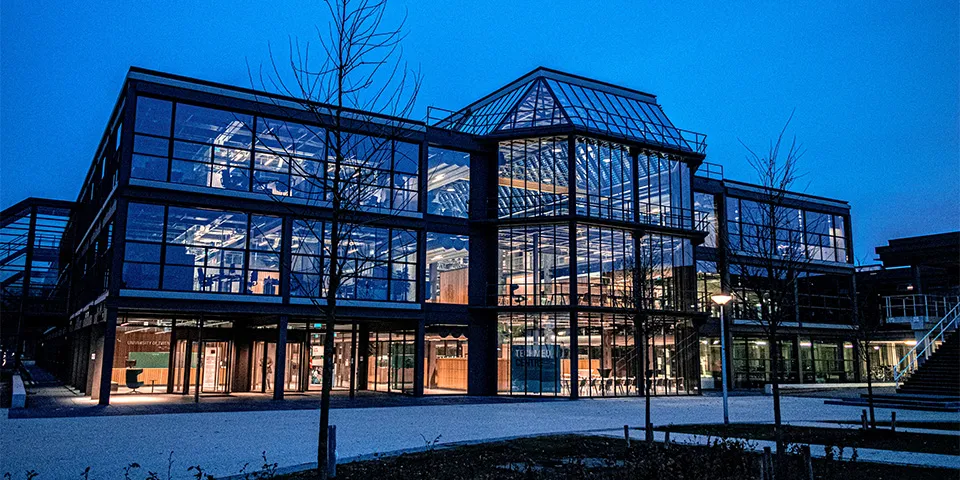
As mentioned, the Technohal’s structure was retained. “The contractor stripped the building back to its shell,” recalls Prikken. “What remained was a steel frame with concrete floors. After the contractor made the necessary thermal modifications to the steel structure, we were able to fix the steel façade units to the newly installed timber subframes. The building proved exceptionally dimensionally stable, with a primary grid of 6.20 metres and a secondary grid of 1.55 metres, so we were able to manufacture almost all the frames straight away. This resulted in significant efficiency gains.” Rollecate installed the frames one grid bay at a time, working from the bottom up. The glazing was then installed, in this case double solar-control HR++ insulating glass, SGG Cool-lite SKN 165. “We used steel angle sections to temporarily secure the panes,” explains Prikken. “At the next stage, the panes were sealed on the inside and outside. Since sealant cannot be applied in bad weather, we installed temporary protection to keep the façade dry. We started installation in the winter of 2018.”
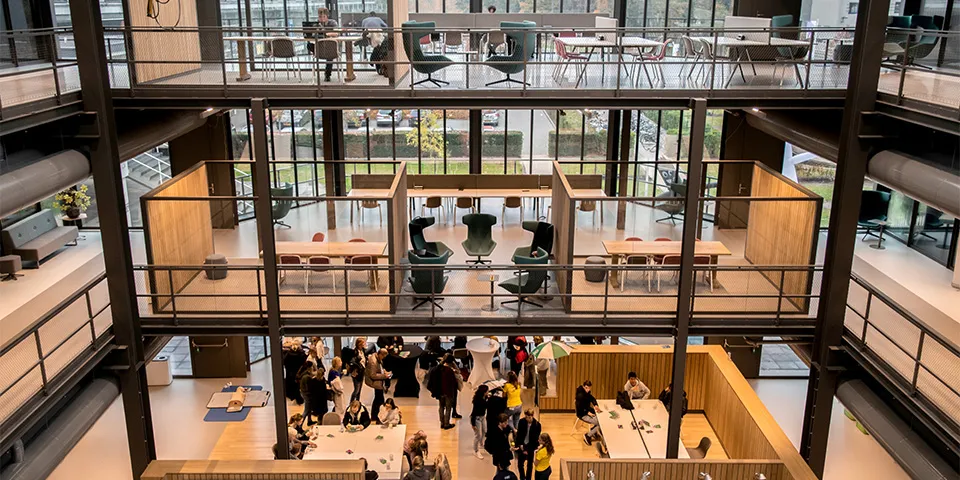
On 29 November last year, the former Technohal at the University of Twente was officially opened by King Willem Alexander and renamed TechMed Centre. It is home to the University of Twente’s Faculty of Health and health-related research institutes. Each year, 1,500 students, 400 staff members and 500 trainees use this glass building. Since September 2019, the 18-metre-high atrium has been a meeting place for doctors, students, professors and industry. Thanks in part to its new façade, the building has made a huge leap in its energy rating, achieving label A++.
Question about this story? Ask your question
Keep following this
Get an email when a new story is published. No account needed.
- SubjectVMRG







