








VMRG expert session on MIA/VAMIL
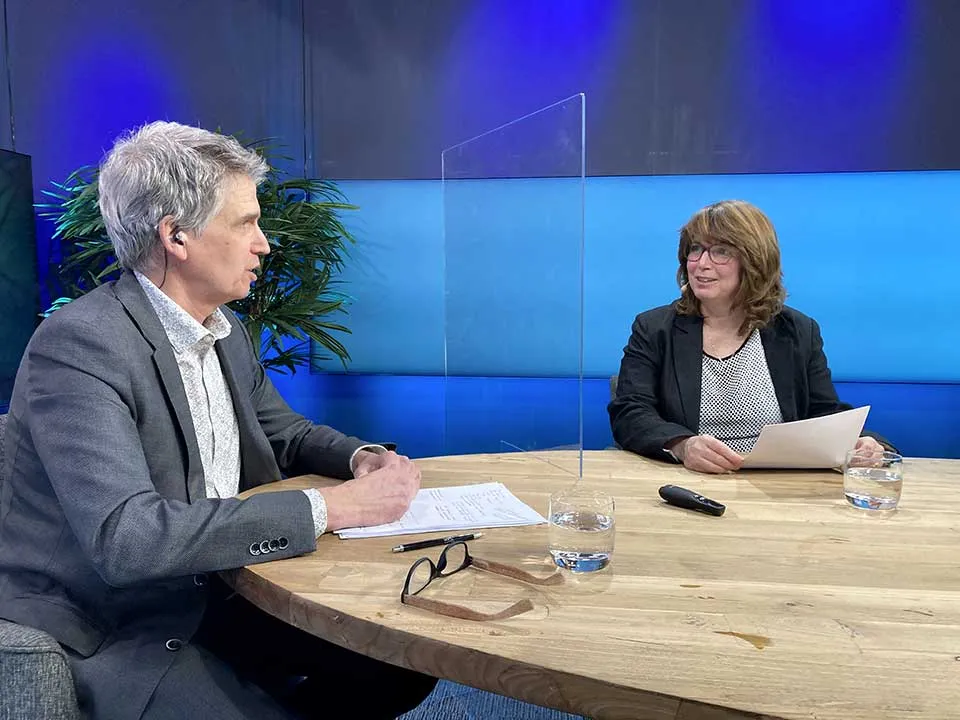
On 2 February, the VMRG held an online expert session on the MIA/VAMIL schemes. Our expert at the session was Janneke Brouwer, MIA/VAMIL adviser at RVO (Netherlands Enterprise Agency). Hans Zwaanenburg, director of the VMRG, spoke to her and asked the questions below.
What are the MIA/VAMIL schemes?
MIA and VAMIL are two separate schemes, but they have much the same practical aim. MIA stands for Environmental Investment Allowance and VAMIL for Arbitrary Depreciation of Environmental Investments. Assets, equipment and technologies that go beyond statutory requirements are eligible. The schemes are often referred to as subsidies, but they are in fact tax incentives. This means that if a company invests in an asset included on the Environmental List, part of the investment can be deducted from its profit in its tax return, reducing the amount of corporation tax it pays. The Environmental List is a list of eligible assets and is valid for one year. The ‘rules of the game’ are also revised annually on 1 January. Anything that has become standard practice is removed from the list, while new innovative assets are added each year.
What is the aim of the schemes?
To encourage companies to buy assets that go beyond what is legally required in terms of environmental performance. Environmentally friendly investments are often more expensive than standard equipment and methods. This allows businesses to recoup some of the additional costs. The schemes facilitate the market introduction and wider uptake of innovative and environmentally friendly assets.
What conditions must a company meet?
The investment must be in an asset, so consumables are not covered by the schemes. The asset must be registered with RVO within three months of entering into the purchase commitment. The minimum amount is €2,500 per asset, up to a maximum of €25 million per asset and/or €25 million per business per year. Second-hand assets are excluded, unless they have been converted into a new asset as part of a circularity initiative.
Could the funding suddenly run out?
In the 20 years that MIA and VAMIL have been in existence, the ‘pot’ has run out only once, in 2008. There is €114 million available for MIA and €25 million for VAMIL. However, the schemes are becoming increasingly well known in the market.
What financial benefit do companies get?
With MIA, a company can claim an investment deduction of up to 36% of the investment amount, which equates to a net benefit of approximately 9%. This deduction is on top of the standard investment deduction. If the asset is also eligible for the VAMIL scheme, a company may depreciate 75% of its cost in any year it chooses. This is particularly beneficial for companies whose annual profits fluctuate.
What qualifies as an asset specifically for the façade industry?
The circular façade is an asset specifically for the façade industry, for both commercial and residential construction. It must be a complete façade, not just the window frames, for example. In this case, the benefit of the scheme goes to the owner, meaning the party that purchases the circular façade.
How does the façade contractor benefit?
If a façade contractor offers a circular façade, it will generally be more expensive, and the contractor will have to work hard to sell it. The scheme could therefore be used as a selling point, because the owner will ultimately pay less for it after tax. A façade contractor could, of course, also retain ownership of the façade, in which case it could use the MIA/VAMIL scheme itself.
What requirements must a circular façade meet?
We require an environmental performance assessment of the façade. A materials passport must also be available. We need to know what is where in the façade. Without this information being available throughout the façade’s entire service life, it is difficult to ‘harvest’ materials at a later date. There must also be a circular materials maintenance contract and a take-back obligation. Finally, an assessment report must be submitted by an independent party approved under the scheme. This party independently verifies that the information provided is correct. RVO then checks that all the requirements have been met and advises the Tax Administration.
Are there any other assets of interest to the façade industry?
The Environmental List also includes assets with an objective-based requirement. This caters for companies with a good idea for making their production process or a technology, for example, more sustainable. A target is set, for instance, for reducing the use of raw materials or water. The burden of proof is more complex than for an asset with a prescriptive requirement. It is therefore advisable to contact RVO in advance to check the likelihood of qualifying for a tax benefit. This can be done using the contact form on the RVO website.
Question about this story? Ask your question
Keep following this
Get an email when a new story is published. No account needed.
- SubjectVMRG







