








VMRG | First pilot building inspections using drones show promise
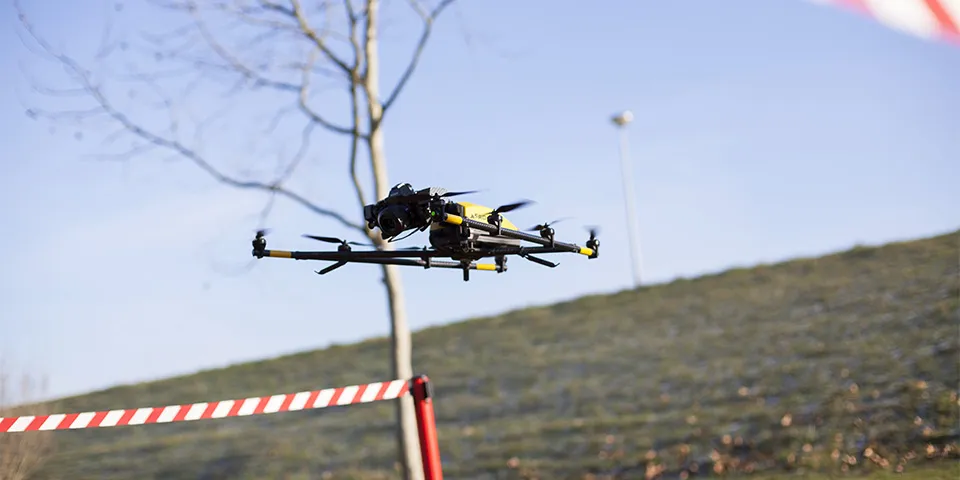
This spring saw the first legal drone flights in urban areas. They took place as part of the FaSA innovation project, a three-year initiative to develop a ‘Façade Service Application’. The project was launched by VMRG, OCTO and Aeroscan, working with 39 public and private sector partners.
Stingo Huurdeman of VMRG: “FaSA is a platform that is innovating the physical property market through the use of digital tools such as sensors, drones and artificial intelligence. This provides continuous, objective insight into the technical and aesthetic performance of the façades of homes and commercial buildings. Innovation in façade construction is high on VMRG’s agenda. That is why VMRG is keen to contribute its expertise in façade construction technology and maintenance to this project.”
Thorough preparation
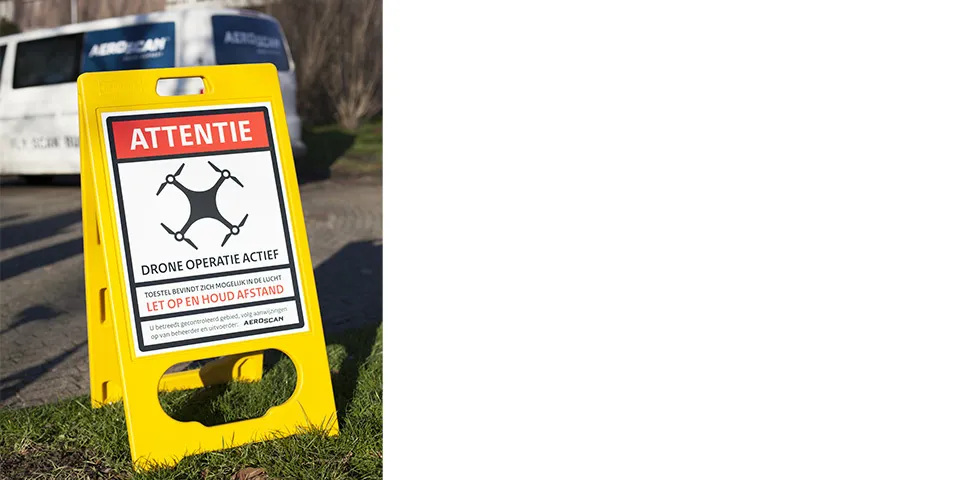
The first pilots under the FaSA project were recently carried out, comprising several drone flights in residential areas. “That’s quite remarkable,” explains Mark Nicolai of Aeroscan, “because these were the first ever test flights in an urban area. We were the first in the Netherlands to receive permission for them from the Human Environment and Transport Inspectorate and the Ministry of Defence. Each flight begins with thorough preparation, covering not only procedures and technology, but also, and above all, privacy and communication. These flights took place in a residential area, so residents are given extensive information in advance, in consultation with the housing associations we are working with on the FaSA project.”
Privacy protected
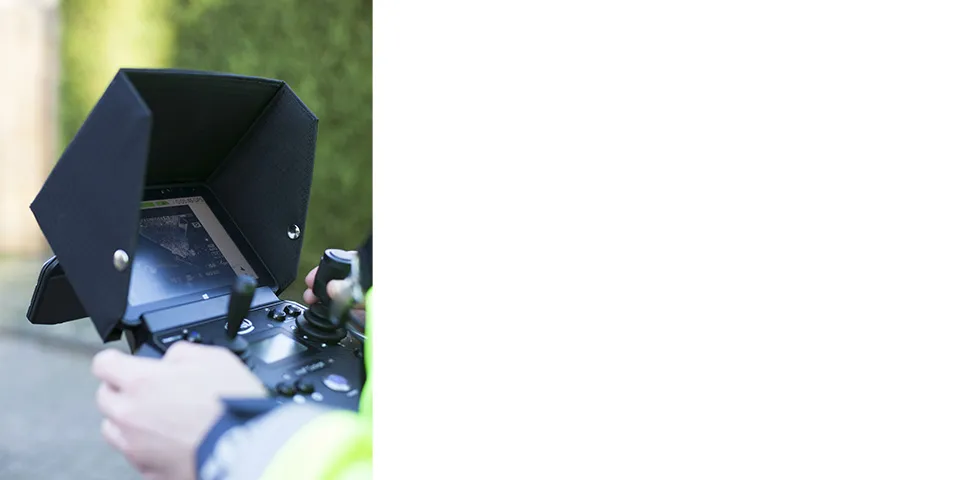
Privacy is taken very seriously during drone flights. Nicolai explains: “Before the pilot flights, tenants receive a letter from the housing association explaining the inspections. It stresses that we focus on the technical aspects of a home’s exterior, and explicitly not on people or personal belongings. If people or, for example, number plates do appear in the images, they are blurred, and only the edited images are shared with the client. The raw files are deleted.” In addition, plans are drawn up in advance to outline the drone’s route during the pilot. Information sessions are also held for local residents, where they can view the footage. The first responses have been very positive. People find it very enjoyable and interesting to see their own neighbourhood in drone footage.
Predicting maintenance needs
Inspecting a large residential complex is costly. A drone can do the job faster, more accurately and more cheaply. “We use drones that currently score best in terms of safety and technology,” says Nicolai. The drones fly at a suitable distance, while their cameras take photographs of the roof, façade and window frames from above. The cameras capture images at very high resolution, pinpointing defects with millimetre-level precision. To build a complete picture of a building, the images will eventually also need to be combined with ground-level photography. “In my ideal scenario, in a few years’ time we’ll detect a leak before it actually becomes a leak,” says Dirk Huibers of Octo. “Then a tenant won’t need to report it: a contractor or façade builder will be alerted straight away and can fix a potential leak before the damage gets worse.” Huurdeman adds: “This also means that façade maintenance will be carried out in a completely different way in the future. A building will be monitored continuously. We will also develop new sensors for this project, enabling maintenance needs to be predicted very accurately. No more maintenance once it’s already too late, but preventive maintenance.” “But,” Huibers continues, “we’re not there yet. First, we need to turn the images into information and analyse it.”
Scaling up
Further research is also needed into what it will take to scale up these drone inspections to neighbourhood level, and how to do so as effectively and efficiently as possible. “We’re consulting with regulatory bodies about what’s needed to apply this more widely,” says Huibers. “We’ve kept a detailed record of what happened on all the pilot flights, and we’re evaluating them. This will enable us to identify improvements to carry forward into the next phase. After the first pilots, we’re very positive about the results. The flights went safely, the drones took excellent photographs and remained stable in wind speeds of up to force 5. We’re making huge strides technically, greater than we’d dared to imagine.”
This project is being made possible in part with support from Kansen voor West II, through an ERDF grant.
Question about this story? Ask your question
Keep following this
Get an email when a new story is published. No account needed.
- ThemeCollaboration in the facade industry
- SubjectVMRG







