








Watertightness of façade elements
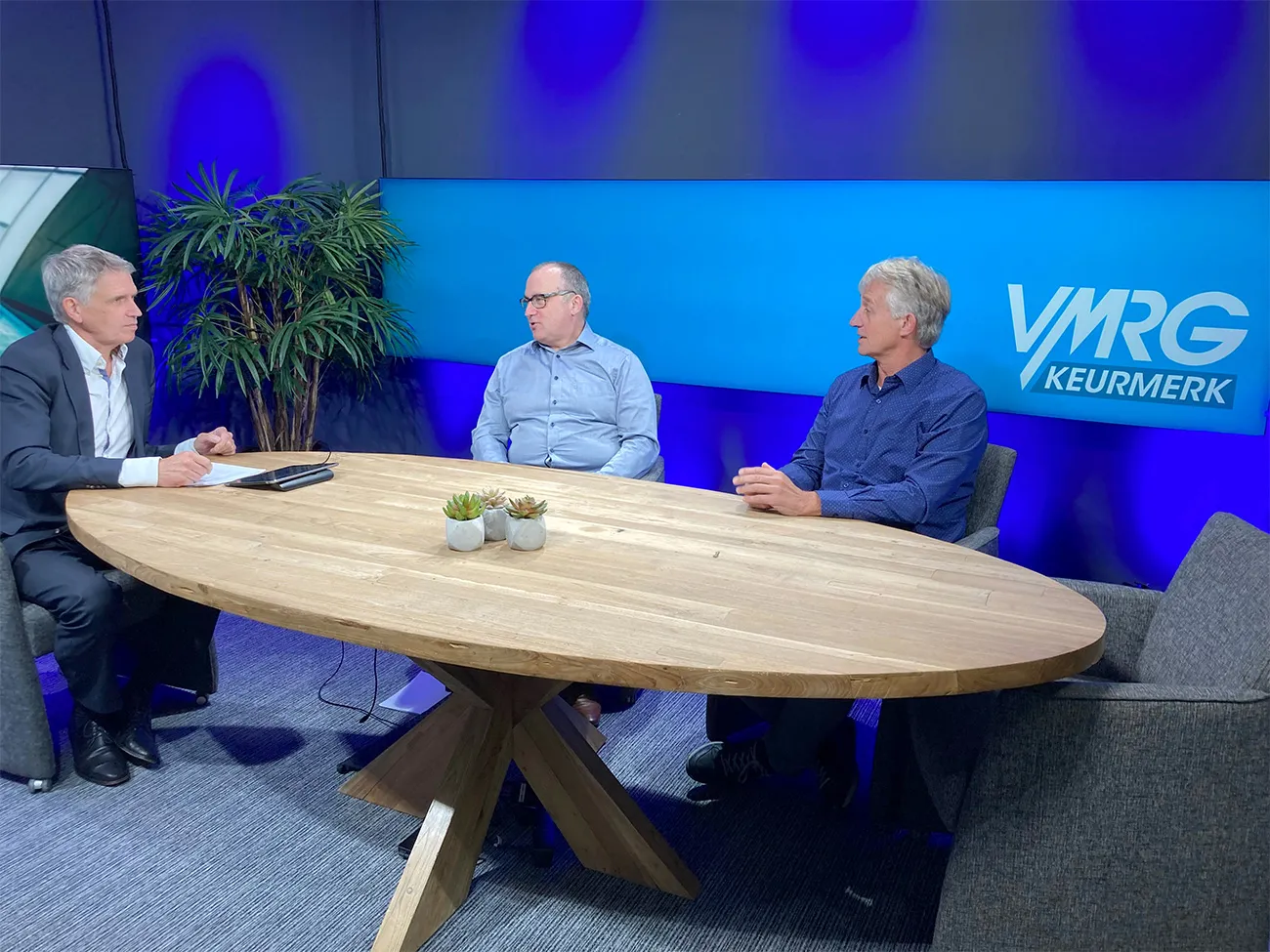
On 14 October, Hans Zwaanenburg, director of the VMRG, discussed the watertightness of façade elements during the online VMRG Expertsessie. He was joined by Jeroen van der Roest, project coordinator at Hydro Systems Netherlands, and Bert Maas, technical manager at Reynaers. This article covers the key topics. VMRG member companies can watch the full Expertsessie again.
What requirements must a building meet?
The minimum requirements are set out in the Building Decree. These have been incorporated into the VMRG Quality Requirements and Recommendations, which form the basis of the VMRG Quality Mark. In some areas, these Quality Requirements set higher standards.
What performance requirements apply to a façade element?
A façade must meet a wide range of requirements, including resistance to burglary, fire and smoke, as well as watertightness. All these requirements are set out in the product standards EN 14351-1 (for windows and doors) and EN 13830 (for curtain walling). These standards underpin the CE declaration required to place the product on the market.
What are the watertightness requirements for façade elements?
The product standard for windows and doors defines various watertightness classes. It also specifies how each class is to be tested. The standard gives precise details of the test procedure, including the amount of water, the spray angle and the pressure. Watertightness requirements vary depending on the location in the Netherlands and the height of the building.
How is watertightness tested?
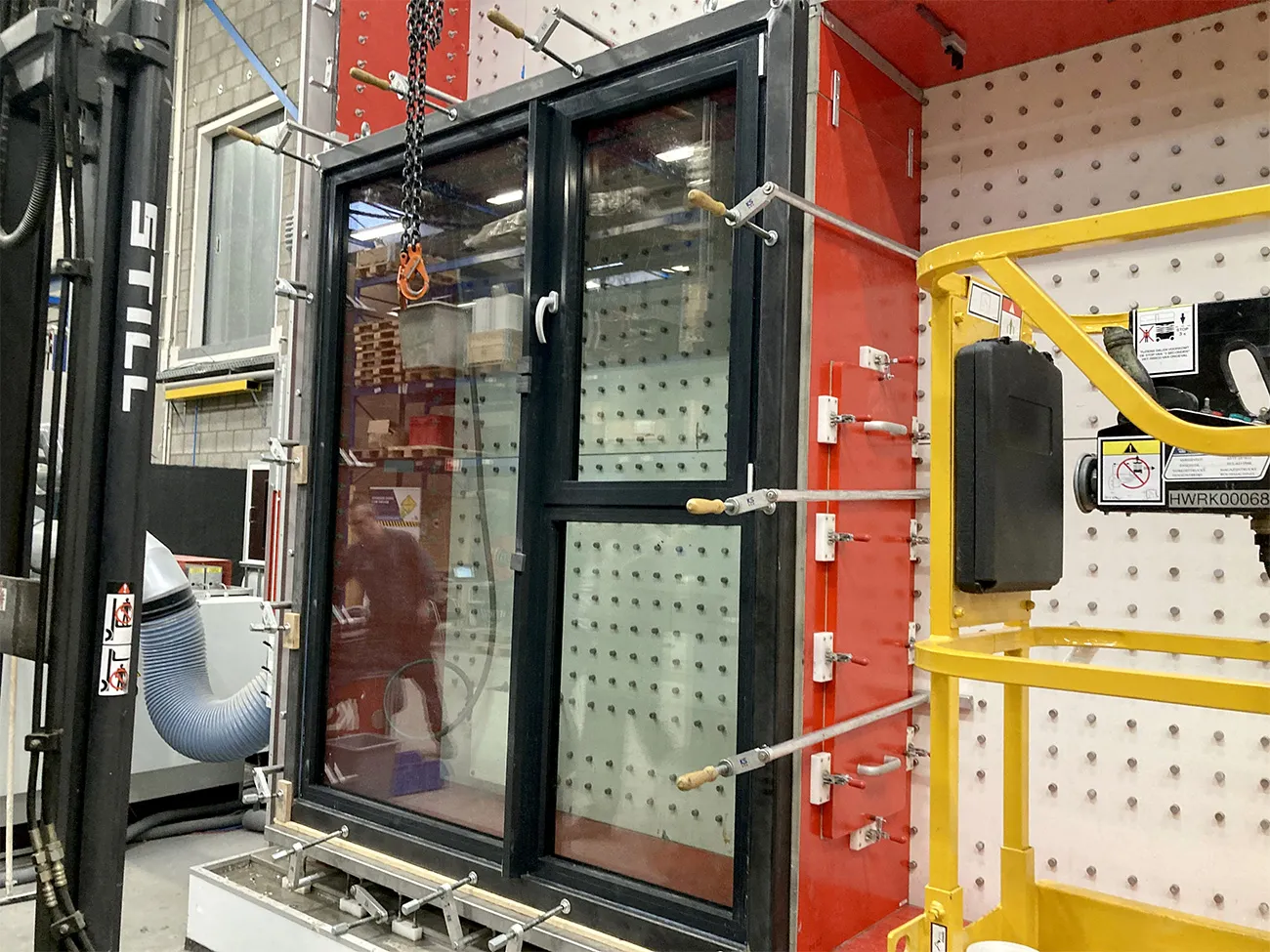
A façade element is fitted into a test chamber, with a spray pipe on the inside. The chamber can be pressurised to simulate wind pressure and water exposure. The test starts with three pressure pulses to prepare the element. Water is then applied for 15 minutes at 0 pascals (Pa). The water flow rate onto the element is two litres per m2 per minute. The pressure is then increased at fixed intervals every five minutes.
When does a test pass?
The test passes if no water enters during the test and all areas not designed to drain are dry when the door or window is opened. A passing product is assigned a pressure class. The next two steps are 300 and then 450 Pa. If the requirement based on location and building height is 380 Pa, the product cannot be classified at that pressure because there is no such step, so it is classified at 450 Pa. The classification steps are specified in the standard. The tests are governed by European regulations, but the Dutch Building Decree sets specific requirements depending on the region and building height of a project, so project tests will not necessarily correspond to the classification steps.
How, and how often, do system houses test for wind and watertightness?
A system house carries out around 100 tests a year to comply with the European standard. The many different product configurations mean that numerous tests are required. If a system house carries out its own testing, a notified body must always be present to check that the tests are performed in accordance with the standard.
What can you do in practice based on this test?
Laboratory testing and real-world conditions are not the same, so it is important to agree on what will be tested in practice. You must also make sure that the proposed solution is compatible with the system.
What if the tested element is smaller than the one used in practice?
The element may be 50% larger in area than the tested element. The system house sets out the system’s capabilities for each aspect, including the wind and watertightness of an element, in the product data sheet provided. Façade contractors can also use it to access the supporting test reports. The tests underpinning these results are called ITT, Initial Type Testing. They are required to obtain CE marking.
How can you ensure that a façade contractor achieves performance comparable to that of a system house?
A system house provides detailed fabrication and installation instructions. When a façade contractor starts production, a system house is often on hand to provide practical guidance. This is also common on site with curtain walling. Working together in this way helps ensure that the intended quality of the ITT test is achieved. If the façade contractor is working near the limits of the product data sheet, it is always advisable to consult the system house in advance.
One option is to have SKG-IKOB's mobile test unit visit. What is the purpose of this test?
This test is carried out at the façade contractor’s premises to check whether an element meets the requirements. The same test can also be carried out in a system house’s test chamber or in an in-house chamber, with a notified body present. It is advisable to check that the product meets the requirements before starting batch production.
Is the product also tested to check that it meets the requirements once it has been installed in a building?
This is not mandatory, but clients are requiring it increasingly often. Certain factors can cause actual site conditions to differ from laboratory conditions. If water does get in, the cause must be investigated. For example, this could be due to variations in the interfaces.
Why might an ITT and an on-site test produce different results?
There are several stages between laboratory testing and an on-site test. The element has to be transported, installed and used correctly. Dirt and damage can also play a part. These factors can cause results to differ from those of the ITT. To prepare properly for an on-site test, façade contractors are advised to draw on the system house’s expertise in advance. It is also advisable to be present at the test so that, if there is a leak, you can see where the problem lies.
How do you account for wind and watertightness when designing systems, for example with a profile developed specifically for a project?
As long as the sealing system is unchanged, we assume that the element will achieve the same performance. If not, a project test can be carried out at a test centre with a notified body present.
Question about this story? Ask your question
Companies in this story

Keep following this
Get an email when a new story is published. No account needed.
- SubjectVMRG
- CompanyReynaers







